

Beef, shoulder top blade steak, boneless, separable lean only, trimmed to 0" fat, choice, cooked, grilled
Whole food · Beef Products

Photo: Wikipedia
This is a lean, boneless cut from the beef shoulder, specifically the top blade muscle, trimmed of all visible fat and cooked by grilling. It has a robust, beefy flavor with a firm, slightly chewy texture that becomes tender when sliced against the grain. Nutritionally, it's a powerhouse of high-quality protein with virtually no carbohydrates, making it a staple for low-carb and high-protein diets.
Calorie split: 56% protein · 0% carbs · 44% fat
↓ Full nutrition💚 Why it's loved
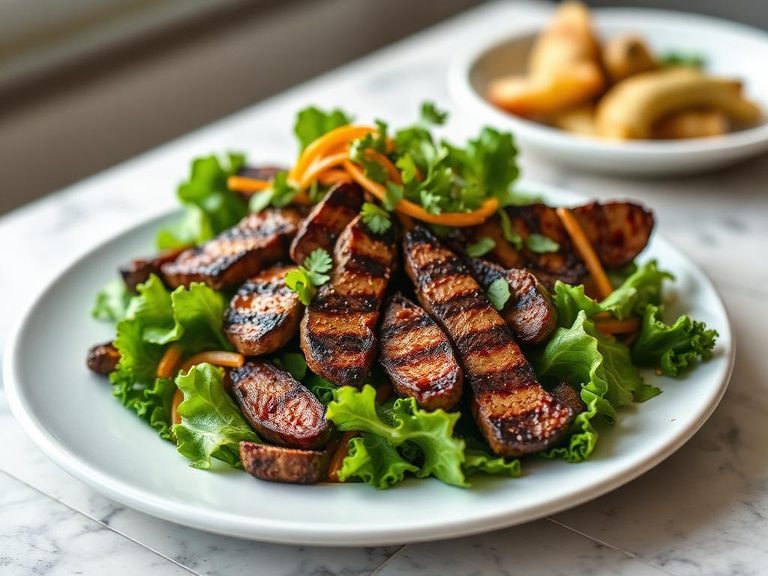
People love it for its deep, satisfying beef flavor that shines with simple seasoning and high-heat cooking. It's a versatile workhorse in the kitchen, perfect for quick weeknight grills, slicing for salads, or dicing for stews, offering a lean yet hearty red meat experience.
⚠️ Watch-outs & how to enjoy it better
The shoulder cut can be tough if overcooked or not sliced properly, leading to a chewy bite. As a red meat, it should be consumed in moderation as part of a balanced diet, and those watching their saturated fat intake might opt for leaner poultry or fish. To counteract toughness, always slice thinly against the grain and consider a brief marinade with acidic ingredients like citrus or vinegar to help tenderize the fibers before grilling.
Key benefits
- Excellent source of complete protein (28g per 100g) for muscle maintenance and satiety.
- Very low in carbohydrates and sugars, suitable for ketogenic and diabetic-friendly diets.
- Provides essential minerals like zinc, iron, and B vitamins, particularly B12.
- Trimmed to 0g fat, it is one of the leanest red meat options available.
- Grilling is a dry-heat cooking method that doesn't require added fats.
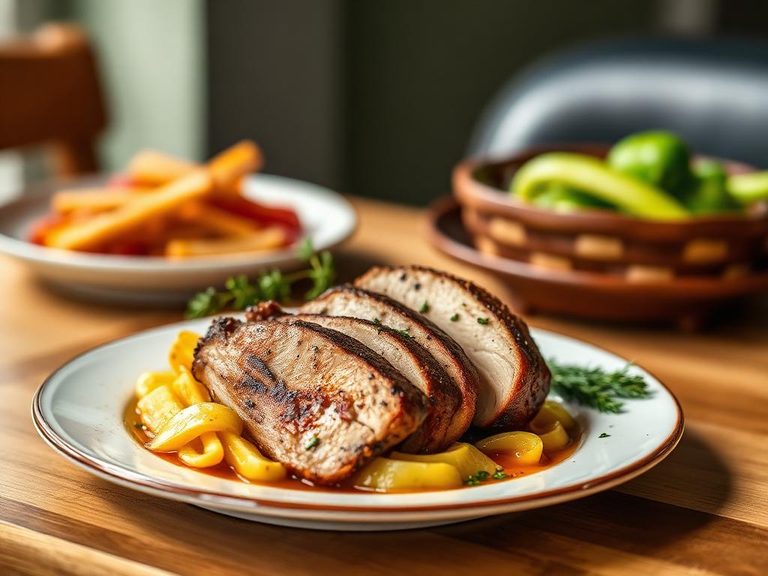
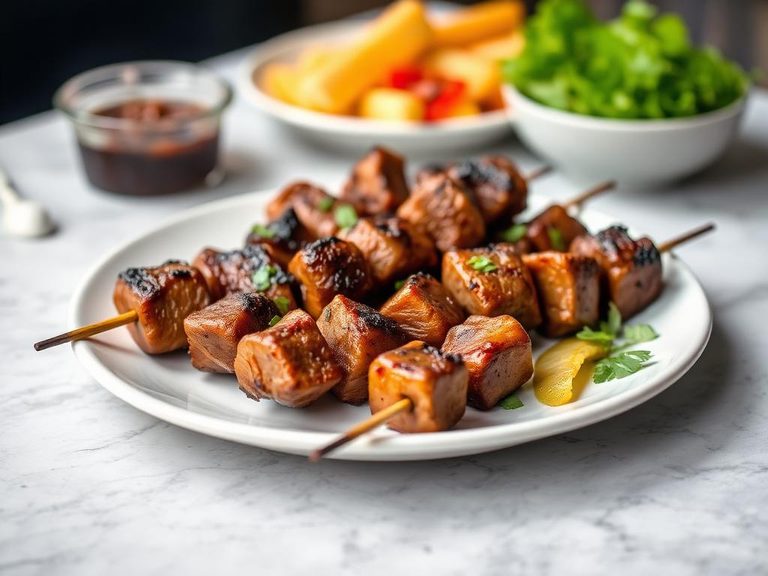
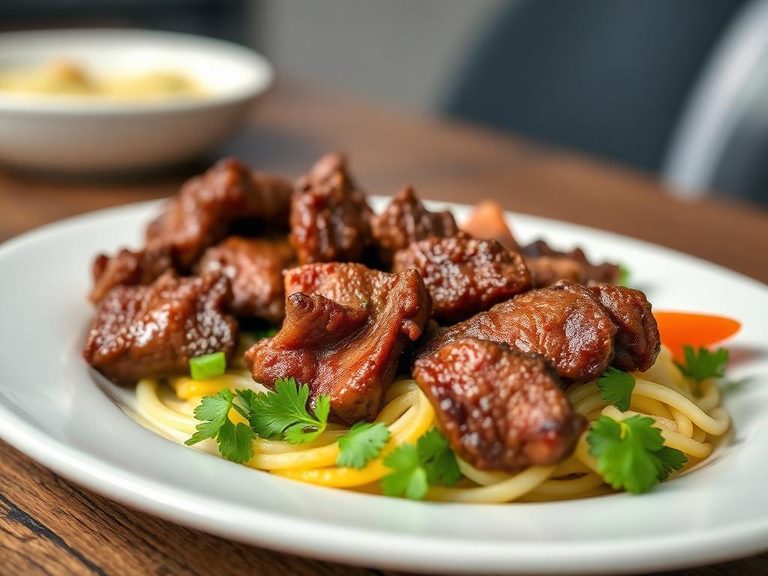
🍽️ Popular dishes
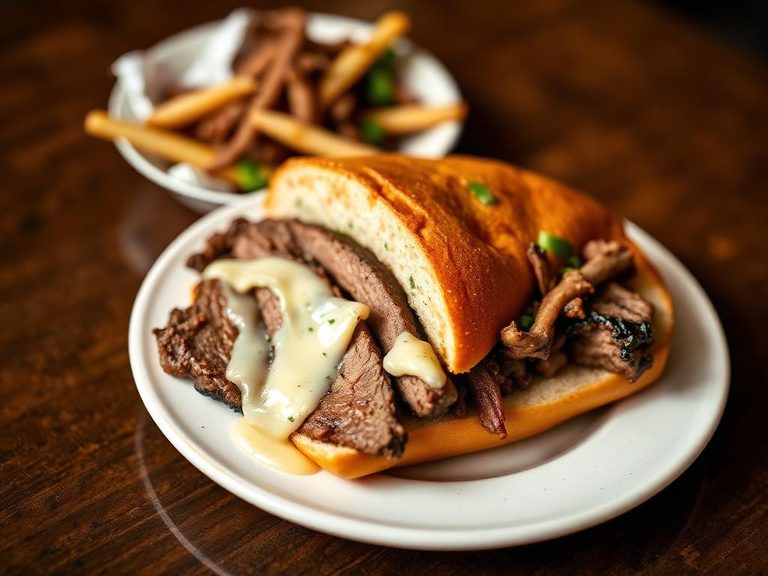
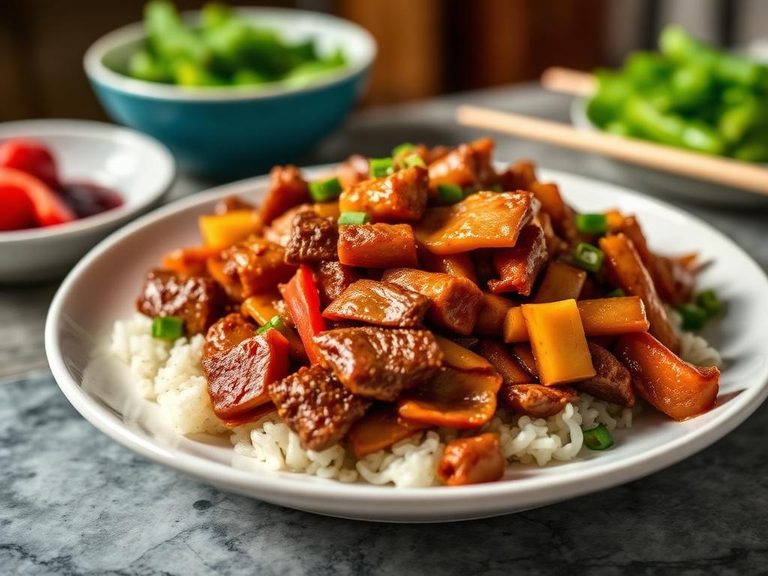
🌍 Where it's eaten
💡 Did you know?
The 'top blade' muscle contains a line of gristle running through its center; when this is removed and the two resulting pieces are cooked and sliced, it's often marketed as the more premium 'flat iron steak.'
Full nutrition (USDA data · scales with serving)
| Water | 61.7 g |
| Energy | 202 kcal |
| Energy | 844 kj |
| Protein | 28.3 g |
| Total lipid (fat) | 9.8 g |
| Ash | 1.0 g |
| Carbohydrate, by difference | 0.00 g |
| Fiber, total dietary | 0.00 g |
| Total Sugars | 0.00 g |
| Calcium, Ca | 14.0 mg |
| Iron, Fe | 3.2 mg |
| Magnesium, Mg | 23.0 mg |
| Phosphorus, P | 226 mg |
| Potassium, K | 389 mg |
| Sodium, Na | 85.0 mg |
| Zinc, Zn | 9.8 mg |
| Copper, Cu | 0.14 mg |
| Manganese, Mn | 0.02 mg |
| Selenium, Se | 31.2 ug |
| Vitamin C, total ascorbic acid | 0.00 mg |
| Thiamin | 0.08 mg |
| Riboflavin | 0.32 mg |
| Niacin | 4.3 mg |
| Pantothenic acid | 0.98 mg |
| Vitamin B-6 | 0.39 mg |
| Folate, total | 7.0 ug |
| Folic acid | 0.00 ug |
| Folate, food | 7.0 ug |
| Folate, DFE | 7.0 ug |
| Choline, total | 105 mg |
| Betaine | 20.8 mg |
| Vitamin B-12 | 5.1 ug |
| Vitamin B-12, added | 0.00 ug |
| Vitamin A, RAE | 1.0 ug |
| Retinol | 1.0 ug |
| Carotene, beta | 0.00 ug |
| Carotene, alpha | 0.00 ug |
| Cryptoxanthin, beta | 0.00 ug |
| Vitamin A, IU | 5.0 iu |
| Lycopene | 0.00 ug |
| Lutein + zeaxanthin | 0.00 ug |
| Vitamin E (alpha-tocopherol) | 0.14 mg |
| Vitamin E, added | 0.00 mg |
| Vitamin D (D2 + D3), International Units | 5.0 iu |
| Vitamin D (D2 + D3) | 0.10 ug |
| Vitamin D3 (cholecalciferol) | 0.10 ug |
| Vitamin K (phylloquinone) | 1.6 ug |
| Alcohol, ethyl | 0.00 g |
| Caffeine | 0.00 mg |
| Theobromine | 0.00 mg |
Fat & fatty acid profile (per 100g)
| Fatty acids, total saturated | 4.0 g |
| SFA 4:0 | 0.00 g |
| SFA 6:0 | 0.00 g |
| SFA 8:0 | 0.00 g |
| SFA 10:0 | 0.00 g |
| SFA 12:0 | 0.00 g |
| SFA 14:0 | 0.24 g |
| SFA 16:0 | 2.2 g |
| SFA 17:0 | 0.12 g |
| SFA 18:0 | 1.4 g |
| SFA 20:0 | 0.00 g |
| SFA 24:0 | 0.01 g |
| Fatty acids, total monounsaturated | 5.0 g |
| MUFA 14:1 | 0.05 g |
| MUFA 16:1 | 0.32 g |
| MUFA 17:1 | 0.09 g |
| MUFA 18:1 | 4.5 g |
| MUFA 18:1 c | 4.2 g |
| MUFA 18:1-11 t (18:1t n-7) | 0.23 g |
| MUFA 20:1 | 0.01 g |
| MUFA 22:1 | 0.00 g |
| Fatty acids, total polyunsaturated | 0.48 g |
| PUFA 18:2 | 0.41 g |
| PUFA 18:2 n-6 c,c | 0.38 g |
| PUFA 18:2 CLAs | 0.03 g |
| PUFA 18:3 | 0.01 g |
| PUFA 18:3 n-3 c,c,c (ALA) | 0.01 g |
| PUFA 18:4 | 0.00 g |
| PUFA 20:2 n-6 c,c | 0.00 g |
| PUFA 20:4 | 0.07 g |
| PUFA 20:5 n-3 (EPA) | 0.00 g |
| PUFA 22:5 n-3 (DPA) | 0.00 g |
| PUFA 22:6 n-3 (DHA) | 0.00 g |
| Fatty acids, total trans | 0.36 g |
| Fatty acids, total trans-monoenoic | 0.36 g |
| TFA 18:1 t | 0.36 g |
| Cholesterol | 93.0 mg |
Amino acid profile (per 100g)
| Tryptophan | 0.32 g |
| Threonine | 1.3 g |
| Isoleucine | 1.2 g |
| Leucine | 2.3 g |
| Lysine | 2.5 g |
| Methionine | 0.82 g |
| Cystine | 0.30 g |
| Phenylalanine | 1.1 g |
| Tyrosine | 1.0 g |
| Valine | 1.3 g |
| Arginine | 1.9 g |
| Histidine | 0.93 g |
| Alanine | 1.6 g |
| Aspartic acid | 2.6 g |
| Glutamic acid | 4.6 g |
| Glycine | 1.3 g |
| Proline | 1.2 g |
| Serine | 1.1 g |
| Hydroxyproline | 0.14 g |
FAQ
What's the best way to cook this lean cut to prevent it from becoming dry?
Use high, direct heat like grilling or broiling, and cook it quickly to your desired doneness (medium-rare to medium is ideal). Let it rest for 5-10 minutes after cooking to allow the juices to redistribute before slicing.
What does 'choice' mean in the description?
No, they are related but different. This is the whole top blade muscle with the connective tissue line. A flat iron steak is the result of butterflying the top blade and removing that central gristle, yielding a more uniformly tender cut.
What does 'choice' mean in the description?
'Choice' is a USDA beef quality grade indicating good marbling (intramuscular fat), which contributes to flavor and juiciness. It's the second-highest grade, below 'Prime' and above 'Select.'
Nutrient density (calculated · NRF9.3)
Nutrient Rich Foods index: beneficial nutrients (protein, fiber, vitamins, minerals) minus saturated fat, added sugar & sodium, per 100 kcal.
NRF9.3 index — Fulgoni, Keast & Drewnowski, 2009. Computed from USDA nutrients.
Weight-loss friendliness (composite index)
Energy density 2.02 kcal/g · 56% calories from protein · 0.0 g fiber · 0.0 g sugar per 100 g.
Composite of energy density (Rolls et al., 1999), protein & fiber satiety, minus sugar. A calculated heuristic — ranks satiety-per-calorie, not a clinical measure.
Dietary load (calculated from USDA values)
Potential renal acid load. Positive = acid-forming, negative = alkaline-forming.
Sodium-to-potassium ratio: 0.22 (lower is better — aim for ≤ 1)
Sodium:potassium per WHO potassium guidance. Computed from USDA nutrients.