

Beef, shoulder pot roast or steak, boneless, separable lean and fat, trimmed to 0" fat, all grades, raw
Whole food · Beef Products
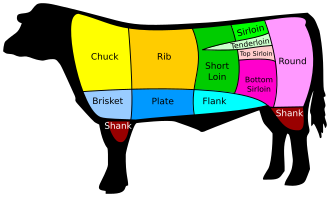
Photo: Wikipedia
This cut is the raw, boneless beef shoulder—often labeled chuck roast or steak—trimmed to virtually zero fat, offering a lean, deep-red canvas for slow cooking. When braised, it transforms into tender, pull-apart meat with a robust, beefy flavor and a fine, dense texture. Nutritionally, it's a protein powerhouse at over 21 grams per 100 grams, with a modest 130 calories and under 5 grams of fat, making it a lean choice for red meat lovers.
Calorie split: 66% protein · 0% carbs · 34% fat
↓ Full nutrition💚 Why it's loved
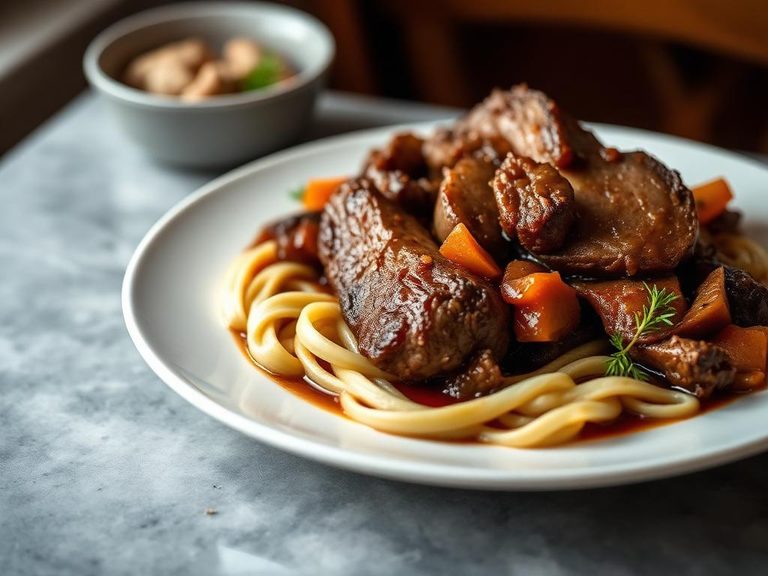
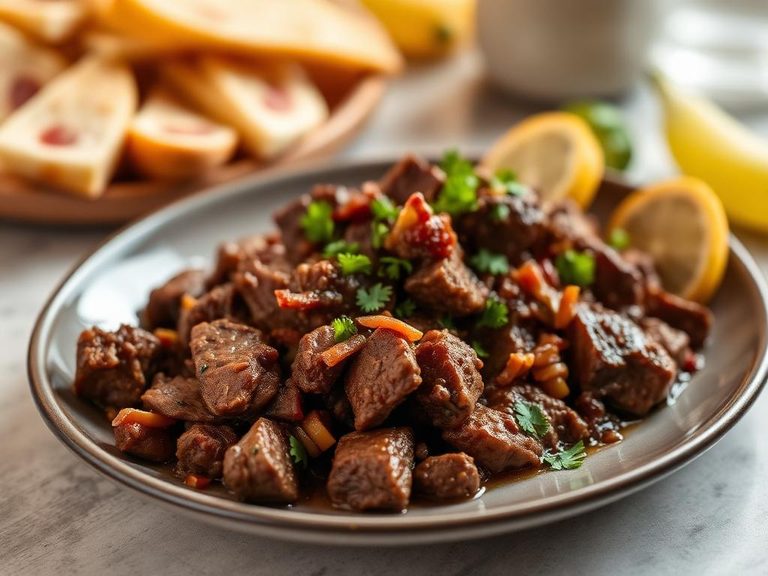
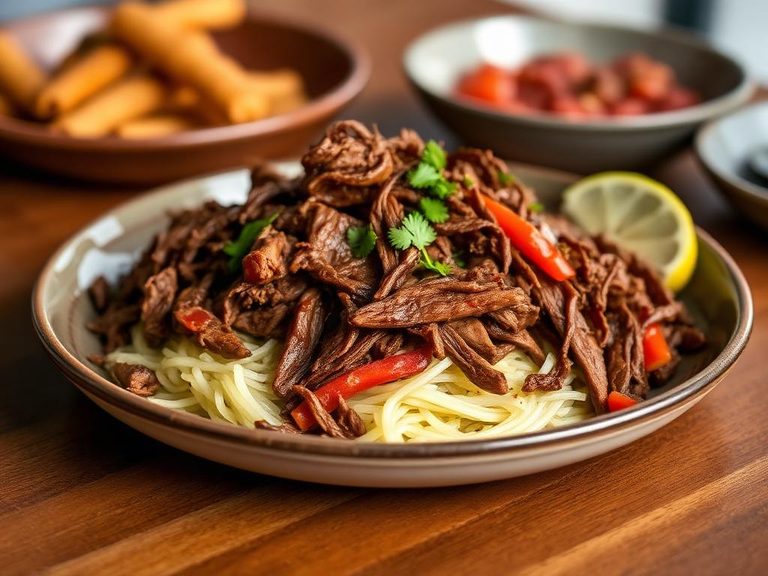
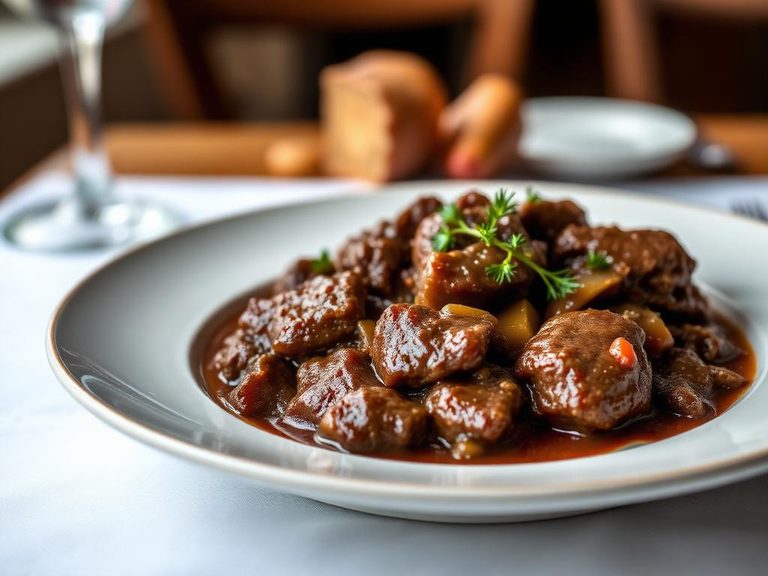
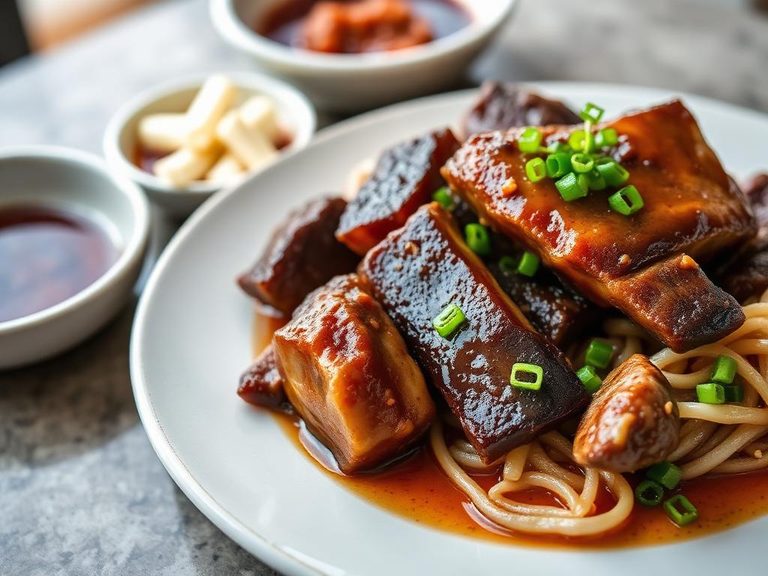
People adore this cut for its incredible versatility and deep, satisfying beef flavor that shines in slow-cooked dishes. It's a cultural staple in comfort food traditions worldwide, from American pot roasts to Latin American stews, where it becomes meltingly tender and absorbs rich sauces beautifully.
⚠️ Watch-outs & how to enjoy it better
The primary downside is its leanness; without careful cooking, it can become tough and chewy due to its connective tissue. To counteract this, always use moist-heat methods like braising or stewing, and consider adding a small amount of healthy fat (like olive oil) during cooking to enhance tenderness and flavor. Those monitoring cholesterol should be mindful of portion sizes, as red meat can be high in saturated fat when not trimmed.
Key benefits
- Excellent source of high-quality, complete protein for muscle maintenance and satiety.
- Very low in carbohydrates and sugar, suitable for low-carb and ketogenic diets.
- Rich in heme iron, which is highly bioavailable and helps prevent iron-deficiency anemia.
- Provides essential B vitamins, particularly B12, crucial for nerve function and red blood cell formation.
- Contains zinc and selenium, minerals important for immune health and antioxidant defense.
🍽️ Popular dishes
🌍 Where it's eaten
💡 Did you know?
The '0g fat' trim is a modern labeling achievement; traditionally, shoulder cuts were prized for their marbling, but advanced butchery can now remove nearly all visible fat, making this one of the leanest red meat options available.
Full nutrition (USDA data · scales with serving)
| Water | 72.6 g |
| Energy | 130 kcal |
| Energy | 545 kj |
| Protein | 21.4 g |
| Total lipid (fat) | 5.0 g |
| Ash | 1.1 g |
| Carbohydrate, by difference | 0.00 g |
| Fiber, total dietary | 0.00 g |
| Total Sugars | 0.00 g |
| Calcium, Ca | 12.0 mg |
| Iron, Fe | 2.6 mg |
| Magnesium, Mg | 25.0 mg |
| Phosphorus, P | 234 mg |
| Potassium, K | 395 mg |
| Sodium, Na | 72.0 mg |
| Zinc, Zn | 6.8 mg |
| Copper, Cu | 0.07 mg |
| Manganese, Mn | 0.01 mg |
| Selenium, Se | 23.8 ug |
| Vitamin C, total ascorbic acid | 0.00 mg |
| Thiamin | 0.09 mg |
| Riboflavin | 0.21 mg |
| Niacin | 4.6 mg |
| Pantothenic acid | 0.79 mg |
| Vitamin B-6 | 0.58 mg |
| Folate, total | 3.0 ug |
| Folic acid | 0.00 ug |
| Folate, food | 3.0 ug |
| Folate, DFE | 3.0 ug |
| Choline, total | 72.5 mg |
| Betaine | 14.2 mg |
| Vitamin B-12 | 2.7 ug |
| Vitamin B-12, added | 0.00 ug |
| Vitamin A, RAE | 3.0 ug |
| Retinol | 3.0 ug |
| Carotene, beta | 0.00 ug |
| Carotene, alpha | 0.00 ug |
| Cryptoxanthin, beta | 0.00 ug |
| Vitamin A, IU | 11.0 iu |
| Lycopene | 0.00 ug |
| Lutein + zeaxanthin | 0.00 ug |
| Vitamin E (alpha-tocopherol) | 0.18 mg |
| Vitamin E, added | 0.00 mg |
| Vitamin D (D2 + D3), International Units | 1.0 iu |
| Vitamin D (D2 + D3) | 0.00 ug |
| Vitamin D3 (cholecalciferol) | 0.00 ug |
| Vitamin K (phylloquinone) | 1.5 ug |
| Alcohol, ethyl | 0.00 g |
| Caffeine | 0.00 mg |
| Theobromine | 0.00 mg |
Fat & fatty acid profile (per 100g)
| Fatty acids, total saturated | 2.0 g |
| SFA 4:0 | 0.00 g |
| SFA 6:0 | 0.00 g |
| SFA 8:0 | 0.00 g |
| SFA 10:0 | 0.00 g |
| SFA 12:0 | 0.00 g |
| SFA 14:0 | 0.13 g |
| SFA 16:0 | 1.1 g |
| SFA 17:0 | 0.06 g |
| SFA 18:0 | 0.70 g |
| SFA 20:0 | 0.00 g |
| SFA 24:0 | 0.01 g |
| Fatty acids, total monounsaturated | 2.5 g |
| MUFA 14:1 | 0.03 g |
| MUFA 16:1 | 0.17 g |
| MUFA 16:1 c | 0.17 g |
| MUFA 17:1 | 0.05 g |
| MUFA 18:1 | 2.2 g |
| MUFA 18:1 c | 2.0 g |
| MUFA 18:1-11 t (18:1t n-7) | 0.14 g |
| MUFA 20:1 | 0.00 g |
| MUFA 22:1 | 0.00 g |
| Fatty acids, total polyunsaturated | 0.33 g |
| PUFA 18:2 | 0.27 g |
| PUFA 18:2 n-6 c,c | 0.25 g |
| PUFA 18:2 CLAs | 0.02 g |
| PUFA 18:3 | 0.00 g |
| PUFA 18:3 n-3 c,c,c (ALA) | 0.00 g |
| PUFA 18:4 | 0.00 g |
| PUFA 20:2 n-6 c,c | 0.00 g |
| PUFA 20:4 | 0.05 g |
| PUFA 20:5 n-3 (EPA) | 0.00 g |
| PUFA 22:5 n-3 (DPA) | 0.00 g |
| PUFA 22:6 n-3 (DHA) | 0.00 g |
| Fatty acids, total trans | 0.26 g |
| Fatty acids, total trans-monoenoic | 0.26 g |
| TFA 18:1 t | 0.26 g |
| Cholesterol | 66.0 mg |
Amino acid profile (per 100g)
| Tryptophan | 0.24 g |
| Threonine | 0.94 g |
| Isoleucine | 0.91 g |
| Leucine | 1.7 g |
| Lysine | 1.9 g |
| Methionine | 0.61 g |
| Cystine | 0.23 g |
| Phenylalanine | 0.81 g |
| Tyrosine | 0.74 g |
| Valine | 0.97 g |
| Arginine | 1.4 g |
| Histidine | 0.69 g |
| Alanine | 1.2 g |
| Aspartic acid | 1.9 g |
| Glutamic acid | 3.4 g |
| Glycine | 0.98 g |
| Proline | 0.88 g |
| Serine | 0.82 g |
| Hydroxyproline | 0.15 g |
FAQ
How do I prevent this lean cut from becoming tough?
Cook it low and slow using moist heat—braising, stewing, or slow-cooking in liquid (like broth or wine) breaks down the connective tissue and makes it tender. Avoid high-heat methods like grilling unless it's cut into thin steaks.
Is this cut suitable for a low-fat diet?
Yes, when trimmed to near-zero fat, it's one of the leanest red meat options, with under 5 grams of fat per 100 grams. It's ideal for those seeking high protein with minimal fat.
What's the best way to store and freeze this raw beef?
Store in the refrigerator for 1-2 days, or freeze in airtight packaging for up to 6 months. For best quality, thaw in the refrigerator overnight before cooking.
Nutrient density (calculated · NRF9.3)
Nutrient Rich Foods index: beneficial nutrients (protein, fiber, vitamins, minerals) minus saturated fat, added sugar & sodium, per 100 kcal.
NRF9.3 index — Fulgoni, Keast & Drewnowski, 2009. Computed from USDA nutrients.
Weight-loss friendliness (composite index)
Energy density 1.30 kcal/g · 66% calories from protein · 0.0 g fiber · 0.0 g sugar per 100 g.
Composite of energy density (Rolls et al., 1999), protein & fiber satiety, minus sugar. A calculated heuristic — ranks satiety-per-calorie, not a clinical measure.
Dietary load (calculated from USDA values)
Potential renal acid load. Positive = acid-forming, negative = alkaline-forming.
Sodium-to-potassium ratio: 0.18 (lower is better — aim for ≤ 1)
Sodium:potassium per WHO potassium guidance. Computed from USDA nutrients.