

Beef, New Zealand, imported, variety meats and by-products, tongue, cooked, boiled
Whole food · Beef Products

Photo: Wikipedia
Boiled beef tongue is a culinary delicacy prized for its remarkably tender, almost buttery texture and rich, deep beef flavor. Once the tough outer skin is removed, the interior meat becomes succulent and mild, making it a surprisingly versatile protein. It's a nutrient-dense cut, offering a substantial 18.31g of protein per 100g alongside essential vitamins like B12 and zinc.
Calorie split: 27% protein · 5% carbs · 68% fat
↓ Full nutrition💚 Why it's loved
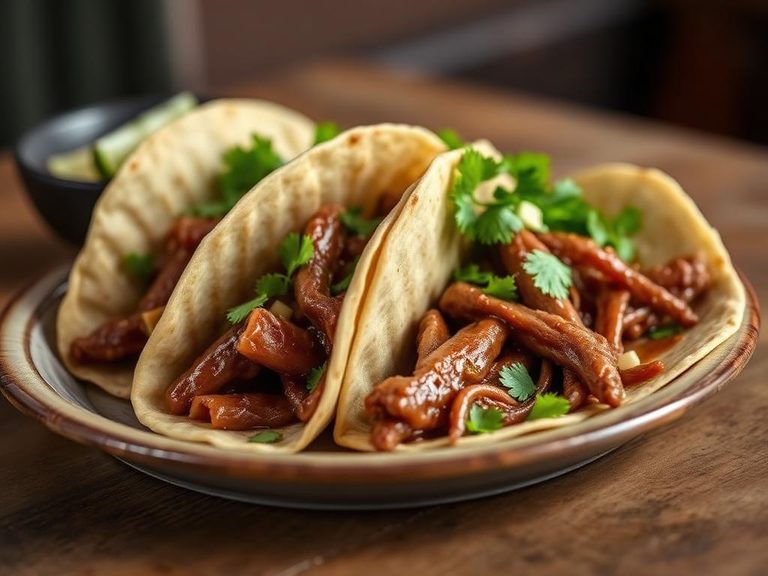
People love beef tongue for its unique, melt-in-your-mouth texture that's more delicate than steak, and its ability to absorb marinades and seasonings beautifully. It's a centerpiece in many cultural cuisines, from Japanese izakayas to Mexican taquerias, celebrated for transforming a humble cut into a gourmet experience.
⚠️ Watch-outs & how to enjoy it better
The primary downside is its high cholesterol and saturated fat content, which those monitoring heart health should consider. The preparation is also labor-intensive, requiring careful simmering and peeling of the outer membrane. To enjoy it wisely, practice portion control (a few thin slices) and pair it with fiber-rich vegetables or a vinegar-based slaw to balance the meal.
Key benefits
- Excellent source of complete protein for muscle maintenance.
- Rich in vitamin B12, crucial for nerve function and red blood cell formation.
- Provides significant amounts of zinc, supporting immune health.
- Contains iron in a highly bioavailable heme form.
- Offers a good dose of niacin (vitamin B3) for energy metabolism.
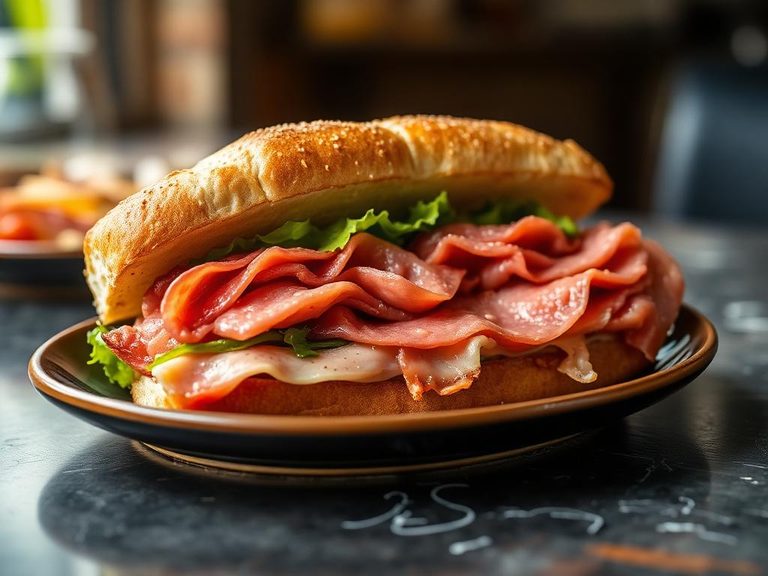
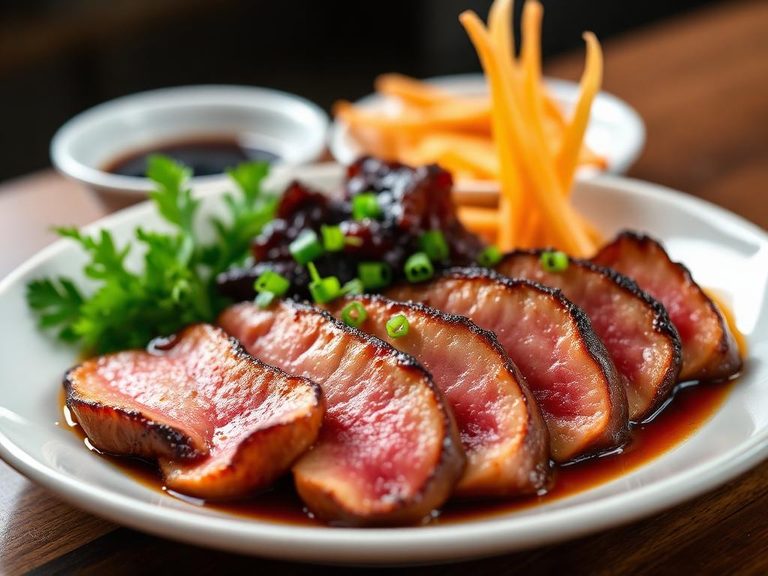
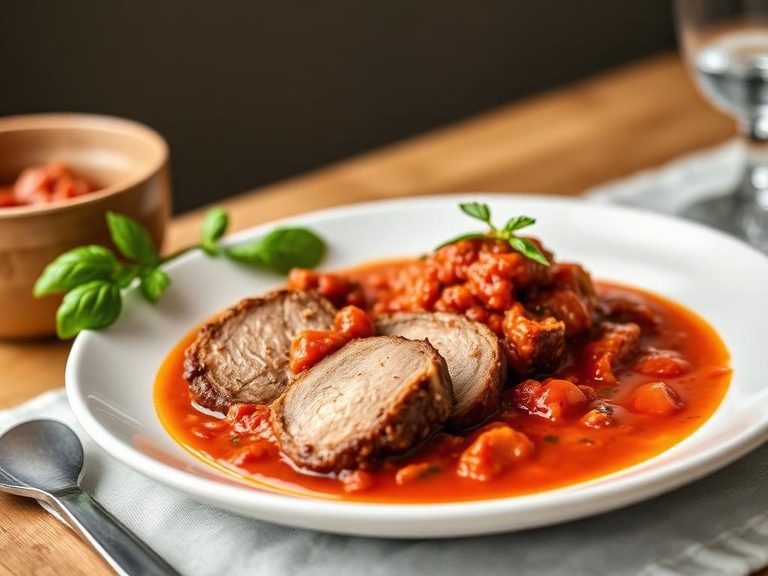
🍽️ Popular dishes
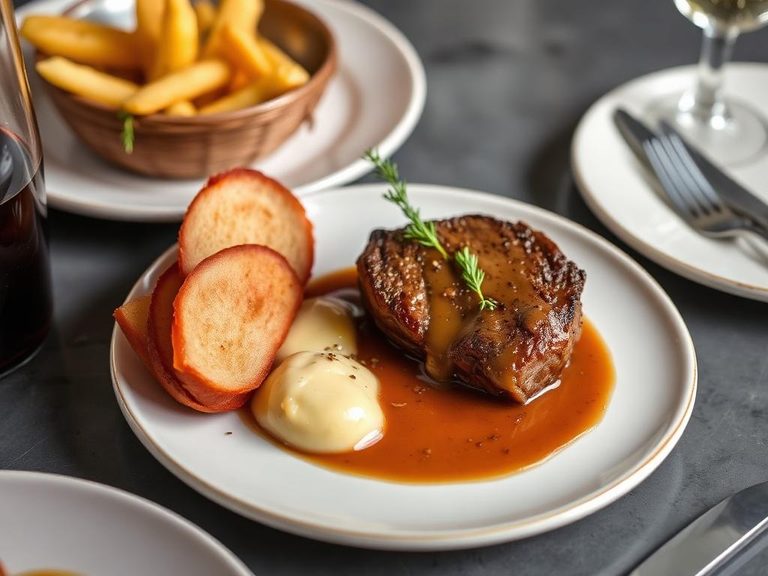
🌍 Where it's eaten
💡 Did you know?
A whole beef tongue can weigh between 2 to 4 pounds and is one of the strongest muscles in a cow's body, used constantly for grasping and tearing grass.
Full nutrition (USDA data · scales with serving)
| Water | 57.0 g |
| Energy | 271 kcal |
| Energy | 1134 kj |
| Protein | 18.3 g |
| Total lipid (fat) | 20.3 g |
| Ash | 0.72 g |
| Carbohydrate, by difference | 3.7 g |
| Fiber, total dietary | 0.00 g |
| Total Sugars | 0.00 g |
| Calcium, Ca | 5.0 mg |
| Iron, Fe | 2.5 mg |
| Magnesium, Mg | 17.0 mg |
| Phosphorus, P | 157 mg |
| Potassium, K | 189 mg |
| Sodium, Na | 57.0 mg |
| Zinc, Zn | 4.2 mg |
| Copper, Cu | 0.16 mg |
| Manganese, Mn | 0.01 mg |
| Selenium, Se | 3.9 ug |
| Vitamin C, total ascorbic acid | 0.00 mg |
| Thiamin | 0.06 mg |
| Riboflavin | 0.23 mg |
| Niacin | 2.6 mg |
| Pantothenic acid | 0.71 mg |
| Vitamin B-6 | 0.07 mg |
| Vitamin B-12 | 4.0 ug |
| Vitamin B-12, added | 0.00 ug |
| Vitamin A, RAE | 12.0 ug |
| Retinol | 12.0 ug |
| Carotene, beta | 0.00 ug |
| Carotene, alpha | 0.00 ug |
| Cryptoxanthin, beta | 0.00 ug |
| Vitamin A, IU | 42.0 iu |
| Lycopene | 0.00 ug |
| Lutein + zeaxanthin | 0.00 ug |
| Vitamin E (alpha-tocopherol) | 0.95 mg |
| Vitamin E, added | 0.00 mg |
| Vitamin D (D2 + D3), International Units | 14.0 iu |
| Vitamin D (D2 + D3) | 0.30 ug |
| Vitamin D3 (cholecalciferol) | 0.30 ug |
| Alcohol, ethyl | 0.00 g |
| Caffeine | 0.00 mg |
| Theobromine | 0.00 mg |
Fat & fatty acid profile (per 100g)
| Fatty acids, total saturated | 7.0 g |
| SFA 4:0 | 0.00 g |
| SFA 6:0 | 0.00 g |
| SFA 8:0 | 0.00 g |
| SFA 10:0 | 0.01 g |
| SFA 12:0 | 0.01 g |
| SFA 14:0 | 0.46 g |
| SFA 16:0 | 3.4 g |
| SFA 17:0 | 0.31 g |
| SFA 18:0 | 2.8 g |
| SFA 20:0 | 0.02 g |
| SFA 22:0 | 0.00 g |
| SFA 24:0 | 0.00 g |
| Fatty acids, total monounsaturated | 6.6 g |
| MUFA 14:1 | 0.08 g |
| MUFA 15:1 | 0.01 g |
| MUFA 16:1 | 0.52 g |
| MUFA 16:1 c | 0.44 g |
| MUFA 17:1 | 0.00 g |
| MUFA 18:1 | 6.0 g |
| MUFA 18:1 c | 5.7 g |
| MUFA 20:1 | 0.03 g |
| MUFA 22:1 | 0.00 g |
| MUFA 22:1 c | 0.00 g |
| MUFA 24:1 c | 0.00 g |
| Fatty acids, total polyunsaturated | 0.71 g |
| PUFA 18:2 | 0.40 g |
| PUFA 18:2 n-6 c,c | 0.30 g |
| PUFA 18:2 CLAs | 0.10 g |
| PUFA 18:3 | 0.15 g |
| PUFA 18:3 n-3 c,c,c (ALA) | 0.15 g |
| PUFA 18:3 n-6 c,c,c | 0.00 g |
| PUFA 18:4 | 0.00 g |
| PUFA 20:2 n-6 c,c | 0.00 g |
| PUFA 20:3 | 0.02 g |
| PUFA 20:3 n-3 | 0.01 g |
| PUFA 20:3 n-6 | 0.02 g |
| PUFA 20:4 | 0.04 g |
| PUFA 20:4 n-6 | 0.04 g |
| PUFA 20:5 n-3 (EPA) | 0.03 g |
| PUFA 22:5 n-3 (DPA) | 0.06 g |
| PUFA 22:6 n-3 (DHA) | 0.00 g |
| Fatty acids, total trans | 0.36 g |
| Fatty acids, total trans-monoenoic | 0.36 g |
| TFA 16:1 t | 0.09 g |
| TFA 18:1 t | 0.27 g |
| TFA 18:2 t,t | 0.00 g |
| Fatty acids, total trans-polyenoic | 0.00 g |
| Cholesterol | 105 mg |
Amino acid profile (per 100g)
| Tryptophan | 0.19 g |
| Threonine | 0.66 g |
| Isoleucine | 0.76 g |
| Leucine | 1.4 g |
| Lysine | 1.4 g |
| Methionine | 0.60 g |
| Phenylalanine | 0.71 g |
| Tyrosine | 0.62 g |
| Valine | 0.81 g |
| Arginine | 1.2 g |
| Histidine | 0.66 g |
| Alanine | 0.95 g |
| Glutamic acid | 2.6 g |
| Glycine | 1.00 g |
| Proline | 0.59 g |
| Serine | 0.64 g |
FAQ
How do you prepare beef tongue from scratch?
The key step is simmering the whole tongue in water or broth with aromatics (onion, garlic, bay leaf) for 2.5-3.5 hours until fork-tender. After cooling, the thick, rough outer skin peels off easily, revealing the smooth, edible meat inside.
Is beef tongue fatty or healthy?
It's a mixed profile. It's very high in protein and essential nutrients like B12 and zinc, but also contains significant saturated fat and cholesterol. It's best enjoyed as an occasional part of a balanced diet.
What does beef tongue taste like?
The flavor is a rich, concentrated beef taste, milder and less gamey than liver. The texture is the star—it's exceptionally tender and smooth, often compared to a very tender roast or even foie gras when properly cooked.
Nutrient density (calculated · NRF9.3)
Nutrient Rich Foods index: beneficial nutrients (protein, fiber, vitamins, minerals) minus saturated fat, added sugar & sodium, per 100 kcal.
NRF9.3 index — Fulgoni, Keast & Drewnowski, 2009. Computed from USDA nutrients.
Weight-loss friendliness (composite index)
Energy density 2.71 kcal/g · 27% calories from protein · 0.0 g fiber · 0.0 g sugar per 100 g.
Composite of energy density (Rolls et al., 1999), protein & fiber satiety, minus sugar. A calculated heuristic — ranks satiety-per-calorie, not a clinical measure.
Dietary load (calculated from USDA values)
Potential renal acid load. Positive = acid-forming, negative = alkaline-forming.
Sodium-to-potassium ratio: 0.30 (lower is better — aim for ≤ 1)
Sodium:potassium per WHO potassium guidance. Computed from USDA nutrients.