

Beef, New Zealand, imported, flank, separable lean only, cooked, braised
Whole food · Beef Products

Photo: Wikipedia
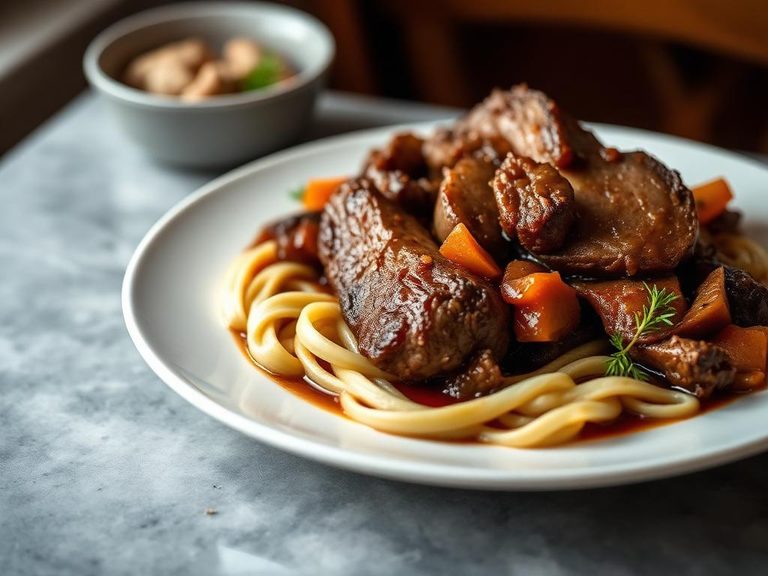
This is lean, braised flank steak from New Zealand, known for its deep, beefy flavor and tender, pull-apart texture after slow cooking. With 30.75g of protein per 100g and virtually no fat or carbs, it's a powerhouse for muscle maintenance and a staple in hearty, protein-focused meals. The braising method transforms this traditionally tough cut into a succulent, melt-in-your-mouth delicacy.
Calorie split: 63% protein · 0% carbs · 37% fat
↓ Full nutrition💚 Why it's loved
People love it for its rich, savory umami depth and the satisfying, tender texture that only slow braising can achieve. It's incredibly versatile, absorbing the flavors of herbs, wine, and aromatics, making it a beloved centerpiece for family dinners and comfort food classics.
⚠️ Watch-outs & how to enjoy it better
The primary downside is its high protein density, which can be heavy for those with kidney concerns or who require very low-protein diets. To mitigate, pair it with fiber-rich vegetables like roasted carrots or leafy greens to balance the meal and aid digestion, and ensure adequate hydration to support protein metabolism.
Key benefits
- Extremely high in protein for muscle repair and satiety
- Very low in carbohydrates, making it ideal for low-carb or ketogenic diets
- Zero sugar content, supporting stable blood glucose levels
- Rich source of iron and B vitamins for energy metabolism
- Lean cut with minimal saturated fat compared to other beef cuts
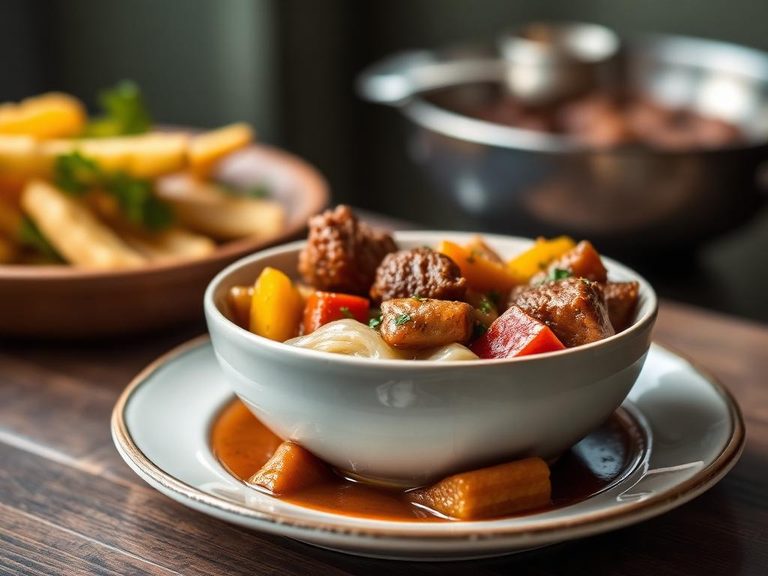
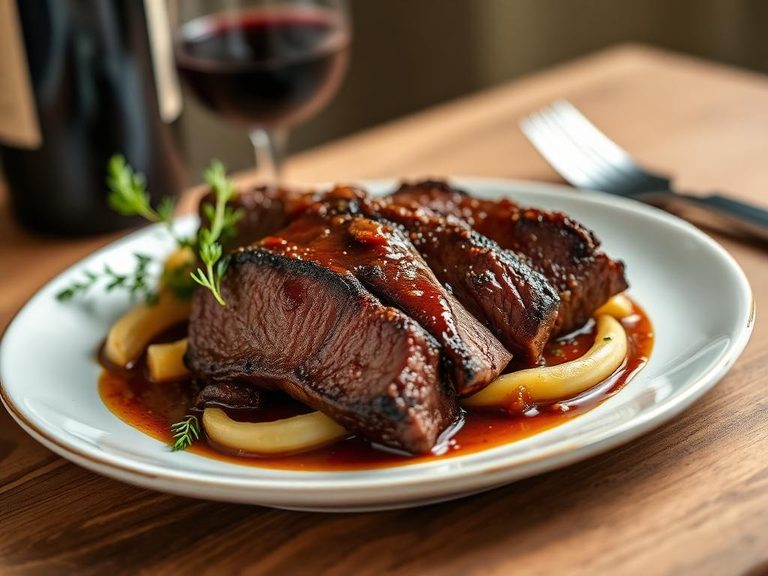
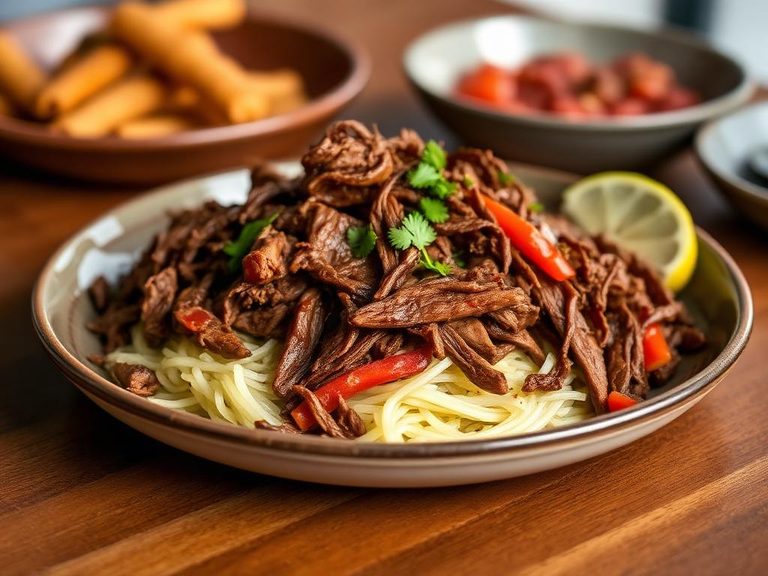
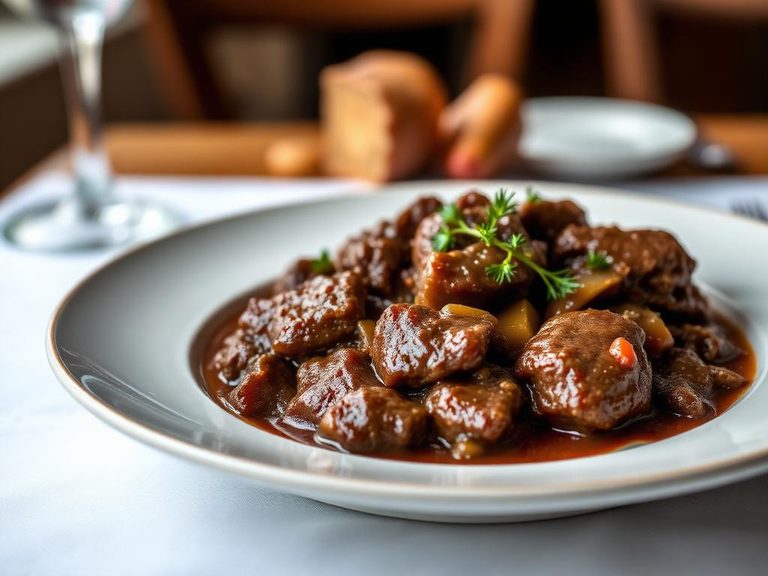
🍽️ Popular dishes
🌍 Where it's eaten
💡 Did you know?
New Zealand grass-fed beef is often noted for having a higher concentration of omega-3 fatty acids and conjugated linoleic acid (CLA) compared to grain-fed beef, despite this specific cut being very lean.
Full nutrition (USDA data · scales with serving)
| Water | 61.5 g |
| Energy | 194 kcal |
| Energy | 813 kj |
| Protein | 30.8 g |
| Total lipid (fat) | 7.9 g |
| Ash | 0.67 g |
| Carbohydrate, by difference | 0.00 g |
| Fiber, total dietary | 0.00 g |
| Total Sugars | 0.00 g |
| Calcium, Ca | 5.0 mg |
| Iron, Fe | 2.4 mg |
| Magnesium, Mg | 18.0 mg |
| Phosphorus, P | 141 mg |
| Potassium, K | 192 mg |
| Sodium, Na | 28.0 mg |
| Zinc, Zn | 6.9 mg |
| Copper, Cu | 0.07 mg |
| Manganese, Mn | 0.01 mg |
| Selenium, Se | 5.5 ug |
| Vitamin C, total ascorbic acid | 0.00 mg |
| Thiamin | 0.02 mg |
| Riboflavin | 0.09 mg |
| Niacin | 3.5 mg |
| Pantothenic acid | 0.13 mg |
| Vitamin B-6 | 0.12 mg |
| Vitamin B-12 | 1.4 ug |
| Vitamin B-12, added | 0.00 ug |
| Vitamin A, RAE | 11.0 ug |
| Retinol | 11.0 ug |
| Carotene, beta | 0.00 ug |
| Carotene, alpha | 0.00 ug |
| Cryptoxanthin, beta | 0.00 ug |
| Vitamin A, IU | 38.0 iu |
| Lycopene | 0.00 ug |
| Lutein + zeaxanthin | 0.00 ug |
| Vitamin E (alpha-tocopherol) | 0.95 mg |
| Vitamin E, added | 0.00 mg |
| Vitamin D (D2 + D3), International Units | 11.0 iu |
| Vitamin D (D2 + D3) | 0.30 ug |
| Vitamin D3 (cholecalciferol) | 0.30 ug |
| Alcohol, ethyl | 0.00 g |
| Caffeine | 0.00 mg |
| Theobromine | 0.00 mg |
Fat & fatty acid profile (per 100g)
| Fatty acids, total saturated | 2.9 g |
| SFA 4:0 | 0.00 g |
| SFA 6:0 | 0.00 g |
| SFA 8:0 | 0.00 g |
| SFA 10:0 | 0.00 g |
| SFA 12:0 | 0.00 g |
| SFA 14:0 | 0.17 g |
| SFA 16:0 | 1.6 g |
| SFA 17:0 | 0.09 g |
| SFA 18:0 | 0.97 g |
| SFA 20:0 | 0.01 g |
| SFA 22:0 | 0.00 g |
| SFA 24:0 | 0.00 g |
| Fatty acids, total monounsaturated | 2.7 g |
| MUFA 14:1 | 0.04 g |
| MUFA 15:1 | 0.00 g |
| MUFA 16:1 | 0.23 g |
| MUFA 16:1 c | 0.20 g |
| MUFA 17:1 | 0.00 g |
| MUFA 18:1 | 2.4 g |
| MUFA 18:1 c | 2.3 g |
| MUFA 20:1 | 0.01 g |
| MUFA 22:1 | 0.00 g |
| MUFA 22:1 c | 0.00 g |
| MUFA 24:1 c | 0.00 g |
| Fatty acids, total polyunsaturated | 0.29 g |
| PUFA 18:2 | 0.12 g |
| PUFA 18:2 n-6 c,c | 0.10 g |
| PUFA 18:2 CLAs | 0.02 g |
| PUFA 18:3 | 0.06 g |
| PUFA 18:3 n-3 c,c,c (ALA) | 0.06 g |
| PUFA 18:3 n-6 c,c,c | 0.00 g |
| PUFA 20:2 n-6 c,c | 0.00 g |
| PUFA 20:3 | 0.01 g |
| PUFA 20:3 n-3 | 0.00 g |
| PUFA 20:3 n-6 | 0.01 g |
| PUFA 20:4 | 0.03 g |
| PUFA 20:4 n-6 | 0.03 g |
| PUFA 20:5 n-3 (EPA) | 0.02 g |
| PUFA 22:5 n-3 (DPA) | 0.03 g |
| PUFA 22:6 n-3 (DHA) | 0.00 g |
| Fatty acids, total trans | 0.12 g |
| Fatty acids, total trans-monoenoic | 0.12 g |
| TFA 16:1 t | 0.03 g |
| TFA 18:1 t | 0.09 g |
| TFA 18:2 t,t | 0.00 g |
| Fatty acids, total trans-polyenoic | 0.00 g |
| Cholesterol | 78.0 mg |
Amino acid profile (per 100g)
| Tryptophan | 0.32 g |
| Threonine | 1.1 g |
| Isoleucine | 1.3 g |
| Leucine | 2.3 g |
| Lysine | 2.4 g |
| Methionine | 1.0 g |
| Phenylalanine | 1.2 g |
| Tyrosine | 1.0 g |
| Valine | 1.4 g |
| Arginine | 2.0 g |
| Histidine | 1.1 g |
| Alanine | 1.6 g |
| Glutamic acid | 4.3 g |
| Glycine | 1.7 g |
| Proline | 0.99 g |
| Serine | 1.1 g |
FAQ
What is the best way to cook this cut?
Braising is ideal. Sear the meat first, then cook slowly in liquid (like broth or wine) at low heat until it becomes tender and easily pulls apart.
Is this a lean cut of beef?
Yes, the 'separable lean only' designation means it contains minimal fat, with only about 7.92g per 100g, making it one of the leaner beef options.
Can I use this in a stir-fry?
While possible, it's better suited for slow cooking. For stir-fry, slice it thinly against the grain and marinate first to ensure tenderness, as flank can be tough if cooked quickly.
Nutrient density (calculated · NRF9.3)
Nutrient Rich Foods index: beneficial nutrients (protein, fiber, vitamins, minerals) minus saturated fat, added sugar & sodium, per 100 kcal.
NRF9.3 index — Fulgoni, Keast & Drewnowski, 2009. Computed from USDA nutrients.
Weight-loss friendliness (composite index)
Energy density 1.94 kcal/g · 63% calories from protein · 0.0 g fiber · 0.0 g sugar per 100 g.
Composite of energy density (Rolls et al., 1999), protein & fiber satiety, minus sugar. A calculated heuristic — ranks satiety-per-calorie, not a clinical measure.
Dietary load (calculated from USDA values)
Potential renal acid load. Positive = acid-forming, negative = alkaline-forming.
Sodium-to-potassium ratio: 0.15 (lower is better — aim for ≤ 1)
Sodium:potassium per WHO potassium guidance. Computed from USDA nutrients.