

Beef, chuck, under blade pot roast, boneless, separable lean only, trimmed to 0" fat, select, cooked, braised
Whole food · Beef Products

Photo: Wikipedia
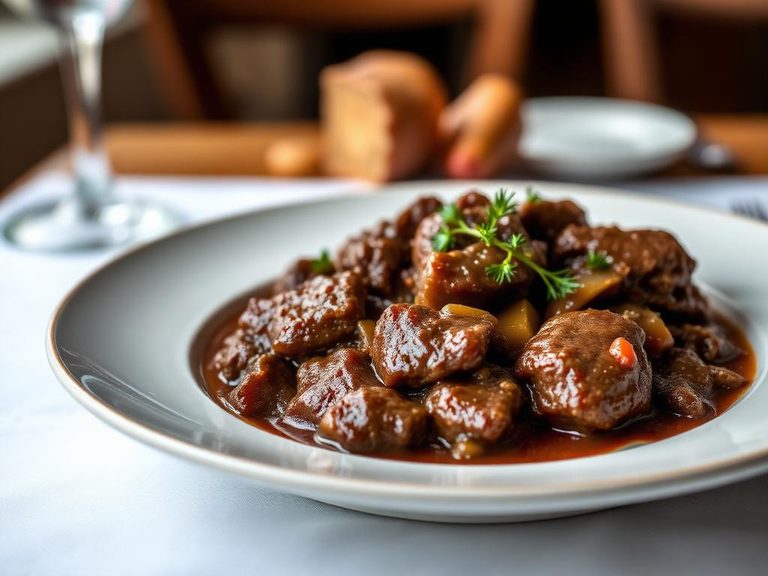
This is a lean, boneless cut from the chuck shoulder, slow-braised until it becomes fork-tender with a deep, beefy flavor. Its texture is soft and succulent, having broken down tough connective tissue into rich gelatin during the long cook. Nutritionally, it's a protein powerhouse, delivering over 30 grams per 100 grams with minimal fat.
Calorie split: 59% protein · 0% carbs · 41% fat
↓ Full nutrition💚 Why it's loved
People adore it for its profound, savory beef flavor that intensifies with slow cooking, and its melt-in-your-mouth texture when braised properly. It's a versatile staple in comfort food, capable of absorbing the flavors of its cooking liquid, from red wine to tomatoes.
⚠️ Watch-outs & how to enjoy it better
If undercooked, this cut can be tough and chewy due to its muscular structure. Those monitoring saturated fat intake should note it contributes to the 9.44g per 100g, though it's lean for a beef cut. To counteract toughness, always cook it low and slow (braising, stewing) and slice against the grain before serving.
Key benefits
- Excellent source of high-quality protein for muscle maintenance.
- Very low in carbohydrates and sugars.
- Rich in bioavailable iron and zinc.
- Contains collagen and gelatin from connective tissue.
🍽️ Popular dishes
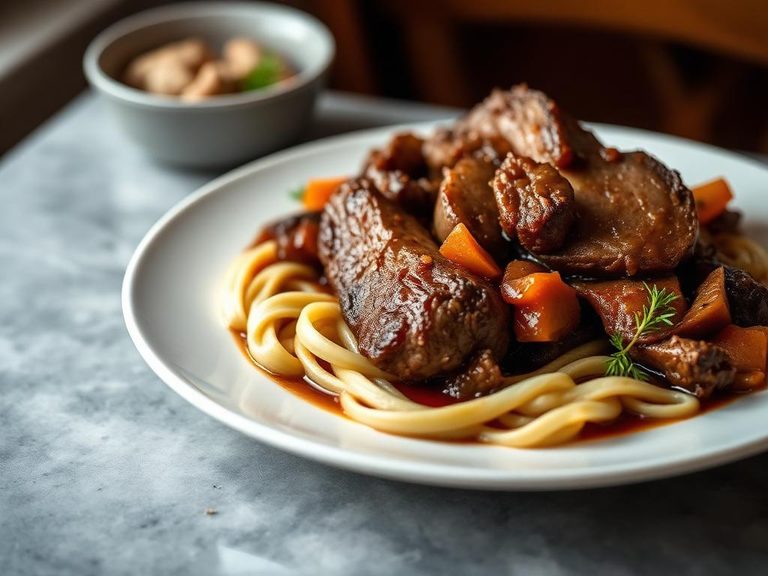
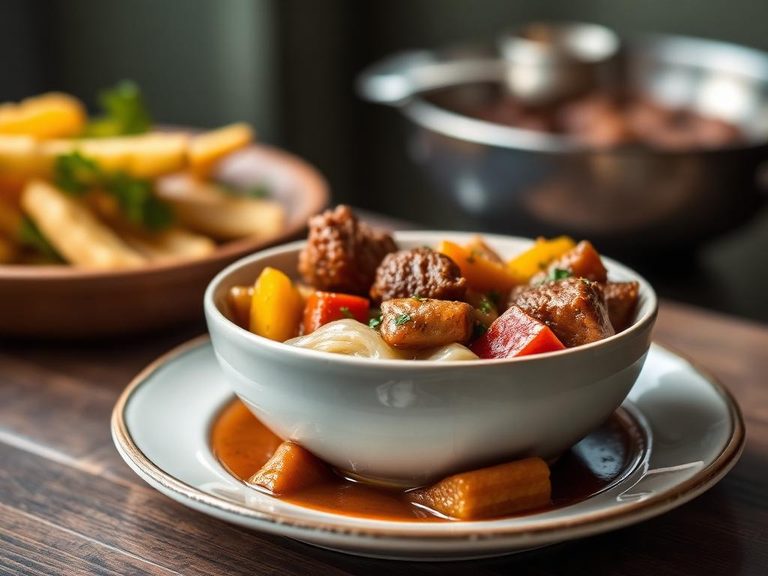
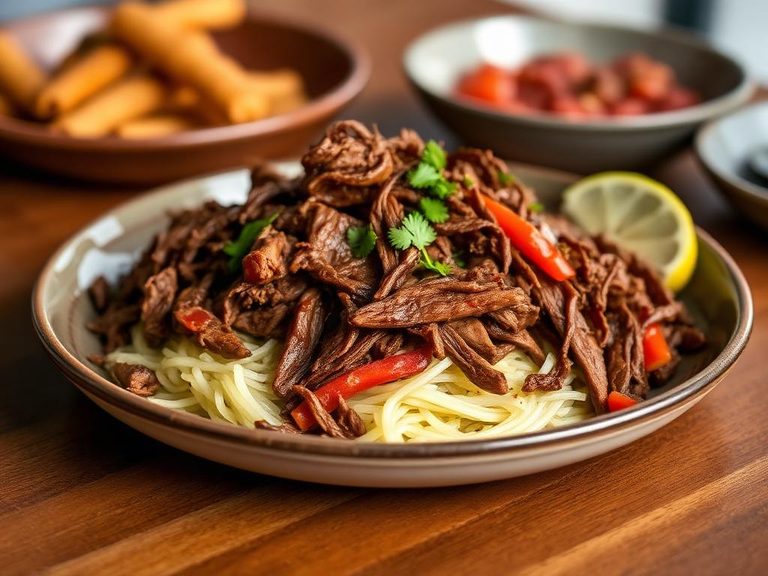
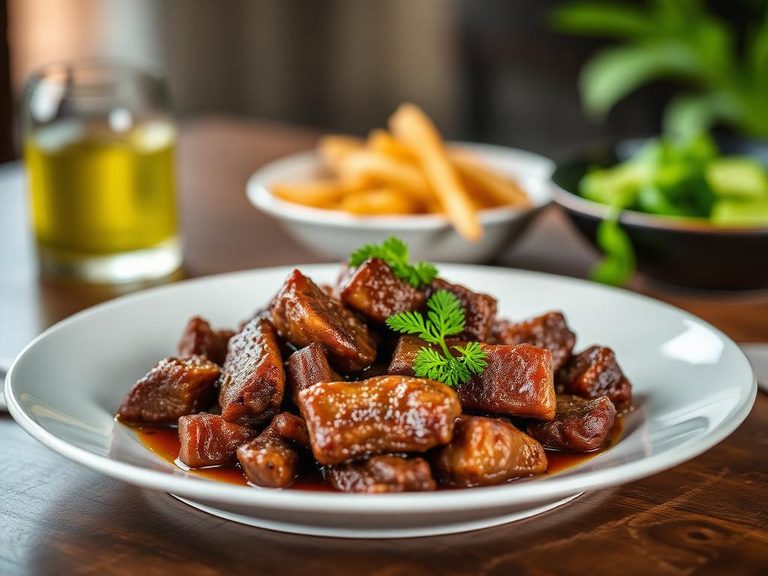
🌍 Where it's eaten
💡 Did you know?
The 'under blade' refers to its specific location beneath the scapula bone, making it a single, well-defined muscle that cooks uniformly when braised.
Full nutrition (USDA data · scales with serving)
| Water | 58.8 g |
| Energy | 216 kcal |
| Energy | 904 kj |
| Protein | 30.7 g |
| Total lipid (fat) | 9.4 g |
| Ash | 1.6 g |
| Carbohydrate, by difference | 0.00 g |
| Fiber, total dietary | 0.00 g |
| Total Sugars | 0.00 g |
| Calcium, Ca | 14.0 mg |
| Iron, Fe | 3.2 mg |
| Magnesium, Mg | 22.0 mg |
| Phosphorus, P | 204 mg |
| Potassium, K | 306 mg |
| Sodium, Na | 67.0 mg |
| Zinc, Zn | 11.5 mg |
| Copper, Cu | 0.11 mg |
| Manganese, Mn | 0.02 mg |
| Selenium, Se | 36.5 ug |
| Vitamin C, total ascorbic acid | 0.00 mg |
| Thiamin | 0.07 mg |
| Riboflavin | 0.24 mg |
| Niacin | 3.7 mg |
| Pantothenic acid | 0.75 mg |
| Vitamin B-6 | 0.32 mg |
| Folate, total | 7.0 ug |
| Folic acid | 0.00 ug |
| Folate, food | 7.0 ug |
| Folate, DFE | 7.0 ug |
| Choline, total | 99.8 mg |
| Betaine | 10.6 mg |
| Vitamin B-12 | 3.2 ug |
| Vitamin B-12, added | 0.00 ug |
| Vitamin A, RAE | 2.0 ug |
| Retinol | 2.0 ug |
| Carotene, beta | 0.00 ug |
| Carotene, alpha | 0.00 ug |
| Cryptoxanthin, beta | 0.00 ug |
| Vitamin A, IU | 8.0 iu |
| Lycopene | 0.00 ug |
| Lutein + zeaxanthin | 0.00 ug |
| Vitamin E (alpha-tocopherol) | 0.06 mg |
| Vitamin E, added | 0.00 mg |
| Vitamin D (D2 + D3), International Units | 4.0 iu |
| Vitamin D (D2 + D3) | 0.10 ug |
| Vitamin D3 (cholecalciferol) | 0.10 ug |
| Vitamin K (phylloquinone) | 1.6 ug |
| Alcohol, ethyl | 0.00 g |
| Caffeine | 0.00 mg |
| Theobromine | 0.00 mg |
Fat & fatty acid profile (per 100g)
| Fatty acids, total saturated | 3.5 g |
| SFA 4:0 | 0.00 g |
| SFA 6:0 | 0.00 g |
| SFA 8:0 | 0.00 g |
| SFA 10:0 | 0.00 g |
| SFA 12:0 | 0.00 g |
| SFA 14:0 | 0.22 g |
| SFA 16:0 | 2.0 g |
| SFA 17:0 | 0.10 g |
| SFA 18:0 | 1.2 g |
| SFA 20:0 | 0.01 g |
| SFA 24:0 | 0.01 g |
| Fatty acids, total monounsaturated | 4.2 g |
| MUFA 14:1 | 0.04 g |
| MUFA 16:1 | 0.29 g |
| MUFA 17:1 | 0.08 g |
| MUFA 18:1 | 3.7 g |
| MUFA 18:1 c | 3.3 g |
| MUFA 18:1-11 t (18:1t n-7) | 0.30 g |
| MUFA 20:1 | 0.02 g |
| MUFA 22:1 | 0.00 g |
| Fatty acids, total polyunsaturated | 0.52 g |
| PUFA 18:2 | 0.43 g |
| PUFA 18:2 n-6 c,c | 0.40 g |
| PUFA 18:2 CLAs | 0.03 g |
| PUFA 18:3 | 0.02 g |
| PUFA 18:3 n-3 c,c,c (ALA) | 0.02 g |
| PUFA 18:4 | 0.00 g |
| PUFA 20:2 n-6 c,c | 0.00 g |
| PUFA 20:4 | 0.06 g |
| PUFA 20:5 n-3 (EPA) | 0.00 g |
| PUFA 22:5 n-3 (DPA) | 0.00 g |
| PUFA 22:6 n-3 (DHA) | 0.00 g |
| Fatty acids, total trans | 0.42 g |
| Fatty acids, total trans-monoenoic | 0.42 g |
| TFA 18:1 t | 0.42 g |
| Cholesterol | 102 mg |
Amino acid profile (per 100g)
| Tryptophan | 0.35 g |
| Threonine | 1.4 g |
| Isoleucine | 1.3 g |
| Leucine | 2.5 g |
| Lysine | 2.8 g |
| Methionine | 0.90 g |
| Cystine | 0.33 g |
| Phenylalanine | 1.2 g |
| Tyrosine | 1.1 g |
| Valine | 1.4 g |
| Arginine | 2.1 g |
| Histidine | 1.0 g |
| Alanine | 1.8 g |
| Aspartic acid | 2.8 g |
| Glutamic acid | 5.0 g |
| Glycine | 1.4 g |
| Proline | 1.3 g |
| Serine | 1.2 g |
| Hydroxyproline | 0.15 g |
FAQ
What's the best cooking method for this cut?
Braising is ideal. Sear it first, then cook slowly in liquid (like broth or wine) at a low temperature (around 325°F/160°C) for 2-3 hours until fork-tender.
How is this different from a chuck roast?
This is a specific, boneless, lean-trimmed portion from the chuck. A standard chuck roast may include more fat, connective tissue, and bone, requiring similar long cooking but yielding a different texture.
Can I cook it quickly?
Not without sacrificing tenderness. Quick, high-heat methods like grilling will make it very tough. For a faster option, consider using a pressure cooker or Instant Pot.
Nutrient density (calculated · NRF9.3)
Nutrient Rich Foods index: beneficial nutrients (protein, fiber, vitamins, minerals) minus saturated fat, added sugar & sodium, per 100 kcal.
NRF9.3 index — Fulgoni, Keast & Drewnowski, 2009. Computed from USDA nutrients.
Weight-loss friendliness (composite index)
Energy density 2.16 kcal/g · 57% calories from protein · 0.0 g fiber · 0.0 g sugar per 100 g.
Composite of energy density (Rolls et al., 1999), protein & fiber satiety, minus sugar. A calculated heuristic — ranks satiety-per-calorie, not a clinical measure.
Dietary load (calculated from USDA values)
Potential renal acid load. Positive = acid-forming, negative = alkaline-forming.
Sodium-to-potassium ratio: 0.22 (lower is better — aim for ≤ 1)
Sodium:potassium per WHO potassium guidance. Computed from USDA nutrients.