

Beef, chuck, short ribs, boneless, separable lean and fat, trimmed to 0" fat, select, cooked, braised
Whole food · Beef Products
This is a premium cut of beef from the chuck, specifically boneless short ribs, where the meat has been trimmed of all external fat before slow braising. The braising process transforms it into a luxuriously tender, deeply savory morsel where the lean meat and intramuscular fat have melded into a rich, gelatinous texture. Nutritionally, it's a powerhouse of high-quality protein and energy-dense fats, with virtually no carbohydrates.
Calorie split: 36% protein · 0% carbs · 64% fat
↓ Full nutrition💚 Why it's loved
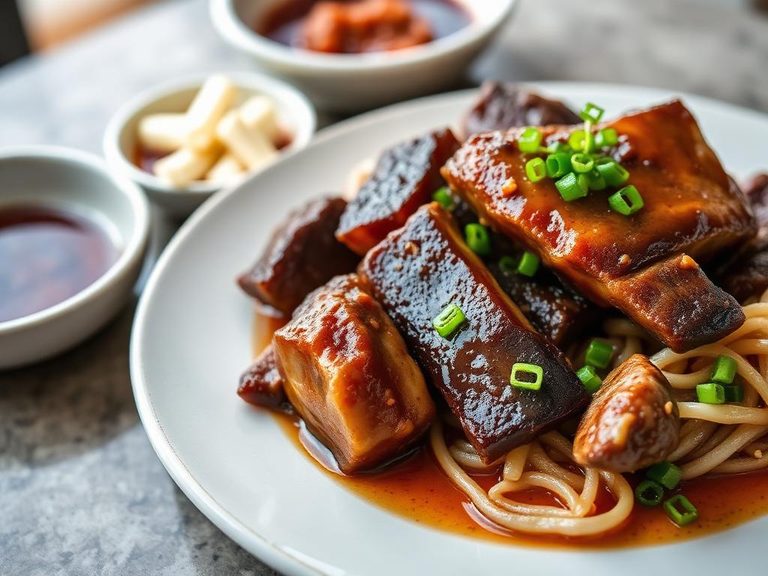
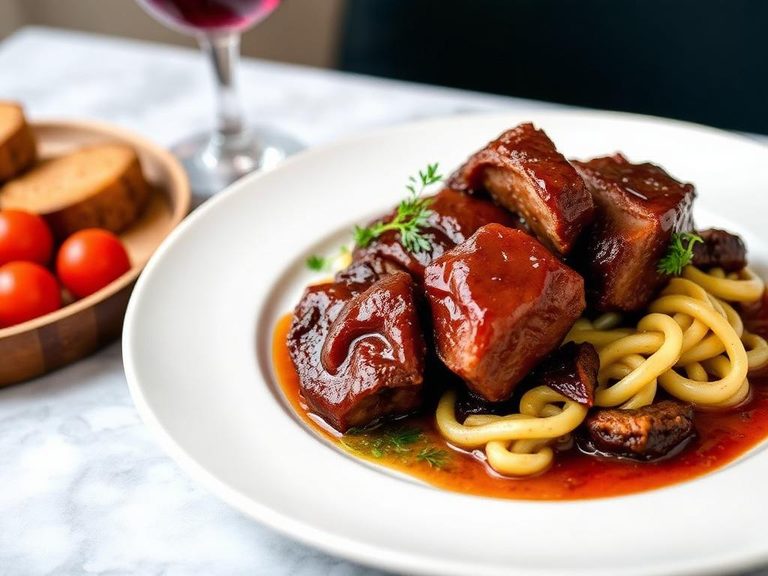
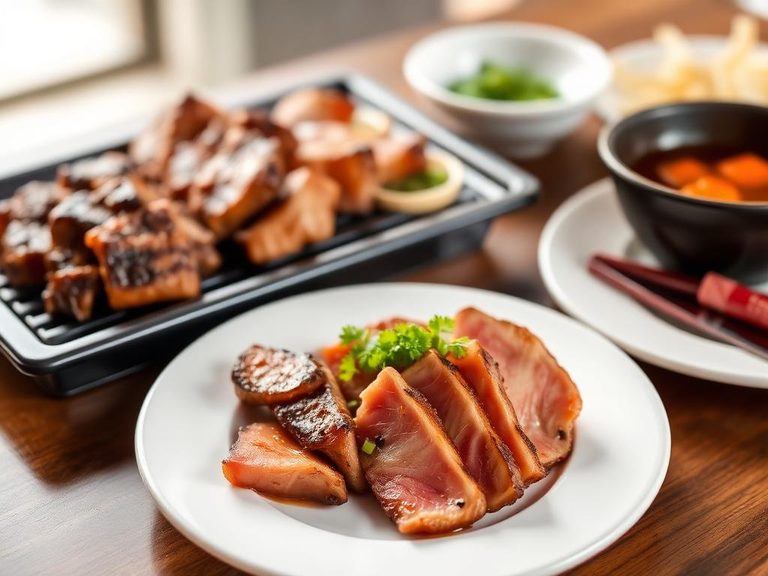
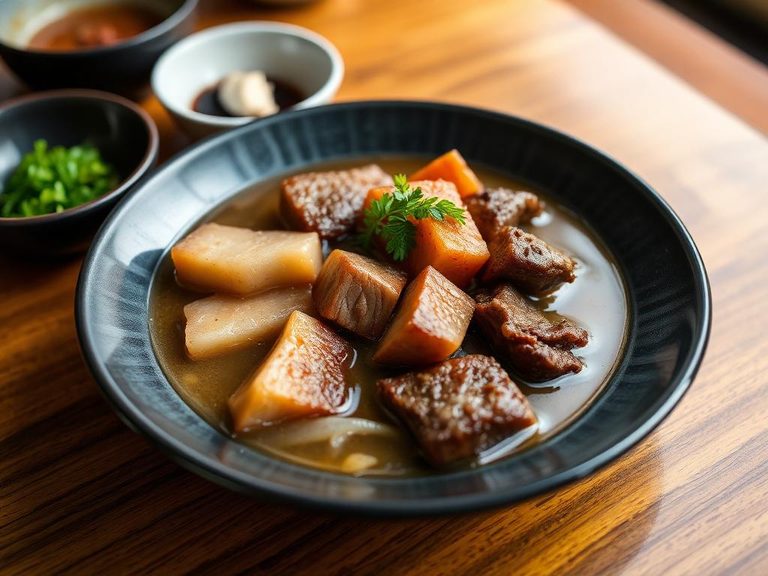
People adore it for its profound, beefy flavor and melt-in-your-mouth tenderness achieved through slow cooking, which renders the intramuscular fat and connective tissue into pure succulence. It's a versatile centerpiece for comfort foods, from Korean BBQ to hearty Western stews, symbolizing indulgence and care in cooking.
⚠️ Watch-outs & how to enjoy it better
Its high fat and calorie density may be a concern for those monitoring caloric or fat intake. To enjoy it mindfully, practice portion control and pair it with large servings of non-starchy vegetables (like roasted broccoli or a vinegar-based slaw) to add fiber and volume, creating a more balanced meal. Those with specific dietary restrictions for saturated fat should consider it an occasional treat.
Key benefits
- Excellent source of complete protein (25.8g per 100g)
- Rich in bioavailable iron and zinc
- Provides energy-dense fats (20.4g per 100g)
- Contains collagen from connective tissue, beneficial for joints
- Zero carbohydrates, suitable for ketogenic diets
🍽️ Popular dishes
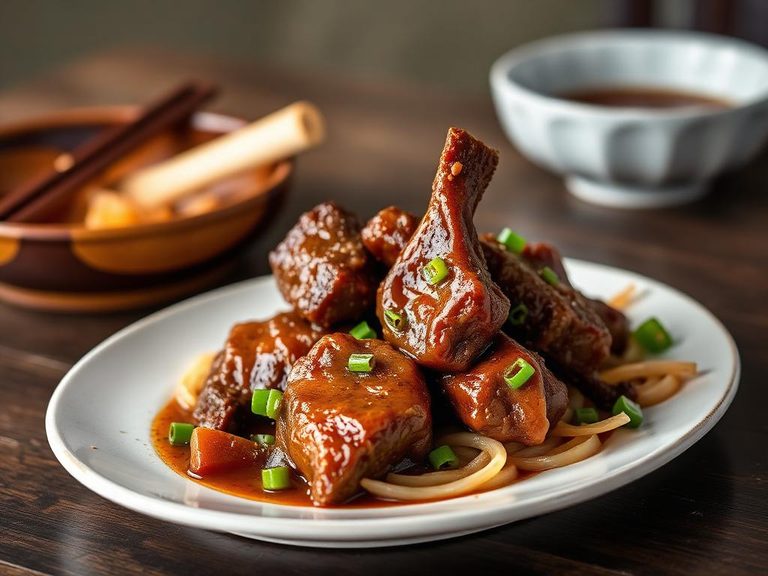
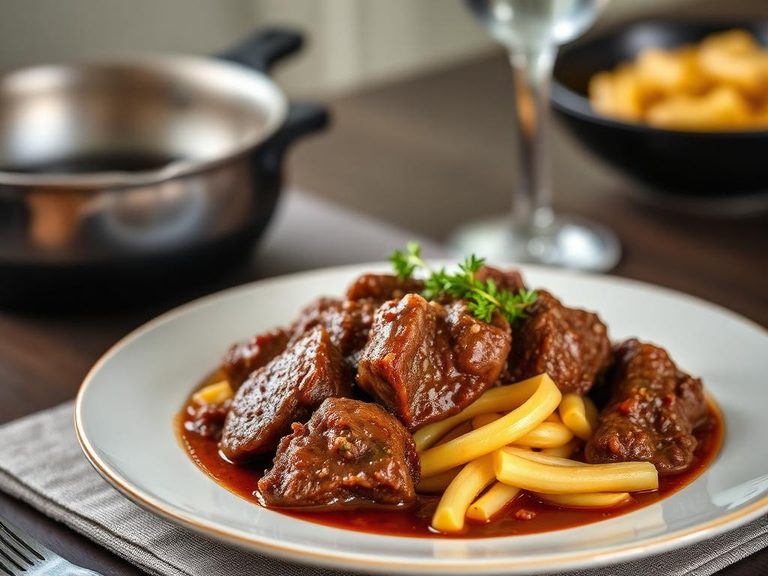
🌍 Where it's eaten
💡 Did you know?
The term 'short' in short ribs doesn't refer to the size of the meat, but to the length of the rib bone itself, which is shorter than the bones used for prime rib or ribeye steaks.
Full nutrition (USDA data · scales with serving)
| Water | 54.0 g |
| Energy | 287 kcal |
| Energy | 1199 kj |
| Protein | 25.8 g |
| Total lipid (fat) | 20.4 g |
| Ash | 0.84 g |
| Carbohydrate, by difference | 0.00 g |
| Fiber, total dietary | 0.00 g |
| Total Sugars | 0.00 g |
| Calcium, Ca | 14.0 mg |
| Iron, Fe | 2.8 mg |
| Magnesium, Mg | 21.0 mg |
| Phosphorus, P | 180 mg |
| Potassium, K | 269 mg |
| Sodium, Na | 71.0 mg |
| Zinc, Zn | 10.2 mg |
| Copper, Cu | 0.10 mg |
| Manganese, Mn | 0.01 mg |
| Selenium, Se | 31.9 ug |
| Vitamin C, total ascorbic acid | 0.00 mg |
| Thiamin | 0.09 mg |
| Riboflavin | 0.24 mg |
| Niacin | 3.5 mg |
| Pantothenic acid | 0.79 mg |
| Vitamin B-6 | 0.31 mg |
| Folate, total | 6.0 ug |
| Folic acid | 0.00 ug |
| Folate, food | 6.0 ug |
| Folate, DFE | 6.0 ug |
| Choline, total | 93.0 mg |
| Betaine | 13.9 mg |
| Vitamin B-12 | 3.3 ug |
| Vitamin B-12, added | 0.00 ug |
| Vitamin A, RAE | 8.0 ug |
| Retinol | 8.0 ug |
| Carotene, beta | 0.00 ug |
| Carotene, alpha | 0.00 ug |
| Cryptoxanthin, beta | 0.00 ug |
| Vitamin A, IU | 27.0 iu |
| Lycopene | 0.00 ug |
| Lutein + zeaxanthin | 0.00 ug |
| Vitamin E (alpha-tocopherol) | 0.06 mg |
| Vitamin E, added | 0.00 mg |
| Vitamin D (D2 + D3), International Units | 5.0 iu |
| Vitamin D (D2 + D3) | 0.10 ug |
| Vitamin D3 (cholecalciferol) | 0.10 ug |
| Vitamin K (phylloquinone) | 1.6 ug |
| Alcohol, ethyl | 0.00 g |
| Caffeine | 0.00 mg |
| Theobromine | 0.00 mg |
Fat & fatty acid profile (per 100g)
| Fatty acids, total saturated | 9.1 g |
| SFA 4:0 | 0.00 g |
| SFA 6:0 | 0.00 g |
| SFA 8:0 | 0.00 g |
| SFA 10:0 | 0.00 g |
| SFA 12:0 | 0.00 g |
| SFA 14:0 | 0.62 g |
| SFA 16:0 | 5.0 g |
| SFA 17:0 | 0.27 g |
| SFA 18:0 | 3.3 g |
| SFA 20:0 | 0.02 g |
| SFA 24:0 | 0.01 g |
| Fatty acids, total monounsaturated | 10.2 g |
| MUFA 14:1 | 0.12 g |
| MUFA 16:1 | 0.63 g |
| MUFA 16:1 c | 0.63 g |
| MUFA 17:1 | 0.17 g |
| MUFA 18:1 | 9.2 g |
| MUFA 18:1 c | 7.9 g |
| MUFA 18:1-11 t (18:1t n-7) | 0.56 g |
| MUFA 20:1 | 0.05 g |
| MUFA 22:1 | 0.00 g |
| Fatty acids, total polyunsaturated | 0.92 g |
| PUFA 18:2 | 0.82 g |
| PUFA 18:2 n-6 c,c | 0.72 g |
| PUFA 18:2 CLAs | 0.10 g |
| PUFA 18:3 | 0.04 g |
| PUFA 18:3 n-3 c,c,c (ALA) | 0.04 g |
| PUFA 18:4 | 0.00 g |
| PUFA 20:2 n-6 c,c | 0.01 g |
| PUFA 20:4 | 0.05 g |
| PUFA 20:5 n-3 (EPA) | 0.00 g |
| PUFA 22:5 n-3 (DPA) | 0.00 g |
| PUFA 22:6 n-3 (DHA) | 0.00 g |
| Fatty acids, total trans | 1.3 g |
| Fatty acids, total trans-monoenoic | 1.3 g |
| TFA 18:1 t | 1.3 g |
| Cholesterol | 104 mg |
Amino acid profile (per 100g)
| Tryptophan | 0.29 g |
| Threonine | 1.1 g |
| Isoleucine | 1.1 g |
| Leucine | 2.1 g |
| Lysine | 2.3 g |
| Methionine | 0.73 g |
| Cystine | 0.27 g |
| Phenylalanine | 0.98 g |
| Tyrosine | 0.89 g |
| Valine | 1.2 g |
| Arginine | 1.7 g |
| Histidine | 0.84 g |
| Alanine | 1.5 g |
| Aspartic acid | 2.3 g |
| Glutamic acid | 4.1 g |
| Glycine | 1.2 g |
| Proline | 1.1 g |
| Serine | 0.99 g |
| Hydroxyproline | 0.18 g |
FAQ
How is boneless short rib different from bone-in?
Boneless short ribs are cut from the rib section and then the bone is removed, leaving a block of meat with rich marbling. The bone adds flavor during cooking but the boneless cut is easier to eat and portion.
Why is braising the recommended cooking method?
Braising (slow cooking in liquid) is ideal because it breaks down the tough connective tissue (collagen) in this cut into gelatin, resulting in incredibly tender, juicy meat. Dry-heat methods can make it tough.
What does 'trimmed to 0' fat mean?
It means all visible external fat has been removed before cooking. The 20.38g of fat per 100g is primarily intramuscular fat (marbling) and fat rendered from connective tissue during braising, not added fat.
Nutrient density (calculated · NRF9.3)
Nutrient Rich Foods index: beneficial nutrients (protein, fiber, vitamins, minerals) minus saturated fat, added sugar & sodium, per 100 kcal.
NRF9.3 index — Fulgoni, Keast & Drewnowski, 2009. Computed from USDA nutrients.
Weight-loss friendliness (composite index)
Energy density 2.87 kcal/g · 36% calories from protein · 0.0 g fiber · 0.0 g sugar per 100 g.
Composite of energy density (Rolls et al., 1999), protein & fiber satiety, minus sugar. A calculated heuristic — ranks satiety-per-calorie, not a clinical measure.
Dietary load (calculated from USDA values)
Potential renal acid load. Positive = acid-forming, negative = alkaline-forming.
Sodium-to-potassium ratio: 0.26 (lower is better — aim for ≤ 1)
Sodium:potassium per WHO potassium guidance. Computed from USDA nutrients.