

Beef, chuck eye Country-Style ribs, boneless, separable lean only, trimmed to 0" fat, choice, cooked, braised
Whole food · Beef Products

Photo: Wikipedia
This cut is the boneless, lean-only portion of the beef chuck eye, slow-braised to a tender, fork-shredding consistency. Its flavor is deeply beefy and rich, with a clean, meaty texture devoid of connective tissue. Nutritionally, it's a powerhouse, delivering a substantial 30.95g of protein per 100g with zero carbohydrates.
Calorie split: 53% protein · 0% carbs · 47% fat
↓ Full nutrition💚 Why it's loved
People love it for its intense, concentrated beef flavor and melt-in-your-mouth tenderness achieved through slow cooking. It's a versatile canvas for bold seasonings and sauces, from tangy barbecue to savory red wine reductions.
⚠️ Watch-outs & how to enjoy it better
As a lean cut, it can become dry and tough if overcooked or prepared with high-heat methods. To counteract this, always use moist-heat cooking like braising or stewing, and consider adding a small amount of fat (like oil or butter) during the final stages to enhance mouthfeel. Individuals monitoring saturated fat intake should practice portion control.
Key benefits
- Excellent source of complete protein for muscle maintenance and repair.
- Provides essential minerals like iron (heme iron for absorption) and zinc.
- Contains B vitamins, particularly B12, crucial for nerve function.
- Zero carbohydrates makes it suitable for ketogenic and low-carb diets.
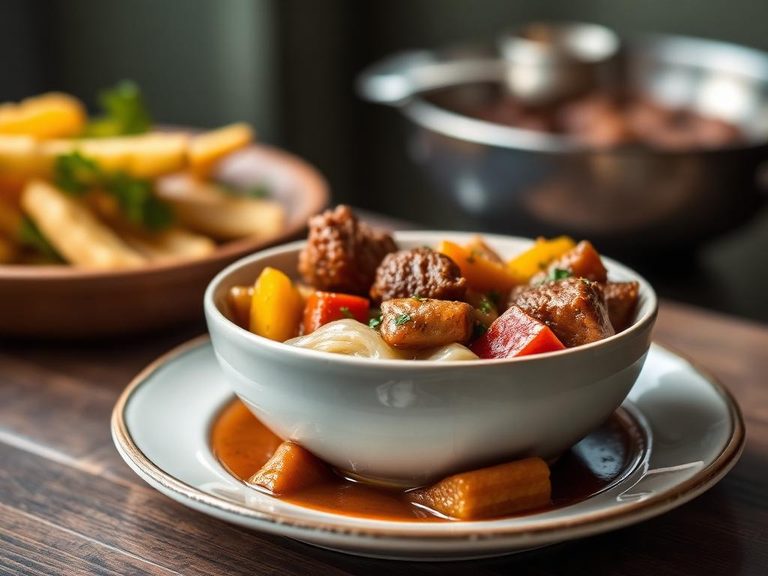
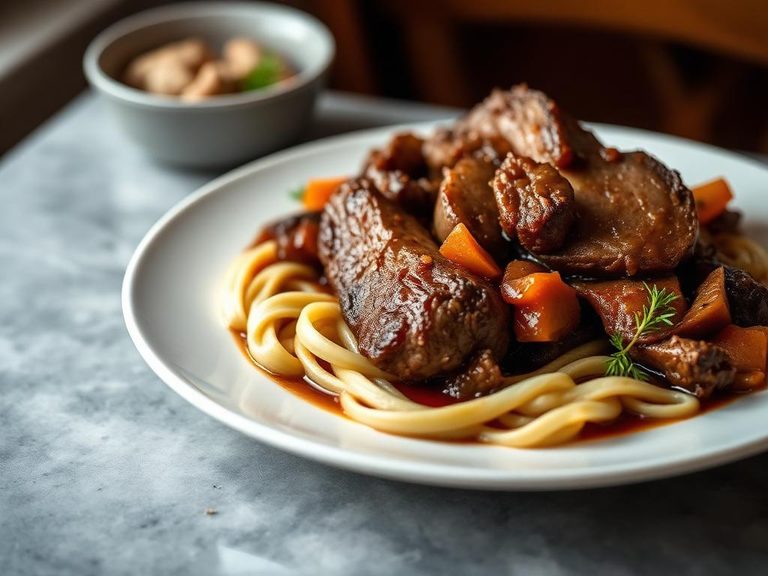
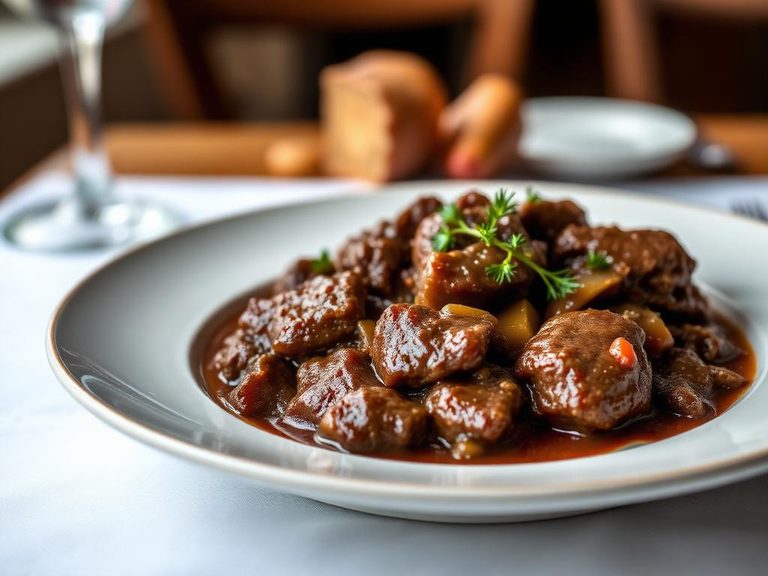
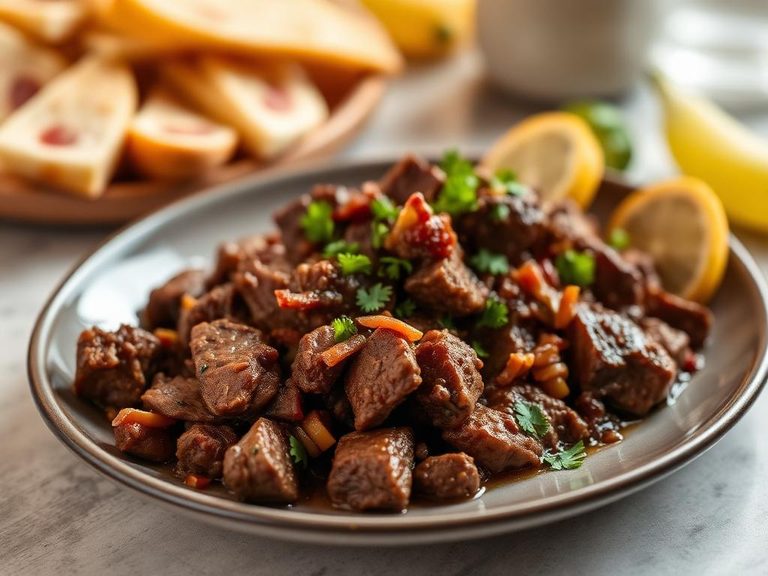
🍽️ Popular dishes
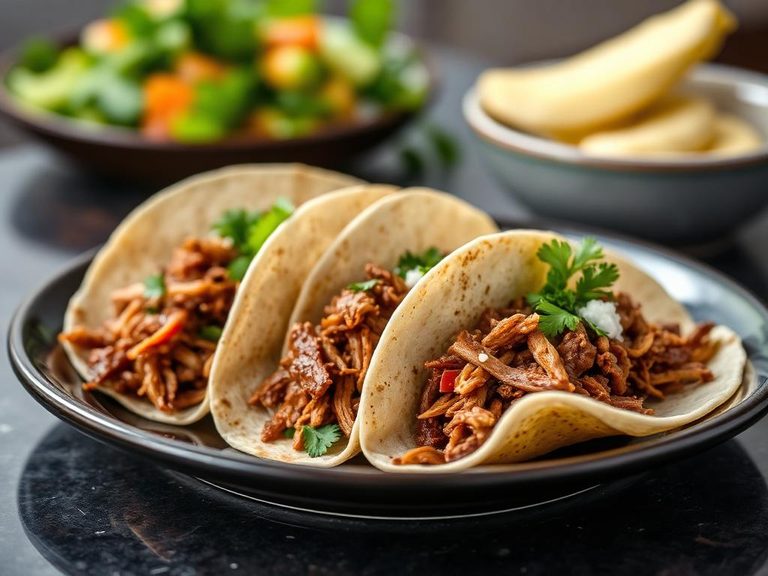
🌍 Where it's eaten
💡 Did you know?
The 'chuck eye' is sometimes called the 'poor man's ribeye' because it comes from the same muscle (the longissimus dorsi) as the premium ribeye steak, just from the shoulder end.
Full nutrition (USDA data · scales with serving)
| Water | 56.6 g |
| Energy | 234 kcal |
| Energy | 978 kj |
| Protein | 30.9 g |
| Total lipid (fat) | 12.2 g |
| Ash | 1.1 g |
| Carbohydrate, by difference | 0.00 g |
| Fiber, total dietary | 0.00 g |
| Total Sugars | 0.00 g |
| Calcium, Ca | 17.0 mg |
| Iron, Fe | 3.0 mg |
| Magnesium, Mg | 18.0 mg |
| Phosphorus, P | 200 mg |
| Potassium, K | 279 mg |
| Sodium, Na | 69.0 mg |
| Zinc, Zn | 11.0 mg |
| Copper, Cu | 0.11 mg |
| Manganese, Mn | 0.02 mg |
| Selenium, Se | 36.4 ug |
| Vitamin C, total ascorbic acid | 0.00 mg |
| Thiamin | 0.07 mg |
| Riboflavin | 0.24 mg |
| Niacin | 4.1 mg |
| Pantothenic acid | 0.74 mg |
| Vitamin B-6 | 0.29 mg |
| Folate, total | 8.0 ug |
| Folic acid | 0.00 ug |
| Folate, food | 8.0 ug |
| Folate, DFE | 8.0 ug |
| Choline, total | 104 mg |
| Betaine | 19.4 mg |
| Vitamin B-12 | 3.5 ug |
| Vitamin B-12, added | 0.00 ug |
| Vitamin A, RAE | 2.0 ug |
| Retinol | 2.0 ug |
| Carotene, beta | 0.00 ug |
| Carotene, alpha | 0.00 ug |
| Cryptoxanthin, beta | 0.00 ug |
| Vitamin A, IU | 5.0 iu |
| Lycopene | 0.00 ug |
| Lutein + zeaxanthin | 0.00 ug |
| Vitamin E (alpha-tocopherol) | 0.12 mg |
| Vitamin E, added | 0.00 mg |
| Vitamin D (D2 + D3), International Units | 6.0 iu |
| Vitamin D (D2 + D3) | 0.20 ug |
| Vitamin D3 (cholecalciferol) | 0.20 ug |
| Vitamin K (phylloquinone) | 1.6 ug |
| Alcohol, ethyl | 0.00 g |
| Caffeine | 0.00 mg |
| Theobromine | 0.00 mg |
Fat & fatty acid profile (per 100g)
| Fatty acids, total saturated | 5.4 g |
| SFA 4:0 | 0.00 g |
| SFA 6:0 | 0.00 g |
| SFA 8:0 | 0.00 g |
| SFA 10:0 | 0.00 g |
| SFA 12:0 | 0.00 g |
| SFA 14:0 | 0.32 g |
| SFA 16:0 | 2.9 g |
| SFA 17:0 | 0.16 g |
| SFA 18:0 | 1.9 g |
| SFA 20:0 | 0.01 g |
| SFA 24:0 | 0.01 g |
| Fatty acids, total monounsaturated | 6.2 g |
| MUFA 14:1 | 0.06 g |
| MUFA 16:1 | 0.40 g |
| MUFA 17:1 | 0.11 g |
| MUFA 18:1 | 5.6 g |
| MUFA 18:1 c | 5.0 g |
| MUFA 18:1-11 t (18:1t n-7) | 0.45 g |
| MUFA 20:1 | 0.03 g |
| MUFA 22:1 | 0.00 g |
| Fatty acids, total polyunsaturated | 0.55 g |
| PUFA 18:2 | 0.48 g |
| PUFA 18:2 n-6 c,c | 0.43 g |
| PUFA 18:2 CLAs | 0.05 g |
| PUFA 18:3 | 0.02 g |
| PUFA 18:3 n-3 c,c,c (ALA) | 0.02 g |
| PUFA 18:4 | 0.00 g |
| PUFA 20:2 n-6 c,c | 0.00 g |
| PUFA 20:4 | 0.04 g |
| PUFA 20:5 n-3 (EPA) | 0.00 g |
| PUFA 22:5 n-3 (DPA) | 0.00 g |
| PUFA 22:6 n-3 (DHA) | 0.00 g |
| Fatty acids, total trans | 0.63 g |
| Fatty acids, total trans-monoenoic | 0.63 g |
| TFA 18:1 t | 0.63 g |
| Cholesterol | 100 mg |
Amino acid profile (per 100g)
| Tryptophan | 0.35 g |
| Threonine | 1.4 g |
| Isoleucine | 1.4 g |
| Leucine | 2.6 g |
| Lysine | 2.8 g |
| Methionine | 0.90 g |
| Cystine | 0.33 g |
| Phenylalanine | 1.2 g |
| Tyrosine | 1.1 g |
| Valine | 1.4 g |
| Arginine | 2.1 g |
| Histidine | 1.0 g |
| Alanine | 1.8 g |
| Aspartic acid | 2.8 g |
| Glutamic acid | 5.0 g |
| Glycine | 1.4 g |
| Proline | 1.3 g |
| Serine | 1.2 g |
| Hydroxyproline | 0.16 g |
FAQ
What's the best way to cook this cut to keep it tender?
Moist-heat methods are ideal. Braise it slowly in liquid (like broth, wine, or tomatoes) at a low temperature (around 300°F/150°C) for several hours until it's fork-tender.
Is this the same as a chuck roast?
It's a specific, leaner portion of the chuck roast. A chuck roast may include more fat and connective tissue, while this is the separable lean only, trimmed to 0" fat.
How does it differ from other braising cuts?
Compared to cuts like short ribs or brisket, it has less intramuscular fat and connective tissue, meaning it cooks faster but requires careful attention to avoid drying out.
Nutrient density (calculated · NRF9.3)
Nutrient Rich Foods index: beneficial nutrients (protein, fiber, vitamins, minerals) minus saturated fat, added sugar & sodium, per 100 kcal.
NRF9.3 index — Fulgoni, Keast & Drewnowski, 2009. Computed from USDA nutrients.
Weight-loss friendliness (composite index)
Energy density 2.34 kcal/g · 53% calories from protein · 0.0 g fiber · 0.0 g sugar per 100 g.
Composite of energy density (Rolls et al., 1999), protein & fiber satiety, minus sugar. A calculated heuristic — ranks satiety-per-calorie, not a clinical measure.
Dietary load (calculated from USDA values)
Potential renal acid load. Positive = acid-forming, negative = alkaline-forming.
Sodium-to-potassium ratio: 0.25 (lower is better — aim for ≤ 1)
Sodium:potassium per WHO potassium guidance. Computed from USDA nutrients.