

Babyfood, dinner, macaroni and cheese, strained
Whole food · Baby Foods

Photo: Wikipedia
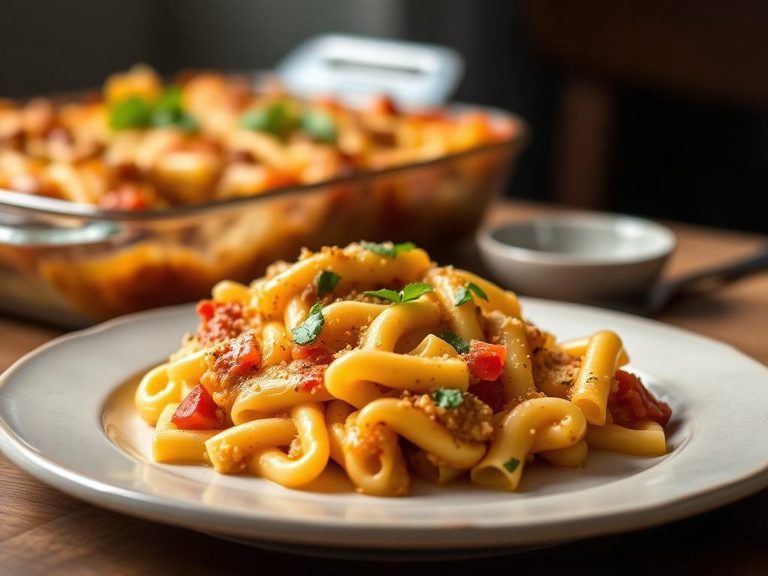
This is a smooth, velvety strained puree of macaroni pasta and mild cheddar cheese, designed for infants transitioning to solids. Its texture is uniformly soft and easily swallowable, with a creamy, subtly cheesy flavor that's gentle on developing palates. Nutritionally, it offers a modest 67 kcal per 100g, with a balanced mix of carbs for energy and a touch of protein and fat.
Calorie split: 19% protein · 53% carbs · 28% fat
↓ Full nutrition💚 Why it's loved
Parents love it for its familiar, comforting taste that often makes mealtime easier, and its smooth consistency is perfect for babies just starting solids. It's a trusted staple that bridges the gap between purees and more textured foods.
⚠️ Watch-outs & how to enjoy it better
As a processed baby food, it may contain added sodium or preservatives not ideal for very young kidneys. The high carbohydrate content can cause rapid blood sugar spikes if not paired with other foods. To counteract, serve small portions alongside a source of protein (like mashed beans) or fat (like avocado) to slow digestion and add nutritional variety.
Key benefits
- Provides a gentle introduction to classic comfort food flavors.
- Smooth texture supports early chewing and swallowing development.
- Offers a balanced, low-calorie meal base with carbs, protein, and fat.
- Convenient, ready-to-serve option for busy caregivers.
🍽️ Popular dishes
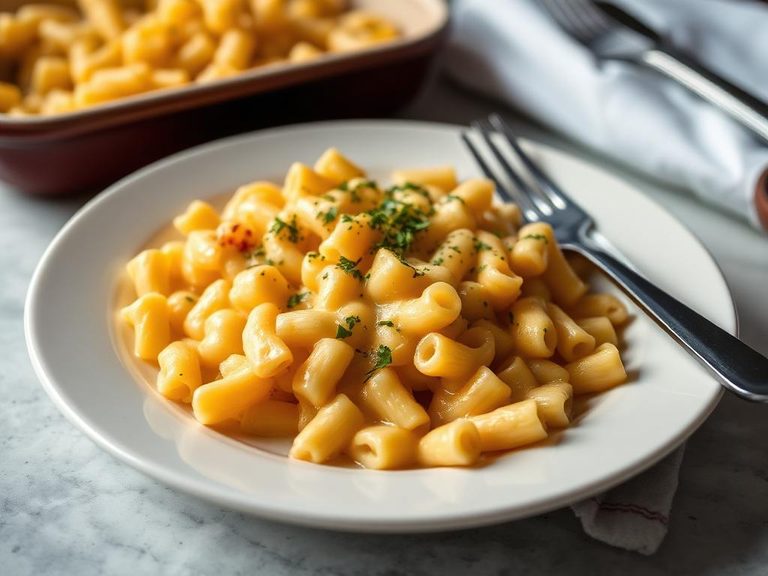
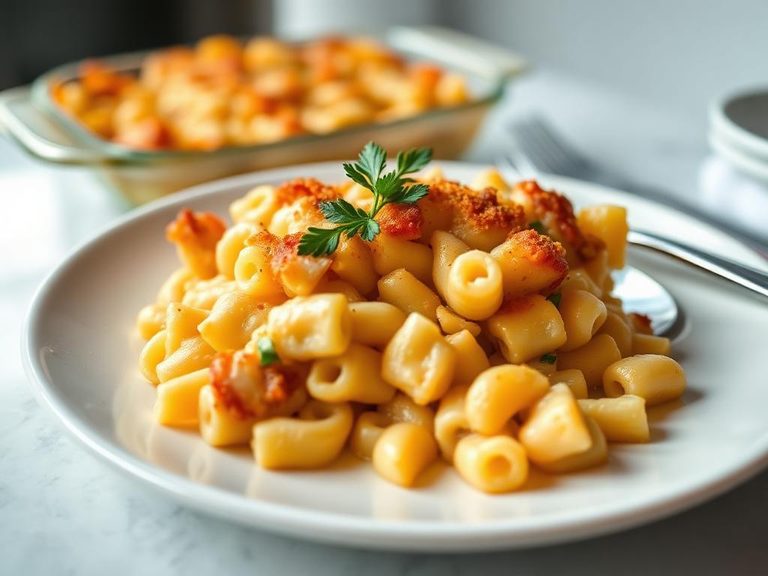
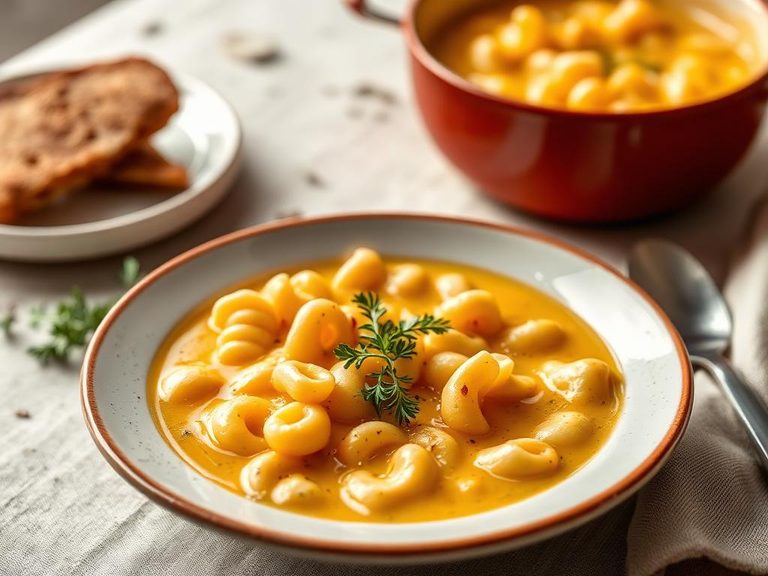
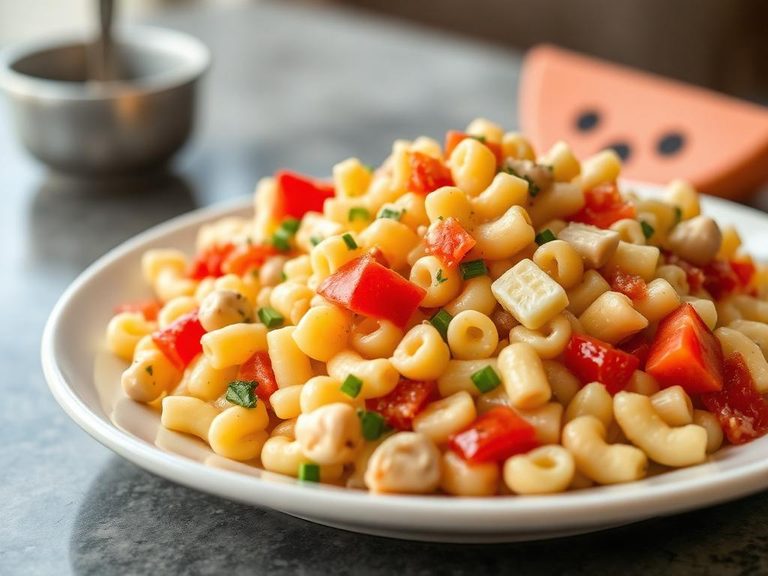
🌍 Where it's eaten
💡 Did you know?
The concept of combining pasta and cheese dates back to 14th-century Italy, but the specific dish we know as 'macaroni and cheese' was popularized in North America by Kraft in the 1930s as a convenient boxed meal.
Full nutrition (USDA data · scales with serving)
| Water | 85.3 g |
| Energy | 67.0 kcal |
| Energy | 280 kj |
| Protein | 3.1 g |
| Total lipid (fat) | 2.1 g |
| Ash | 0.55 g |
| Carbohydrate, by difference | 8.9 g |
| Fiber, total dietary | 0.70 g |
| Total Sugars | 1.3 g |
| Sucrose | 0.07 g |
| Glucose | 0.10 g |
| Fructose | 0.00 g |
| Lactose | 0.50 g |
| Maltose | 0.60 g |
| Starch | 1.4 g |
| Calcium, Ca | 66.0 mg |
| Iron, Fe | 0.21 mg |
| Magnesium, Mg | 8.0 mg |
| Phosphorus, P | 86.0 mg |
| Potassium, K | 67.0 mg |
| Sodium, Na | 88.0 mg |
| Zinc, Zn | 0.40 mg |
| Copper, Cu | 0.02 mg |
| Manganese, Mn | 0.09 mg |
| Selenium, Se | 3.8 ug |
| Fluoride, F | 65.6 ug |
| Vitamin C, total ascorbic acid | 0.10 mg |
| Thiamin | 0.04 mg |
| Riboflavin | 0.08 mg |
| Niacin | 0.52 mg |
| Pantothenic acid | 0.18 mg |
| Vitamin B-6 | 0.04 mg |
| Folate, total | 11.0 ug |
| Folic acid | 6.0 ug |
| Folate, food | 5.0 ug |
| Folate, DFE | 15.0 ug |
| Choline, total | 10.5 mg |
| Betaine | 3.8 mg |
| Vitamin B-12 | 0.27 ug |
| Vitamin B-12, added | 0.00 ug |
| Vitamin A, RAE | 15.0 ug |
| Retinol | 14.0 ug |
| Carotene, beta | 5.0 ug |
| Carotene, alpha | 0.00 ug |
| Cryptoxanthin, beta | 0.00 ug |
| Vitamin A, IU | 56.0 iu |
| Lycopene | 0.00 ug |
| Lutein + zeaxanthin | 0.00 ug |
| Vitamin E (alpha-tocopherol) | 0.02 mg |
| Vitamin E, added | 0.00 mg |
| Vitamin D (D2 + D3), International Units | 2.0 iu |
| Vitamin D (D2 + D3) | 0.00 ug |
| Vitamin K (phylloquinone) | 0.20 ug |
| Alcohol, ethyl | 0.00 g |
| Caffeine | 0.00 mg |
| Theobromine | 0.00 mg |
Fat & fatty acid profile (per 100g)
| Fatty acids, total saturated | 1.3 g |
| SFA 4:0 | 0.06 g |
| SFA 6:0 | 0.03 g |
| SFA 8:0 | 0.02 g |
| SFA 10:0 | 0.04 g |
| SFA 12:0 | 0.03 g |
| SFA 13:0 | 0.00 g |
| SFA 14:0 | 0.20 g |
| SFA 15:0 | 0.00 g |
| SFA 16:0 | 0.61 g |
| SFA 17:0 | 0.00 g |
| SFA 18:0 | 0.24 g |
| SFA 20:0 | 0.00 g |
| SFA 22:0 | 0.00 g |
| SFA 24:0 | 0.00 g |
| Fatty acids, total monounsaturated | 0.58 g |
| MUFA 14:1 | 0.00 g |
| MUFA 15:1 | 0.00 g |
| MUFA 16:1 | 0.06 g |
| MUFA 17:1 | 0.00 g |
| MUFA 18:1 | 0.49 g |
| MUFA 20:1 | 0.00 g |
| MUFA 22:1 | 0.00 g |
| MUFA 24:1 c | 0.00 g |
| Fatty acids, total polyunsaturated | 0.10 g |
| PUFA 18:2 | 0.07 g |
| PUFA 18:3 | 0.03 g |
| PUFA 18:4 | 0.00 g |
| PUFA 20:2 n-6 c,c | 0.00 g |
| PUFA 20:3 | 0.00 g |
| PUFA 20:4 | 0.00 g |
| PUFA 20:5 n-3 (EPA) | 0.00 g |
| PUFA 22:5 n-3 (DPA) | 0.00 g |
| PUFA 22:6 n-3 (DHA) | 0.00 g |
| Fatty acids, total trans | 0.00 g |
| Cholesterol | 7.0 mg |
Amino acid profile (per 100g)
Estimated from Babyfood, grape juice, no sugar, canned — USDA does not publish this profile for Babyfood.
| Threonine | 0.02 g |
| Isoleucine | 0.01 g |
| Leucine | 0.02 g |
| Lysine | 0.02 g |
| Methionine | 0.03 g |
| Cystine | 0.01 g |
| Phenylalanine | 0.02 g |
| Tyrosine | 0.02 g |
| Valine | 0.02 g |
| Arginine | 0.06 g |
| Histidine | 0.03 g |
| Alanine | 0.04 g |
| Aspartic acid | 0.10 g |
| Glutamic acid | 0.18 g |
| Glycine | 0.03 g |
| Proline | 0.03 g |
| Serine | 0.04 g |
FAQ
Is this the same as homemade mac and cheese?
No, this is a specifically formulated, strained puree for infants. It has a much smoother, thinner texture and a milder flavor profile than typical homemade or boxed versions, which are chunkier and often richer in cheese and sodium.
Can I mix it with other baby foods?
Yes, it's very versatile. You can stir in pureed vegetables like carrots or peas to add nutrients and flavor, or mix with a little breast milk or formula to adjust the consistency.
What age is this appropriate for?
Strained foods like this are typically introduced when a baby starts solids, around 4-6 months of age, as part of a varied diet. Always consult with a pediatrician about introducing new foods.
Nutrient density (calculated · NRF9.3)
Nutrient Rich Foods index: beneficial nutrients (protein, fiber, vitamins, minerals) minus saturated fat, added sugar & sodium, per 100 kcal.
NRF9.3 index — Fulgoni, Keast & Drewnowski, 2009. Computed from USDA nutrients.
Weight-loss friendliness (composite index)
Energy density 0.67 kcal/g · 19% calories from protein · 0.7 g fiber · 1.3 g sugar per 100 g.
Composite of energy density (Rolls et al., 1999), protein & fiber satiety, minus sugar. A calculated heuristic — ranks satiety-per-calorie, not a clinical measure.
Dietary load (calculated from USDA values)
Potential renal acid load. Positive = acid-forming, negative = alkaline-forming.
Sodium-to-potassium ratio: 1.31 (lower is better — aim for ≤ 1)
Sodium:potassium per WHO potassium guidance. Computed from USDA nutrients.