

Apples, raw, with skin (Includes foods for USDA's Food Distribution Program)
Whole food · Fruits and Fruit Juices
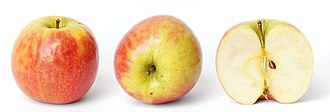
Photo: Wikipedia
A crisp, juicy fruit with a satisfying snap, offering a bright, sweet-tart flavor that varies by variety. Its skin provides a chewy contrast to the tender flesh, while its nutrition profile is notably low in calories yet rich in fiber. This makes it a light, hydrating snack that delivers natural energy without heaviness.
Calorie split: 2% protein · 96% carbs · 3% fat
↓ Full nutrition💚 Why it's loved
People adore the universal, refreshing crunch and the perfect balance of sweetness and acidity. Its incredible versatility—from a standalone snack to a baked dessert ingredient—makes it a staple in kitchens worldwide.
⚠️ Watch-outs & how to enjoy it better
The natural sugars (10.39g per 100g) can cause a blood-sugar spike if eaten alone, especially by those monitoring glucose levels. To counteract this, pair an apple with a source of protein or fat, like a handful of nuts or a slice of cheese, to slow digestion and stabilize energy.
Key benefits
- Excellent source of dietary fiber (2.4g per 100g)
- Very low in fat and a good source of vitamin C
- Contains quercetin, an antioxidant concentrated in the skin
- High water content aids in hydration
- Provides natural, quick-release energy from carbs
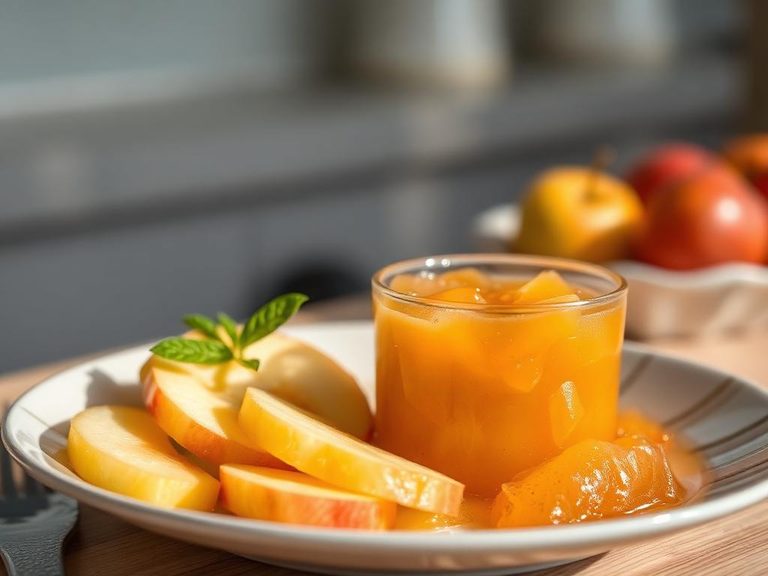
🍽️ Popular dishes

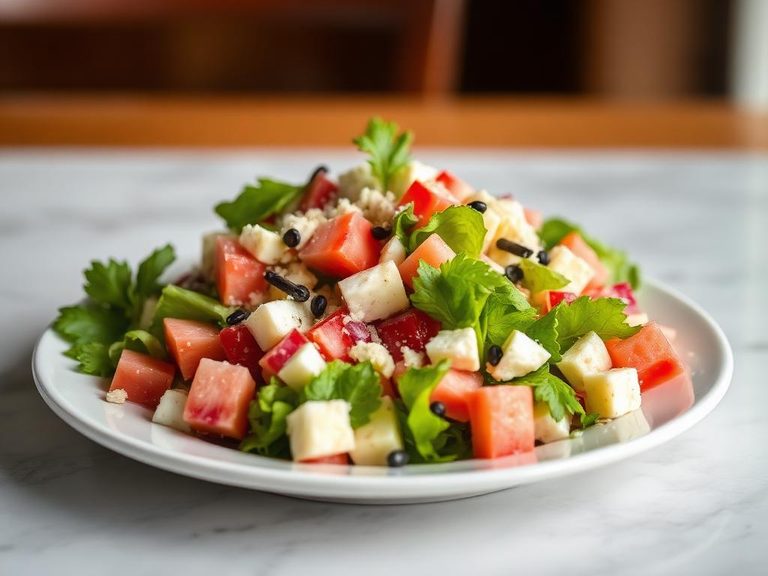

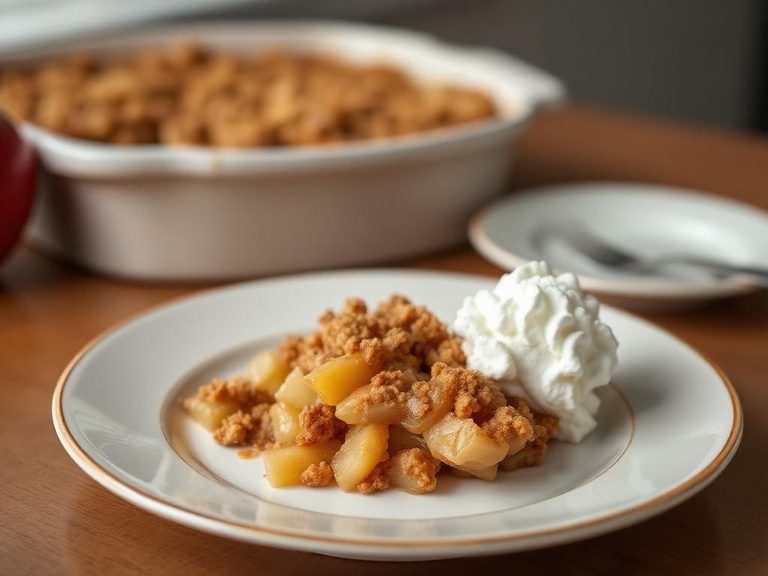
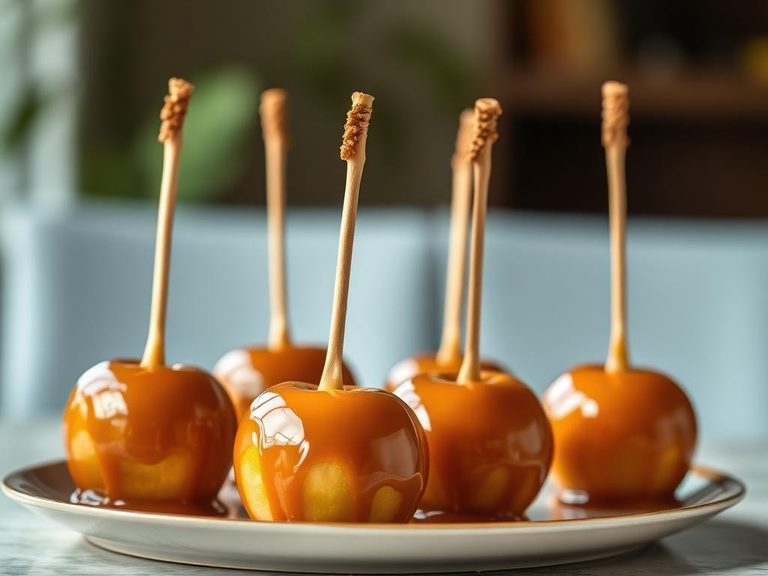
🌍 Where it's eaten
💡 Did you know?
The skin of a medium apple contains more fiber than the entire flesh of the fruit itself.
Full nutrition (USDA data · scales with serving)
| Water | 85.6 g |
| Energy | 52.0 kcal |
| Energy | 218 kj |
| Protein | 0.26 g |
| Total lipid (fat) | 0.17 g |
| Ash | 0.19 g |
| Carbohydrate, by difference | 13.8 g |
| Fiber, total dietary | 2.4 g |
| Total Sugars | 10.4 g |
| Sucrose | 2.1 g |
| Glucose | 2.4 g |
| Fructose | 5.9 g |
| Lactose | 0.00 g |
| Maltose | 0.00 g |
| Galactose | 0.00 g |
| Starch | 0.05 g |
| Calcium, Ca | 6.0 mg |
| Iron, Fe | 0.12 mg |
| Magnesium, Mg | 5.0 mg |
| Phosphorus, P | 11.0 mg |
| Potassium, K | 107 mg |
| Sodium, Na | 1.0 mg |
| Zinc, Zn | 0.04 mg |
| Copper, Cu | 0.03 mg |
| Manganese, Mn | 0.04 mg |
| Selenium, Se | 0.00 ug |
| Fluoride, F | 3.3 ug |
| Vitamin C, total ascorbic acid | 4.6 mg |
| Thiamin | 0.02 mg |
| Riboflavin | 0.03 mg |
| Niacin | 0.09 mg |
| Pantothenic acid | 0.06 mg |
| Vitamin B-6 | 0.04 mg |
| Folate, total | 3.0 ug |
| Folic acid | 0.00 ug |
| Folate, food | 3.0 ug |
| Folate, DFE | 3.0 ug |
| Choline, total | 3.4 mg |
| Betaine | 0.10 mg |
| Vitamin B-12 | 0.00 ug |
| Vitamin B-12, added | 0.00 ug |
| Vitamin A, RAE | 3.0 ug |
| Retinol | 0.00 ug |
| Carotene, beta | 27.0 ug |
| Carotene, alpha | 0.00 ug |
| Cryptoxanthin, beta | 11.0 ug |
| Vitamin A, IU | 54.0 iu |
| Lycopene | 0.00 ug |
| Lutein + zeaxanthin | 29.0 ug |
| Vitamin E (alpha-tocopherol) | 0.18 mg |
| Vitamin E, added | 0.00 mg |
| Tocopherol, beta | 0.00 mg |
| Tocopherol, gamma | 0.00 mg |
| Tocopherol, delta | 0.00 mg |
| Vitamin D (D2 + D3), International Units | 0.00 iu |
| Vitamin D (D2 + D3) | 0.00 ug |
| Vitamin K (phylloquinone) | 2.2 ug |
| Vitamin K (Dihydrophylloquinone) | 0.00 ug |
| Alcohol, ethyl | 0.00 g |
| Caffeine | 0.00 mg |
| Theobromine | 0.00 mg |
Fat & fatty acid profile (per 100g)
| Fatty acids, total saturated | 0.03 g |
| SFA 4:0 | 0.00 g |
| SFA 6:0 | 0.00 g |
| SFA 8:0 | 0.00 g |
| SFA 10:0 | 0.00 g |
| SFA 12:0 | 0.00 g |
| SFA 14:0 | 0.00 g |
| SFA 16:0 | 0.02 g |
| SFA 18:0 | 0.00 g |
| Fatty acids, total monounsaturated | 0.01 g |
| MUFA 16:1 | 0.00 g |
| MUFA 18:1 | 0.01 g |
| MUFA 20:1 | 0.00 g |
| MUFA 22:1 | 0.00 g |
| Fatty acids, total polyunsaturated | 0.05 g |
| PUFA 18:2 | 0.04 g |
| PUFA 18:3 | 0.01 g |
| PUFA 18:4 | 0.00 g |
| PUFA 20:4 | 0.00 g |
| PUFA 20:5 n-3 (EPA) | 0.00 g |
| PUFA 22:5 n-3 (DPA) | 0.00 g |
| PUFA 22:6 n-3 (DHA) | 0.00 g |
| Fatty acids, total trans | 0.00 g |
| Cholesterol | 0.00 mg |
| Phytosterols | 12.0 mg |
Amino acid profile (per 100g)
| Tryptophan | 0.00 g |
| Threonine | 0.01 g |
| Isoleucine | 0.01 g |
| Leucine | 0.01 g |
| Lysine | 0.01 g |
| Methionine | 0.00 g |
| Cystine | 0.00 g |
| Phenylalanine | 0.01 g |
| Tyrosine | 0.00 g |
| Valine | 0.01 g |
| Arginine | 0.01 g |
| Histidine | 0.01 g |
| Alanine | 0.01 g |
| Aspartic acid | 0.07 g |
| Glutamic acid | 0.03 g |
| Glycine | 0.01 g |
| Proline | 0.01 g |
| Serine | 0.01 g |
FAQ
Should I peel an apple to get the most benefits?
Keeping the skin on is recommended, as it contains a significant portion of the apple's fiber, vitamin C, and antioxidants like quercetin. Simply wash it well under running water.
Why do cut apples turn brown?
This is due to an enzymatic reaction called oxidation. To slow it, you can dip slices in a solution of water and a little lemon juice or vinegar, which lowers the pH and inhibits the enzyme.
Are the seeds poisonous?
Apple seeds contain amygdalin, which can release cyanide when crushed or chewed. However, you would need to consume a very large number of crushed seeds (many apples' worth) for it to be harmful. Swallowing a few whole seeds is generally not a concern.
Nutrient density (calculated · NRF9.3)
Nutrient Rich Foods index: beneficial nutrients (protein, fiber, vitamins, minerals) minus saturated fat, added sugar & sodium, per 100 kcal.
NRF9.3 index — Fulgoni, Keast & Drewnowski, 2009. Computed from USDA nutrients.
Weight-loss friendliness (composite index)
Energy density 0.52 kcal/g · 2% calories from protein · 2.4 g fiber · 10.4 g sugar per 100 g.
Composite of energy density (Rolls et al., 1999), protein & fiber satiety, minus sugar. A calculated heuristic — ranks satiety-per-calorie, not a clinical measure.
Dietary load (calculated from USDA values)
Potential renal acid load. Positive = acid-forming, negative = alkaline-forming.
Sodium-to-potassium ratio: 0.01 (lower is better — aim for ≤ 1)
Sodium:potassium per WHO potassium guidance. Computed from USDA nutrients.