Chicken, ground, raw
Whole food · Poultry Products

Photo: Wikipedia
Ground chicken is finely minced raw chicken meat, typically from the breast or thigh, with a mild, subtly sweet flavor and a soft, malleable texture before cooking. Nutritionally, it is a powerhouse of lean protein with minimal carbohydrates and a moderate fat content, making it a versatile base for countless recipes. When cooked, it develops a tender, juicy consistency that readily absorbs seasonings and sauces.
💚 Why it's loved
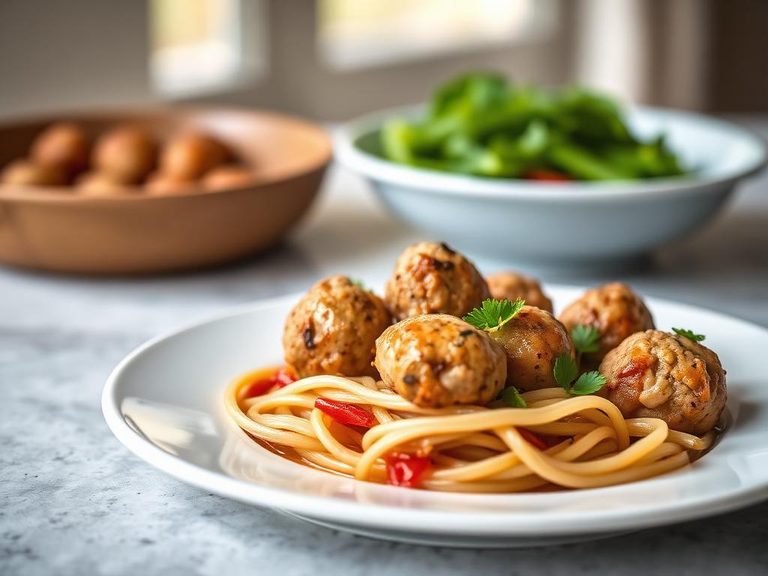
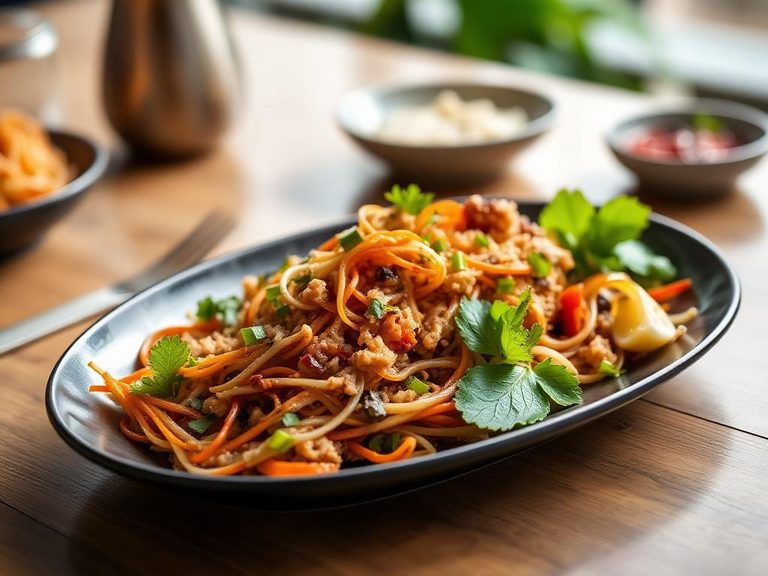
People love ground chicken for its incredible versatility and mild flavor, which acts as a blank canvas for a vast array of spices, herbs, and sauces from global cuisines. It's a staple in home kitchens for quick, protein-packed meals like burgers, meatballs, and stir-fries, offering a lighter alternative to ground beef without sacrificing texture or satisfaction.
⚠️ Watch-outs & how to enjoy it better
Some find ground chicken can be bland or dry if overcooked, and its higher fat content (compared to breast) can be a concern for those monitoring saturated fat intake. To counteract dryness, mix with a small amount of grated onion or zucchini for moisture, or use thigh meat for juiciness. For fat concerns, opt for leaner ground chicken breast and pair with fiber-rich vegetables to balance the meal.
Key benefits
- High-quality lean protein source for muscle maintenance and satiety.
- Very low in carbohydrates, making it suitable for low-carb and ketogenic diets.
- Contains essential B vitamins like niacin and B6 for energy metabolism.
- Provides minerals such as phosphorus and selenium for bone health and immune function.
- Versatile ingredient that can be used in a wide range of healthy, low-fat dishes.
🍽️ Popular dishes
🌍 Where it's eaten
💡 Did you know?
Ground chicken is often used as a leaner substitute for ground pork in traditional Asian dishes like Chinese lion's head meatballs, where it helps create a lighter, more delicate texture.
Full nutrition (scales with serving)
| Water | 73.2 g |
| Energy | 143 kcal |
| Energy | 598 kj |
| Protein | 17.4 g |
| Total lipid (fat) | 8.1 g |
| Ash | 1.2 g |
| Carbohydrate, by difference | 0.04 g |
| Fiber, total dietary | 0.00 g |
| Total Sugars | 0.00 g |
| Calcium, Ca | 6.0 mg |
| Iron, Fe | 0.82 mg |
| Magnesium, Mg | 21.0 mg |
| Phosphorus, P | 178 mg |
| Potassium, K | 522 mg |
| Sodium, Na | 60.0 mg |
| Zinc, Zn | 1.5 mg |
| Copper, Cu | 0.07 mg |
| Manganese, Mn | 0.02 mg |
| Selenium, Se | 10.2 ug |
| Vitamin C, total ascorbic acid | 0.00 mg |
| Thiamin | 0.11 mg |
| Riboflavin | 0.24 mg |
| Niacin | 5.6 mg |
| Pantothenic acid | 1.1 mg |
| Vitamin B-6 | 0.51 mg |
| Folate, total | 1.0 ug |
| Folic acid | 0.00 ug |
| Folate, food | 1.0 ug |
| Folate, DFE | 1.0 ug |
| Choline, total | 58.8 mg |
| Betaine | 7.7 mg |
| Vitamin B-12 | 0.56 ug |
| Vitamin B-12, added | 0.00 ug |
| Vitamin A, RAE | 0.00 ug |
| Retinol | 0.00 ug |
| Carotene, beta | 0.00 ug |
| Carotene, alpha | 0.00 ug |
| Cryptoxanthin, beta | 0.00 ug |
| Vitamin A, IU | 0.00 iu |
| Lycopene | 0.00 ug |
| Lutein + zeaxanthin | 0.00 ug |
| Vitamin E (alpha-tocopherol) | 0.27 mg |
| Vitamin E, added | 0.00 mg |
| Tocopherol, beta | 0.00 mg |
| Tocopherol, gamma | 0.17 mg |
| Tocopherol, delta | 0.03 mg |
| Tocotrienol, alpha | 0.05 mg |
| Tocotrienol, beta | 0.00 mg |
| Tocotrienol, gamma | 0.00 mg |
| Tocotrienol, delta | 0.00 mg |
| Vitamin K (phylloquinone) | 0.80 ug |
| Alcohol, ethyl | 0.00 g |
| Caffeine | 0.00 mg |
| Theobromine | 0.00 mg |
Fat & fatty acid profile (per 100g)
| Fatty acids, total saturated | 2.3 g |
| SFA 4:0 | 0.00 g |
| SFA 6:0 | 0.00 g |
| SFA 8:0 | 0.00 g |
| SFA 10:0 | 0.00 g |
| SFA 12:0 | 0.00 g |
| SFA 14:0 | 0.04 g |
| SFA 15:0 | 0.00 g |
| SFA 16:0 | 1.8 g |
| SFA 17:0 | 0.01 g |
| SFA 18:0 | 0.46 g |
| SFA 20:0 | 0.01 g |
| SFA 22:0 | 0.00 g |
| Fatty acids, total monounsaturated | 3.6 g |
| MUFA 14:1 | 0.02 g |
| MUFA 15:1 | 0.00 g |
| MUFA 16:1 | 0.54 g |
| MUFA 17:1 | 0.00 g |
| MUFA 18:1 | 3.0 g |
| MUFA 18:1 c | 3.0 g |
| MUFA 20:1 | 0.03 g |
| MUFA 22:1 | 0.00 g |
| Fatty acids, total polyunsaturated | 1.5 g |
| PUFA 18:2 | 1.3 g |
| PUFA 18:2 n-6 c,c | 1.3 g |
| PUFA 18:3 | 0.07 g |
| PUFA 18:3 n-3 c,c,c (ALA) | 0.06 g |
| PUFA 18:3 n-6 c,c,c | 0.01 g |
| PUFA 18:4 | 0.00 g |
| PUFA 20:2 n-6 c,c | 0.01 g |
| PUFA 20:3 | 0.00 g |
| PUFA 20:4 | 0.07 g |
| PUFA 20:5 n-3 (EPA) | 0.01 g |
| PUFA 22:5 n-3 (DPA) | 0.01 g |
| PUFA 22:6 n-3 (DHA) | 0.02 g |
| Fatty acids, total trans | 0.07 g |
| Fatty acids, total trans-monoenoic | 0.04 g |
| TFA 18:1 t | 0.04 g |
| TFA 18:2 t,t | 0.02 g |
| Fatty acids, total trans-polyenoic | 0.02 g |
| Cholesterol | 86.0 mg |
Amino acid profile (per 100g)
| Tryptophan | 0.15 g |
| Threonine | 0.73 g |
| Isoleucine | 0.79 g |
| Leucine | 1.4 g |
| Lysine | 1.5 g |
| Methionine | 0.45 g |
| Cystine | 0.19 g |
| Phenylalanine | 0.68 g |
| Tyrosine | 0.60 g |
| Valine | 0.83 g |
| Arginine | 1.1 g |
| Histidine | 0.53 g |
| Alanine | 0.99 g |
| Aspartic acid | 1.6 g |
| Glutamic acid | 2.6 g |
| Glycine | 0.84 g |
| Proline | 0.66 g |
| Serine | 0.73 g |
| Hydroxyproline | 0.09 g |
FAQ
Is ground chicken healthier than ground beef?
Generally, yes. Ground chicken (especially breast) is typically lower in saturated fat and calories than regular ground beef, while providing similar protein. However, the exact nutritional profile depends on the cut (breast vs. thigh) and fat percentage of both meats.
How should I store raw ground chicken?
Store it in the coldest part of your refrigerator (below 40°F/4°C) and use it within 1-2 days. For longer storage, freeze it in airtight packaging for up to 3-4 months. Always thaw it in the refrigerator, not on the counter, to prevent bacterial growth.
What's the best way to cook ground chicken without it drying out?
Avoid overcooking. Cook it quickly over medium-high heat, breaking it into crumbles, and remove it from heat as soon as it's no longer pink. For juicier results, use ground chicken thigh or mix in a small amount of moisture-rich ingredients like grated onion, mushrooms, or a splash of broth.