

Tomato products, canned, sauce
Whole food · Vegetables and Vegetable Products
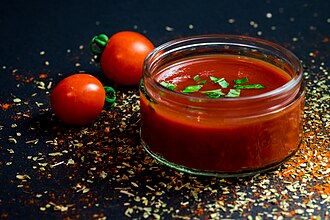
Photo: Wikipedia
Canned tomato sauce is a smooth, concentrated paste made from cooked and strained tomatoes, offering a rich, deep red color and a thick, velvety texture. Its flavor is intensely savory and slightly sweet, with a bright acidity that forms the backbone of countless dishes. Nutritionally, it's a low-calorie source of fiber and natural sugars, with a modest amount of protein.
Calorie split: 17% protein · 74% carbs · 9% fat
↓ Full nutrition💚 Why it's loved
People adore its unparalleled convenience and the instant depth of flavor it provides, acting as a ready-made base for sauces, stews, and soups. It's a cultural staple, especially in Italian-American and Mediterranean cooking, representing comfort and home-style meals.
⚠️ Watch-outs & how to enjoy it better
The natural sugars can contribute to blood-sugar spikes if consumed in large quantities without other macronutrients. Some brands add significant sodium, which is a concern for heart health. To counteract this, pair it with protein (like beans or meat) and healthy fats (like olive oil) to slow sugar absorption, and always check labels to choose low-sodium versions.
Key benefits
- Low in calories and fat
- Good source of dietary fiber
- Provides natural sugars for quick energy
- Contains lycopene, a stable antioxidant from cooking
- Long shelf life reduces food waste
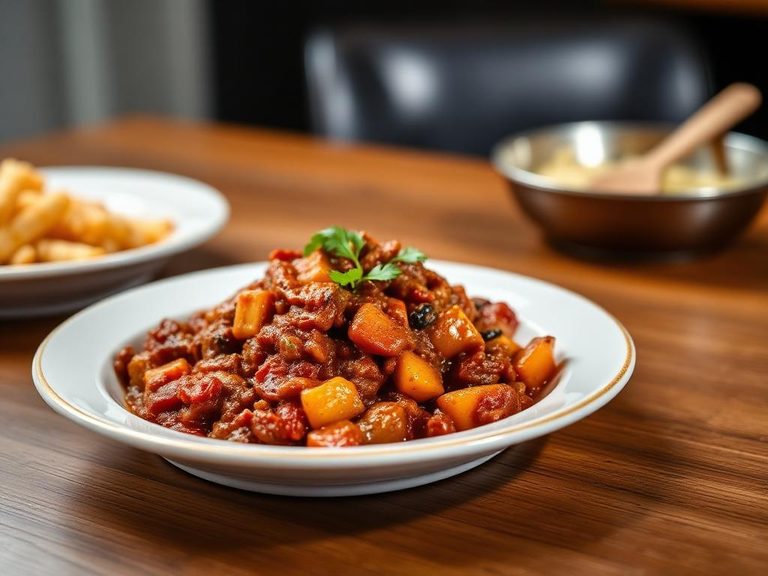
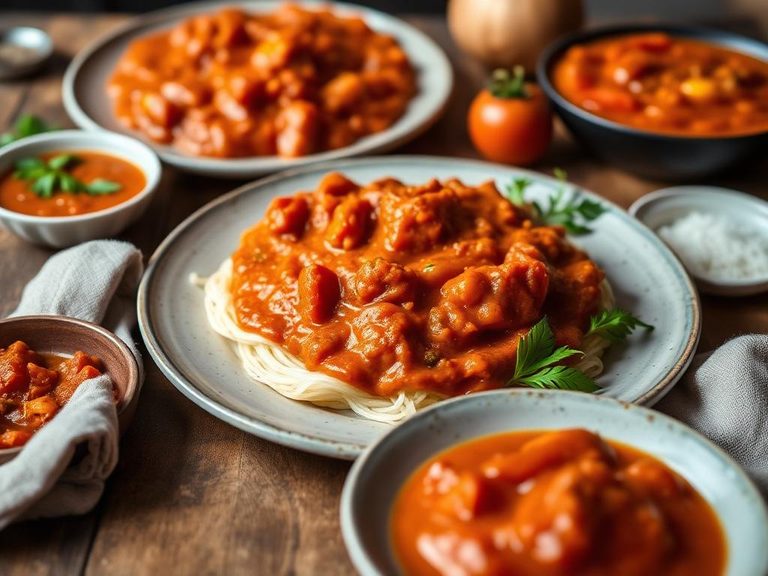
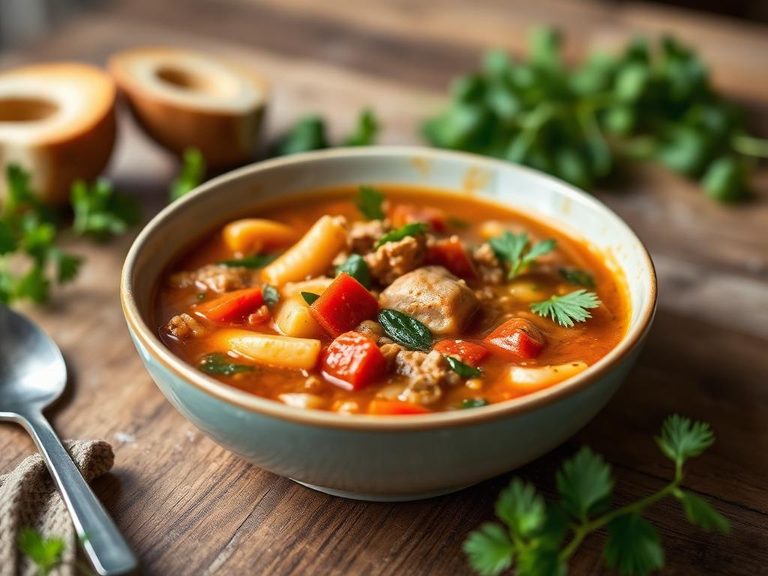
🍽️ Popular dishes
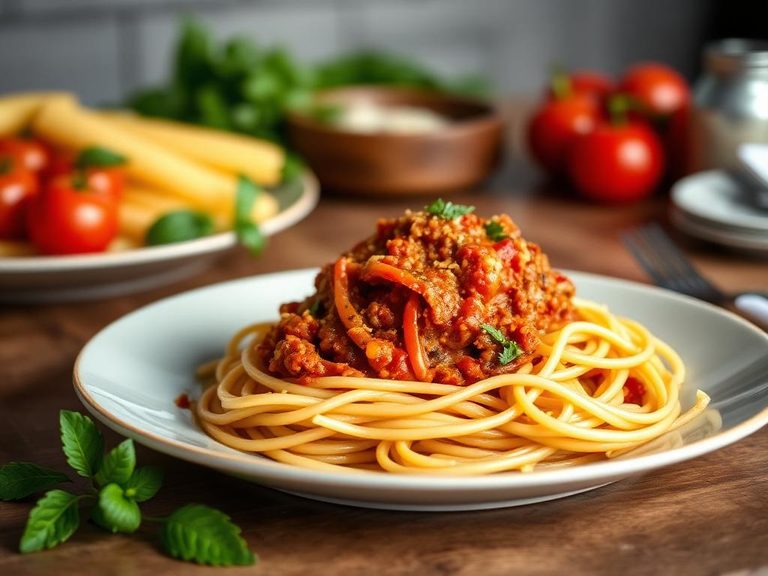
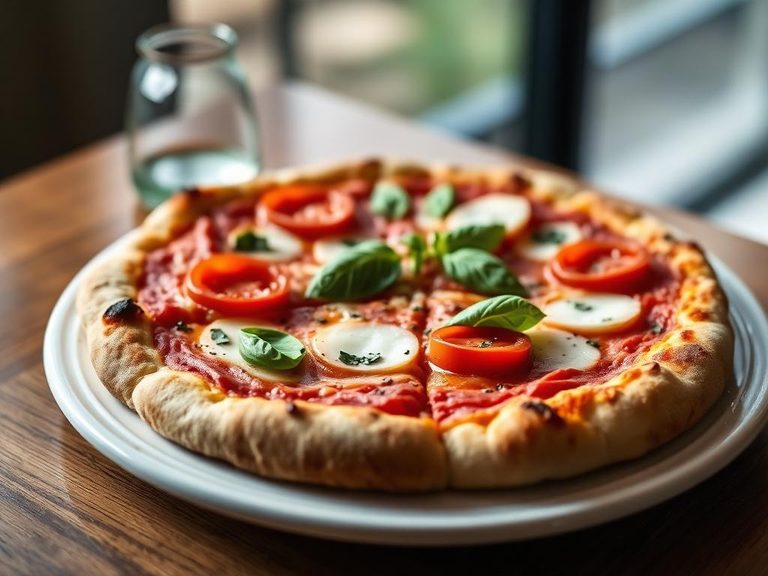
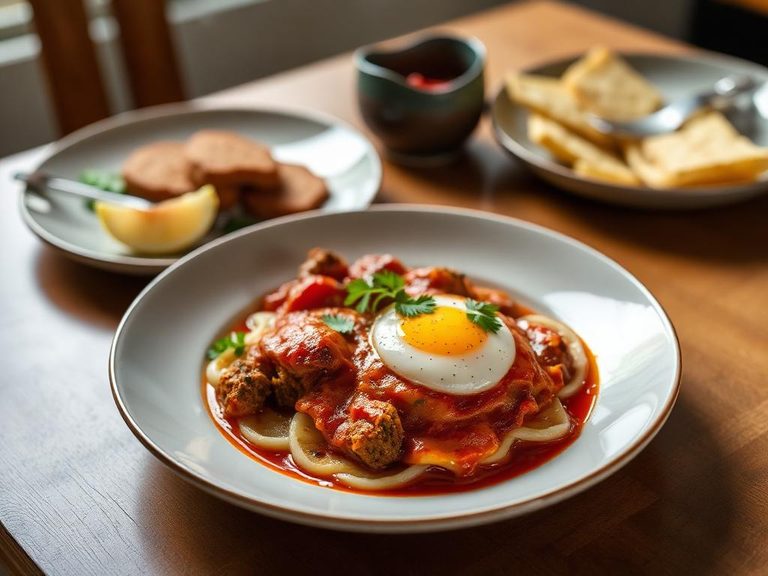
🌍 Where it's eaten
💡 Did you know?
Canned tomato sauce often contains a small amount of citric acid to preserve its bright red color, preventing the lycopene from oxidizing and turning brown during the canning process.
Full nutrition (USDA data · scales with serving)
| Water | 91.3 g |
| Energy | 24.0 kcal |
| Energy | 102 kj |
| Protein | 1.2 g |
| Total lipid (fat) | 0.30 g |
| Ash | 1.9 g |
| Carbohydrate, by difference | 5.3 g |
| Fiber, total dietary | 1.5 g |
| Total Sugars | 3.6 g |
| Sucrose | 0.07 g |
| Glucose | 1.8 g |
| Fructose | 1.7 g |
| Lactose | 0.00 g |
| Maltose | 0.00 g |
| Galactose | 0.00 g |
| Calcium, Ca | 14.0 mg |
| Iron, Fe | 0.96 mg |
| Magnesium, Mg | 15.0 mg |
| Phosphorus, P | 27.0 mg |
| Potassium, K | 297 mg |
| Sodium, Na | 474 mg |
| Zinc, Zn | 0.22 mg |
| Copper, Cu | 0.12 mg |
| Manganese, Mn | 0.11 mg |
| Selenium, Se | 0.60 ug |
| Fluoride, F | 34.9 ug |
| Vitamin C, total ascorbic acid | 7.0 mg |
| Thiamin | 0.02 mg |
| Riboflavin | 0.07 mg |
| Niacin | 0.99 mg |
| Pantothenic acid | 0.31 mg |
| Vitamin B-6 | 0.10 mg |
| Folate, total | 9.0 ug |
| Folic acid | 0.00 ug |
| Folate, food | 9.0 ug |
| Folate, DFE | 9.0 ug |
| Choline, total | 9.9 mg |
| Betaine | 0.80 mg |
| Vitamin B-12 | 0.00 ug |
| Vitamin B-12, added | 0.00 ug |
| Vitamin A, RAE | 22.0 ug |
| Retinol | 0.00 ug |
| Carotene, beta | 259 ug |
| Carotene, alpha | 0.00 ug |
| Cryptoxanthin, beta | 3.0 ug |
| Vitamin A, IU | 435 iu |
| Lycopene | 13895 ug |
| Lutein + zeaxanthin | 24.0 ug |
| Vitamin E (alpha-tocopherol) | 1.4 mg |
| Vitamin E, added | 0.00 mg |
| Tocopherol, beta | 0.02 mg |
| Tocopherol, gamma | 0.10 mg |
| Tocopherol, delta | 0.00 mg |
| Vitamin D (D2 + D3), International Units | 0.00 iu |
| Vitamin D (D2 + D3) | 0.00 ug |
| Vitamin K (phylloquinone) | 2.8 ug |
| Vitamin K (Dihydrophylloquinone) | 0.00 ug |
| Alcohol, ethyl | 0.00 g |
| Caffeine | 0.00 mg |
| Theobromine | 0.00 mg |
Fat & fatty acid profile (per 100g)
| Fatty acids, total saturated | 0.04 g |
| SFA 4:0 | 0.00 g |
| SFA 6:0 | 0.00 g |
| SFA 8:0 | 0.00 g |
| SFA 10:0 | 0.00 g |
| SFA 12:0 | 0.00 g |
| SFA 14:0 | 0.00 g |
| SFA 16:0 | 0.03 g |
| SFA 18:0 | 0.01 g |
| Fatty acids, total monounsaturated | 0.04 g |
| MUFA 16:1 | 0.00 g |
| MUFA 18:1 | 0.04 g |
| MUFA 20:1 | 0.00 g |
| MUFA 22:1 | 0.00 g |
| Fatty acids, total polyunsaturated | 0.12 g |
| PUFA 18:2 | 0.12 g |
| PUFA 18:3 | 0.01 g |
| PUFA 18:4 | 0.00 g |
| PUFA 20:4 | 0.00 g |
| PUFA 20:5 n-3 (EPA) | 0.00 g |
| PUFA 22:5 n-3 (DPA) | 0.00 g |
| PUFA 22:6 n-3 (DHA) | 0.00 g |
| Fatty acids, total trans | 0.00 g |
| Cholesterol | 0.00 mg |
Amino acid profile (per 100g)
| Tryptophan | 0.01 g |
| Threonine | 0.04 g |
| Isoleucine | 0.03 g |
| Leucine | 0.04 g |
| Lysine | 0.04 g |
| Methionine | 0.01 g |
| Cystine | 0.01 g |
| Phenylalanine | 0.04 g |
| Tyrosine | 0.02 g |
| Valine | 0.03 g |
| Arginine | 0.03 g |
| Histidine | 0.02 g |
| Alanine | 0.04 g |
| Aspartic acid | 0.20 g |
| Glutamic acid | 0.65 g |
| Glycine | 0.03 g |
| Proline | 0.02 g |
| Serine | 0.04 g |
FAQ
What's the difference between tomato sauce, paste, and crushed tomatoes?
Tomato sauce is a smooth, strained, and seasoned product. Tomato paste is a highly concentrated, thick paste made by cooking tomatoes for hours. Crushed tomatoes are roughly chopped with more texture and seeds.
Is canned tomato sauce as nutritious as fresh tomatoes?
Canning actually increases the bioavailability of the antioxidant lycopene. However, fresh tomatoes offer more vitamin C, which is heat-sensitive. Both are nutritious.
How can I reduce the acidity of canned tomato sauce?
Simmer it with a pinch of sugar or a small, peeled potato (which you remove later) to balance the acidity. Adding a bit of baking soda can also neutralize it, but use sparingly.
Nutrient density (calculated · NRF9.3)
Nutrient Rich Foods index: beneficial nutrients (protein, fiber, vitamins, minerals) minus saturated fat, added sugar & sodium, per 100 kcal.
NRF9.3 index — Fulgoni, Keast & Drewnowski, 2009. Computed from USDA nutrients.
Weight-loss friendliness (composite index)
Energy density 0.24 kcal/g · 20% calories from protein · 1.5 g fiber · 3.6 g sugar per 100 g.
Composite of energy density (Rolls et al., 1999), protein & fiber satiety, minus sugar. A calculated heuristic — ranks satiety-per-calorie, not a clinical measure.
Dietary load (calculated from USDA values)
Potential renal acid load. Positive = acid-forming, negative = alkaline-forming.
Sodium-to-potassium ratio: 1.60 (lower is better — aim for ≤ 1)
Sodium:potassium per WHO potassium guidance. Computed from USDA nutrients.