

Puddings, tapioca, ready-to-eat
Whole food · Sweets

Photo: Wikipedia
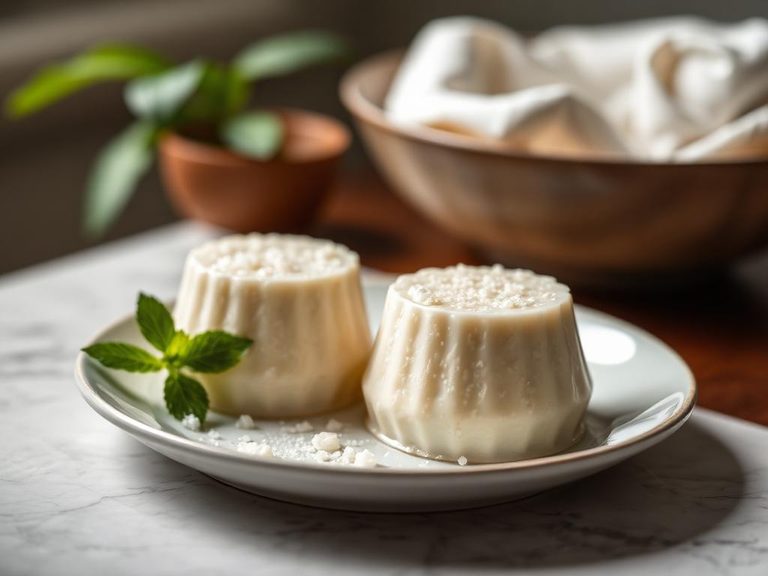
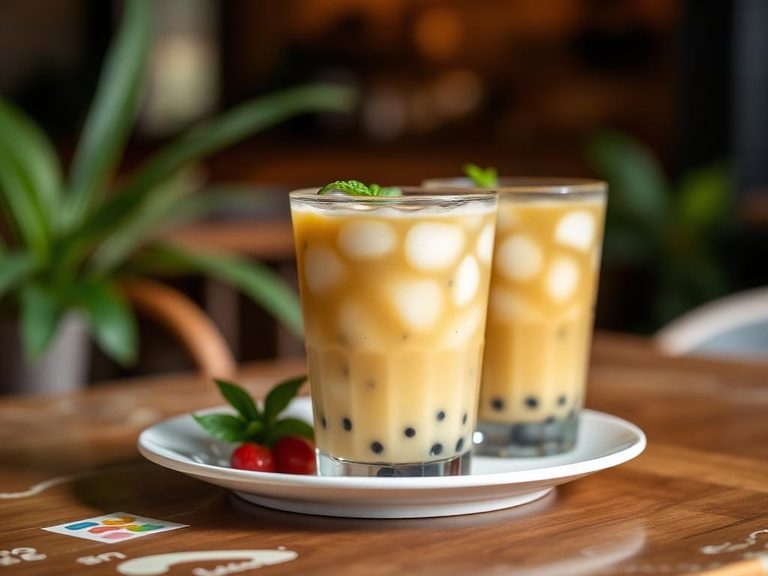
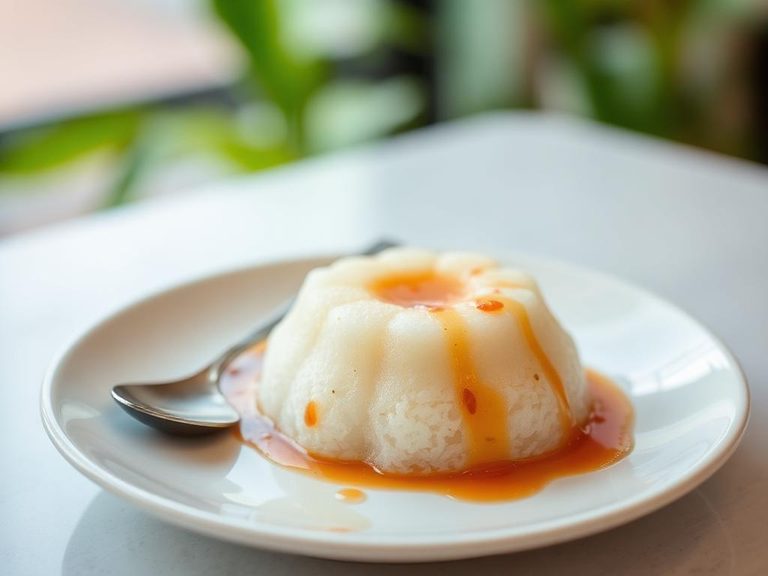
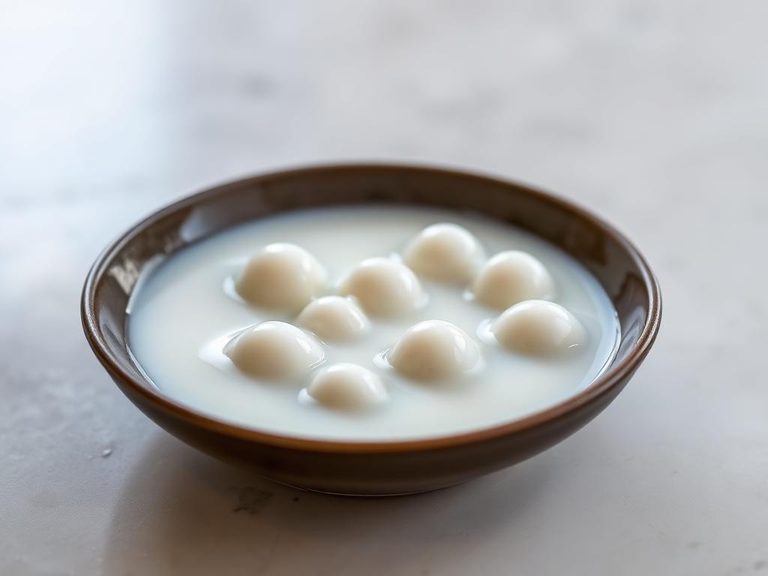
Ready-to-eat tapioca pudding is a creamy, comforting dessert made from small, translucent tapioca pearls that become delightfully chewy and gelatinous when cooked. Its mild, sweet flavor and smooth texture make it a nostalgic treat, often enjoyed chilled. Nutritionally, it's a moderate source of carbohydrates and sugars, providing quick energy with minimal protein.
Calorie split: 6% protein · 67% carbs · 27% fat
↓ Full nutrition💚 Why it's loved
People love its unique, playful texture—the soft pearls suspended in a creamy base offer a satisfying mouthfeel. It's a versatile canvas for flavors, from vanilla and coconut to fruit, and holds deep cultural significance as a comforting childhood staple in many cuisines.
⚠️ Watch-outs & how to enjoy it better
The high sugar content (nearly 15g per 100g) can cause rapid blood-sugar spikes, making it a concern for diabetics or those monitoring sugar intake. To counteract this, pair a small portion with a source of protein (like nuts or Greek yogurt) or fiber to slow sugar absorption. It also contains minimal protein and fiber, so it's not very satiating on its own.
Key benefits
- Quick source of energy from carbohydrates
- Gluten-free, suitable for those with celiac disease or gluten sensitivity
- Low in fat, making it a lighter dessert option
- Contains some resistant starch which can support gut health
- Easy to digest for many people
🍽️ Popular dishes
🌍 Where it's eaten
💡 Did you know?
Tapioca pearls are derived from the starchy root of the cassava plant, and the process of making them involves washing, pulping, and pressing the root to extract the starch, which is then formed into pearls or other shapes.
Full nutrition (USDA data · scales with serving)
| Water | 71.8 g |
| Energy | 130 kcal |
| Energy | 542 kj |
| Protein | 1.9 g |
| Total lipid (fat) | 3.9 g |
| Ash | 0.64 g |
| Carbohydrate, by difference | 21.7 g |
| Fiber, total dietary | 0.00 g |
| Total Sugars | 14.9 g |
| Sucrose | 12.6 g |
| Glucose | 0.00 g |
| Fructose | 0.00 g |
| Lactose | 2.4 g |
| Maltose | 0.00 g |
| Galactose | 0.00 g |
| Calcium, Ca | 71.0 mg |
| Iron, Fe | 0.11 mg |
| Magnesium, Mg | 6.0 mg |
| Phosphorus, P | 60.0 mg |
| Potassium, K | 92.0 mg |
| Sodium, Na | 145 mg |
| Zinc, Zn | 0.22 mg |
| Copper, Cu | 0.02 mg |
| Manganese, Mn | 0.01 mg |
| Selenium, Se | 0.00 ug |
| Vitamin C, total ascorbic acid | 0.30 mg |
| Thiamin | 0.02 mg |
| Riboflavin | 0.10 mg |
| Niacin | 0.07 mg |
| Pantothenic acid | 0.23 mg |
| Vitamin B-6 | 0.02 mg |
| Folate, total | 3.0 ug |
| Folic acid | 0.00 ug |
| Folate, food | 3.0 ug |
| Folate, DFE | 3.0 ug |
| Choline, total | 6.2 mg |
| Vitamin B-12 | 0.21 ug |
| Vitamin B-12, added | 0.00 ug |
| Vitamin A, RAE | 0.00 ug |
| Retinol | 0.00 ug |
| Carotene, beta | 0.00 ug |
| Carotene, alpha | 0.00 ug |
| Cryptoxanthin, beta | 0.00 ug |
| Vitamin A, IU | 0.00 iu |
| Lycopene | 0.00 ug |
| Lutein + zeaxanthin | 0.00 ug |
| Vitamin E (alpha-tocopherol) | 0.15 mg |
| Vitamin E, added | 0.00 mg |
| Tocopherol, beta | 0.02 mg |
| Tocopherol, gamma | 1.8 mg |
| Tocopherol, delta | 0.83 mg |
| Vitamin D (D2 + D3), International Units | 0.00 iu |
| Vitamin D (D2 + D3) | 0.00 ug |
| Vitamin D3 (cholecalciferol) | 0.00 ug |
| Vitamin K (phylloquinone) | 0.40 ug |
| Alcohol, ethyl | 0.00 g |
| Caffeine | 0.00 mg |
| Theobromine | 0.00 mg |
Fat & fatty acid profile (per 100g)
| Fatty acids, total saturated | 0.96 g |
| SFA 4:0 | 0.00 g |
| SFA 6:0 | 0.00 g |
| SFA 8:0 | 0.00 g |
| SFA 10:0 | 0.00 g |
| SFA 12:0 | 0.00 g |
| SFA 14:0 | 0.01 g |
| SFA 15:0 | 0.00 g |
| SFA 16:0 | 0.42 g |
| SFA 17:0 | 0.00 g |
| SFA 18:0 | 0.51 g |
| SFA 20:0 | 0.01 g |
| SFA 22:0 | 0.01 g |
| Fatty acids, total monounsaturated | 2.5 g |
| MUFA 14:1 | 0.00 g |
| MUFA 15:1 | 0.00 g |
| MUFA 16:1 | 0.00 g |
| MUFA 17:1 | 0.00 g |
| MUFA 18:1 | 2.5 g |
| MUFA 20:1 | 0.01 g |
| MUFA 22:1 | 0.00 g |
| Fatty acids, total polyunsaturated | 0.07 g |
| PUFA 18:2 | 0.07 g |
| PUFA 18:3 | 0.00 g |
| PUFA 18:3 n-3 c,c,c (ALA) | 0.00 g |
| PUFA 18:3 n-6 c,c,c | 0.00 g |
| PUFA 18:4 | 0.00 g |
| PUFA 20:2 n-6 c,c | 0.00 g |
| PUFA 20:3 | 0.00 g |
| PUFA 20:4 | 0.00 g |
| PUFA 20:5 n-3 (EPA) | 0.00 g |
| PUFA 22:5 n-3 (DPA) | 0.00 g |
| PUFA 22:6 n-3 (DHA) | 0.00 g |
| Cholesterol | 1.0 mg |
Amino acid profile (per 100g)
Estimated from Puddings, lemon, dry mix, instant, prepared with whole milk — USDA does not publish this profile for Puddings.
| Tryptophan | 0.04 g |
| Threonine | 0.12 g |
| Isoleucine | 0.16 g |
| Leucine | 0.26 g |
| Lysine | 0.21 g |
| Methionine | 0.07 g |
| Cystine | 0.02 g |
| Phenylalanine | 0.13 g |
| Tyrosine | 0.13 g |
| Valine | 0.17 g |
| Arginine | 0.09 g |
| Histidine | 0.07 g |
| Alanine | 0.09 g |
| Aspartic acid | 0.20 g |
| Glutamic acid | 0.55 g |
| Glycine | 0.06 g |
| Proline | 0.25 g |
| Serine | 0.14 g |
FAQ
Is tapioca pudding gluten-free?
Yes, traditional tapioca pudding is made from tapioca starch, which is naturally gluten-free. However, always check labels for added ingredients or cross-contamination if you have a severe allergy.
Can I make it dairy-free?
Absolutely. You can substitute the milk with plant-based alternatives like coconut milk, almond milk, or oat milk for a delicious dairy-free version.
Why did my tapioca pudding turn out runny?
This can happen if the pearls weren't fully cooked or if the mixture didn't cool and set properly. Ensure you simmer it long enough for the pearls to become fully translucent and allow it to chill in the fridge for several hours to thicken.
Nutrient density (calculated · NRF9.3)
Nutrient Rich Foods index: beneficial nutrients (protein, fiber, vitamins, minerals) minus saturated fat, added sugar & sodium, per 100 kcal.
NRF9.3 index — Fulgoni, Keast & Drewnowski, 2009. Computed from USDA nutrients.
Weight-loss friendliness (composite index)
Energy density 1.30 kcal/g · 6% calories from protein · 0.0 g fiber · 14.9 g sugar per 100 g.
Composite of energy density (Rolls et al., 1999), protein & fiber satiety, minus sugar. A calculated heuristic — ranks satiety-per-calorie, not a clinical measure.
Dietary load (calculated from USDA values)
Potential renal acid load. Positive = acid-forming, negative = alkaline-forming.
Sodium-to-potassium ratio: 1.58 (lower is better — aim for ≤ 1)
Sodium:potassium per WHO potassium guidance. Computed from USDA nutrients.