

Pork, fresh, composite of separable fat, with added solution, raw
Whole food · Pork Products

Photo: Wikipedia
This is raw, separable pork fat that has been enhanced with a solution (typically water, salt, and phosphates) to increase its weight and moisture. It has a very soft, pliable, and greasy texture when raw, rendering down into a rich, savory liquid when cooked. Nutritionally, it is almost pure fat, providing a very high calorie density with minimal protein.
Calorie split: 7% protein · 0% carbs · 93% fat
↓ Full nutrition💚 Why it's loved
People love it for its unparalleled ability to create deep, savory flavor in dishes through rendering, and its cultural significance in traditional cuisines worldwide as a foundational cooking fat.
⚠️ Watch-outs & how to enjoy it better
Its extremely high saturated fat and calorie content make it unsuitable for frequent consumption, especially for those managing heart health or weight. To enjoy it wisely, use it sparingly as a flavoring agent rather than a primary ingredient, and pair it with high-fiber vegetables to balance the meal.
Key benefits
- Excellent source of high-energy calories
- Provides a rich, savory base for cooking
- Contains fat-soluble vitamins like Vitamin D
- Can be rendered into lard for long-term storage
- Adds moisture and flavor to lean meat dishes
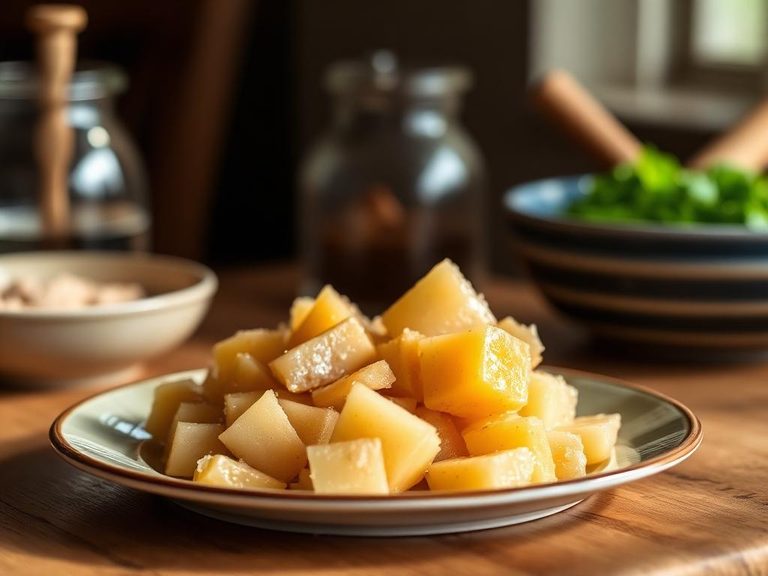
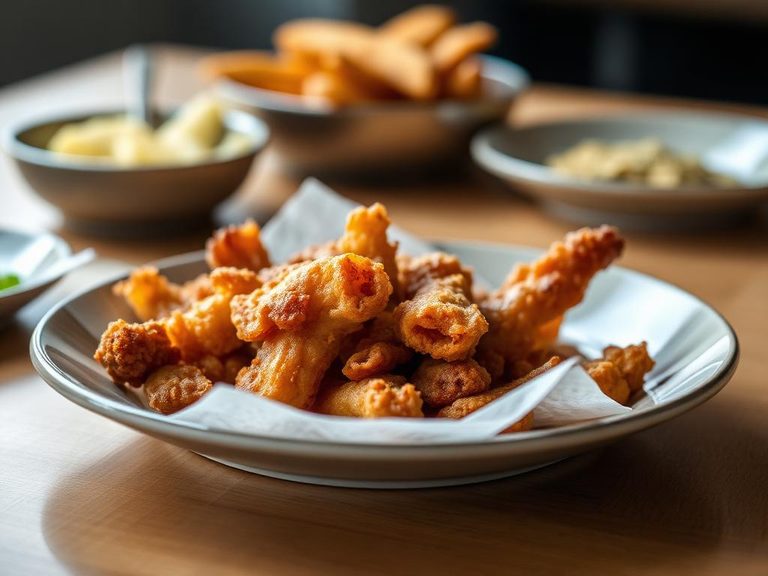
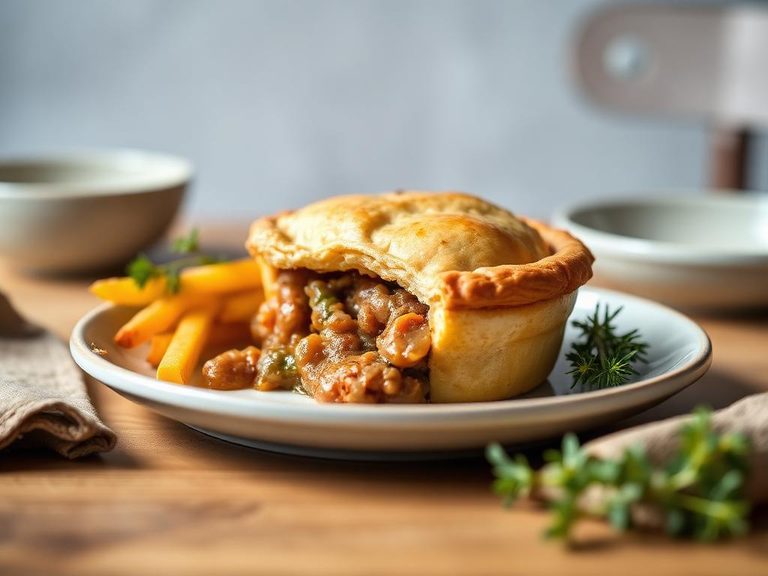
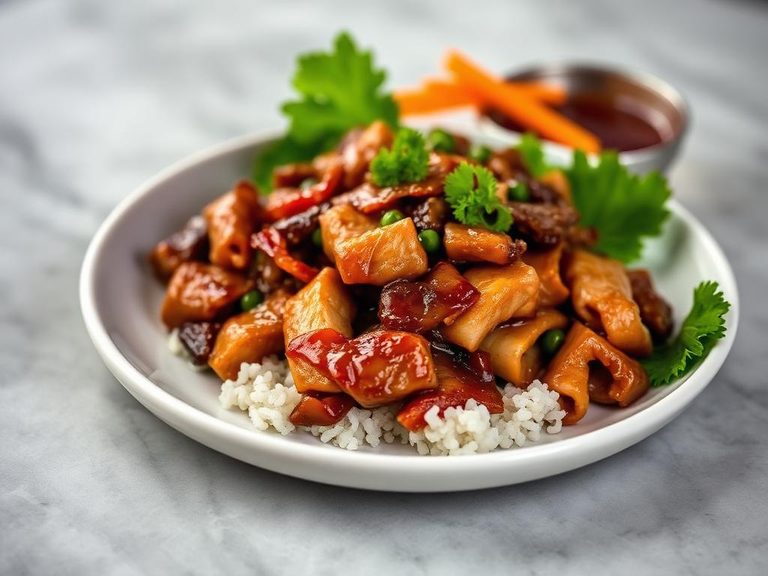
🍽️ Popular dishes
🌍 Where it's eaten
💡 Did you know?
The added solution in this product is often a 'brine' containing sodium phosphates, which can increase the water-holding capacity of the fat, making it heavier and juicier when cooked.
Full nutrition (USDA data · scales with serving)
| Water | 38.3 g |
| Energy | 508 kcal |
| Energy | 2126 kj |
| Protein | 9.3 g |
| Total lipid (fat) | 52.3 g |
| Ash | 0.72 g |
| Carbohydrate, by difference | 0.00 g |
| Fiber, total dietary | 0.00 g |
| Total Sugars | 0.00 g |
| Calcium, Ca | 22.0 mg |
| Iron, Fe | 0.47 mg |
| Magnesium, Mg | 9.0 mg |
| Phosphorus, P | 121 mg |
| Potassium, K | 191 mg |
| Sodium, Na | 81.0 mg |
| Zinc, Zn | 0.90 mg |
| Copper, Cu | 0.06 mg |
| Manganese, Mn | 0.01 mg |
| Selenium, Se | 11.1 ug |
| Vitamin C, total ascorbic acid | 0.00 mg |
| Thiamin | 0.20 mg |
| Riboflavin | 0.10 mg |
| Niacin | 3.2 mg |
| Pantothenic acid | 0.61 mg |
| Vitamin B-6 | 0.28 mg |
| Folate, total | 0.00 ug |
| Folic acid | 0.00 ug |
| Folate, food | 0.00 ug |
| Folate, DFE | 0.00 ug |
| Choline, total | 34.3 mg |
| Betaine | 1.7 mg |
| Vitamin B-12 | 1.5 ug |
| Vitamin B-12, added | 0.00 ug |
| Vitamin A, RAE | 0.00 ug |
| Retinol | 0.00 ug |
| Carotene, beta | 0.00 ug |
| Carotene, alpha | 0.00 ug |
| Cryptoxanthin, beta | 0.00 ug |
| Vitamin A, IU | 0.00 iu |
| Lycopene | 0.00 ug |
| Lutein + zeaxanthin | 0.00 ug |
| Vitamin E (alpha-tocopherol) | 0.04 mg |
| Vitamin E, added | 0.00 mg |
| Vitamin K (phylloquinone) | 0.00 ug |
| Vitamin K (Dihydrophylloquinone) | 0.00 ug |
| Alcohol, ethyl | 0.00 g |
| Caffeine | 0.00 mg |
| Theobromine | 0.00 mg |
Fat & fatty acid profile (per 100g)
| Fatty acids, total saturated | 18.5 g |
| SFA 4:0 | 0.00 g |
| SFA 6:0 | 0.00 g |
| SFA 8:0 | 0.00 g |
| SFA 10:0 | 0.04 g |
| SFA 12:0 | 0.04 g |
| SFA 14:0 | 0.65 g |
| SFA 15:0 | 0.03 g |
| SFA 16:0 | 11.2 g |
| SFA 17:0 | 0.18 g |
| SFA 18:0 | 6.3 g |
| SFA 22:0 | 0.00 g |
| Fatty acids, total monounsaturated | 21.5 g |
| MUFA 14:1 | 0.01 g |
| MUFA 15:1 | 0.00 g |
| MUFA 16:1 | 0.98 g |
| MUFA 17:1 | 0.00 g |
| MUFA 18:1 | 20.2 g |
| MUFA 18:1 c | 19.8 g |
| MUFA 20:1 | 0.36 g |
| MUFA 22:1 | 0.00 g |
| Fatty acids, total polyunsaturated | 7.5 g |
| PUFA 18:2 | 6.8 g |
| PUFA 18:2 n-6 c,c | 6.6 g |
| PUFA 18:3 | 0.33 g |
| PUFA 18:3 n-3 c,c,c (ALA) | 0.32 g |
| PUFA 18:3 n-6 c,c,c | 0.01 g |
| PUFA 18:4 | 0.00 g |
| PUFA 20:2 n-6 c,c | 0.26 g |
| PUFA 20:3 | 0.04 g |
| PUFA 20:4 | 0.12 g |
| PUFA 20:5 n-3 (EPA) | 0.00 g |
| PUFA 22:5 n-3 (DPA) | 0.00 g |
| PUFA 22:6 n-3 (DHA) | 0.00 g |
| Fatty acids, total trans | 0.58 g |
| Fatty acids, total trans-monoenoic | 0.39 g |
| TFA 18:1 t | 0.39 g |
| TFA 18:2 t,t | 0.19 g |
| Cholesterol | 83.0 mg |
Amino acid profile (per 100g)
| Tryptophan | 0.10 g |
| Threonine | 0.42 g |
| Isoleucine | 0.46 g |
| Leucine | 0.79 g |
| Lysine | 0.86 g |
| Methionine | 0.26 g |
| Cystine | 0.11 g |
| Phenylalanine | 0.39 g |
| Tyrosine | 0.35 g |
| Valine | 0.48 g |
| Arginine | 0.62 g |
| Histidine | 0.40 g |
| Alanine | 0.54 g |
| Aspartic acid | 0.91 g |
| Glutamic acid | 1.5 g |
| Glycine | 0.42 g |
| Proline | 0.38 g |
| Serine | 0.40 g |
| Hydroxyproline | 0.02 g |
FAQ
What does 'added solution' mean on the label?
It refers to a mixture (often water, salt, and phosphates) injected into the meat or fat to increase moisture, weight, and sometimes tenderness. It's a common practice in commercial meat processing.
Is this the same as lard?
Not exactly. Lard is the rendered (cooked down) fat from a pig. This is the raw, separable fat before rendering. You would need to cook this down to make lard.
How is this different from pork belly?
Pork belly is a cut of meat with layers of fat and meat (like bacon). This is just the separable fat layer, with virtually no meat or connective tissue attached.
Nutrient density (calculated · NRF9.3)
Nutrient Rich Foods index: beneficial nutrients (protein, fiber, vitamins, minerals) minus saturated fat, added sugar & sodium, per 100 kcal.
NRF9.3 index — Fulgoni, Keast & Drewnowski, 2009. Computed from USDA nutrients.
Weight-loss friendliness (composite index)
Energy density 5.08 kcal/g · 7% calories from protein · 0.0 g fiber · 0.0 g sugar per 100 g.
Composite of energy density (Rolls et al., 1999), protein & fiber satiety, minus sugar. A calculated heuristic — ranks satiety-per-calorie, not a clinical measure.
Dietary load (calculated from USDA values)
Potential renal acid load. Positive = acid-forming, negative = alkaline-forming.
Sodium-to-potassium ratio: 0.42 (lower is better — aim for ≤ 1)
Sodium:potassium per WHO potassium guidance. Computed from USDA nutrients.