

Papayas, raw
Whole food · Fruits and Fruit Juices

Photo: Wikipedia
Papaya is a vibrant, tropical fruit with a soft, buttery texture and a sweet, musky flavor reminiscent of melon and citrus. Its golden-orange flesh is studded with small, black, peppery seeds. Nutritionally, it's a low-calorie powerhouse, providing over 100% of your daily vitamin C and a significant dose of vitamin A in just one cup.
Calorie split: 4% protein · 91% carbs · 5% fat
↓ Full nutrition💚 Why it's loved
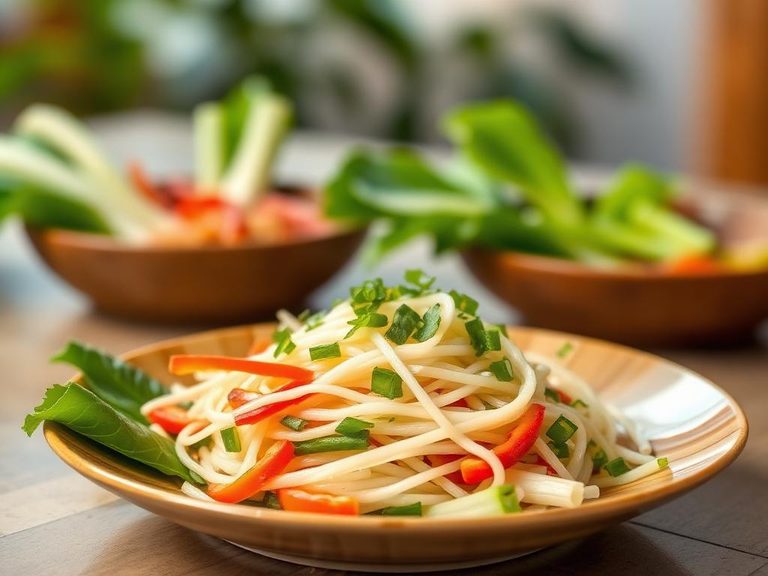
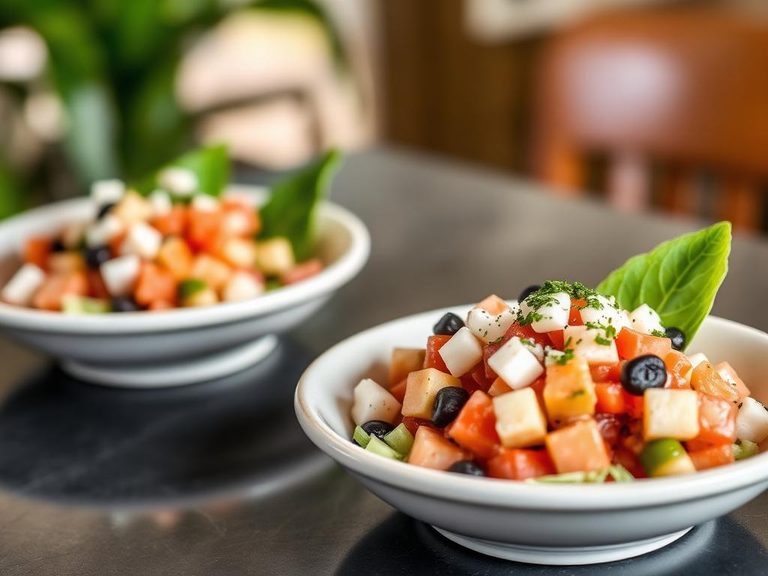
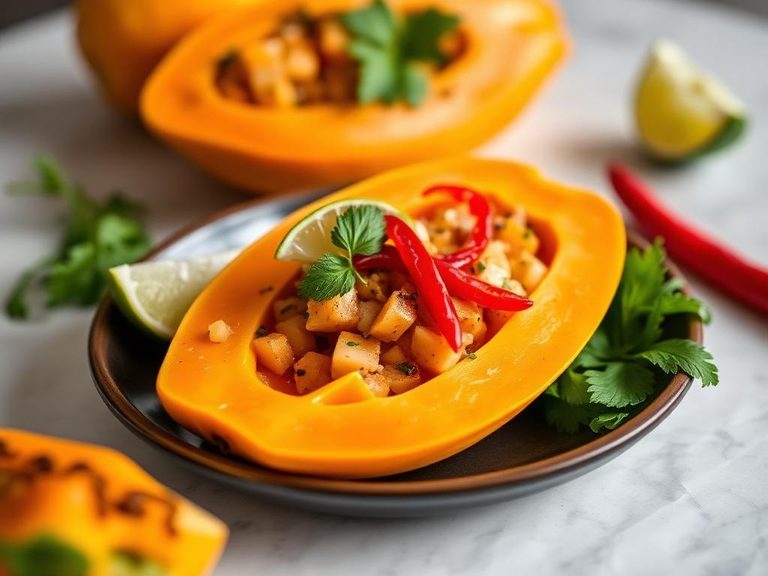
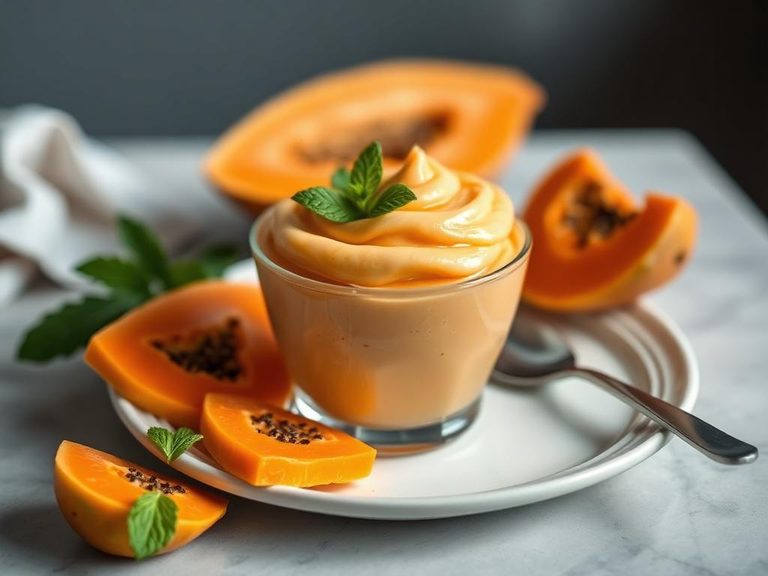
People adore papaya for its luscious, tropical sweetness and its incredible versatility—it shines equally well in fresh breakfast bowls, spicy salads, and blended into smoothies. Its vibrant color and unique flavor are a hallmark of many tropical cuisines and a symbol of sunny, relaxed meals.
⚠️ Watch-outs & how to enjoy it better
The natural sugars (about 8g per cup) can cause a blood-sugar spike if eaten alone in large quantities. To counteract this, pair papaya with a source of protein (like Greek yogurt) or healthy fat (like nuts or seeds) to slow sugar absorption. Also, the enzyme papain can irritate the mouth or lips in some individuals; this effect is neutralized by cooking or consuming the fruit with other foods.
Key benefits
- Excellent source of vitamin C for immune function and skin health.
- Rich in vitamin A, important for vision and cell growth.
- Contains papain, a digestive enzyme that may aid protein digestion.
- High in fiber, supporting digestive regularity.
- Provides antioxidants like lycopene, linked to heart health.
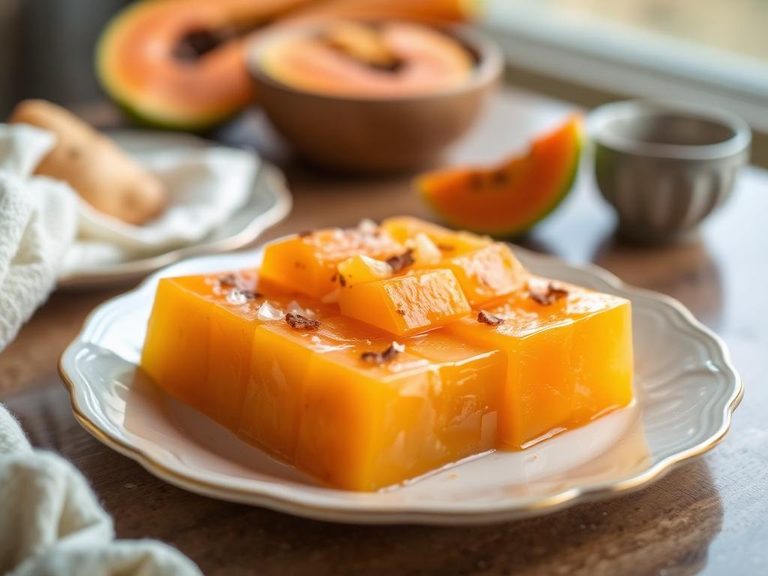
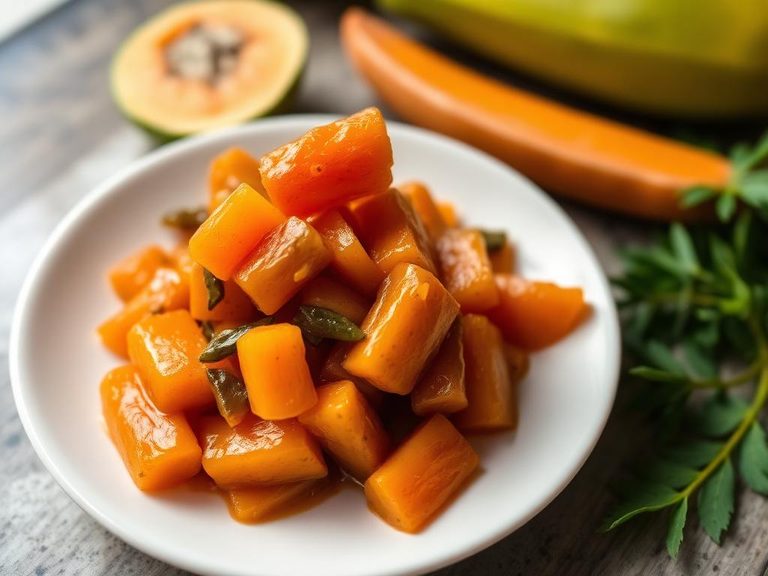
🍽️ Popular dishes
🌍 Where it's eaten
💡 Did you know?
The black seeds of the papaya are edible and have a sharp, peppery flavor; they are sometimes used as a substitute for black pepper or in salad dressings.
Full nutrition (USDA data · scales with serving)
| Water | 88.1 g |
| Energy | 43.0 kcal |
| Energy | 179 kj |
| Protein | 0.47 g |
| Total lipid (fat) | 0.26 g |
| Ash | 0.39 g |
| Carbohydrate, by difference | 10.8 g |
| Fiber, total dietary | 1.7 g |
| Total Sugars | 7.8 g |
| Sucrose | 0.00 g |
| Glucose | 4.1 g |
| Fructose | 3.7 g |
| Lactose | 0.00 g |
| Maltose | 0.00 g |
| Galactose | 0.00 g |
| Starch | 0.00 g |
| Calcium, Ca | 20.0 mg |
| Iron, Fe | 0.25 mg |
| Magnesium, Mg | 21.0 mg |
| Phosphorus, P | 10.0 mg |
| Potassium, K | 182 mg |
| Sodium, Na | 8.0 mg |
| Zinc, Zn | 0.08 mg |
| Copper, Cu | 0.04 mg |
| Manganese, Mn | 0.04 mg |
| Selenium, Se | 0.60 ug |
| Vitamin C, total ascorbic acid | 60.9 mg |
| Thiamin | 0.02 mg |
| Riboflavin | 0.03 mg |
| Niacin | 0.36 mg |
| Pantothenic acid | 0.19 mg |
| Vitamin B-6 | 0.04 mg |
| Folate, total | 37.0 ug |
| Folic acid | 0.00 ug |
| Folate, food | 37.0 ug |
| Folate, DFE | 37.0 ug |
| Choline, total | 6.1 mg |
| Vitamin B-12 | 0.00 ug |
| Vitamin B-12, added | 0.00 ug |
| Vitamin A, RAE | 47.0 ug |
| Retinol | 0.00 ug |
| Carotene, beta | 274 ug |
| Carotene, alpha | 2.0 ug |
| Cryptoxanthin, beta | 589 ug |
| Vitamin A, IU | 950 iu |
| Lycopene | 1828 ug |
| Lutein + zeaxanthin | 89.0 ug |
| Vitamin E (alpha-tocopherol) | 0.30 mg |
| Vitamin E, added | 0.00 mg |
| Tocopherol, beta | 0.02 mg |
| Tocopherol, gamma | 0.09 mg |
| Tocopherol, delta | 0.01 mg |
| Tocotrienol, alpha | 0.00 mg |
| Tocotrienol, beta | 0.07 mg |
| Tocotrienol, gamma | 0.01 mg |
| Tocotrienol, delta | 0.00 mg |
| Vitamin D (D2 + D3), International Units | 0.00 iu |
| Vitamin D (D2 + D3) | 0.00 ug |
| Vitamin K (phylloquinone) | 2.6 ug |
| Alcohol, ethyl | 0.00 g |
| Caffeine | 0.00 mg |
| Theobromine | 0.00 mg |
Fat & fatty acid profile (per 100g)
| Fatty acids, total saturated | 0.08 g |
| SFA 4:0 | 0.00 g |
| SFA 6:0 | 0.00 g |
| SFA 8:0 | 0.00 g |
| SFA 10:0 | 0.00 g |
| SFA 12:0 | 0.00 g |
| SFA 14:0 | 0.01 g |
| SFA 16:0 | 0.06 g |
| SFA 18:0 | 0.00 g |
| Fatty acids, total monounsaturated | 0.07 g |
| MUFA 16:1 | 0.04 g |
| MUFA 18:1 | 0.03 g |
| MUFA 20:1 | 0.00 g |
| MUFA 22:1 | 0.00 g |
| Fatty acids, total polyunsaturated | 0.06 g |
| PUFA 18:2 | 0.01 g |
| PUFA 18:3 | 0.05 g |
| PUFA 18:4 | 0.00 g |
| PUFA 20:4 | 0.00 g |
| PUFA 20:5 n-3 (EPA) | 0.00 g |
| PUFA 22:5 n-3 (DPA) | 0.00 g |
| PUFA 22:6 n-3 (DHA) | 0.00 g |
| Fatty acids, total trans | 0.00 g |
| Cholesterol | 0.00 mg |
Amino acid profile (per 100g)
| Tryptophan | 0.01 g |
| Threonine | 0.01 g |
| Isoleucine | 0.01 g |
| Leucine | 0.02 g |
| Lysine | 0.03 g |
| Methionine | 0.00 g |
| Phenylalanine | 0.01 g |
| Tyrosine | 0.01 g |
| Valine | 0.01 g |
| Arginine | 0.01 g |
| Histidine | 0.01 g |
| Alanine | 0.01 g |
| Aspartic acid | 0.05 g |
| Glutamic acid | 0.03 g |
| Glycine | 0.02 g |
| Proline | 0.01 g |
| Serine | 0.01 g |
FAQ
How do I pick a ripe papaya?
Look for skin that is mostly yellow or orange with a slight give when pressed gently. Green papayas are unripe and used for savory dishes like salads.
Can I eat papaya seeds?
Yes, they are edible and have a peppery taste. You can eat them in small amounts, dry and grind them as a spice, or blend them into dressings, but they are quite bitter.
Is papaya safe during pregnancy?
Ripe papaya is generally considered safe and nutritious. However, unripe (green) papaya contains high levels of latex and papain, which may cause uterine contractions and is often advised against.
Nutrient density (calculated · NRF9.3)
Nutrient Rich Foods index: beneficial nutrients (protein, fiber, vitamins, minerals) minus saturated fat, added sugar & sodium, per 100 kcal.
NRF9.3 index — Fulgoni, Keast & Drewnowski, 2009. Computed from USDA nutrients.
Weight-loss friendliness (composite index)
Energy density 0.43 kcal/g · 4% calories from protein · 1.7 g fiber · 7.8 g sugar per 100 g.
Composite of energy density (Rolls et al., 1999), protein & fiber satiety, minus sugar. A calculated heuristic — ranks satiety-per-calorie, not a clinical measure.
Dietary load (calculated from USDA values)
Potential renal acid load. Positive = acid-forming, negative = alkaline-forming.
Sodium-to-potassium ratio: 0.04 (lower is better — aim for ≤ 1)
Sodium:potassium per WHO potassium guidance. Computed from USDA nutrients.