

Olives, ripe, canned (small-extra large)
Whole food · Fruits and Fruit Juices

Photo: Wikipedia
Cured in brine or lye, these small to large black olives offer a rich, meaty texture and a deep, savory flavor with a characteristic salty tang. Nutritionally, they are a standout source of heart-healthy monounsaturated fats, providing nearly 11 grams of fat per 100 grams with virtually no sugar.
Calorie split: 3% protein · 19% carbs · 78% fat
↓ Full nutrition💚 Why it's loved
People adore the intense, briny burst of flavor that can elevate a simple dish, and their versatility makes them a staple in everything from salads to charcuterie boards. They are deeply woven into the culinary and cultural fabric of Mediterranean and Middle Eastern cuisines.
⚠️ Watch-outs & how to enjoy it better
The primary concern is their very high sodium content from the brining process, which can be problematic for those monitoring salt intake. To counteract this, rinse them briefly under water before use and pair them with low-sodium ingredients like fresh vegetables or unsalted nuts.
Key benefits
- Excellent source of heart-healthy monounsaturated fats
- Good source of dietary fiber (1.6g per 100g)
- Contains antioxidant compounds like vitamin E
- Provides essential minerals such as iron and copper
- Naturally low in sugar and carbohydrates
🍽️ Popular dishes
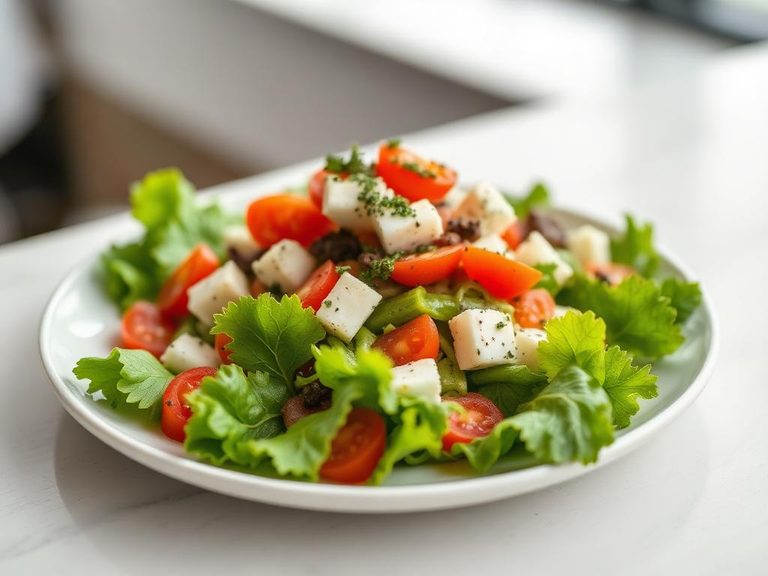
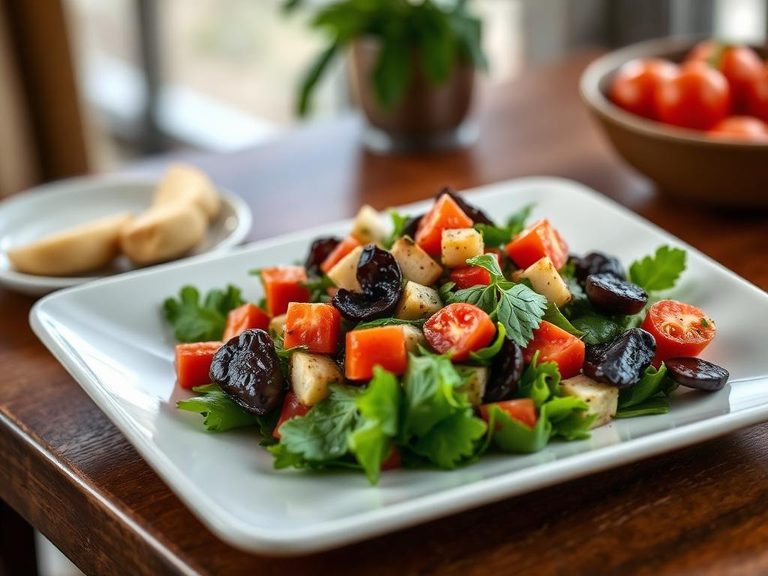
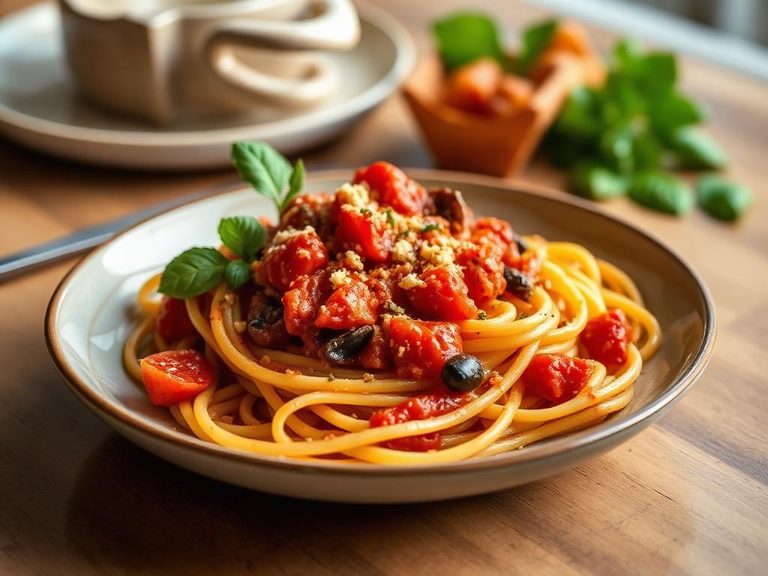
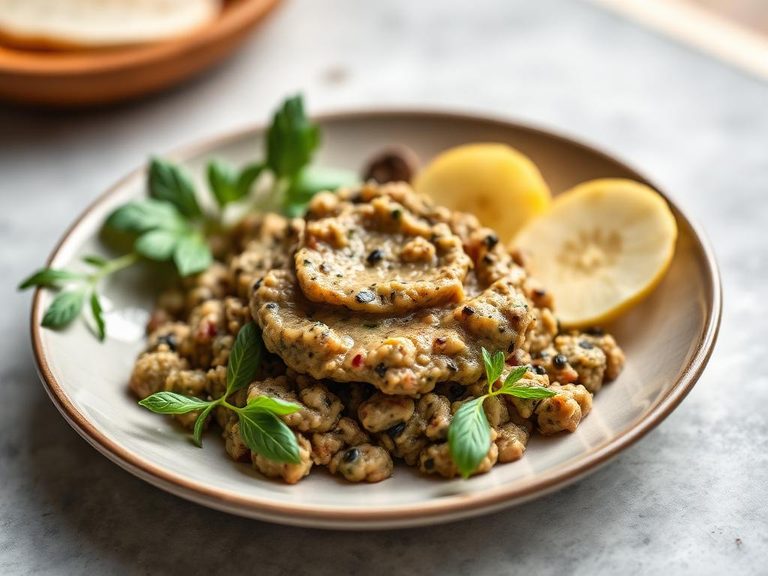
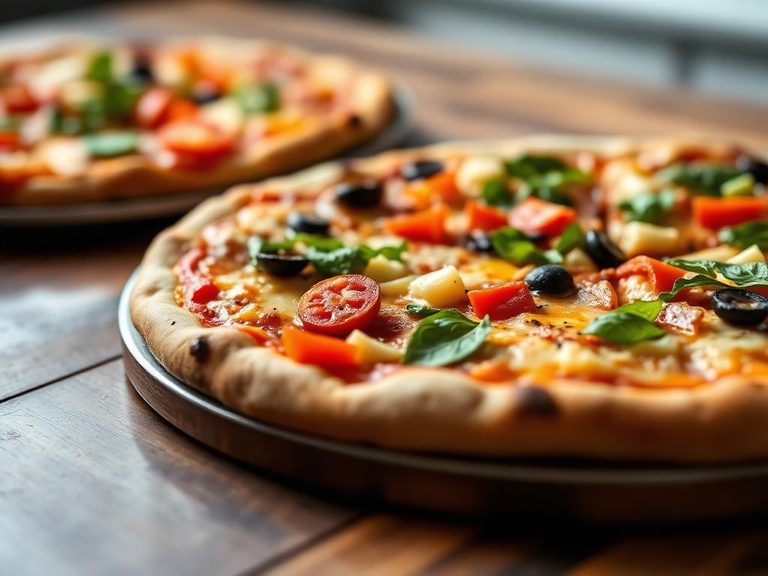
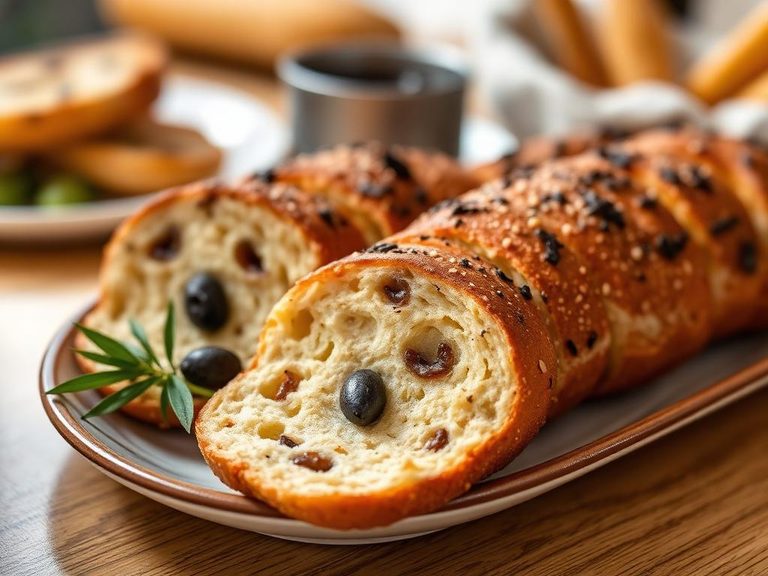
🌍 Where it's eaten
💡 Did you know?
The ancient Romans used a special spoon with three prongs, called a 'tridens' or 'ligula,' specifically designed to retrieve olives from narrow-necked storage jars without bruising them.
Full nutrition (USDA data · scales with serving)
| Water | 80.0 g |
| Energy | 116 kcal |
| Energy | 485 kj |
| Protein | 0.84 g |
| Total lipid (fat) | 10.9 g |
| Ash | 2.2 g |
| Carbohydrate, by difference | 6.0 g |
| Fiber, total dietary | 1.6 g |
| Total Sugars | 0.00 g |
| Calcium, Ca | 88.0 mg |
| Iron, Fe | 6.3 mg |
| Magnesium, Mg | 4.0 mg |
| Phosphorus, P | 3.0 mg |
| Potassium, K | 8.0 mg |
| Sodium, Na | 735 mg |
| Zinc, Zn | 0.22 mg |
| Copper, Cu | 0.25 mg |
| Manganese, Mn | 0.02 mg |
| Selenium, Se | 0.90 ug |
| Vitamin C, total ascorbic acid | 0.90 mg |
| Thiamin | 0.00 mg |
| Riboflavin | 0.00 mg |
| Niacin | 0.04 mg |
| Pantothenic acid | 0.01 mg |
| Vitamin B-6 | 0.01 mg |
| Folate, total | 0.00 ug |
| Folic acid | 0.00 ug |
| Folate, food | 0.00 ug |
| Folate, DFE | 0.00 ug |
| Choline, total | 10.3 mg |
| Vitamin B-12 | 0.00 ug |
| Vitamin B-12, added | 0.00 ug |
| Vitamin A, RAE | 17.0 ug |
| Retinol | 0.00 ug |
| Carotene, beta | 198 ug |
| Carotene, alpha | 0.00 ug |
| Cryptoxanthin, beta | 0.00 ug |
| Vitamin A, IU | 330 iu |
| Lycopene | 0.00 ug |
| Lutein + zeaxanthin | 510 ug |
| Vitamin E (alpha-tocopherol) | 1.6 mg |
| Vitamin E, added | 0.00 mg |
| Tocopherol, beta | 0.00 mg |
| Tocopherol, gamma | 0.00 mg |
| Tocopherol, delta | 0.00 mg |
| Tocotrienol, alpha | 0.00 mg |
| Tocotrienol, beta | 0.00 mg |
| Tocotrienol, gamma | 0.00 mg |
| Tocotrienol, delta | 0.00 mg |
| Vitamin D (D2 + D3), International Units | 0.00 iu |
| Vitamin D (D2 + D3) | 0.00 ug |
| Vitamin K (phylloquinone) | 1.4 ug |
| Alcohol, ethyl | 0.00 g |
| Caffeine | 0.00 mg |
| Theobromine | 0.00 mg |
Fat & fatty acid profile (per 100g)
| Fatty acids, total saturated | 2.3 g |
| SFA 4:0 | 0.00 g |
| SFA 6:0 | 0.00 g |
| SFA 8:0 | 0.00 g |
| SFA 10:0 | 0.00 g |
| SFA 12:0 | 0.00 g |
| SFA 14:0 | 0.00 g |
| SFA 15:0 | 0.00 g |
| SFA 16:0 | 1.7 g |
| SFA 17:0 | 0.15 g |
| SFA 18:0 | 0.32 g |
| SFA 20:0 | 0.06 g |
| SFA 22:0 | 0.01 g |
| SFA 24:0 | 0.01 g |
| Fatty acids, total monounsaturated | 7.7 g |
| MUFA 14:1 | 0.00 g |
| MUFA 15:1 | 0.00 g |
| MUFA 16:1 | 0.15 g |
| MUFA 17:1 | 0.00 g |
| MUFA 18:1 | 7.5 g |
| MUFA 20:1 | 0.03 g |
| MUFA 22:1 | 0.00 g |
| Fatty acids, total polyunsaturated | 0.63 g |
| PUFA 18:2 | 0.63 g |
| PUFA 18:3 | 0.00 g |
| PUFA 18:4 | 0.00 g |
| PUFA 20:2 n-6 c,c | 0.00 g |
| PUFA 20:4 | 0.00 g |
| PUFA 20:4 n-6 | 0.00 g |
| PUFA 20:5 n-3 (EPA) | 0.00 g |
| PUFA 22:5 n-3 (DPA) | 0.00 g |
| PUFA 22:6 n-3 (DHA) | 0.00 g |
| Fatty acids, total trans | 0.00 g |
| Cholesterol | 0.00 mg |
Amino acid profile (per 100g)
| Threonine | 0.03 g |
| Isoleucine | 0.03 g |
| Leucine | 0.05 g |
| Lysine | 0.03 g |
| Methionine | 0.01 g |
| Phenylalanine | 0.03 g |
| Tyrosine | 0.02 g |
| Valine | 0.04 g |
| Arginine | 0.07 g |
| Histidine | 0.02 g |
| Alanine | 0.04 g |
| Aspartic acid | 0.09 g |
| Glutamic acid | 0.09 g |
| Glycine | 0.05 g |
| Proline | 0.04 g |
| Serine | 0.03 g |
FAQ
What's the difference between black and green olives?
Green olives are picked unripe, while black olives are allowed to ripen fully on the tree before curing. This gives black olives a milder, less bitter flavor and a softer texture compared to the firmer, more pungent green variety.
Why are canned olives sometimes black but not naturally so?
Many 'black' olives are actually green olives cured with lye and then exposed to air and an iron compound (ferrous gluconate) to achieve a uniform, deep black color and prevent oxidation.
How should I store opened canned olives?
Transfer them to a clean, airtight container, ensuring they are submerged in their brine or a little olive oil. Refrigerate and use within 1-2 weeks for best quality.
Nutrient density (calculated · NRF9.3)
Nutrient Rich Foods index: beneficial nutrients (protein, fiber, vitamins, minerals) minus saturated fat, added sugar & sodium, per 100 kcal.
NRF9.3 index — Fulgoni, Keast & Drewnowski, 2009. Computed from USDA nutrients.
Weight-loss friendliness (composite index)
Energy density 1.16 kcal/g · 3% calories from protein · 1.6 g fiber · 0.0 g sugar per 100 g.
Composite of energy density (Rolls et al., 1999), protein & fiber satiety, minus sugar. A calculated heuristic — ranks satiety-per-calorie, not a clinical measure.
Dietary load (calculated from USDA values)
Potential renal acid load. Positive = acid-forming, negative = alkaline-forming.
Sodium-to-potassium ratio: 91.88 (lower is better — aim for ≤ 1)
Sodium:potassium per WHO potassium guidance. Computed from USDA nutrients.