

Olive Bread

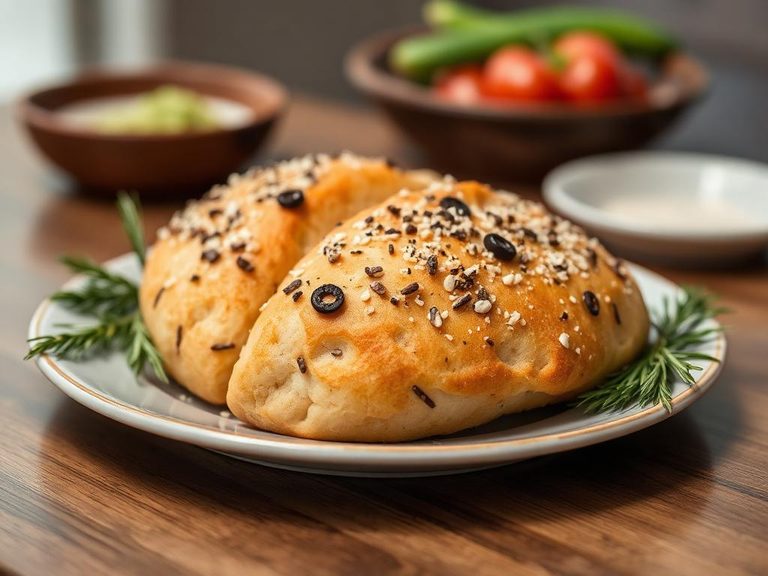
Olive bread is a savory, rustic loaf that incorporates chopped olives—often briny Kalamata or green varieties—directly into the dough, creating pockets of salty, tangy flavor. It typically features a simple base of flour, water, yeast, and salt, sometimes enhanced with herbs like rosemary or thyme. This bread is a staple across the Mediterranean, particularly in Greece, Italy, and southern France, where it's enjoyed as a flavorful accompaniment to meals or on its own.
🍽️ Nutrition at a glance
As a bread, it is primarily a source of carbohydrates for energy, with the olives adding healthy monounsaturated fats and a modest amount of protein. A standard slice provides roughly 150-200 calories, along with beneficial nutrients like vitamin E, iron, and antioxidants from the olives themselves.
Nutrition breakdown
| Calories | 130 kcal |
| Protein | 4 g |
| Carbs | 20 g |
| Fat | 4 g |
| Fiber | 2 g |
| Sugar | 1 g |
| Sodium | 280 mg |
| Iron | 1.5 mg |
| Calcium | 40 mg |
| Potassium | 80 mg |
| Magnesium | 20 mg |
| Phosphorus | 60 mg |
| Niacin (B3) | 2 mg |
| Folate | 40 µg |
| Selenium | 10 µg |
Per 1 slice (50 g) · estimated, varies by recipe
💡 What's interesting
What makes olive bread unique is its perfect marriage of staple grain and a preserved fruit, turning a simple loaf into a self-contained flavor experience. Nutritionally, the olives elevate the bread from a basic carb source to one that offers heart-healthy fats and a more complex nutritional profile.
🍽️ Related dishes





AI estimate may be inaccurate · Terms