

Melons, honeydew, raw
Whole food · Fruits and Fruit Juices

Photo: Wikipedia
Honeydew melon is a smooth, pale green-fleshed melon with a sweet, subtly floral flavor and a juicy, tender texture. Its high water content makes it incredibly refreshing, while its natural sugars provide a light energy boost. Nutritionally, it's a low-calorie source of vitamin C and potassium.
Calorie split: 5% protein · 91% carbs · 3% fat
↓ Full nutrition💚 Why it's loved
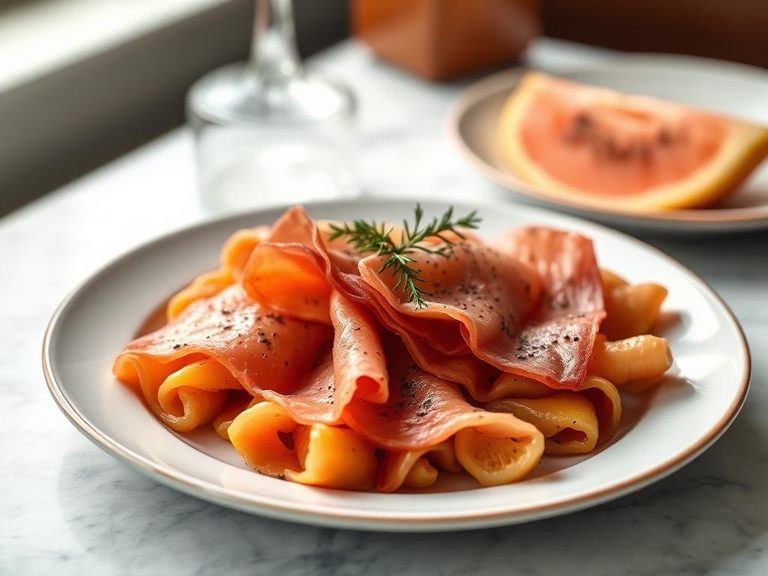
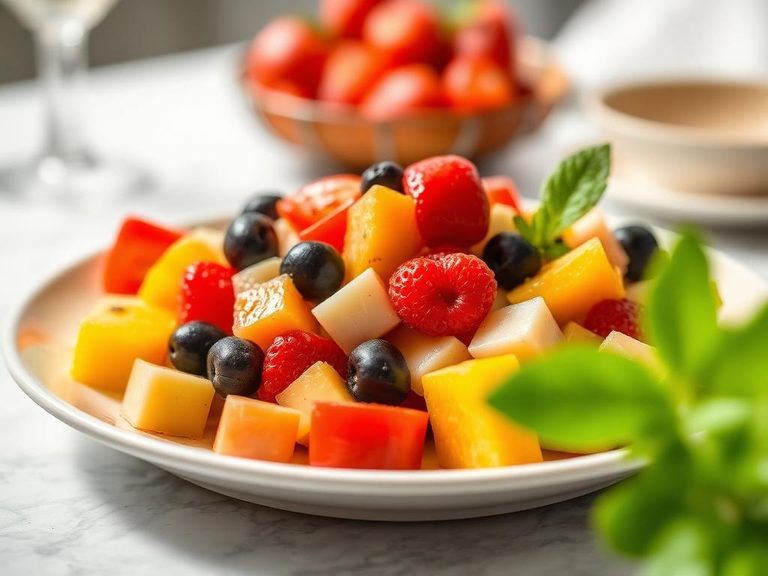
People love honeydew for its delicate, honey-like sweetness and cool, crisp texture that makes it a quintessential summer treat. It's cherished for its versatility, enjoyed fresh in fruit salads, as a hydrating snack, or paired with salty prosciutto in elegant appetizers.
⚠️ Watch-outs & how to enjoy it better
Its high natural sugar content can cause blood sugar spikes if eaten in large quantities, especially for those with diabetes. To mitigate this, pair it with a source of protein or healthy fat (like nuts or cheese) and practice portion control. The rind can harbor bacteria, so always wash it thoroughly before cutting.
Key benefits
- Excellent source of hydration (over 90% water).
- Rich in vitamin C, supporting immune function.
- Provides potassium for healthy blood pressure.
- Contains antioxidants like beta-carotene.
- Low in calories and fat, aiding weight management.
🍽️ Popular dishes
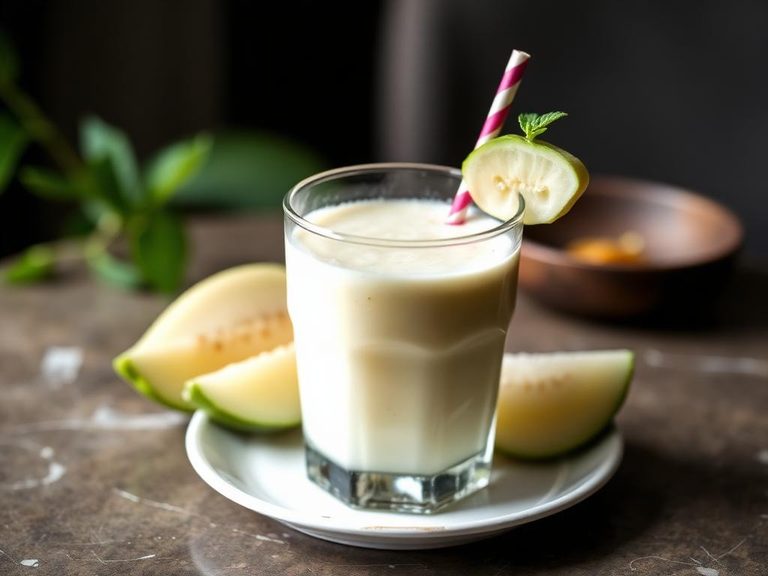
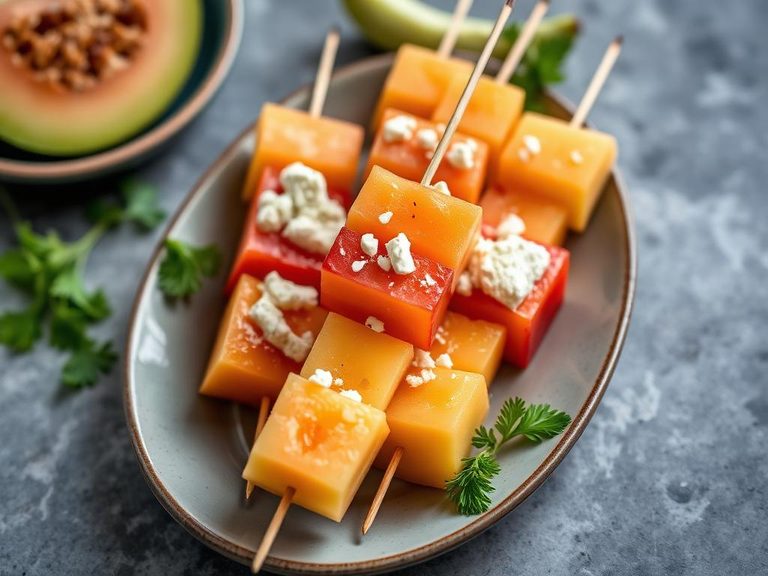
🌍 Where it's eaten
💡 Did you know?
The honeydew is actually the mature form of the white melon, and its characteristic pale green color comes from a lack of carotenoids, the pigments that give cantaloupes their orange hue.
Full nutrition (USDA data · scales with serving)
| Water | 89.8 g |
| Energy | 36.0 kcal |
| Energy | 150 kj |
| Protein | 0.54 g |
| Total lipid (fat) | 0.14 g |
| Ash | 0.41 g |
| Carbohydrate, by difference | 9.1 g |
| Fiber, total dietary | 0.80 g |
| Total Sugars | 8.1 g |
| Sucrose | 2.5 g |
| Glucose | 2.7 g |
| Fructose | 3.0 g |
| Lactose | 0.00 g |
| Maltose | 0.00 g |
| Galactose | 0.00 g |
| Starch | 0.00 g |
| Calcium, Ca | 6.0 mg |
| Iron, Fe | 0.17 mg |
| Magnesium, Mg | 10.0 mg |
| Phosphorus, P | 11.0 mg |
| Potassium, K | 228 mg |
| Sodium, Na | 18.0 mg |
| Zinc, Zn | 0.09 mg |
| Copper, Cu | 0.02 mg |
| Manganese, Mn | 0.03 mg |
| Selenium, Se | 0.70 ug |
| Vitamin C, total ascorbic acid | 18.0 mg |
| Thiamin | 0.04 mg |
| Riboflavin | 0.01 mg |
| Niacin | 0.42 mg |
| Pantothenic acid | 0.15 mg |
| Vitamin B-6 | 0.09 mg |
| Folate, total | 19.0 ug |
| Folic acid | 0.00 ug |
| Folate, food | 19.0 ug |
| Folate, DFE | 19.0 ug |
| Choline, total | 7.6 mg |
| Vitamin B-12 | 0.00 ug |
| Vitamin B-12, added | 0.00 ug |
| Vitamin A, RAE | 3.0 ug |
| Retinol | 0.00 ug |
| Carotene, beta | 30.0 ug |
| Carotene, alpha | 0.00 ug |
| Cryptoxanthin, beta | 0.00 ug |
| Vitamin A, IU | 50.0 iu |
| Lycopene | 0.00 ug |
| Lutein + zeaxanthin | 27.0 ug |
| Vitamin E (alpha-tocopherol) | 0.02 mg |
| Vitamin E, added | 0.00 mg |
| Tocopherol, beta | 0.00 mg |
| Tocopherol, gamma | 0.03 mg |
| Tocopherol, delta | 0.00 mg |
| Tocotrienol, alpha | 0.00 mg |
| Tocotrienol, beta | 0.00 mg |
| Tocotrienol, gamma | 0.00 mg |
| Tocotrienol, delta | 0.00 mg |
| Vitamin D (D2 + D3), International Units | 0.00 iu |
| Vitamin D (D2 + D3) | 0.00 ug |
| Vitamin K (phylloquinone) | 2.9 ug |
| Vitamin K (Dihydrophylloquinone) | 0.00 ug |
| Alcohol, ethyl | 0.00 g |
| Caffeine | 0.00 mg |
| Theobromine | 0.00 mg |
Fat & fatty acid profile (per 100g)
| Fatty acids, total saturated | 0.04 g |
| SFA 4:0 | 0.00 g |
| SFA 6:0 | 0.00 g |
| SFA 8:0 | 0.00 g |
| SFA 10:0 | 0.00 g |
| SFA 12:0 | 0.00 g |
| SFA 14:0 | 0.00 g |
| SFA 16:0 | 0.03 g |
| SFA 18:0 | 0.00 g |
| Fatty acids, total monounsaturated | 0.00 g |
| MUFA 16:1 | 0.00 g |
| MUFA 18:1 | 0.00 g |
| MUFA 20:1 | 0.00 g |
| MUFA 22:1 | 0.00 g |
| Fatty acids, total polyunsaturated | 0.06 g |
| PUFA 18:2 | 0.03 g |
| PUFA 18:3 | 0.03 g |
| PUFA 18:4 | 0.00 g |
| PUFA 20:4 | 0.00 g |
| PUFA 20:5 n-3 (EPA) | 0.00 g |
| PUFA 22:5 n-3 (DPA) | 0.00 g |
| PUFA 22:6 n-3 (DHA) | 0.00 g |
| Fatty acids, total trans | 0.00 g |
| Cholesterol | 0.00 mg |
Amino acid profile (per 100g)
| Tryptophan | 0.01 g |
| Threonine | 0.01 g |
| Isoleucine | 0.01 g |
| Leucine | 0.02 g |
| Lysine | 0.02 g |
| Methionine | 0.01 g |
| Cystine | 0.01 g |
| Phenylalanine | 0.01 g |
| Tyrosine | 0.01 g |
| Valine | 0.02 g |
| Arginine | 0.01 g |
| Histidine | 0.01 g |
| Alanine | 0.04 g |
| Aspartic acid | 0.09 g |
| Glutamic acid | 0.15 g |
| Glycine | 0.02 g |
| Proline | 0.01 g |
| Serine | 0.02 g |
FAQ
How do I pick a ripe honeydew?
Look for a creamy, pale yellow rind (not green), a slight blossom-end fragrance, and a heavy feel for its size. The stem end should give slightly to pressure.
Can I eat the seeds and rind?
The seeds are edible but typically scooped out and discarded. The rind is tough and not commonly eaten, though it can be pickled in some cuisines.
How should I store a cut honeydew?
Wrap the cut surface tightly in plastic wrap or store in an airtight container in the refrigerator. It will keep for 3-5 days.
Nutrient density (calculated · NRF9.3)
Nutrient Rich Foods index: beneficial nutrients (protein, fiber, vitamins, minerals) minus saturated fat, added sugar & sodium, per 100 kcal.
NRF9.3 index — Fulgoni, Keast & Drewnowski, 2009. Computed from USDA nutrients.
Weight-loss friendliness (composite index)
Energy density 0.36 kcal/g · 6% calories from protein · 0.8 g fiber · 8.1 g sugar per 100 g.
Composite of energy density (Rolls et al., 1999), protein & fiber satiety, minus sugar. A calculated heuristic — ranks satiety-per-calorie, not a clinical measure.
Dietary load (calculated from USDA values)
Potential renal acid load. Positive = acid-forming, negative = alkaline-forming.
Sodium-to-potassium ratio: 0.08 (lower is better — aim for ≤ 1)
Sodium:potassium per WHO potassium guidance. Computed from USDA nutrients.