

Lamb, New Zealand, imported, sweetbread, raw
Whole food · Lamb, Veal, and Game Products

Photo: Wikipedia
Sweetbreads are the thymus or pancreas glands of a young lamb, prized for their delicate, creamy texture and mild, subtly sweet flavor. When raw, they appear as pale, lobed masses that transform into a luxurious, velvety bite when cooked properly. Nutritionally, they are a lean, high-protein organ meat with minimal fat and zero carbohydrates.
Calorie split: 61% protein · 0% carbs · 39% fat
↓ Full nutrition💚 Why it's loved
People adore sweetbreads for their unique, non-gamey flavor and melt-in-the-mouth texture that feels indulgent yet refined. They are a versatile canvas in the kitchen, capable of being fried, braised, or grilled, and are a celebrated delicacy in many classic cuisines.
⚠️ Watch-outs & how to enjoy it better
The primary downside is their preparation, which requires careful soaking, trimming, and often blanching to remove any residual blood or impurities for the best flavor and texture. They are also an organ meat, which some may find unappealing on principle, and should be sourced from reputable suppliers to ensure quality.
Key benefits
- Excellent source of high-quality protein for muscle maintenance.
- Rich in B vitamins, particularly B12, crucial for nerve function and energy.
- Contains important minerals like zinc and selenium for immune health.
- Low in fat and carbohydrates, fitting well into lean protein-focused diets.
- A traditional nose-to-tail ingredient that promotes whole-animal utilization.
🍽️ Popular dishes
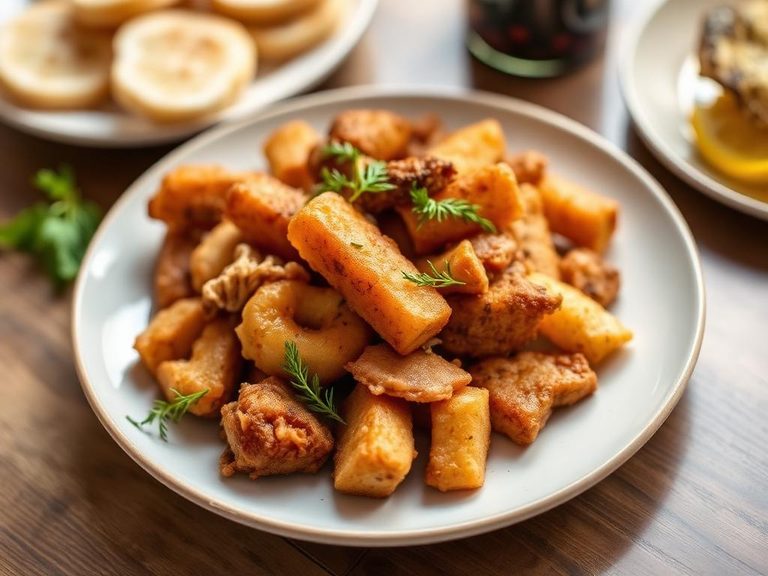
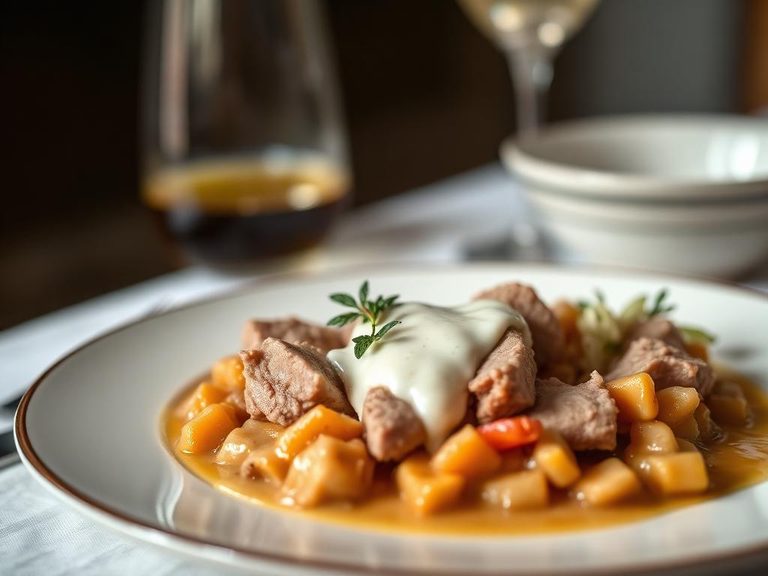


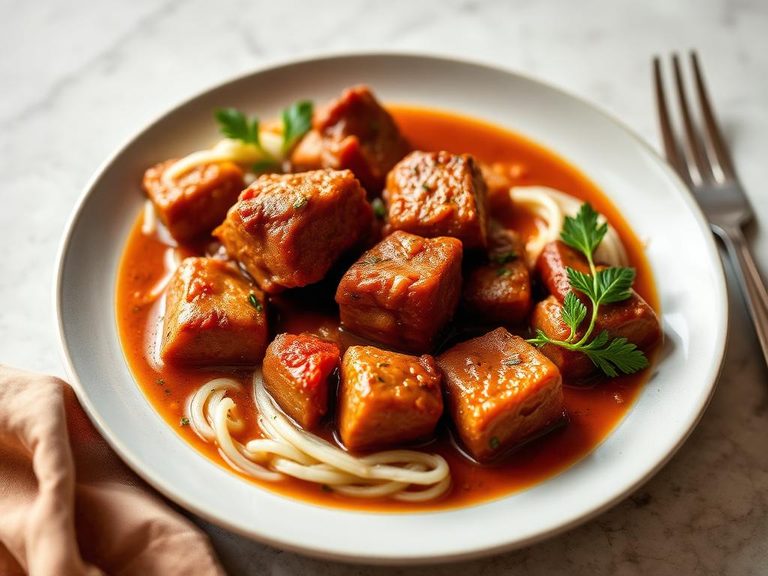
🌍 Where it's eaten
💡 Did you know?
The term 'sweetbread' is believed to derive from the Old English 'swete brod,' meaning 'sweet meat,' referring not to sugar but to the high-quality, desirable nature of the organ.
Full nutrition (USDA data · scales with serving)
| Water | 85.8 g |
| Energy | 72.0 kcal |
| Energy | 303 kj |
| Protein | 11.0 g |
| Total lipid (fat) | 3.2 g |
| Ash | 1.4 g |
| Carbohydrate, by difference | 0.00 g |
| Fiber, total dietary | 0.00 g |
| Total Sugars | 0.00 g |
| Calcium, Ca | 2.0 mg |
| Iron, Fe | 0.54 mg |
| Magnesium, Mg | 14.0 mg |
| Phosphorus, P | 310 mg |
| Potassium, K | 302 mg |
| Sodium, Na | 39.0 mg |
| Zinc, Zn | 0.98 mg |
| Copper, Cu | 0.06 mg |
| Manganese, Mn | 0.01 mg |
| Selenium, Se | 8.6 ug |
| Vitamin C, total ascorbic acid | 0.00 mg |
| Thiamin | 0.05 mg |
| Riboflavin | 0.07 mg |
| Niacin | 1.3 mg |
| Pantothenic acid | 0.72 mg |
| Vitamin B-6 | 0.00 mg |
| Vitamin B-12 | 1.8 ug |
| Vitamin A, RAE | 5.0 ug |
| Retinol | 5.0 ug |
| Carotene, beta | 0.00 ug |
| Carotene, alpha | 0.00 ug |
| Cryptoxanthin, beta | 0.00 ug |
| Vitamin A, IU | 18.0 iu |
| Lycopene | 0.00 ug |
| Lutein + zeaxanthin | 0.00 ug |
| Vitamin E (alpha-tocopherol) | 0.48 mg |
| Vitamin D (D2 + D3), International Units | 4.0 iu |
| Vitamin D (D2 + D3) | 0.10 ug |
| Vitamin D3 (cholecalciferol) | 0.10 ug |
| Alcohol, ethyl | 0.00 g |
| Caffeine | 0.00 mg |
| Theobromine | 0.00 mg |
Fat & fatty acid profile (per 100g)
| Fatty acids, total saturated | 1.6 g |
| SFA 4:0 | 0.00 g |
| SFA 6:0 | 0.00 g |
| SFA 8:0 | 0.00 g |
| SFA 10:0 | 0.10 g |
| SFA 12:0 | 0.00 g |
| SFA 14:0 | 0.06 g |
| SFA 16:0 | 0.60 g |
| SFA 17:0 | 0.06 g |
| SFA 18:0 | 0.76 g |
| SFA 20:0 | 0.00 g |
| SFA 22:0 | 0.02 g |
| SFA 24:0 | 0.00 g |
| Fatty acids, total monounsaturated | 1.1 g |
| MUFA 14:1 | 0.00 g |
| MUFA 15:1 | 0.00 g |
| MUFA 16:1 | 0.03 g |
| MUFA 16:1 c | 0.03 g |
| MUFA 17:1 | 0.00 g |
| MUFA 18:1 | 1.1 g |
| MUFA 18:1 c | 0.92 g |
| MUFA 20:1 | 0.01 g |
| MUFA 22:1 | 0.00 g |
| MUFA 22:1 c | 0.00 g |
| MUFA 24:1 c | 0.00 g |
| Fatty acids, total polyunsaturated | 0.23 g |
| PUFA 18:2 | 0.10 g |
| PUFA 18:2 n-6 c,c | 0.07 g |
| PUFA 18:2 CLAs | 0.04 g |
| PUFA 18:3 | 0.04 g |
| PUFA 18:3 n-3 c,c,c (ALA) | 0.04 g |
| PUFA 18:3 n-6 c,c,c | 0.00 g |
| PUFA 18:4 | 0.00 g |
| PUFA 20:2 n-6 c,c | 0.00 g |
| PUFA 20:3 | 0.00 g |
| PUFA 20:3 n-3 | 0.00 g |
| PUFA 20:3 n-6 | 0.00 g |
| PUFA 20:4 | 0.03 g |
| PUFA 20:4 n-6 | 0.03 g |
| PUFA 20:5 n-3 (EPA) | 0.02 g |
| PUFA 22:5 n-3 (DPA) | 0.03 g |
| PUFA 22:6 n-3 (DHA) | 0.01 g |
| Fatty acids, total trans | 0.16 g |
| Fatty acids, total trans-monoenoic | 0.16 g |
| TFA 16:1 t | 0.01 g |
| TFA 18:1 t | 0.15 g |
| TFA 18:2 t,t | 0.00 g |
| Fatty acids, total trans-polyenoic | 0.00 g |
| Cholesterol | 160 mg |
Amino acid profile (per 100g)
| Tryptophan | 0.12 g |
| Threonine | 0.53 g |
| Isoleucine | 0.49 g |
| Leucine | 0.85 g |
| Lysine | 0.96 g |
| Methionine | 0.36 g |
| Cystine | 0.14 g |
| Phenylalanine | 0.43 g |
| Tyrosine | 0.38 g |
| Valine | 0.56 g |
| Arginine | 0.74 g |
| Histidine | 0.23 g |
| Alanine | 0.55 g |
| Glutamic acid | 1.5 g |
| Glycine | 0.47 g |
| Proline | 0.35 g |
| Serine | 0.38 g |
FAQ
What exactly are sweetbreads?
Sweetbreads are the thymus gland (from the neck) or the pancreas gland (from the belly) of a young animal, most commonly lamb or veal. They are not related to the heart, liver, or other organs.
How do I prepare raw sweetbreads for cooking?
Soak them in cold water or milk for several hours to draw out blood. Then, blanch them in simmering water for a few minutes, shock in ice water, and carefully peel off any outer membrane or fat before cooking.
Are sweetbreads high in cholesterol?
Like most organ meats, sweetbreads are a source of dietary cholesterol. However, for most healthy individuals, dietary cholesterol has a minimal impact on blood cholesterol levels compared to saturated and trans fats. They are best enjoyed as part of a balanced diet.
Nutrient density (calculated · NRF9.3)
Nutrient Rich Foods index: beneficial nutrients (protein, fiber, vitamins, minerals) minus saturated fat, added sugar & sodium, per 100 kcal.
NRF9.3 index — Fulgoni, Keast & Drewnowski, 2009. Computed from USDA nutrients.
Weight-loss friendliness (composite index)
Energy density 0.72 kcal/g · 61% calories from protein · 0.0 g fiber · 0.0 g sugar per 100 g.
Composite of energy density (Rolls et al., 1999), protein & fiber satiety, minus sugar. A calculated heuristic — ranks satiety-per-calorie, not a clinical measure.
Dietary load (calculated from USDA values)
Potential renal acid load. Positive = acid-forming, negative = alkaline-forming.
Sodium-to-potassium ratio: 0.13 (lower is better — aim for ≤ 1)
Sodium:potassium per WHO potassium guidance. Computed from USDA nutrients.