

Lamb, New Zealand, imported, liver, cooked, soaked and fried
Whole food · Lamb, Veal, and Game Products

Photo: Wikipedia
New Zealand lamb liver, after a traditional soak and quick pan-fry, transforms into a remarkably tender and richly flavored delicacy. Its texture is velvety and smooth, with a deep, mineral-rich taste that's less gamey than beef liver. Nutritionally, it's a powerhouse, delivering an exceptional 25.8 grams of protein per 100g with minimal fat and zero carbohydrates.
Calorie split: 61% protein · 4% carbs · 35% fat
↓ Full nutrition💚 Why it's loved
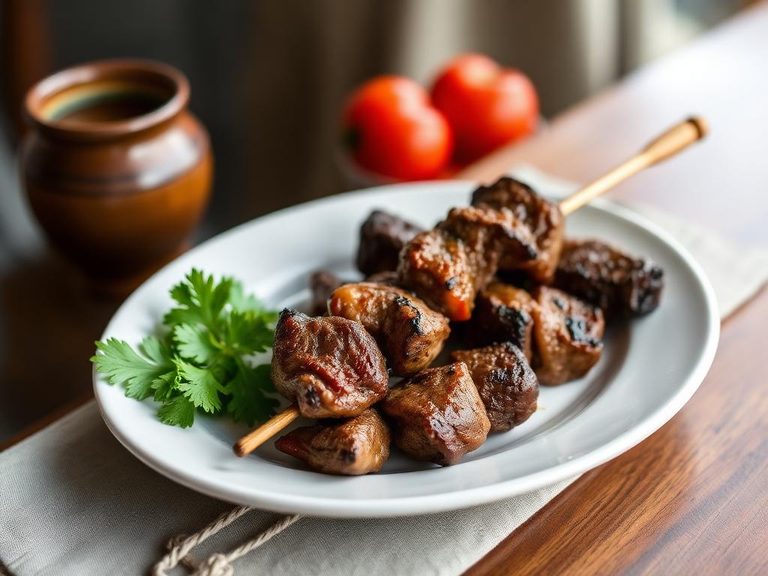
Food lovers cherish it for its intense, savory depth and buttery mouthfeel when cooked correctly. It's prized for its versatility, starring in everything from rustic British fry-ups to elegant French pâtés and Middle Eastern kebabs.
⚠️ Watch-outs & how to enjoy it better
The strong, mineral flavor can be off-putting to some, and its high vitamin A content means excessive consumption isn't advisable. To mitigate any potential iron-related digestive discomfort, soaking in milk or water before cooking is a classic technique, and it's best enjoyed as part of a balanced diet rather than a daily staple.
Key benefits
- Exceptionally high in complete protein for muscle maintenance.
- One of the richest natural sources of bioavailable vitamin B12.
- Provides highly absorbable heme iron to support energy levels.
- Contains significant amounts of vitamin A and folate.
- Low in fat and carbohydrates, fitting various dietary patterns.
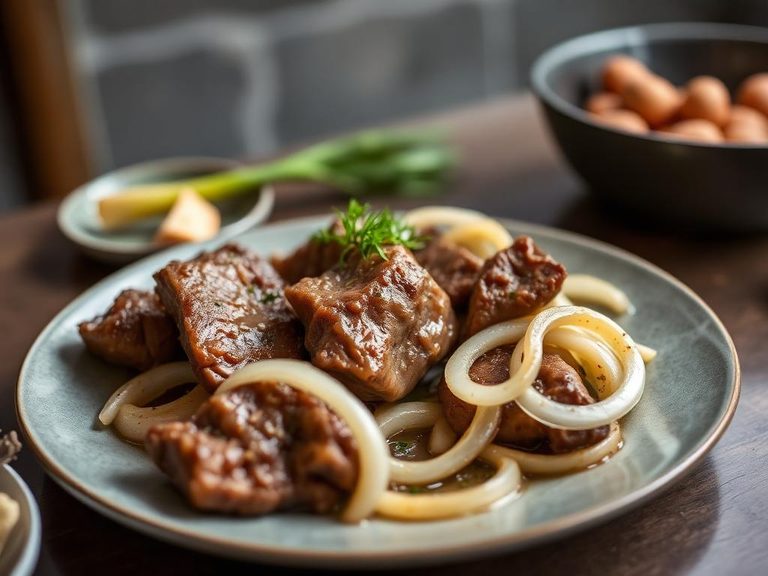
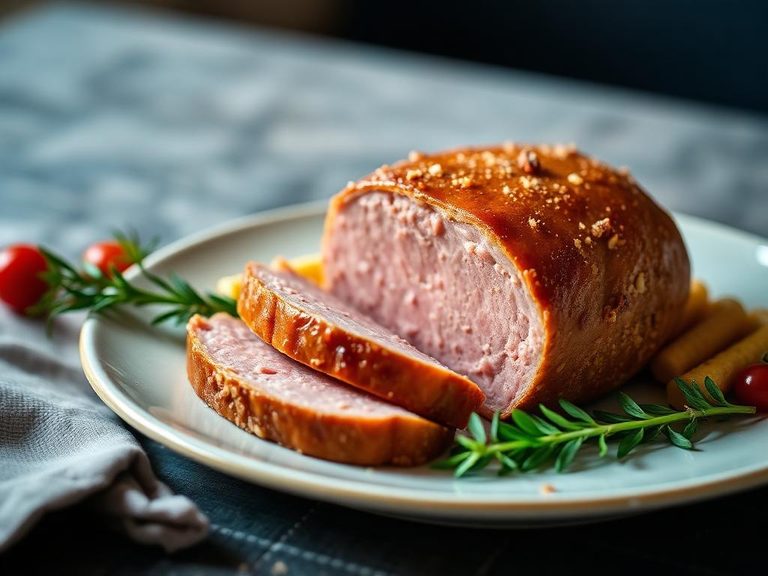
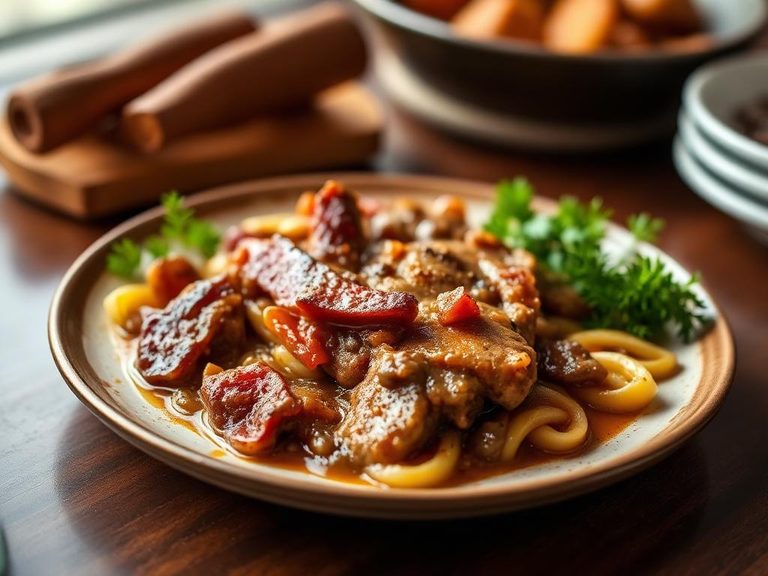
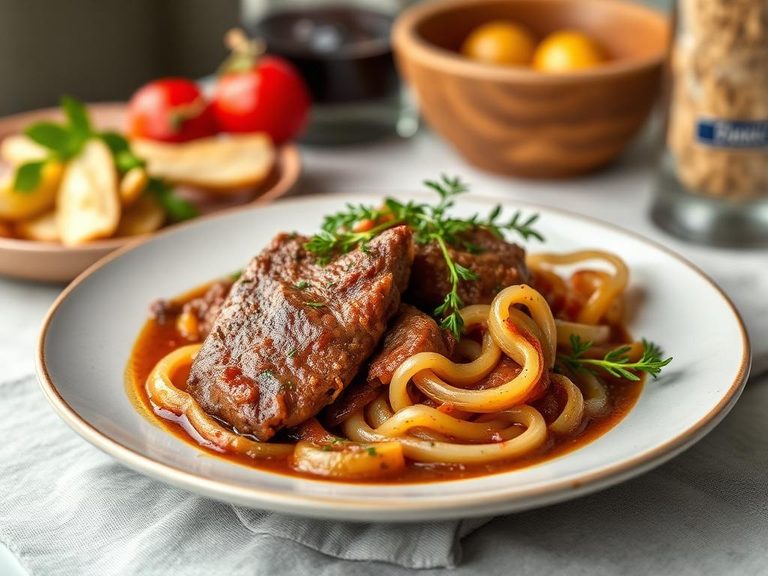
🍽️ Popular dishes
🌍 Where it's eaten
💡 Did you know?
Soaking liver in milk or water before cooking is a centuries-old technique that doesn't just mellow its flavor—the liquid helps draw out residual blood and impurities, resulting in a cleaner, sweeter taste.
Full nutrition (USDA data · scales with serving)
| Water | 64.6 g |
| Energy | 168 kcal |
| Energy | 704 kj |
| Protein | 25.8 g |
| Total lipid (fat) | 6.6 g |
| Ash | 1.6 g |
| Carbohydrate, by difference | 1.5 g |
| Fiber, total dietary | 0.00 g |
| Total Sugars | 0.00 g |
| Calcium, Ca | 5.0 mg |
| Iron, Fe | 5.4 mg |
| Magnesium, Mg | 21.0 mg |
| Phosphorus, P | 459 mg |
| Potassium, K | 287 mg |
| Sodium, Na | 59.0 mg |
| Zinc, Zn | 5.1 mg |
| Copper, Cu | 13.4 mg |
| Manganese, Mn | 0.37 mg |
| Selenium, Se | 19.0 ug |
| Vitamin C, total ascorbic acid | 0.00 mg |
| Thiamin | 1.6 mg |
| Riboflavin | 5.3 mg |
| Niacin | 12.8 mg |
| Pantothenic acid | 5.2 mg |
| Vitamin B-6 | 0.19 mg |
| Vitamin B-12 | 57.5 ug |
| Vitamin A, RAE | 19872 ug |
| Retinol | 19872 ug |
| Carotene, beta | 0.00 ug |
| Carotene, alpha | 0.00 ug |
| Cryptoxanthin, beta | 0.00 ug |
| Vitamin A, IU | 66240 iu |
| Lycopene | 0.00 ug |
| Lutein + zeaxanthin | 0.00 ug |
| Vitamin E (alpha-tocopherol) | 1.1 mg |
| Vitamin D (D2 + D3), International Units | 0.00 iu |
| Vitamin D (D2 + D3) | 0.00 ug |
| Vitamin D3 (cholecalciferol) | 0.00 ug |
| Alcohol, ethyl | 0.00 g |
| Caffeine | 0.00 mg |
| Theobromine | 0.00 mg |
Fat & fatty acid profile (per 100g)
| Fatty acids, total saturated | 2.0 g |
| SFA 4:0 | 0.00 g |
| SFA 6:0 | 0.00 g |
| SFA 8:0 | 0.00 g |
| SFA 10:0 | 0.00 g |
| SFA 12:0 | 0.01 g |
| SFA 14:0 | 0.02 g |
| SFA 16:0 | 0.62 g |
| SFA 17:0 | 0.09 g |
| SFA 18:0 | 1.2 g |
| SFA 20:0 | 0.01 g |
| SFA 22:0 | 0.03 g |
| SFA 24:0 | 0.02 g |
| Fatty acids, total monounsaturated | 1.0 g |
| MUFA 14:1 | 0.00 g |
| MUFA 15:1 | 0.00 g |
| MUFA 16:1 | 0.07 g |
| MUFA 16:1 c | 0.04 g |
| MUFA 17:1 | 0.00 g |
| MUFA 18:1 | 0.93 g |
| MUFA 18:1 c | 0.77 g |
| MUFA 20:1 | 0.00 g |
| MUFA 22:1 | 0.00 g |
| MUFA 22:1 c | 0.00 g |
| MUFA 24:1 c | 0.01 g |
| Fatty acids, total polyunsaturated | 1.1 g |
| PUFA 18:2 | 0.25 g |
| PUFA 18:2 n-6 c,c | 0.19 g |
| PUFA 18:2 CLAs | 0.06 g |
| PUFA 18:3 | 0.17 g |
| PUFA 18:3 n-3 c,c,c (ALA) | 0.17 g |
| PUFA 18:3 n-6 c,c,c | 0.00 g |
| PUFA 18:4 | 0.00 g |
| PUFA 20:2 n-6 c,c | 0.00 g |
| PUFA 20:3 | 0.02 g |
| PUFA 20:3 n-3 | 0.00 g |
| PUFA 20:3 n-6 | 0.02 g |
| PUFA 20:4 | 0.16 g |
| PUFA 20:4 n-6 | 0.16 g |
| PUFA 20:5 n-3 (EPA) | 0.16 g |
| PUFA 22:5 n-3 (DPA) | 0.18 g |
| PUFA 22:6 n-3 (DHA) | 0.21 g |
| Fatty acids, total trans | 0.19 g |
| Fatty acids, total trans-monoenoic | 0.19 g |
| TFA 16:1 t | 0.02 g |
| TFA 18:1 t | 0.17 g |
| TFA 18:2 t,t | 0.00 g |
| Fatty acids, total trans-polyenoic | 0.00 g |
| Cholesterol | 566 mg |
Amino acid profile (per 100g)
| Tryptophan | 0.28 g |
| Threonine | 1.2 g |
| Isoleucine | 1.2 g |
| Leucine | 2.0 g |
| Lysine | 2.3 g |
| Methionine | 0.84 g |
| Cystine | 0.34 g |
| Phenylalanine | 1.0 g |
| Tyrosine | 0.89 g |
| Valine | 1.3 g |
| Arginine | 1.7 g |
| Histidine | 0.55 g |
| Alanine | 1.3 g |
| Glutamic acid | 3.6 g |
| Glycine | 1.1 g |
| Proline | 0.83 g |
| Serine | 0.88 g |
FAQ
How do I cook lamb liver so it's not tough or rubbery?
The key is high heat and very short cooking time. Pat the slices completely dry, season, and sear in a very hot, oiled pan for just 1-2 minutes per side. It should be slightly pink in the center. Overcooking is the primary cause of toughness.
Is lamb liver healthier than beef liver?
They are nutritionally very similar. Lamb liver is often slightly milder in flavor and can be a bit more tender. The best choice depends on personal taste and availability, as both are exceptional sources of nutrients like B12 and iron.
Can I eat lamb liver if I'm watching my cholesterol?
While liver contains dietary cholesterol, current nutritional science emphasizes that saturated and trans fats have a greater impact on blood cholesterol for most people. Liver is low in saturated fat and can be part of a heart-healthy diet in moderation, but it's best to consult with a healthcare provider for personalized advice.
Nutrient density (calculated · NRF9.3)
Nutrient Rich Foods index: beneficial nutrients (protein, fiber, vitamins, minerals) minus saturated fat, added sugar & sodium, per 100 kcal.
NRF9.3 index — Fulgoni, Keast & Drewnowski, 2009. Computed from USDA nutrients.
Weight-loss friendliness (composite index)
Energy density 1.68 kcal/g · 61% calories from protein · 0.0 g fiber · 0.0 g sugar per 100 g.
Composite of energy density (Rolls et al., 1999), protein & fiber satiety, minus sugar. A calculated heuristic — ranks satiety-per-calorie, not a clinical measure.
Dietary load (calculated from USDA values)
Potential renal acid load. Positive = acid-forming, negative = alkaline-forming.
Sodium-to-potassium ratio: 0.21 (lower is better — aim for ≤ 1)
Sodium:potassium per WHO potassium guidance. Computed from USDA nutrients.