

Lamb, Australian, imported, fresh, rack, roast, frenched, denuded, bone-in, separable lean only, trimmed to 0" fat, cooked, roasted
Whole food · Lamb, Veal, and Game Products

Photo: Wikipedia
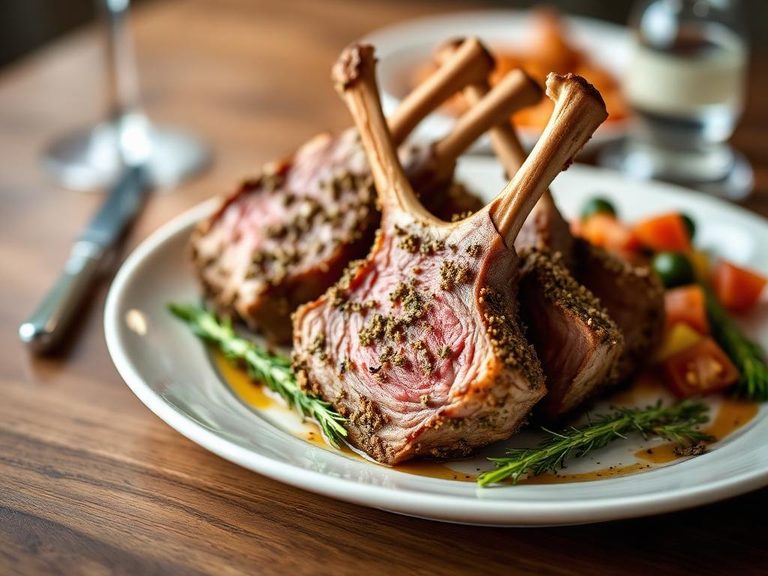
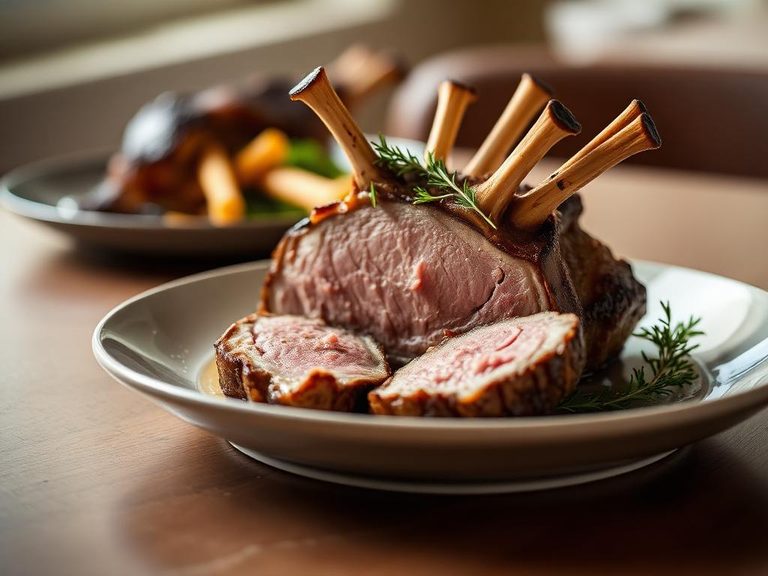
This is a premium cut of Australian lamb, frenched to expose the bone for an elegant presentation, then roasted to a perfect medium-rare. The meat is exceptionally lean and tender, with a clean, mildly sweet flavor that's less gamey than many other lamb cuts. It's a powerhouse of protein, delivering over 26 grams per 100-gram serving with virtually no carbohydrates.
Calorie split: 61% protein · 0% carbs · 39% fat
↓ Full nutrition💚 Why it's loved
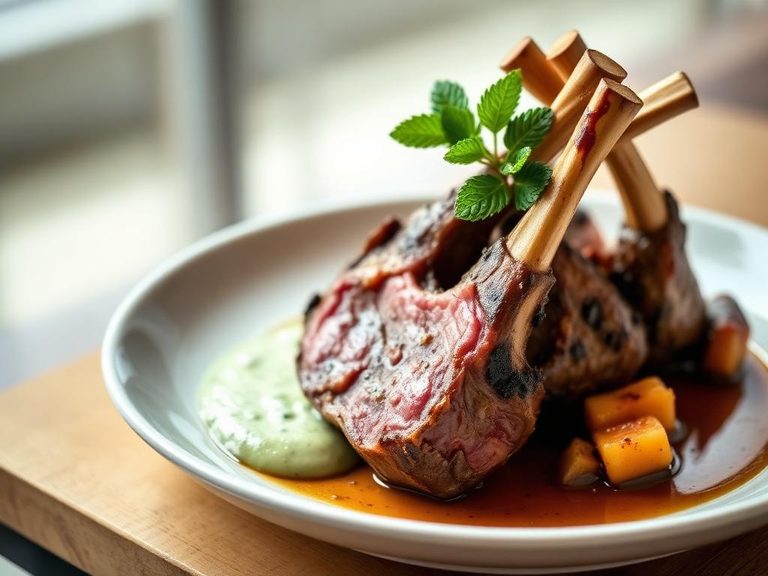
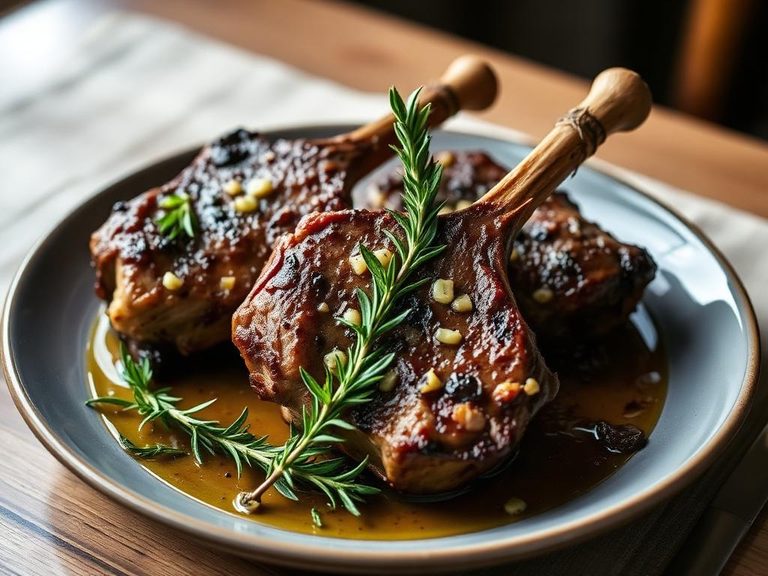
People adore the rack of lamb for its perfect balance of rich, savory flavor and refined tenderness, making it a centerpiece for celebrations. Its natural elegance, with the clean frenched bones, requires minimal adornment, allowing the quality of the meat to shine.
⚠️ Watch-outs & how to enjoy it better
While lean, it is still a red meat, and those monitoring saturated fat intake should practice portion control. The primary caution is for individuals with specific religious or ethical dietary restrictions. To enjoy it healthily, pair it with fiber-rich vegetables like roasted asparagus or a fresh salad, and consider using a flavorful herb crust to enhance satisfaction with a smaller portion.
Key benefits
- Excellent source of high-quality protein for muscle maintenance.
- Rich in essential minerals like zinc and selenium.
- Provides B vitamins, particularly B12, for energy metabolism.
- Naturally free from carbohydrates and sugars.
- Contains conjugated linoleic acid (CLA), a beneficial fatty acid.
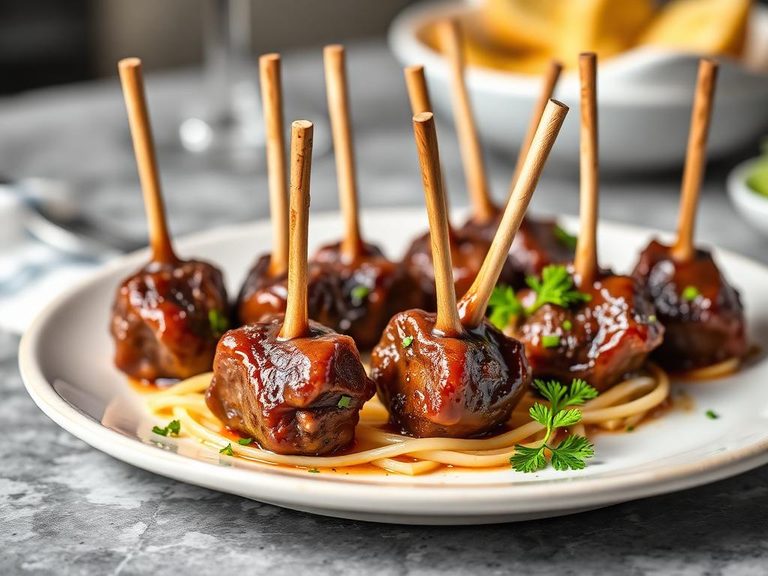
🍽️ Popular dishes
🌍 Where it's eaten
💡 Did you know?
The 'frenched' technique, where meat and fat are scraped clean from the rib bones, is named after the French culinary tradition of preparing racks for an elegant, clean presentation.
Full nutrition (USDA data · scales with serving)
| Water | 66.0 g |
| Energy | 175 kcal |
| Energy | 731 kj |
| Protein | 26.5 g |
| Total lipid (fat) | 7.6 g |
| Ash | 1.0 g |
| Carbohydrate, by difference | 0.00 g |
| Fiber, total dietary | 0.00 g |
| Total Sugars | 0.00 g |
| Calcium, Ca | 7.0 mg |
| Iron, Fe | 1.9 mg |
| Magnesium, Mg | 22.0 mg |
| Phosphorus, P | 168 mg |
| Potassium, K | 230 mg |
| Sodium, Na | 72.0 mg |
| Zinc, Zn | 2.3 mg |
| Copper, Cu | 0.09 mg |
| Manganese, Mn | 0.00 mg |
| Selenium, Se | 12.4 ug |
| Vitamin C, total ascorbic acid | 0.00 mg |
| Thiamin | 0.14 mg |
| Riboflavin | 0.38 mg |
| Niacin | 7.8 mg |
| Pantothenic acid | 0.65 mg |
| Vitamin B-6 | 0.54 mg |
| Vitamin B-12 | 1.4 ug |
| Vitamin B-12, added | 0.00 ug |
| Vitamin A, RAE | 3.0 ug |
| Retinol | 3.0 ug |
| Carotene, beta | 0.00 ug |
| Carotene, alpha | 0.00 ug |
| Cryptoxanthin, beta | 0.00 ug |
| Vitamin A, IU | 12.0 iu |
| Lycopene | 0.00 ug |
| Lutein + zeaxanthin | 0.00 ug |
| Vitamin E (alpha-tocopherol) | 0.27 mg |
| Vitamin E, added | 0.00 mg |
| Vitamin D (D2 + D3), International Units | 0.00 iu |
| Vitamin D (D2 + D3) | 0.00 ug |
| Vitamin D2 (ergocalciferol) | 0.00 ug |
| Vitamin D3 (cholecalciferol) | 0.00 ug |
| Alcohol, ethyl | 0.00 g |
| Caffeine | 0.00 mg |
| Theobromine | 0.00 mg |
Fat & fatty acid profile (per 100g)
| Fatty acids, total saturated | 3.5 g |
| SFA 4:0 | 0.00 g |
| SFA 6:0 | 0.00 g |
| SFA 8:0 | 0.00 g |
| SFA 10:0 | 0.01 g |
| SFA 12:0 | 0.01 g |
| SFA 14:0 | 0.19 g |
| SFA 15:0 | 0.04 g |
| SFA 16:0 | 1.7 g |
| SFA 17:0 | 0.11 g |
| SFA 18:0 | 1.5 g |
| SFA 20:0 | 0.01 g |
| SFA 22:0 | 0.01 g |
| SFA 24:0 | 0.00 g |
| Fatty acids, total monounsaturated | 3.1 g |
| MUFA 14:1 | 0.00 g |
| MUFA 15:1 | 0.00 g |
| MUFA 16:1 | 0.08 g |
| MUFA 17:1 | 0.00 g |
| MUFA 18:1 | 3.0 g |
| MUFA 18:1 c | 2.7 g |
| MUFA 20:1 | 0.00 g |
| MUFA 22:1 | 0.00 g |
| MUFA 22:1 c | 0.00 g |
| Fatty acids, total polyunsaturated | 0.54 g |
| PUFA 18:2 | 0.37 g |
| PUFA 18:2 n-6 c,c | 0.21 g |
| PUFA 18:2 CLAs | 0.07 g |
| PUFA 18:3 | 0.07 g |
| PUFA 18:3 n-3 c,c,c (ALA) | 0.07 g |
| PUFA 18:3 n-6 c,c,c | 0.00 g |
| PUFA 18:4 | 0.00 g |
| PUFA 20:2 n-6 c,c | 0.00 g |
| PUFA 20:3 | 0.00 g |
| PUFA 20:4 | 0.05 g |
| PUFA 20:5 n-3 (EPA) | 0.02 g |
| PUFA 22:5 n-3 (DPA) | 0.03 g |
| PUFA 22:6 n-3 (DHA) | 0.01 g |
| Fatty acids, total trans | 0.42 g |
| Fatty acids, total trans-monoenoic | 0.33 g |
| TFA 18:1 t | 0.33 g |
| TFA 18:2 t not further defined | 0.09 g |
| Fatty acids, total trans-polyenoic | 0.09 g |
| Cholesterol | 97.0 mg |
Amino acid profile (per 100g)
| Tryptophan | 0.28 g |
| Threonine | 1.1 g |
| Isoleucine | 1.1 g |
| Leucine | 1.9 g |
| Lysine | 2.0 g |
| Methionine | 0.64 g |
| Cystine | 0.27 g |
| Phenylalanine | 0.99 g |
| Tyrosine | 0.83 g |
| Valine | 1.2 g |
| Arginine | 1.6 g |
| Histidine | 0.69 g |
| Alanine | 1.5 g |
| Aspartic acid | 2.2 g |
| Glutamic acid | 3.5 g |
| Glycine | 1.4 g |
| Proline | 1.1 g |
| Serine | 0.94 g |
FAQ
What does 'denuded' mean for this cut?
'Denuded' means the cut has been meticulously trimmed of all visible fat and connective tissue, leaving only the pure, lean meat on the bone for a very clean presentation and consistent cooking.
How is this different from a regular lamb chop?
A 'rack' is a larger, multi-rib section (typically 8 ribs) meant for roasting whole before slicing into individual 'chops.' This specific cut is a fully prepared, lean, and trimmed rack ready for roasting.
What's the best way to cook it to keep it lean and tender?
High-heat roasting is ideal. Sear the rack on all sides first, then roast in a hot oven (around 400°F/200°C) until the internal temperature reaches 130-135°F (54-57°C) for medium-rare. Let it rest thoroughly before slicing to retain its juices.
Nutrient density (calculated · NRF9.3)
Nutrient Rich Foods index: beneficial nutrients (protein, fiber, vitamins, minerals) minus saturated fat, added sugar & sodium, per 100 kcal.
NRF9.3 index — Fulgoni, Keast & Drewnowski, 2009. Computed from USDA nutrients.
Weight-loss friendliness (composite index)
Energy density 1.75 kcal/g · 61% calories from protein · 0.0 g fiber · 0.0 g sugar per 100 g.
Composite of energy density (Rolls et al., 1999), protein & fiber satiety, minus sugar. A calculated heuristic — ranks satiety-per-calorie, not a clinical measure.
Dietary load (calculated from USDA values)
Potential renal acid load. Positive = acid-forming, negative = alkaline-forming.
Sodium-to-potassium ratio: 0.31 (lower is better — aim for ≤ 1)
Sodium:potassium per WHO potassium guidance. Computed from USDA nutrients.