

Bologna, chicken, turkey, pork
Whole food · Sausages and Luncheon Meats

Photo: Wikipedia
Bologna is a finely ground, emulsified sausage with a smooth, almost velvety texture and a mild, savory flavor with subtle hints of spice and smoke. Nutritionally, it is a dense source of energy, delivering a significant amount of fat alongside a moderate protein content, with virtually no carbohydrates or fiber.
Calorie split: 13% protein · 8% carbs · 79% fat
↓ Full nutrition💚 Why it's loved
People love bologna for its nostalgic, comforting flavor and its incredible versatility—it's equally at home in a classic sandwich, fried until crispy, or cubed in a salad. Its mild taste and smooth texture make it a crowd-pleasing staple for quick meals and childhood lunches.
⚠️ Watch-outs & how to enjoy it better
Bologna is high in saturated fat and sodium, which can be a concern for heart health and blood pressure. To counteract this, practice strict portion control, pair it with fiber-rich vegetables or whole-grain bread, and choose lower-sodium varieties when available. It also contains common allergens like soy and may have gluten fillers, so always check labels if sensitive.
Key benefits
- Provides a quick and concentrated source of energy
- Offers a moderate amount of complete protein
- Shelf-stable and convenient for on-the-go meals
- Versatile base for a variety of simple and complex dishes
- Consistent flavor profile that is familiar and comforting
🍽️ Popular dishes
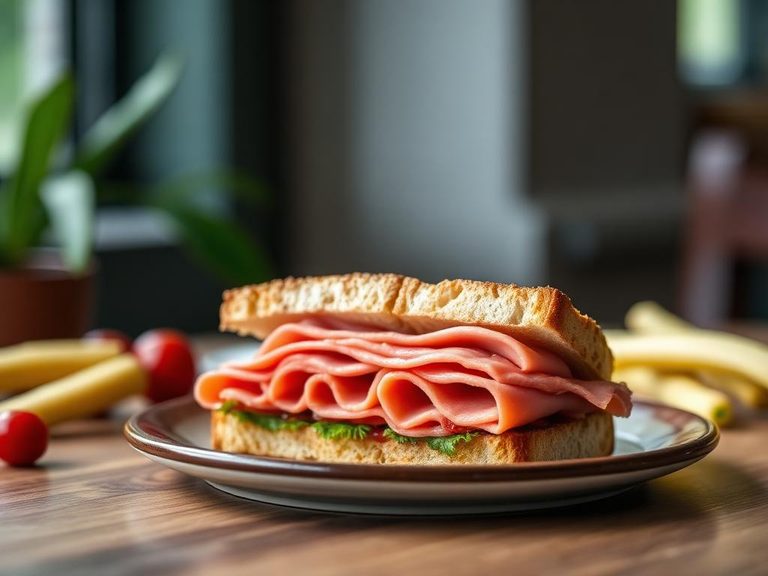

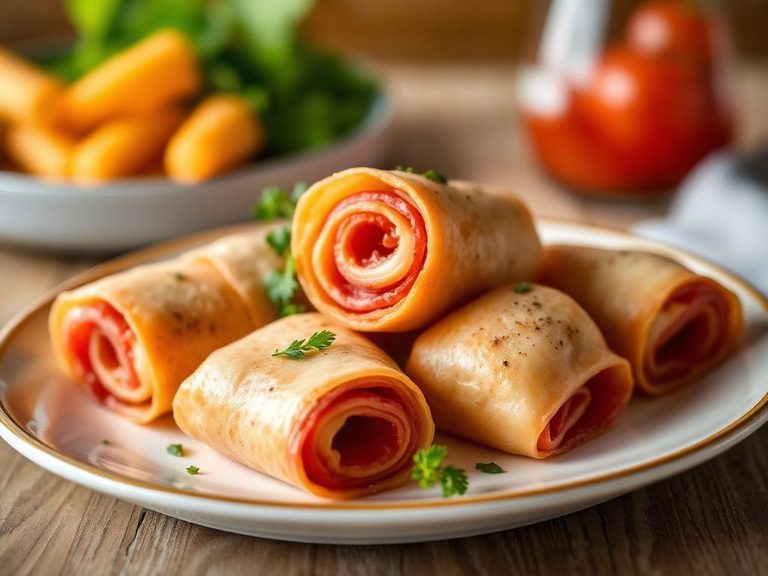
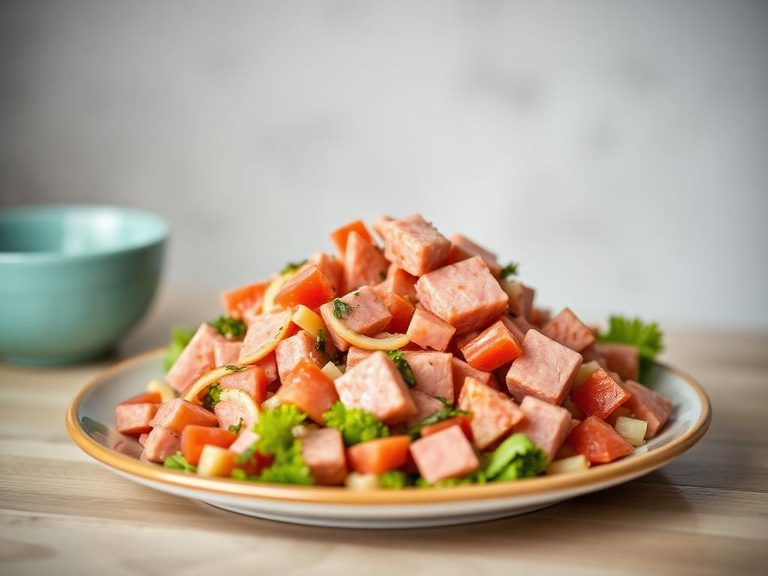
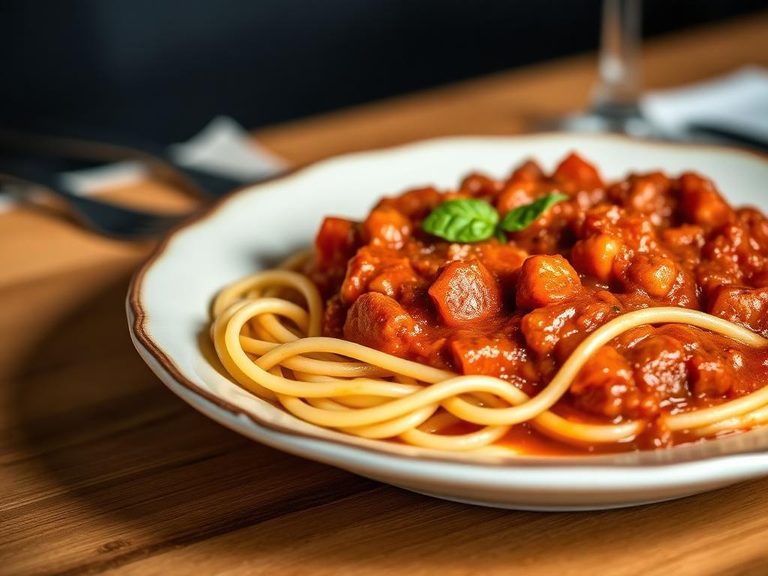
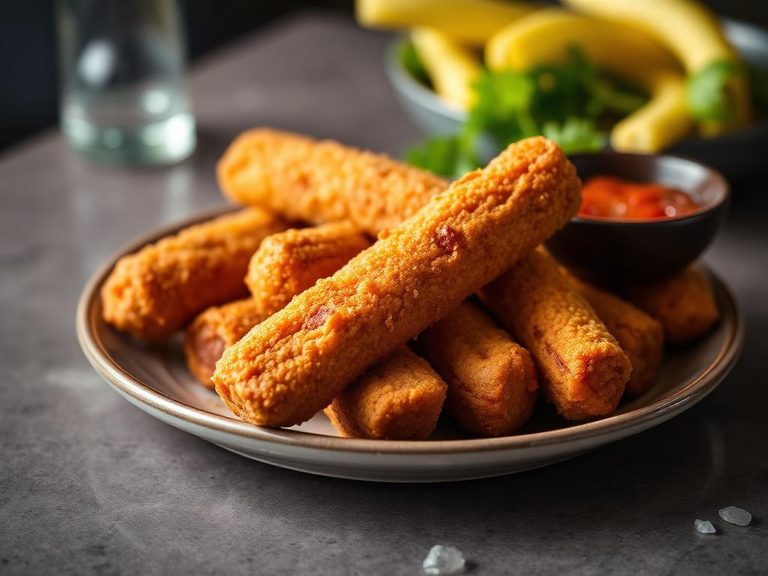
🌍 Where it's eaten
💡 Did you know?
The name 'bologna' comes from the Italian city of Bologna, where a similar sausage called 'mortadella' originated, but the American version is a distinct, smoother, and often cheaper adaptation.
Full nutrition (USDA data · scales with serving)
| Water | 55.3 g |
| Energy | 298 kcal |
| Energy | 1245 kj |
| Protein | 9.9 g |
| Total lipid (fat) | 26.2 g |
| Ash | 3.0 g |
| Carbohydrate, by difference | 5.7 g |
| Fiber, total dietary | 0.00 g |
| Total Sugars | 0.00 g |
| Calcium, Ca | 82.0 mg |
| Iron, Fe | 1.2 mg |
| Magnesium, Mg | 15.0 mg |
| Phosphorus, P | 185 mg |
| Potassium, K | 152 mg |
| Sodium, Na | 922 mg |
| Zinc, Zn | 1.3 mg |
| Copper, Cu | 0.06 mg |
| Manganese, Mn | 0.04 mg |
| Selenium, Se | 0.00 ug |
| Fluoride, F | 36.0 ug |
| Vitamin C, total ascorbic acid | 19.7 mg |
| Thiamin | 0.04 mg |
| Riboflavin | 0.13 mg |
| Niacin | 3.3 mg |
| Pantothenic acid | 0.70 mg |
| Vitamin B-6 | 0.18 mg |
| Folate, total | 9.0 ug |
| Folic acid | 0.00 ug |
| Folate, food | 9.0 ug |
| Folate, DFE | 9.0 ug |
| Choline, total | 53.3 mg |
| Betaine | 4.8 mg |
| Vitamin B-12 | 0.79 ug |
| Vitamin B-12, added | 0.00 ug |
| Vitamin A, RAE | 13.0 ug |
| Retinol | 11.0 ug |
| Carotene, beta | 11.0 ug |
| Carotene, alpha | 11.0 ug |
| Cryptoxanthin, beta | 11.0 ug |
| Vitamin A, IU | 75.0 iu |
| Lycopene | 11.0 ug |
| Lutein + zeaxanthin | 0.00 ug |
| Vitamin E (alpha-tocopherol) | 0.41 mg |
| Vitamin E, added | 0.00 mg |
| Tocopherol, beta | 0.00 mg |
| Tocopherol, gamma | 0.31 mg |
| Tocopherol, delta | 0.00 mg |
| Tocotrienol, alpha | 0.06 mg |
| Tocotrienol, beta | 0.00 mg |
| Tocotrienol, gamma | 0.00 mg |
| Tocotrienol, delta | 0.00 mg |
| Vitamin K (phylloquinone) | 0.00 ug |
| Alcohol, ethyl | 0.00 g |
| Caffeine | 0.00 mg |
| Theobromine | 0.00 mg |
Fat & fatty acid profile (per 100g)
| Fatty acids, total saturated | 8.0 g |
| SFA 4:0 | 0.00 g |
| SFA 6:0 | 0.00 g |
| SFA 8:0 | 0.00 g |
| SFA 10:0 | 0.00 g |
| SFA 12:0 | 0.00 g |
| SFA 14:0 | 0.25 g |
| SFA 15:0 | 0.00 g |
| SFA 16:0 | 5.3 g |
| SFA 17:0 | 0.07 g |
| SFA 18:0 | 2.3 g |
| SFA 20:0 | 0.04 g |
| SFA 22:0 | 0.00 g |
| Fatty acids, total monounsaturated | 10.6 g |
| MUFA 14:1 | 0.00 g |
| MUFA 15:1 | 0.00 g |
| MUFA 16:1 | 0.92 g |
| MUFA 18:1 | 9.4 g |
| MUFA 20:1 | 0.19 g |
| MUFA 22:1 | 0.00 g |
| Fatty acids, total polyunsaturated | 4.7 g |
| PUFA 18:2 | 4.2 g |
| PUFA 18:3 n-3 c,c,c (ALA) | 0.25 g |
| PUFA 18:3 n-6 c,c,c | 0.03 g |
| PUFA 18:4 | 0.00 g |
| PUFA 20:2 n-6 c,c | 0.10 g |
| PUFA 20:3 | 0.00 g |
| PUFA 20:4 | 0.10 g |
| PUFA 20:5 n-3 (EPA) | 0.00 g |
| PUFA 22:5 n-3 (DPA) | 0.00 g |
| PUFA 22:6 n-3 (DHA) | 0.00 g |
| Fatty acids, total trans | 0.43 g |
| Cholesterol | 80.0 mg |
Amino acid profile (per 100g)
Estimated from Bologna, pork, turkey and beef — USDA does not publish this profile for Bologna.
| Tryptophan | 0.13 g |
| Threonine | 0.51 g |
| Isoleucine | 0.54 g |
| Leucine | 0.94 g |
| Lysine | 1.0 g |
| Methionine | 0.30 g |
| Cystine | 0.14 g |
| Phenylalanine | 0.47 g |
| Tyrosine | 0.39 g |
| Valine | 0.61 g |
| Arginine | 0.91 g |
| Histidine | 0.36 g |
| Alanine | 0.72 g |
| Aspartic acid | 1.1 g |
| Glutamic acid | 1.9 g |
| Glycine | 0.66 g |
| Proline | 0.52 g |
| Serine | 0.49 g |
FAQ
Is bologna made from a single type of meat?
Not typically. Most commercial bologna is a blend of meats, which can include pork, beef, chicken, or turkey, along with fillers, spices, and curing agents.
What's the difference between bologna and mortadella?
Mortadella is the Italian original, often studded with pistachios or fat cubes and with a coarser texture. American bologna is usually a smoother, more finely ground emulsion and may contain different spice profiles and fillers.
Can bologna be part of a healthy diet?
In moderation, yes. Opt for low-sodium, nitrate-free, or turkey/chicken-based versions, and pair it with nutrient-dense sides like leafy greens, whole grains, and fresh vegetables to balance the meal.
Nutrient density (calculated · NRF9.3)
Nutrient Rich Foods index: beneficial nutrients (protein, fiber, vitamins, minerals) minus saturated fat, added sugar & sodium, per 100 kcal.
NRF9.3 index — Fulgoni, Keast & Drewnowski, 2009. Computed from USDA nutrients.
Weight-loss friendliness (composite index)
Energy density 2.98 kcal/g · 13% calories from protein · 0.0 g fiber · 0.0 g sugar per 100 g.
Composite of energy density (Rolls et al., 1999), protein & fiber satiety, minus sugar. A calculated heuristic — ranks satiety-per-calorie, not a clinical measure.
Dietary load (calculated from USDA values)
Potential renal acid load. Positive = acid-forming, negative = alkaline-forming.
Sodium-to-potassium ratio: 6.07 (lower is better — aim for ≤ 1)
Sodium:potassium per WHO potassium guidance. Computed from USDA nutrients.