

Beef, ground, 90% lean meat / 10% fat, raw
Whole food · Beef Products
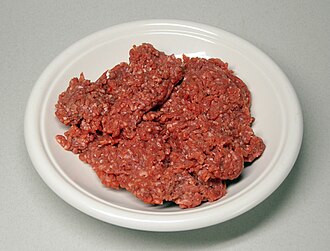
Photo: Wikipedia
This is lean, raw ground beef with a deep red color and a fine, slightly crumbly texture that firms up beautifully when cooked. With 20g of high-quality protein per 100g and virtually no carbohydrates, it's a powerhouse for muscle-building and low-carb diets. Its 10% fat content provides essential flavor and juiciness without being overly greasy.
Calorie split: 47% protein · 0% carbs · 53% fat
↓ Full nutrition💚 Why it's loved
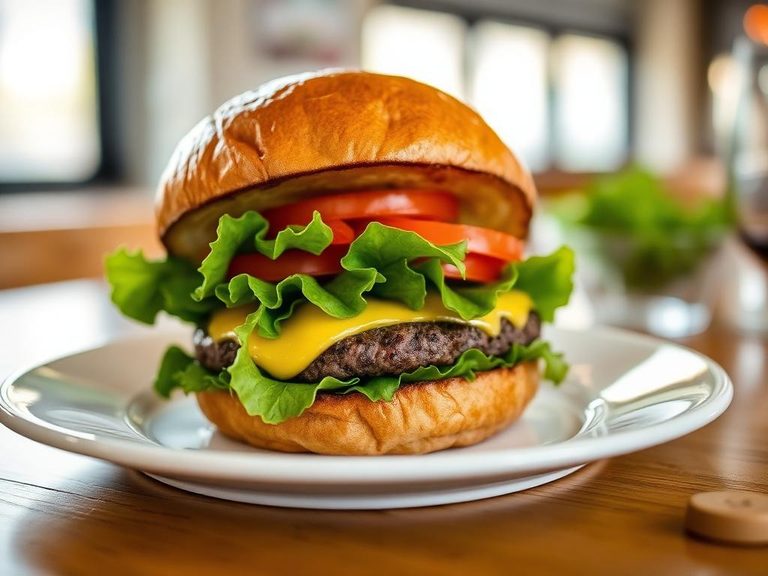
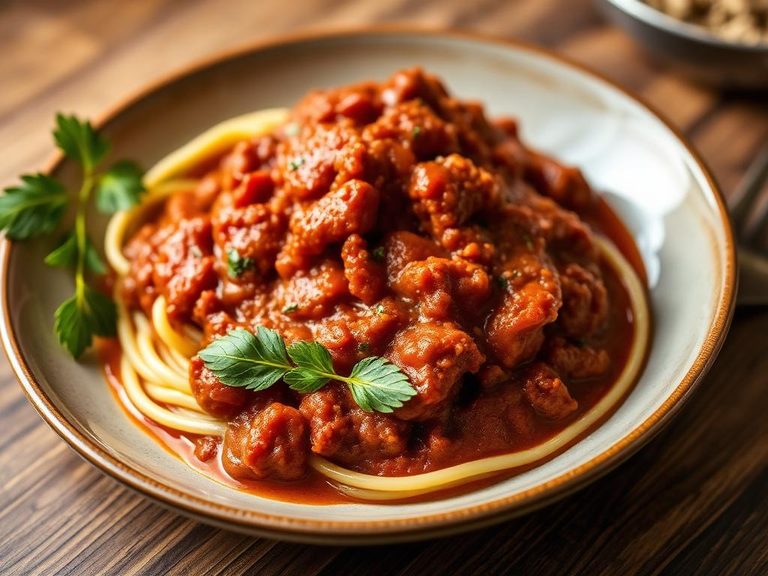
People love it for its incredible versatility—it's the blank canvas for countless global flavors, from Italian bolognese to American burgers. Its familiar, savory umami taste and satisfying texture make it a comforting staple in home cooking.
⚠️ Watch-outs & how to enjoy it better
As a red meat, it should be consumed in moderation by those managing heart health or cholesterol levels. To counteract this, choose leaner cuts like this one, practice portion control (e.g., mixing with mushrooms or lentils), and balance meals with fiber-rich vegetables. Always cook thoroughly to an internal temperature of 160°F (71°C) to eliminate any risk of foodborne illness.
Key benefits
- Excellent source of complete, high-biological-value protein
- Rich in heme iron, which is more easily absorbed than plant-based iron
- Provides key B vitamins like B12 (for nerve function) and niacin
- Contains zinc, crucial for immune health and wound healing
- Zero carbohydrates, making it ideal for ketogenic and low-carb diets
🍽️ Popular dishes
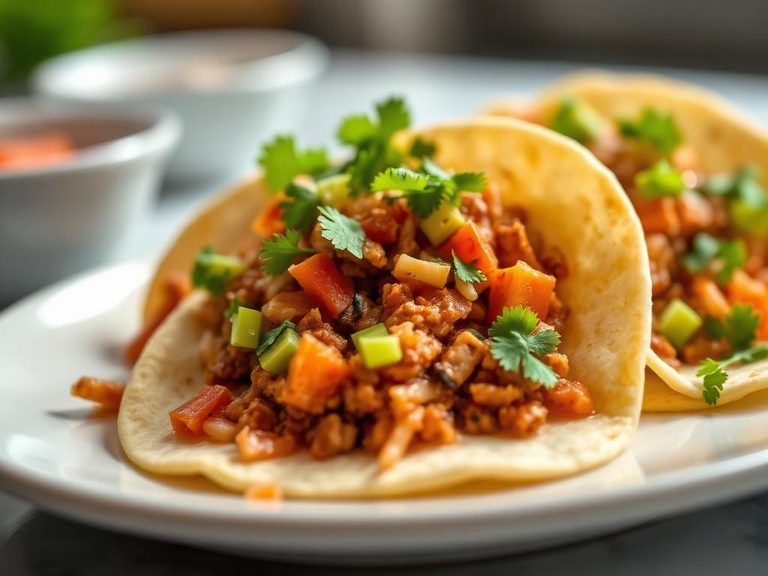
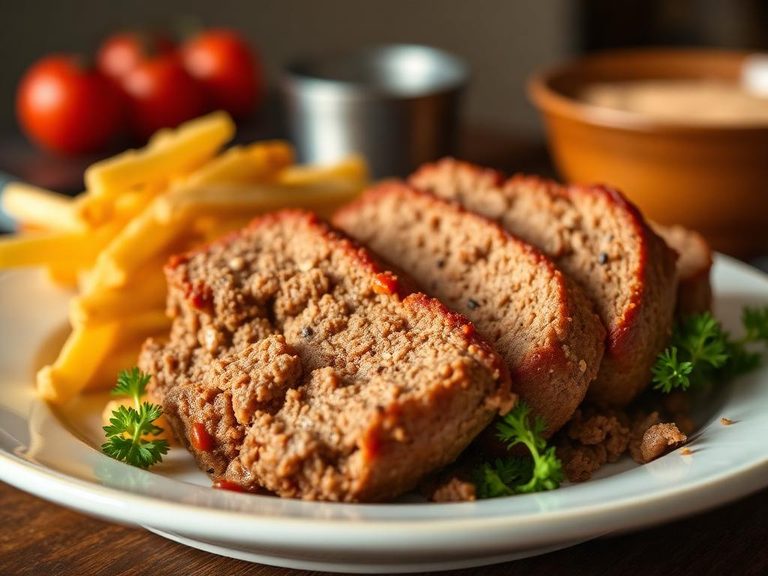

🌍 Where it's eaten
💡 Did you know?
The term 'hamburger' likely derives from Hamburg, Germany, where a similar style of minced beef steak was popular in the 19th century before immigrants brought it to the United States.
Full nutrition (USDA data · scales with serving)
| Water | 69.5 g |
| Energy | 176 kcal |
| Energy | 735 kj |
| Protein | 20.0 g |
| Total lipid (fat) | 10.0 g |
| Ash | 0.98 g |
| Carbohydrate, by difference | 0.00 g |
| Fiber, total dietary | 0.00 g |
| Total Sugars | 0.00 g |
| Calcium, Ca | 12.0 mg |
| Iron, Fe | 2.2 mg |
| Magnesium, Mg | 20.0 mg |
| Phosphorus, P | 184 mg |
| Potassium, K | 321 mg |
| Sodium, Na | 66.0 mg |
| Zinc, Zn | 4.8 mg |
| Copper, Cu | 0.07 mg |
| Manganese, Mn | 0.01 mg |
| Selenium, Se | 16.6 ug |
| Vitamin C, total ascorbic acid | 0.00 mg |
| Thiamin | 0.04 mg |
| Riboflavin | 0.15 mg |
| Niacin | 5.1 mg |
| Pantothenic acid | 0.60 mg |
| Vitamin B-6 | 0.37 mg |
| Folate, total | 6.0 ug |
| Folic acid | 0.00 ug |
| Folate, food | 6.0 ug |
| Folate, DFE | 6.0 ug |
| Choline, total | 66.1 mg |
| Betaine | 7.9 mg |
| Vitamin B-12 | 2.2 ug |
| Vitamin B-12, added | 0.00 ug |
| Vitamin A, RAE | 4.0 ug |
| Retinol | 4.0 ug |
| Carotene, beta | 0.00 ug |
| Carotene, alpha | 0.00 ug |
| Cryptoxanthin, beta | 0.00 ug |
| Vitamin A, IU | 14.0 iu |
| Lycopene | 0.00 ug |
| Lutein + zeaxanthin | 0.00 ug |
| Vitamin E (alpha-tocopherol) | 0.17 mg |
| Vitamin E, added | 0.00 mg |
| Vitamin D (D2 + D3), International Units | 3.0 iu |
| Vitamin D (D2 + D3) | 0.10 ug |
| Vitamin D3 (cholecalciferol) | 0.10 ug |
| Vitamin K (phylloquinone) | 0.80 ug |
| Alcohol, ethyl | 0.00 g |
| Caffeine | 0.00 mg |
| Theobromine | 0.00 mg |
Fat & fatty acid profile (per 100g)
| Fatty acids, total saturated | 3.9 g |
| SFA 4:0 | 0.00 g |
| SFA 6:0 | 0.00 g |
| SFA 8:0 | 0.00 g |
| SFA 10:0 | 0.00 g |
| SFA 12:0 | 0.01 g |
| SFA 14:0 | 0.28 g |
| SFA 15:0 | 0.05 g |
| SFA 16:0 | 2.2 g |
| SFA 17:0 | 0.11 g |
| SFA 18:0 | 1.3 g |
| SFA 20:0 | 0.01 g |
| Fatty acids, total monounsaturated | 4.2 g |
| MUFA 14:1 | 0.07 g |
| MUFA 16:1 | 0.34 g |
| MUFA 17:1 | 0.07 g |
| MUFA 18:1 | 3.8 g |
| MUFA 20:1 | 0.03 g |
| MUFA 22:1 | 0.00 g |
| Fatty acids, total polyunsaturated | 0.34 g |
| PUFA 18:2 | 0.26 g |
| PUFA 18:3 | 0.05 g |
| PUFA 18:3 n-3 c,c,c (ALA) | 0.04 g |
| PUFA 18:3 n-6 c,c,c | 0.01 g |
| PUFA 18:4 | 0.00 g |
| PUFA 20:4 | 0.04 g |
| PUFA 20:5 n-3 (EPA) | 0.00 g |
| PUFA 22:5 n-3 (DPA) | 0.00 g |
| PUFA 22:6 n-3 (DHA) | 0.00 g |
| Fatty acids, total trans | 0.54 g |
| Fatty acids, total trans-monoenoic | 0.54 g |
| TFA 18:1 t | 0.54 g |
| Cholesterol | 65.0 mg |
Amino acid profile (per 100g)
| Tryptophan | 0.10 g |
| Threonine | 0.78 g |
| Isoleucine | 0.89 g |
| Leucine | 1.6 g |
| Lysine | 1.7 g |
| Methionine | 0.52 g |
| Cystine | 0.21 g |
| Phenylalanine | 0.78 g |
| Tyrosine | 0.62 g |
| Valine | 0.98 g |
| Arginine | 1.3 g |
| Histidine | 0.65 g |
| Alanine | 1.3 g |
| Aspartic acid | 1.8 g |
| Glutamic acid | 3.0 g |
| Glycine | 1.4 g |
| Proline | 1.0 g |
| Serine | 0.80 g |
| Hydroxyproline | 0.27 g |
FAQ
How does 90% lean ground beef compare to 80% lean?
90% lean has less fat and calories, making it healthier for heart and weight management, but it can dry out more easily during cooking. 80% lean has more fat, which adds flavor and moisture but also more calories and saturated fat.
What's the best way to cook it to keep it juicy?
Avoid overcooking. For burgers, cook on high heat just until done. For sauces or tacos, brown it gently and add a splash of broth or tomato sauce to retain moisture. Mixing in a small amount of grated onion or zucchini can also add moisture.
Is it safe to eat raw or undercooked?
No. Ground beef should always be cooked to a safe internal temperature of 160°F (71°C) to kill any potential bacteria like E. coli, which can be present throughout the meat, not just on the surface.
Nutrient density (calculated · NRF9.3)
Nutrient Rich Foods index: beneficial nutrients (protein, fiber, vitamins, minerals) minus saturated fat, added sugar & sodium, per 100 kcal.
NRF9.3 index — Fulgoni, Keast & Drewnowski, 2009. Computed from USDA nutrients.
Weight-loss friendliness (composite index)
Energy density 1.76 kcal/g · 45% calories from protein · 0.0 g fiber · 0.0 g sugar per 100 g.
Composite of energy density (Rolls et al., 1999), protein & fiber satiety, minus sugar. A calculated heuristic — ranks satiety-per-calorie, not a clinical measure.
Dietary load (calculated from USDA values)
Potential renal acid load. Positive = acid-forming, negative = alkaline-forming.
Sodium-to-potassium ratio: 0.21 (lower is better — aim for ≤ 1)
Sodium:potassium per WHO potassium guidance. Computed from USDA nutrients.