

Beef, chuck, under blade pot roast, boneless, separable lean and fat, trimmed to 0" fat, all grades, cooked, braised
Whole food · Beef Products

Photo: Wikipedia
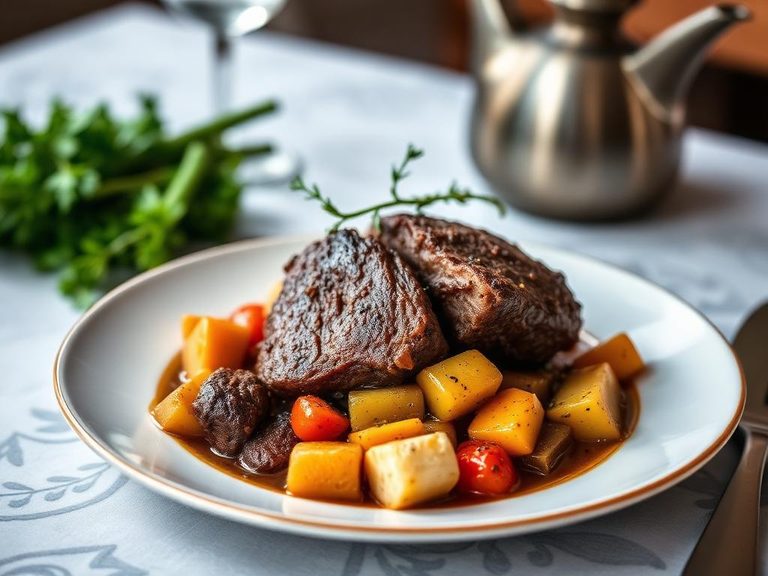
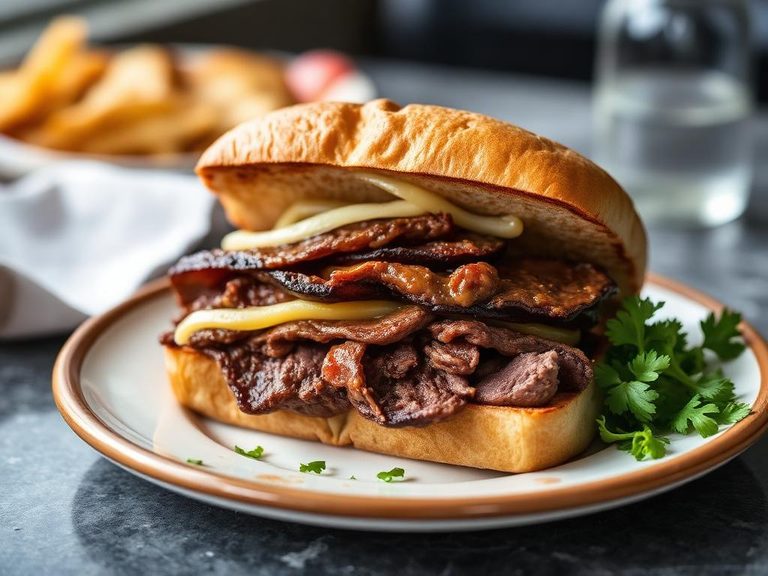
This is a rich, deeply savory cut of beef from the chuck shoulder, slow-braised until fork-tender with a buttery, melt-in-your-mouth texture from its well-marbled fat. Nutritionally, it delivers a substantial protein punch (26.7g per 100g) and a significant amount of energy-dense fat (20.49g), making it a hearty, satiating meal with zero carbohydrates.
Calorie split: 37% protein · 0% carbs · 63% fat
↓ Full nutrition💚 Why it's loved
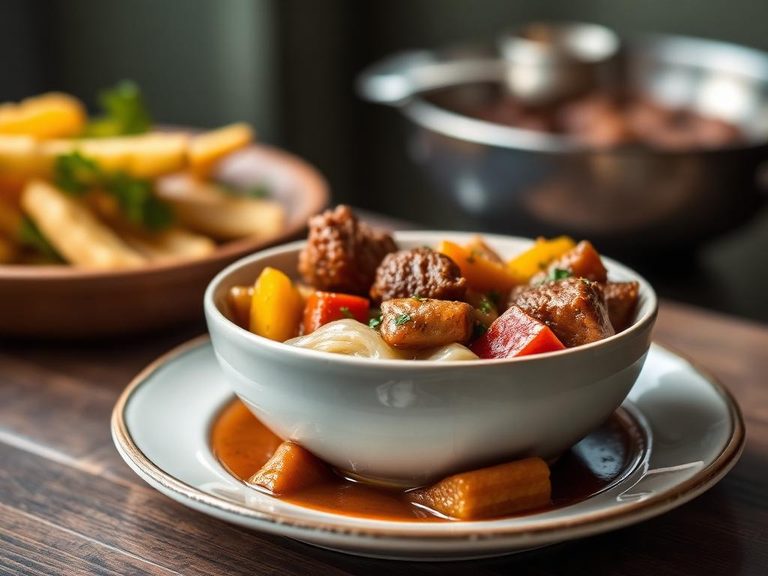
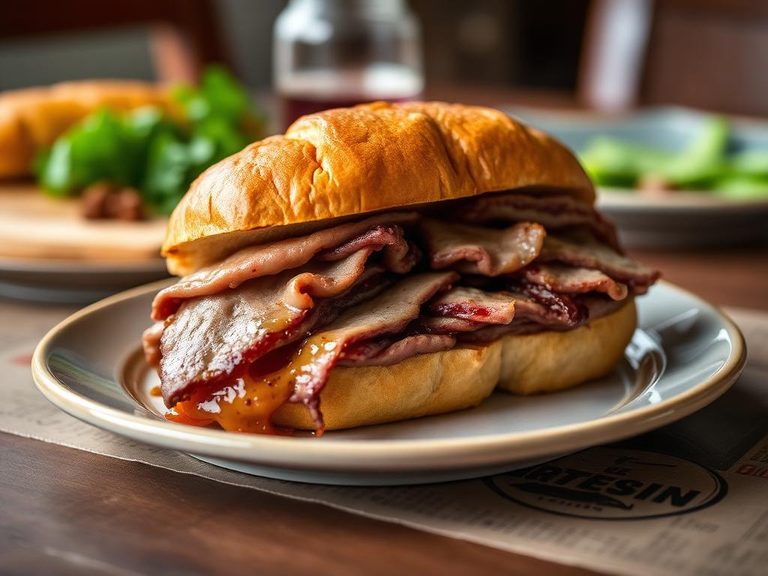
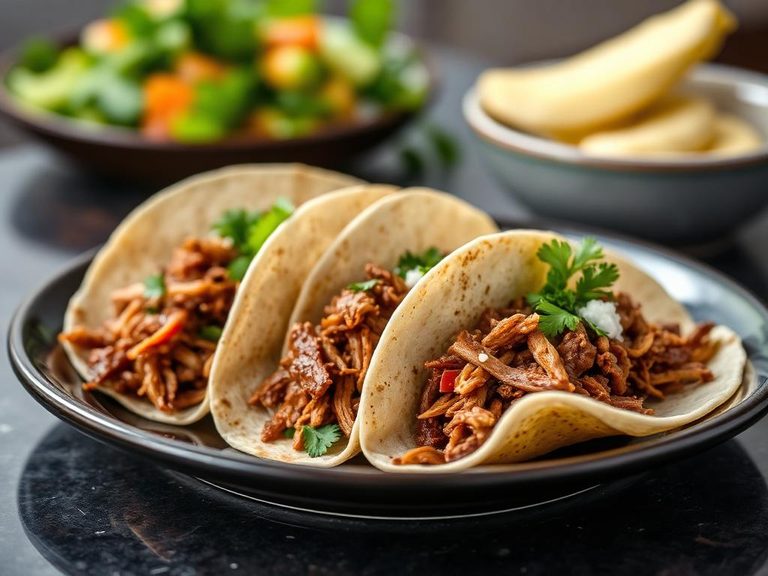
People love it for its unparalleled ability to transform from a tough cut into a succulent, flavor-packed dish through slow cooking, making it the ultimate comfort food. Its versatility allows it to be the star of everything from classic Sunday roasts to rich, savory stews and sandwiches.
⚠️ Watch-outs & how to enjoy it better
The high saturated fat content (about 8g per 100g) and caloric density mean it should be consumed in moderation, especially by those managing cholesterol or heart health. To counteract this, pair it with fiber-rich vegetables like roasted carrots or steamed broccoli to add volume and nutrients, and practice portion control by serving it alongside a substantial side dish rather than as the sole protein.
Key benefits
- High-quality complete protein source for muscle repair and satiety
- Rich in bioavailable heme iron, crucial for oxygen transport in the blood
- Excellent source of vitamin B12, essential for nerve function and energy metabolism
- Contains zinc, which supports a healthy immune system
- Provides conjugated linoleic acid (CLA), a fatty acid studied for potential health benefits
🍽️ Popular dishes
🌍 Where it's eaten
💡 Did you know?
The 'under blade' portion of the chuck comes from the area just below the shoulder blade (scapula), and its unique muscle structure with significant connective tissue is what makes it ideal for braising—it breaks down into gelatin during slow cooking, creating that signature silky, rich sauce.
Full nutrition (USDA data · scales with serving)
| Water | 52.5 g |
| Energy | 291 kcal |
| Energy | 1219 kj |
| Protein | 26.7 g |
| Total lipid (fat) | 20.5 g |
| Ash | 1.2 g |
| Carbohydrate, by difference | 0.00 g |
| Fiber, total dietary | 0.00 g |
| Total Sugars | 0.00 g |
| Calcium, Ca | 14.0 mg |
| Iron, Fe | 2.7 mg |
| Magnesium, Mg | 19.0 mg |
| Phosphorus, P | 173 mg |
| Potassium, K | 262 mg |
| Sodium, Na | 62.0 mg |
| Zinc, Zn | 9.1 mg |
| Copper, Cu | 0.09 mg |
| Manganese, Mn | 0.01 mg |
| Selenium, Se | 30.8 ug |
| Vitamin C, total ascorbic acid | 0.00 mg |
| Thiamin | 0.07 mg |
| Riboflavin | 0.21 mg |
| Niacin | 3.6 mg |
| Pantothenic acid | 0.69 mg |
| Vitamin B-6 | 0.29 mg |
| Folate, total | 6.0 ug |
| Folic acid | 0.00 ug |
| Folate, food | 6.0 ug |
| Folate, DFE | 6.0 ug |
| Choline, total | 83.2 mg |
| Betaine | 10.7 mg |
| Vitamin B-12 | 3.0 ug |
| Vitamin B-12, added | 0.00 ug |
| Vitamin A, RAE | 8.0 ug |
| Retinol | 8.0 ug |
| Carotene, beta | 0.00 ug |
| Carotene, alpha | 0.00 ug |
| Cryptoxanthin, beta | 0.00 ug |
| Vitamin A, IU | 26.0 iu |
| Lycopene | 0.00 ug |
| Lutein + zeaxanthin | 0.00 ug |
| Vitamin E (alpha-tocopherol) | 0.08 mg |
| Vitamin E, added | 0.00 mg |
| Vitamin D (D2 + D3), International Units | 6.0 iu |
| Vitamin D (D2 + D3) | 0.10 ug |
| Vitamin D3 (cholecalciferol) | 0.10 ug |
| Vitamin K (phylloquinone) | 1.6 ug |
| Alcohol, ethyl | 0.00 g |
| Caffeine | 0.00 mg |
| Theobromine | 0.00 mg |
Fat & fatty acid profile (per 100g)
| Fatty acids, total saturated | 8.3 g |
| SFA 4:0 | 0.00 g |
| SFA 6:0 | 0.00 g |
| SFA 8:0 | 0.00 g |
| SFA 10:0 | 0.00 g |
| SFA 12:0 | 0.00 g |
| SFA 14:0 | 0.57 g |
| SFA 16:0 | 4.5 g |
| SFA 17:0 | 0.24 g |
| SFA 18:0 | 2.9 g |
| SFA 20:0 | 0.01 g |
| SFA 24:0 | 0.01 g |
| Fatty acids, total monounsaturated | 9.5 g |
| MUFA 14:1 | 0.12 g |
| MUFA 16:1 | 0.60 g |
| MUFA 16:1 c | 0.60 g |
| MUFA 17:1 | 0.16 g |
| MUFA 18:1 | 8.6 g |
| MUFA 18:1 c | 7.4 g |
| MUFA 18:1-11 t (18:1t n-7) | 0.40 g |
| MUFA 20:1 | 0.05 g |
| MUFA 22:1 | 0.00 g |
| Fatty acids, total polyunsaturated | 0.86 g |
| PUFA 18:2 | 0.74 g |
| PUFA 18:2 n-6 c,c | 0.65 g |
| PUFA 18:2 CLAs | 0.10 g |
| PUFA 18:3 | 0.04 g |
| PUFA 18:3 n-3 c,c,c (ALA) | 0.04 g |
| PUFA 18:4 | 0.00 g |
| PUFA 20:2 n-6 c,c | 0.01 g |
| PUFA 20:4 | 0.06 g |
| PUFA 20:5 n-3 (EPA) | 0.00 g |
| PUFA 22:5 n-3 (DPA) | 0.01 g |
| PUFA 22:6 n-3 (DHA) | 0.00 g |
| Fatty acids, total trans | 1.2 g |
| Fatty acids, total trans-monoenoic | 1.2 g |
| TFA 18:1 t | 1.2 g |
| Cholesterol | 99.0 mg |
Amino acid profile (per 100g)
| Tryptophan | 0.30 g |
| Threonine | 1.2 g |
| Isoleucine | 1.1 g |
| Leucine | 2.1 g |
| Lysine | 2.3 g |
| Methionine | 0.76 g |
| Cystine | 0.28 g |
| Phenylalanine | 1.0 g |
| Tyrosine | 0.92 g |
| Valine | 1.2 g |
| Arginine | 1.8 g |
| Histidine | 0.86 g |
| Alanine | 1.5 g |
| Aspartic acid | 2.4 g |
| Glutamic acid | 4.2 g |
| Glycine | 1.2 g |
| Proline | 1.1 g |
| Serine | 1.0 g |
| Hydroxyproline | 0.18 g |
FAQ
What's the difference between pot roast and regular roast beef?
Pot roast is a cooking method (braising) applied to tougher, well-marbled cuts like chuck, resulting in a tender, shredded texture. Regular roast beef typically uses leaner cuts cooked dry-heat (roasted) to a specific doneness, yielding slices.
Why is this cut boneless?
The 'under blade' refers to the specific muscle group (the infraspinatus or similar) that is removed from the shoulder blade bone. A boneless cut is easier to slice and serve, though bone-in versions can add more flavor to braising liquids.
Is the fat content too high for a healthy diet?
While it is a fatty cut, the fat is largely unsaturated and includes beneficial nutrients. In the context of a balanced diet, it can be part of a healthy meal, especially when trimmed to 0" fat as noted, and paired with plenty of vegetables and whole grains.
Nutrient density (calculated · NRF9.3)
Nutrient Rich Foods index: beneficial nutrients (protein, fiber, vitamins, minerals) minus saturated fat, added sugar & sodium, per 100 kcal.
NRF9.3 index — Fulgoni, Keast & Drewnowski, 2009. Computed from USDA nutrients.
Weight-loss friendliness (composite index)
Energy density 2.91 kcal/g · 37% calories from protein · 0.0 g fiber · 0.0 g sugar per 100 g.
Composite of energy density (Rolls et al., 1999), protein & fiber satiety, minus sugar. A calculated heuristic — ranks satiety-per-calorie, not a clinical measure.
Dietary load (calculated from USDA values)
Potential renal acid load. Positive = acid-forming, negative = alkaline-forming.
Sodium-to-potassium ratio: 0.24 (lower is better — aim for ≤ 1)
Sodium:potassium per WHO potassium guidance. Computed from USDA nutrients.