

Beef, chuck eye roast, boneless, America's Beef Roast, separable lean only, trimmed to 0" fat, all grades, cooked, roasted
Whole food · Beef Products

Photo: Wikipedia
This lean, boneless roast is cut from the well-exercised chuck roll, delivering a deep, beefy flavor with a firm, satisfying texture that becomes tender and juicy when roasted low and slow. Nutritionally, it's a powerhouse of high-quality protein with virtually no carbohydrates or sugar, making it a staple for muscle-building and low-carb diets. The 'America's Beef Roast' designation highlights its role as a classic, affordable centerpiece for family meals.
Calorie split: 58% protein · 0% carbs · 42% fat
↓ Full nutrition💚 Why it's loved
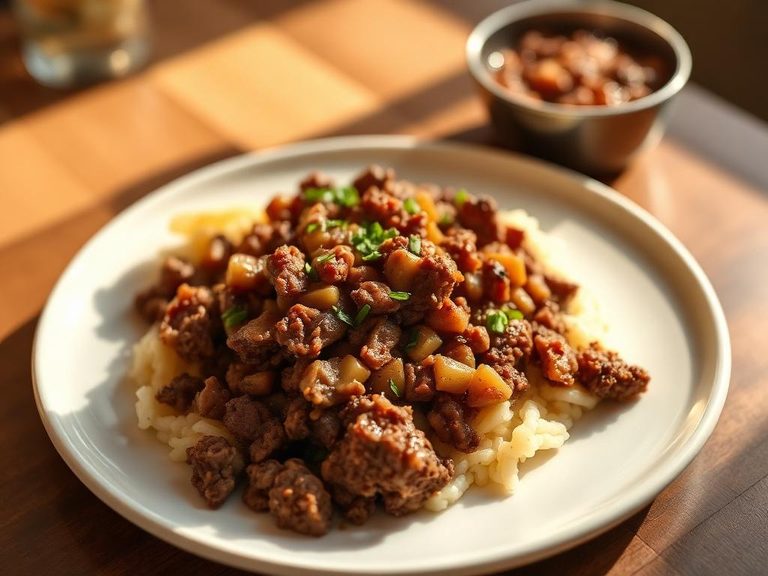
People love it for its robust, classic beef flavor that intensifies with cooking and its ability to become fork-tender in a slow oven or pot. It's the quintessential comfort food roast, perfect for creating hearty, flavorful leftovers for sandwiches or hash.
⚠️ Watch-outs & how to enjoy it better
Due to its leanness, it can become dry and tough if overcooked or prepared with high-heat methods. To counteract this, use a meat thermometer to pull it at 135°F (57°C) for medium-rare, or braise it in liquid (like stock or wine) to break down connective tissue. Pairing it with a flavorful sauce or jus can also enhance moisture.
Key benefits
- Excellent source of complete, high-quality protein (26.65g per 100g).
- Very low in carbohydrates and sugar, suitable for keto and low-carb diets.
- Rich in essential minerals like iron, zinc, and B vitamins (especially B12).
- Trimmed to 0g fat, it offers lean protein with minimal saturated fat.
- A versatile, economical cut for feeding a crowd.
🍽️ Popular dishes
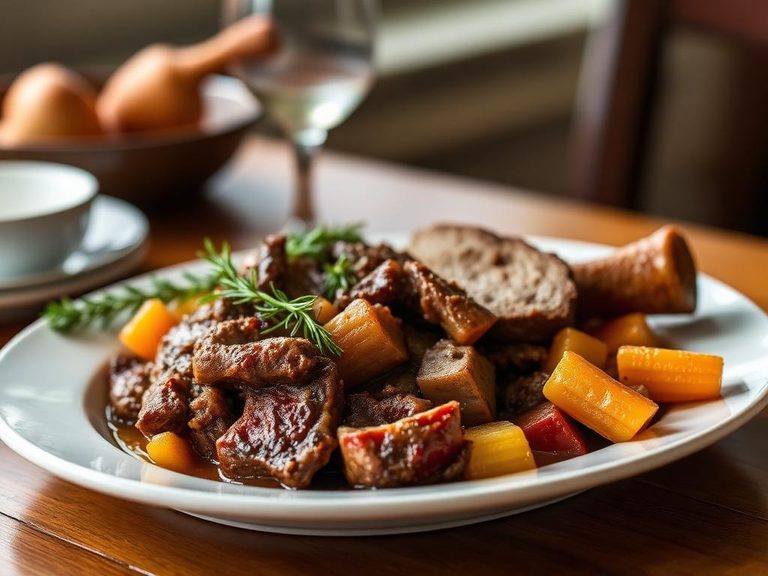
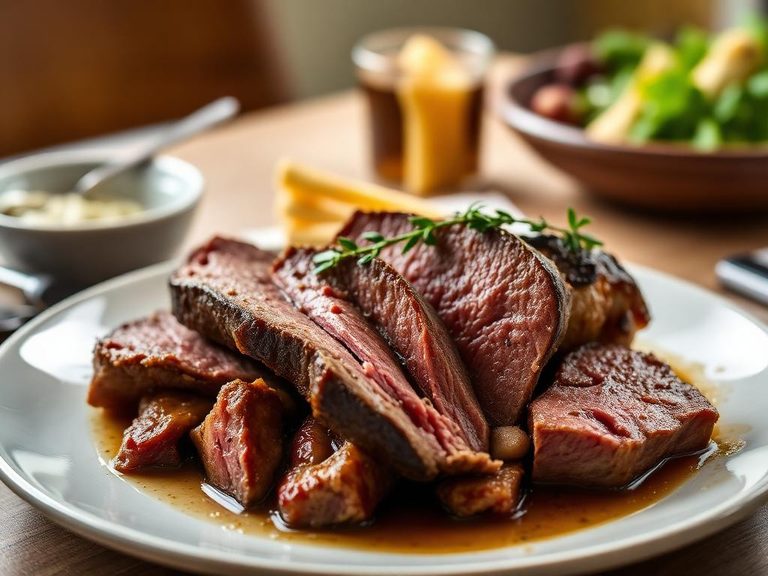
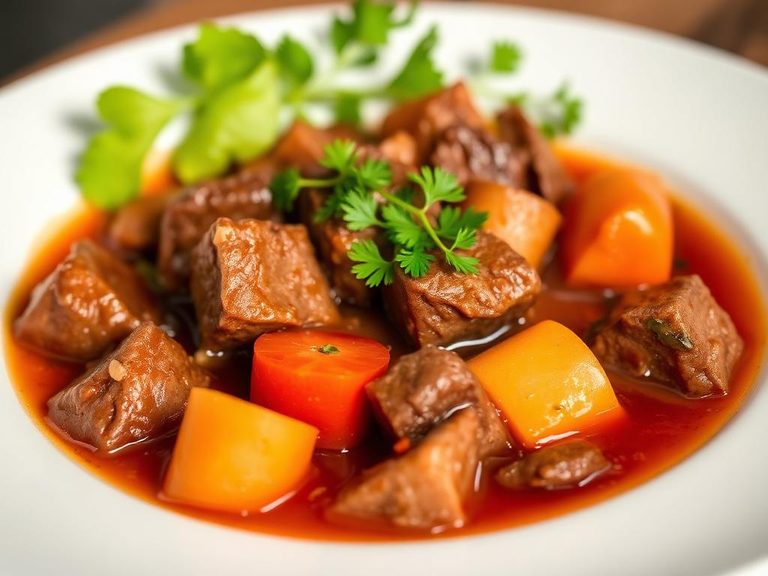
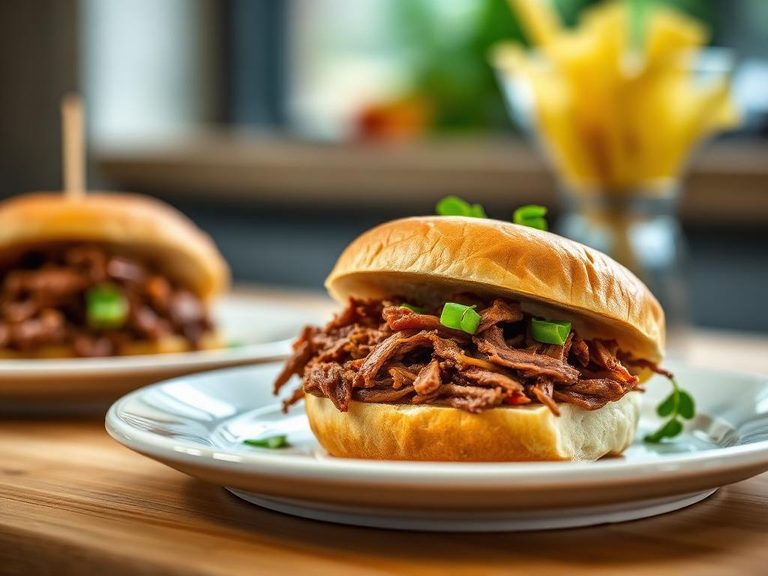
🌍 Where it's eaten
💡 Did you know?
The 'chuck eye' is sometimes called the 'poor man's ribeye' because it shares the same muscle (the longissimus dorsi) as the premium ribeye steak, but is cut from the shoulder section, making it more flavorful but tougher.
Full nutrition (USDA data · scales with serving)
| Water | 64.8 g |
| Energy | 183 kcal |
| Energy | 765 kj |
| Protein | 26.6 g |
| Total lipid (fat) | 8.5 g |
| Ash | 1.0 g |
| Carbohydrate, by difference | 0.00 g |
| Fiber, total dietary | 0.00 g |
| Total Sugars | 0.00 g |
| Calcium, Ca | 19.0 mg |
| Iron, Fe | 2.5 mg |
| Magnesium, Mg | 22.0 mg |
| Phosphorus, P | 210 mg |
| Potassium, K | 344 mg |
| Sodium, Na | 80.0 mg |
| Zinc, Zn | 9.7 mg |
| Copper, Cu | 0.08 mg |
| Manganese, Mn | 0.01 mg |
| Selenium, Se | 27.3 ug |
| Vitamin C, total ascorbic acid | 0.00 mg |
| Thiamin | 0.07 mg |
| Riboflavin | 0.19 mg |
| Niacin | 4.7 mg |
| Pantothenic acid | 0.72 mg |
| Vitamin B-6 | 0.41 mg |
| Folate, total | 6.0 ug |
| Folic acid | 0.00 ug |
| Folate, food | 6.0 ug |
| Folate, DFE | 6.0 ug |
| Choline, total | 79.5 mg |
| Betaine | 27.8 mg |
| Vitamin B-12 | 3.2 ug |
| Vitamin B-12, added | 0.00 ug |
| Vitamin A, RAE | 2.0 ug |
| Retinol | 2.0 ug |
| Carotene, beta | 0.00 ug |
| Carotene, alpha | 0.00 ug |
| Cryptoxanthin, beta | 0.00 ug |
| Vitamin A, IU | 5.0 iu |
| Lycopene | 0.00 ug |
| Lutein + zeaxanthin | 0.00 ug |
| Vitamin E (alpha-tocopherol) | 0.12 mg |
| Vitamin E, added | 0.00 mg |
| Vitamin D (D2 + D3), International Units | 5.0 iu |
| Vitamin D (D2 + D3) | 0.10 ug |
| Vitamin D3 (cholecalciferol) | 0.10 ug |
| Vitamin K (phylloquinone) | 1.6 ug |
| Alcohol, ethyl | 0.00 g |
| Caffeine | 0.00 mg |
| Theobromine | 0.00 mg |
Fat & fatty acid profile (per 100g)
| Fatty acids, total saturated | 3.4 g |
| SFA 4:0 | 0.00 g |
| SFA 6:0 | 0.00 g |
| SFA 8:0 | 0.00 g |
| SFA 10:0 | 0.00 g |
| SFA 12:0 | 0.00 g |
| SFA 14:0 | 0.20 g |
| SFA 16:0 | 1.9 g |
| SFA 17:0 | 0.10 g |
| SFA 18:0 | 1.3 g |
| SFA 20:0 | 0.00 g |
| SFA 24:0 | 0.01 g |
| Fatty acids, total monounsaturated | 4.2 g |
| MUFA 14:1 | 0.04 g |
| MUFA 16:1 | 0.25 g |
| MUFA 17:1 | 0.07 g |
| MUFA 18:1 | 3.8 g |
| MUFA 18:1 c | 3.4 g |
| MUFA 18:1-11 t (18:1t n-7) | 0.25 g |
| MUFA 20:1 | 0.01 g |
| MUFA 22:1 | 0.00 g |
| Fatty acids, total polyunsaturated | 0.43 g |
| PUFA 18:2 | 0.36 g |
| PUFA 18:2 n-6 c,c | 0.33 g |
| PUFA 18:2 CLAs | 0.03 g |
| PUFA 18:3 | 0.01 g |
| PUFA 18:3 n-3 c,c,c (ALA) | 0.01 g |
| PUFA 18:4 | 0.00 g |
| PUFA 20:2 n-6 c,c | 0.00 g |
| PUFA 20:4 | 0.05 g |
| PUFA 20:5 n-3 (EPA) | 0.00 g |
| PUFA 22:5 n-3 (DPA) | 0.00 g |
| PUFA 22:6 n-3 (DHA) | 0.00 g |
| Fatty acids, total trans | 0.37 g |
| Fatty acids, total trans-monoenoic | 0.37 g |
| TFA 18:1 t | 0.37 g |
| Cholesterol | 83.0 mg |
Amino acid profile (per 100g)
| Tryptophan | 0.31 g |
| Threonine | 1.2 g |
| Isoleucine | 1.2 g |
| Leucine | 2.2 g |
| Lysine | 2.4 g |
| Methionine | 0.78 g |
| Cystine | 0.28 g |
| Phenylalanine | 1.0 g |
| Tyrosine | 0.94 g |
| Valine | 1.2 g |
| Arginine | 1.8 g |
| Histidine | 0.88 g |
| Alanine | 1.5 g |
| Aspartic acid | 2.5 g |
| Glutamic acid | 4.3 g |
| Glycine | 1.2 g |
| Proline | 1.1 g |
| Serine | 1.0 g |
| Hydroxyproline | 0.14 g |
FAQ
What's the best way to cook this lean roast to prevent dryness?
The key is low, slow, and moist heat. Roast at 325°F (163°C) until it reaches an internal temperature of 135°F (57°C) for medium-rare, then let it rest for 15 minutes before slicing. For guaranteed tenderness, braise it in a covered pot with broth, wine, and aromatics until it's fork-tender.
Is this cut the same as a 'chuck roast'?
It is a specific type of chuck roast. 'Chuck eye roast' comes from the center of the chuck roll, adjacent to the rib section, and is generally considered more tender and uniform than other chuck roasts used for pot roasting.
How does trimming to 0g fat affect the cooking and flavor?
Trimming all external fat removes a layer that would otherwise baste the meat during cooking. This makes the roast leaner but also means you must be extra vigilant about not overcooking it. Adding a small amount of fat (like olive oil) to the surface before roasting or cooking it in liquid helps compensate.
Nutrient density (calculated · NRF9.3)
Nutrient Rich Foods index: beneficial nutrients (protein, fiber, vitamins, minerals) minus saturated fat, added sugar & sodium, per 100 kcal.
NRF9.3 index — Fulgoni, Keast & Drewnowski, 2009. Computed from USDA nutrients.
Weight-loss friendliness (composite index)
Energy density 1.83 kcal/g · 58% calories from protein · 0.0 g fiber · 0.0 g sugar per 100 g.
Composite of energy density (Rolls et al., 1999), protein & fiber satiety, minus sugar. A calculated heuristic — ranks satiety-per-calorie, not a clinical measure.
Dietary load (calculated from USDA values)
Potential renal acid load. Positive = acid-forming, negative = alkaline-forming.
Sodium-to-potassium ratio: 0.23 (lower is better — aim for ≤ 1)
Sodium:potassium per WHO potassium guidance. Computed from USDA nutrients.