

Beef, chuck eye roast, boneless, America's Beef Roast, separable lean and fat, trimmed to 0" fat, choice, cooked, roasted
Whole food · Beef Products
The chuck eye roast is a flavorful, well-marbled cut from the shoulder of the cow, often called 'America's Beef Roast' for its rich beefy taste and tender texture when slow-roasted. With 24.47g of protein per 100g and zero carbs, it's a powerhouse of nutrition for those seeking a high-protein, low-carb meal. Its lean and fat composition, trimmed to 0% fat, delivers a balanced, satisfying bite without excessive grease.
Calorie split: 41% protein · 0% carbs · 59% fat
↓ Full nutrition💚 Why it's loved
People love chuck eye roast for its deep, savory flavor and melt-in-your-mouth tenderness when cooked properly, making it a staple for family dinners and holiday meals. Its ability to absorb spices and sauces makes it incredibly versatile in both American and global cuisines.
⚠️ Watch-outs & how to enjoy it better
The high fat content, even when trimmed, can be a concern for those watching saturated fat intake, and it may not suit very low-fat diets. To counteract, pair with fiber-rich vegetables like broccoli or spinach to balance the meal, and practice portion control by sticking to a 118g serving to manage calorie and fat intake.
Key benefits
- High-quality protein for muscle repair and satiety
- Zero carbohydrates, ideal for keto and low-carb diets
- Rich in iron and B vitamins for energy metabolism
- Versatile cut suitable for slow-roasting or braising
- Trimmed fat reduces overall calorie density
🍽️ Popular dishes
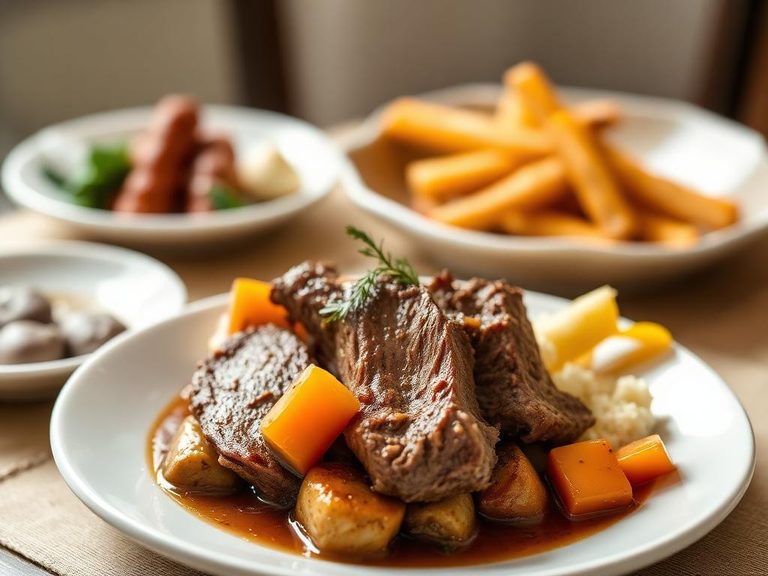
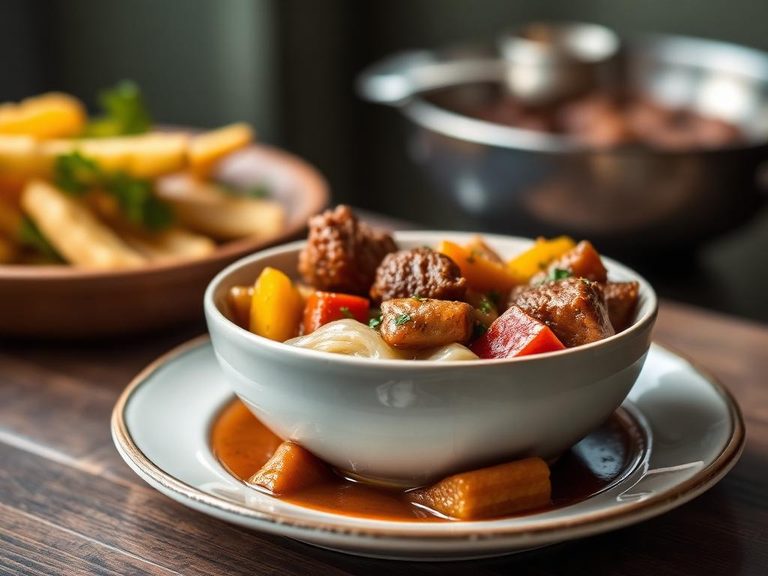
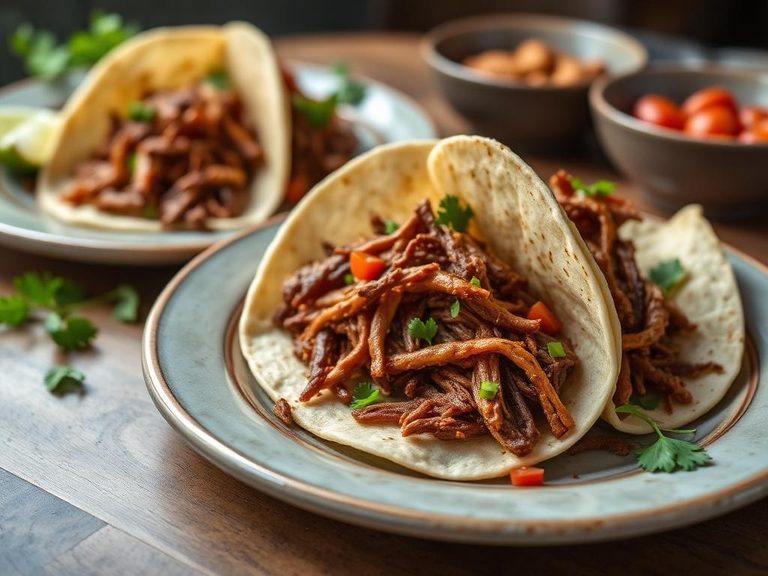
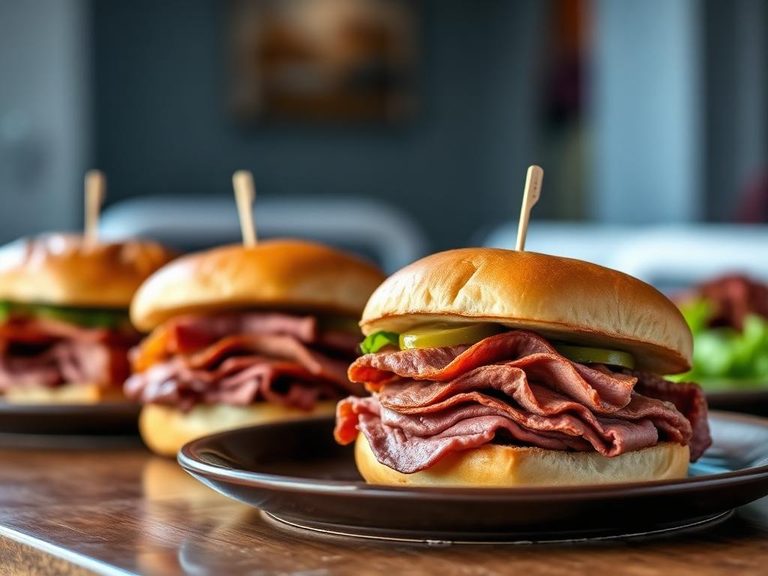
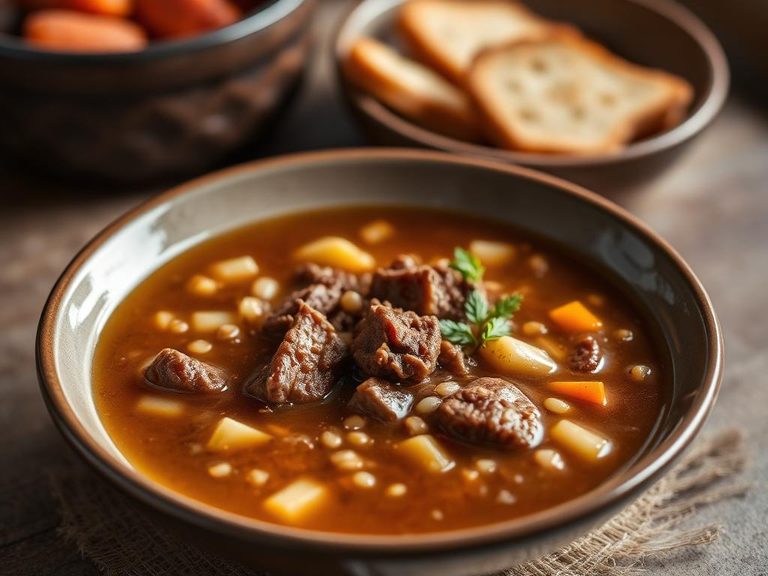
🌍 Where it's eaten
💡 Did you know?
The chuck eye roast is often called 'the poor man's ribeye' because it comes from the same muscle group as the ribeye but at a lower price, offering similar marbling and flavor.
Full nutrition (USDA data · scales with serving)
| Water | 59.6 g |
| Energy | 241 kcal |
| Energy | 1007 kj |
| Protein | 24.5 g |
| Total lipid (fat) | 15.9 g |
| Ash | 0.94 g |
| Carbohydrate, by difference | 0.00 g |
| Fiber, total dietary | 0.00 g |
| Total Sugars | 0.00 g |
| Calcium, Ca | 18.0 mg |
| Iron, Fe | 2.3 mg |
| Magnesium, Mg | 21.0 mg |
| Phosphorus, P | 189 mg |
| Potassium, K | 307 mg |
| Sodium, Na | 75.0 mg |
| Zinc, Zn | 8.7 mg |
| Copper, Cu | 0.07 mg |
| Manganese, Mn | 0.01 mg |
| Selenium, Se | 25.2 ug |
| Vitamin C, total ascorbic acid | 0.00 mg |
| Thiamin | 0.08 mg |
| Riboflavin | 0.18 mg |
| Niacin | 4.3 mg |
| Pantothenic acid | 0.69 mg |
| Vitamin B-6 | 0.37 mg |
| Folate, total | 6.0 ug |
| Folic acid | 0.00 ug |
| Folate, food | 6.0 ug |
| Folate, DFE | 6.0 ug |
| Choline, total | 80.0 mg |
| Betaine | 29.3 mg |
| Vitamin B-12 | 3.2 ug |
| Vitamin B-12, added | 0.00 ug |
| Vitamin A, RAE | 6.0 ug |
| Retinol | 6.0 ug |
| Carotene, beta | 0.00 ug |
| Carotene, alpha | 0.00 ug |
| Cryptoxanthin, beta | 0.00 ug |
| Vitamin A, IU | 22.0 iu |
| Lycopene | 0.00 ug |
| Lutein + zeaxanthin | 0.00 ug |
| Vitamin E (alpha-tocopherol) | 0.13 mg |
| Vitamin E, added | 0.00 mg |
| Vitamin D (D2 + D3), International Units | 5.0 iu |
| Vitamin D (D2 + D3) | 0.10 ug |
| Vitamin D3 (cholecalciferol) | 0.10 ug |
| Vitamin K (phylloquinone) | 1.6 ug |
| Alcohol, ethyl | 0.00 g |
| Caffeine | 0.00 mg |
| Theobromine | 0.00 mg |
Fat & fatty acid profile (per 100g)
| Fatty acids, total saturated | 6.5 g |
| SFA 4:0 | 0.00 g |
| SFA 6:0 | 0.00 g |
| SFA 8:0 | 0.00 g |
| SFA 10:0 | 0.00 g |
| SFA 12:0 | 0.00 g |
| SFA 14:0 | 0.42 g |
| SFA 16:0 | 3.5 g |
| SFA 17:0 | 0.19 g |
| SFA 18:0 | 2.4 g |
| SFA 20:0 | 0.01 g |
| SFA 24:0 | 0.01 g |
| Fatty acids, total monounsaturated | 7.5 g |
| MUFA 14:1 | 0.09 g |
| MUFA 16:1 | 0.45 g |
| MUFA 16:1 c | 0.45 g |
| MUFA 17:1 | 0.12 g |
| MUFA 18:1 | 6.8 g |
| MUFA 18:1 c | 5.9 g |
| MUFA 18:1-11 t (18:1t n-7) | 0.34 g |
| MUFA 20:1 | 0.04 g |
| MUFA 22:1 | 0.00 g |
| Fatty acids, total polyunsaturated | 0.59 g |
| PUFA 18:2 | 0.50 g |
| PUFA 18:2 n-6 c,c | 0.49 g |
| PUFA 18:2 CLAs | 0.01 g |
| PUFA 18:3 | 0.03 g |
| PUFA 18:3 n-3 c,c,c (ALA) | 0.03 g |
| PUFA 18:4 | 0.00 g |
| PUFA 20:2 n-6 c,c | 0.00 g |
| PUFA 20:4 | 0.05 g |
| PUFA 20:5 n-3 (EPA) | 0.00 g |
| PUFA 22:5 n-3 (DPA) | 0.00 g |
| PUFA 22:6 n-3 (DHA) | 0.00 g |
| Fatty acids, total trans | 0.88 g |
| Fatty acids, total trans-monoenoic | 0.88 g |
| TFA 18:1 t | 0.88 g |
| Cholesterol | 84.0 mg |
Amino acid profile (per 100g)
| Tryptophan | 0.28 g |
| Threonine | 1.1 g |
| Isoleucine | 1.0 g |
| Leucine | 2.0 g |
| Lysine | 2.1 g |
| Methionine | 0.69 g |
| Cystine | 0.26 g |
| Phenylalanine | 0.93 g |
| Tyrosine | 0.84 g |
| Valine | 1.1 g |
| Arginine | 1.6 g |
| Histidine | 0.79 g |
| Alanine | 1.4 g |
| Aspartic acid | 2.2 g |
| Glutamic acid | 3.9 g |
| Glycine | 1.1 g |
| Proline | 1.0 g |
| Serine | 0.94 g |
| Hydroxyproline | 0.17 g |
FAQ
What is the best way to cook a chuck eye roast?
Slow-roasting or braising at low temperatures (around 300°F/150°C) for several hours ensures tenderness and flavor development.
How does chuck eye roast differ from other beef roasts?
It comes from the shoulder (chuck) area, offering more marbling and flavor than leaner cuts like sirloin, but less fat than prime rib.
Is chuck eye roast suitable for a low-carb diet?
Yes, with zero carbs and high protein, it's perfect for keto and low-carb diets, especially when paired with non-starchy vegetables.
Nutrient density (calculated · NRF9.3)
Nutrient Rich Foods index: beneficial nutrients (protein, fiber, vitamins, minerals) minus saturated fat, added sugar & sodium, per 100 kcal.
NRF9.3 index — Fulgoni, Keast & Drewnowski, 2009. Computed from USDA nutrients.
Weight-loss friendliness (composite index)
Energy density 2.41 kcal/g · 41% calories from protein · 0.0 g fiber · 0.0 g sugar per 100 g.
Composite of energy density (Rolls et al., 1999), protein & fiber satiety, minus sugar. A calculated heuristic — ranks satiety-per-calorie, not a clinical measure.
Dietary load (calculated from USDA values)
Potential renal acid load. Positive = acid-forming, negative = alkaline-forming.
Sodium-to-potassium ratio: 0.24 (lower is better — aim for ≤ 1)
Sodium:potassium per WHO potassium guidance. Computed from USDA nutrients.