

Babyfood, cereal, rice, prepared with whole milk
Whole food · Baby Foods
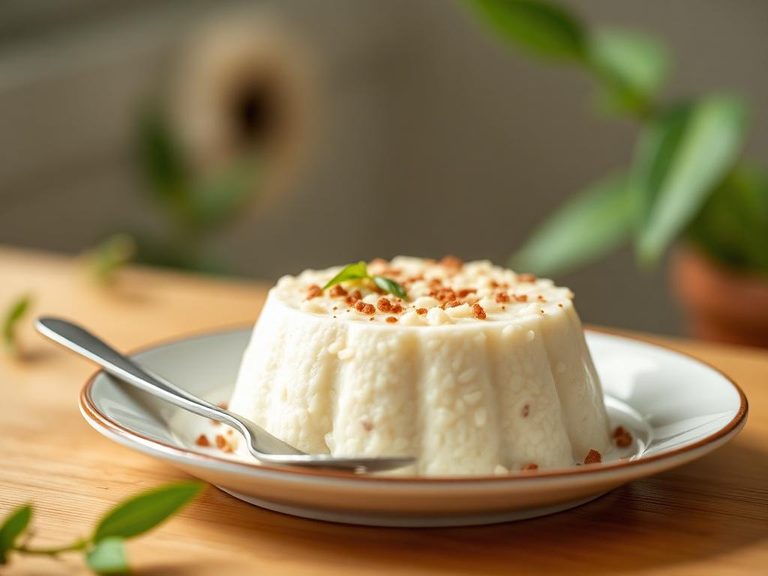
This is a smooth, creamy, and mildly sweet cereal porridge made from finely milled rice and whole milk, designed as a gentle first food for infants. Its texture is typically thin and easily spoonable, with a comforting, milky flavor that is not overpowering. Nutritionally, it provides a quick source of energy from carbohydrates and a modest amount of protein and fat from the milk.
Calorie split: 16% protein · 48% carbs · 36% fat
↓ Full nutrition💚 Why it's loved
Parents and caregivers love it for its simplicity and reliability as a first food, often being the first solid a baby tastes. Its mild, familiar flavor is rarely rejected, making mealtime less stressful during the early weaning stage.
⚠️ Watch-outs & how to enjoy it better
Its high glycemic index can lead to rapid blood-sugar spikes, offering little sustained energy. It is also low in fiber and key nutrients like iron if not fortified, so relying on it exclusively can lead to nutritional gaps. To counteract this, always pair it with a source of protein or fat (like a little mashed avocado or fruit puree) and ensure it's part of a varied diet.
Key benefits
- Provides easily digestible energy for active infants.
- Fortified with iron in many commercial versions to prevent deficiency.
- Whole milk adds calcium and fat crucial for brain development.
- Simple, single-grain base is often recommended for introducing solids.
- Convenient and quick to prepare for caregivers.
🍽️ Popular dishes
🌍 Where it's eaten
💡 Did you know?
Rice cereal is often the first solid food recommended in many Western countries, not because it's nutritionally superior, but because its bland taste and smooth texture make it a neutral 'training' food for learning to swallow.
Full nutrition (USDA data · scales with serving)
| Water | 82.0 g |
| Energy | 85.0 kcal |
| Energy | 357 kj |
| Protein | 3.5 g |
| Total lipid (fat) | 3.4 g |
| Ash | 0.89 g |
| Carbohydrate, by difference | 10.3 g |
| Fiber, total dietary | 0.00 g |
| Total Sugars | 4.9 g |
| Sucrose | 0.00 g |
| Glucose | 0.00 g |
| Fructose | 0.00 g |
| Lactose | 4.7 g |
| Maltose | 0.00 g |
| Galactose | 0.00 g |
| Calcium, Ca | 168 mg |
| Iron, Fe | 3.6 mg |
| Magnesium, Mg | 25.0 mg |
| Phosphorus, P | 122 mg |
| Potassium, K | 151 mg |
| Sodium, Na | 42.0 mg |
| Zinc, Zn | 0.49 mg |
| Copper, Cu | 0.05 mg |
| Manganese, Mn | 0.00 mg |
| Selenium, Se | 4.3 ug |
| Vitamin C, total ascorbic acid | 0.20 mg |
| Thiamin | 0.24 mg |
| Riboflavin | 0.32 mg |
| Niacin | 2.4 mg |
| Pantothenic acid | 0.34 mg |
| Vitamin B-6 | 0.07 mg |
| Folate, total | 6.0 ug |
| Folic acid | 0.00 ug |
| Folate, food | 6.0 ug |
| Folate, DFE | 6.0 ug |
| Choline, total | 14.6 mg |
| Betaine | 0.60 mg |
| Vitamin B-12 | 0.41 ug |
| Vitamin B-12, added | 0.00 ug |
| Vitamin A, RAE | 42.0 ug |
| Retinol | 42.0 ug |
| Carotene, beta | 6.0 ug |
| Carotene, alpha | 0.00 ug |
| Cryptoxanthin, beta | 0.00 ug |
| Vitamin A, IU | 150 iu |
| Lycopene | 0.00 ug |
| Lutein + zeaxanthin | 0.00 ug |
| Vitamin E (alpha-tocopherol) | 0.44 mg |
| Vitamin E, added | 0.00 mg |
| Tocopherol, beta | 0.00 mg |
| Tocopherol, gamma | 0.00 mg |
| Tocopherol, delta | 0.00 mg |
| Tocotrienol, alpha | 0.00 mg |
| Tocotrienol, beta | 0.00 mg |
| Tocotrienol, gamma | 0.00 mg |
| Tocotrienol, delta | 0.00 mg |
| Vitamin D (D2 + D3), International Units | 47.0 iu |
| Vitamin D (D2 + D3) | 1.2 ug |
| Vitamin D3 (cholecalciferol) | 1.2 ug |
| Vitamin K (phylloquinone) | 0.20 ug |
| Vitamin K (Dihydrophylloquinone) | 0.00 ug |
| Vitamin K (Menaquinone-4) | 0.90 ug |
| Alcohol, ethyl | 0.00 g |
| Caffeine | 0.00 mg |
| Theobromine | 0.00 mg |
Fat & fatty acid profile (per 100g)
| Fatty acids, total saturated | 1.8 g |
| SFA 4:0 | 0.07 g |
| SFA 6:0 | 0.07 g |
| SFA 8:0 | 0.07 g |
| SFA 10:0 | 0.07 g |
| SFA 12:0 | 0.07 g |
| SFA 13:0 | 0.00 g |
| SFA 14:0 | 0.28 g |
| SFA 15:0 | 0.00 g |
| SFA 16:0 | 0.82 g |
| SFA 17:0 | 0.00 g |
| SFA 18:0 | 0.35 g |
| SFA 20:0 | 0.00 g |
| SFA 22:0 | 0.00 g |
| SFA 24:0 | 0.00 g |
| Fatty acids, total monounsaturated | 0.85 g |
| MUFA 14:1 | 0.00 g |
| MUFA 16:1 | 0.00 g |
| MUFA 18:1 | 0.84 g |
| MUFA 20:1 | 0.00 g |
| MUFA 22:1 | 0.00 g |
| Fatty acids, total polyunsaturated | 0.33 g |
| PUFA 18:2 | 0.25 g |
| PUFA 18:3 | 0.09 g |
| PUFA 18:4 | 0.00 g |
| PUFA 20:4 | 0.00 g |
| PUFA 20:5 n-3 (EPA) | 0.00 g |
| PUFA 22:5 n-3 (DPA) | 0.00 g |
| PUFA 22:6 n-3 (DHA) | 0.00 g |
| Cholesterol | 10.0 mg |
Amino acid profile (per 100g)
| Tryptophan | 0.07 g |
| Threonine | 0.15 g |
| Isoleucine | 0.17 g |
| Leucine | 0.28 g |
| Lysine | 0.15 g |
| Methionine | 0.08 g |
| Cystine | 0.03 g |
| Phenylalanine | 0.16 g |
| Tyrosine | 0.16 g |
| Valine | 0.21 g |
| Arginine | 0.12 g |
| Histidine | 0.08 g |
| Alanine | 0.13 g |
| Aspartic acid | 0.27 g |
| Glutamic acid | 0.68 g |
| Glycine | 0.10 g |
| Proline | 0.33 g |
| Serine | 0.12 g |
FAQ
Is this the same as adult rice pudding?
No. Babyfood cereal is a very thin, bland, and unseasoned porridge made specifically for infants. Adult rice pudding is thicker, sweeter, often contains eggs, vanilla, and spices, and is a dessert.
Why is it made with whole milk instead of formula or breast milk?
While it can be mixed with formula or breast milk, the nutritional data provided is for the prepared product using whole milk. Whole milk adds fat and calories important for infant growth, but guidelines often recommend waiting until after 12 months for whole cow's milk as a drink.
Can I make this at home instead of buying it pre-made?
Yes, you can cook finely ground rice or use a baby rice cereal powder and mix it with milk. However, commercial versions are often fortified with iron and other nutrients, which is a key advantage for preventing deficiencies.
Nutrient density (calculated · NRF9.3)
Nutrient Rich Foods index: beneficial nutrients (protein, fiber, vitamins, minerals) minus saturated fat, added sugar & sodium, per 100 kcal.
NRF9.3 index — Fulgoni, Keast & Drewnowski, 2009. Computed from USDA nutrients.
Weight-loss friendliness (composite index)
Energy density 0.85 kcal/g · 16% calories from protein · 0.0 g fiber · 4.9 g sugar per 100 g.
Composite of energy density (Rolls et al., 1999), protein & fiber satiety, minus sugar. A calculated heuristic — ranks satiety-per-calorie, not a clinical measure.
Dietary load (calculated from USDA values)
Potential renal acid load. Positive = acid-forming, negative = alkaline-forming.
Sodium-to-potassium ratio: 0.28 (lower is better — aim for ≤ 1)
Sodium:potassium per WHO potassium guidance. Computed from USDA nutrients.