

Apples, raw, without skin
Whole food · Fruits and Fruit Juices

Photo: Wikipedia
Peeled, raw apple slices are crisp, juicy, and mildly sweet, with a clean, refreshing crunch that lacks the slight bitterness of the skin. At just 48 calories per 100g, they are a light, hydrating snack packed with natural sugars and a modest 1.3g of fiber. Their simple, familiar flavor makes them a versatile base for both sweet and savory preparations.
Calorie split: 2% protein · 96% carbs · 2% fat
↓ Full nutrition💚 Why it's loved
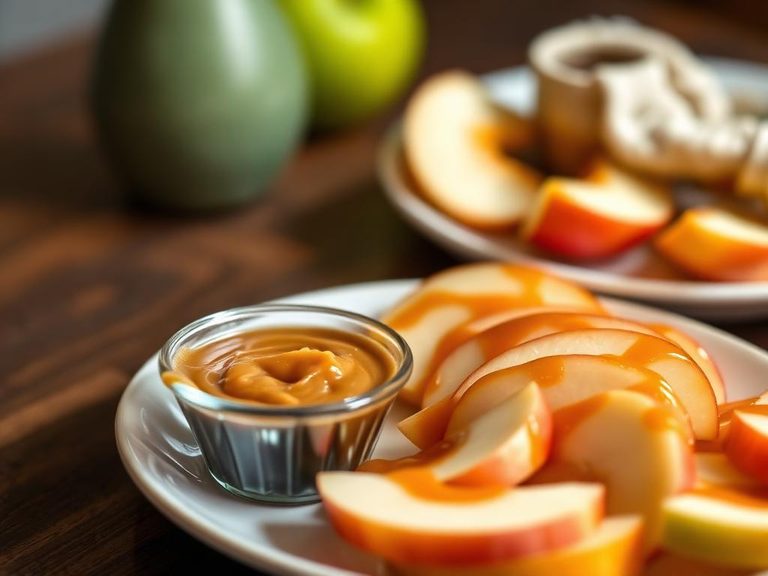
People love the satisfying crunch and clean, sweet-tart flavor that feels both indulgent and wholesome. Its versatility allows it to be eaten alone, paired with nut butter, or used in countless recipes from salads to desserts.
⚠️ Watch-outs & how to enjoy it better
The primary downside is the relatively high sugar content (10.1g per 100g) and low fiber (1.3g) compared to unpeeled apples, which can lead to faster blood-sugar spikes. To counteract this, pair slices with a protein or healthy fat like peanut butter or cheese, or consume them as part of a balanced meal rather than alone.
Key benefits
- Low in calories and fat, making it a light snack option
- Provides quick, natural energy from simple carbohydrates
- Contains vitamin C and small amounts of potassium
- High water content aids in hydration
- Naturally fat-free and cholesterol-free
🍽️ Popular dishes
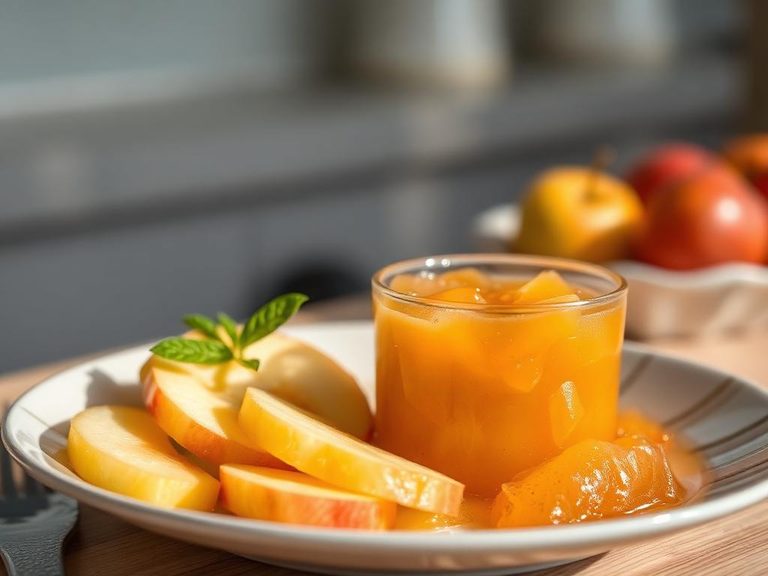
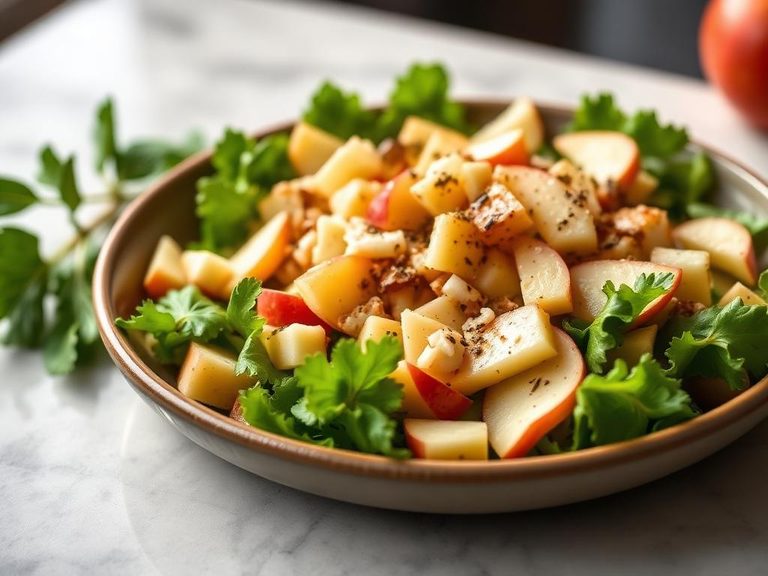
🌍 Where it's eaten
💡 Did you know?
The apple's scientific name, Malus domestica, hints at its ancient lineage; genetic studies trace the domestic apple's origin to the wild apple (Malus sieversii) from the Tian Shan mountains of Kazakhstan, where trees still grow wild today.
Full nutrition (USDA data · scales with serving)
| Water | 86.7 g |
| Energy | 48.0 kcal |
| Energy | 200 kj |
| Protein | 0.27 g |
| Total lipid (fat) | 0.13 g |
| Ash | 0.17 g |
| Carbohydrate, by difference | 12.8 g |
| Fiber, total dietary | 1.3 g |
| Total Sugars | 10.1 g |
| Sucrose | 0.82 g |
| Glucose | 3.3 g |
| Fructose | 6.0 g |
| Lactose | 0.00 g |
| Maltose | 0.00 g |
| Galactose | 0.00 g |
| Calcium, Ca | 5.0 mg |
| Iron, Fe | 0.07 mg |
| Magnesium, Mg | 4.0 mg |
| Phosphorus, P | 11.0 mg |
| Potassium, K | 90.0 mg |
| Sodium, Na | 0.00 mg |
| Zinc, Zn | 0.05 mg |
| Copper, Cu | 0.03 mg |
| Manganese, Mn | 0.04 mg |
| Selenium, Se | 0.00 ug |
| Vitamin C, total ascorbic acid | 4.0 mg |
| Thiamin | 0.02 mg |
| Riboflavin | 0.03 mg |
| Niacin | 0.09 mg |
| Pantothenic acid | 0.07 mg |
| Vitamin B-6 | 0.04 mg |
| Folate, total | 0.00 ug |
| Folic acid | 0.00 ug |
| Folate, food | 0.00 ug |
| Folate, DFE | 0.00 ug |
| Choline, total | 3.4 mg |
| Vitamin B-12 | 0.00 ug |
| Vitamin B-12, added | 0.00 ug |
| Vitamin A, RAE | 2.0 ug |
| Retinol | 0.00 ug |
| Carotene, beta | 17.0 ug |
| Carotene, alpha | 0.00 ug |
| Cryptoxanthin, beta | 13.0 ug |
| Vitamin A, IU | 38.0 iu |
| Lycopene | 0.00 ug |
| Lutein + zeaxanthin | 18.0 ug |
| Vitamin E (alpha-tocopherol) | 0.05 mg |
| Vitamin E, added | 0.00 mg |
| Tocopherol, beta | 0.01 mg |
| Tocopherol, gamma | 0.00 mg |
| Tocopherol, delta | 0.00 mg |
| Tocotrienol, alpha | 0.00 mg |
| Tocotrienol, beta | 0.00 mg |
| Tocotrienol, gamma | 0.00 mg |
| Tocotrienol, delta | 0.00 mg |
| Vitamin D (D2 + D3), International Units | 0.00 iu |
| Vitamin D (D2 + D3) | 0.00 ug |
| Vitamin K (phylloquinone) | 0.60 ug |
| Vitamin K (Dihydrophylloquinone) | 0.00 ug |
| Alcohol, ethyl | 0.00 g |
| Caffeine | 0.00 mg |
| Theobromine | 0.00 mg |
Fat & fatty acid profile (per 100g)
| Fatty acids, total saturated | 0.02 g |
| SFA 4:0 | 0.00 g |
| SFA 6:0 | 0.00 g |
| SFA 8:0 | 0.00 g |
| SFA 10:0 | 0.00 g |
| SFA 12:0 | 0.00 g |
| SFA 14:0 | 0.00 g |
| SFA 16:0 | 0.02 g |
| SFA 18:0 | 0.00 g |
| Fatty acids, total monounsaturated | 0.01 g |
| MUFA 16:1 | 0.00 g |
| MUFA 18:1 | 0.01 g |
| MUFA 20:1 | 0.00 g |
| MUFA 22:1 | 0.00 g |
| Fatty acids, total polyunsaturated | 0.04 g |
| PUFA 18:2 | 0.03 g |
| PUFA 18:3 | 0.01 g |
| PUFA 18:4 | 0.00 g |
| PUFA 20:4 | 0.00 g |
| PUFA 20:5 n-3 (EPA) | 0.00 g |
| PUFA 22:5 n-3 (DPA) | 0.00 g |
| PUFA 22:6 n-3 (DHA) | 0.00 g |
| Fatty acids, total trans | 0.00 g |
| Cholesterol | 0.00 mg |
Amino acid profile (per 100g)
| Tryptophan | 0.00 g |
| Threonine | 0.01 g |
| Isoleucine | 0.01 g |
| Leucine | 0.01 g |
| Lysine | 0.01 g |
| Methionine | 0.00 g |
| Cystine | 0.00 g |
| Phenylalanine | 0.01 g |
| Tyrosine | 0.00 g |
| Valine | 0.01 g |
| Arginine | 0.01 g |
| Histidine | 0.01 g |
| Alanine | 0.01 g |
| Aspartic acid | 0.07 g |
| Glutamic acid | 0.03 g |
| Glycine | 0.01 g |
| Proline | 0.01 g |
| Serine | 0.01 g |
FAQ
Why is the fiber content lower in peeled apples?
A significant portion of an apple's fiber, particularly insoluble fiber, is concentrated in its skin. Removing the skin reduces the total fiber content by about 30-50%.
Are peeled apples less nutritious than unpeeled ones?
Yes, they lose a notable amount of fiber, antioxidants (like quercetin), and some vitamins found in the skin. However, they remain a good source of vitamin C and natural sugars.
How can I prevent peeled apple slices from browning?
Toss them in a little lemon juice, lime juice, or a light saltwater solution (1/2 tsp salt per cup of water) to slow oxidation. Storing them in an airtight container in the fridge also helps.
Nutrient density (calculated · NRF9.3)
Nutrient Rich Foods index: beneficial nutrients (protein, fiber, vitamins, minerals) minus saturated fat, added sugar & sodium, per 100 kcal.
NRF9.3 index — Fulgoni, Keast & Drewnowski, 2009. Computed from USDA nutrients.
Weight-loss friendliness (composite index)
Energy density 0.48 kcal/g · 2% calories from protein · 1.3 g fiber · 10.1 g sugar per 100 g.
Composite of energy density (Rolls et al., 1999), protein & fiber satiety, minus sugar. A calculated heuristic — ranks satiety-per-calorie, not a clinical measure.
Dietary load (calculated from USDA values)
Potential renal acid load. Positive = acid-forming, negative = alkaline-forming.
Sodium-to-potassium ratio: 0.00 (lower is better — aim for ≤ 1)
Sodium:potassium per WHO potassium guidance. Computed from USDA nutrients.