Rice bowl with chicken, frozen entree, prepared (includes fried, teriyaki, and sweet and sour varieties)
Whole food · Meals, Entrees, and Side Dishes

Photo: Wikipedia
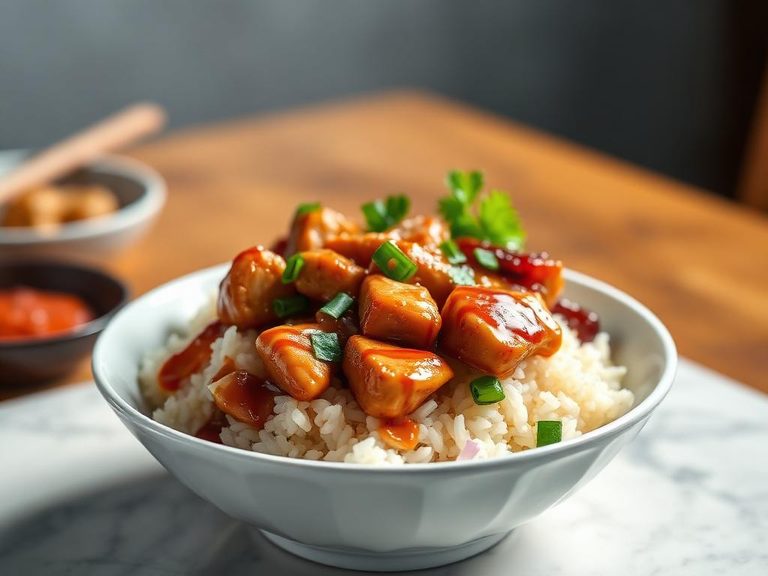
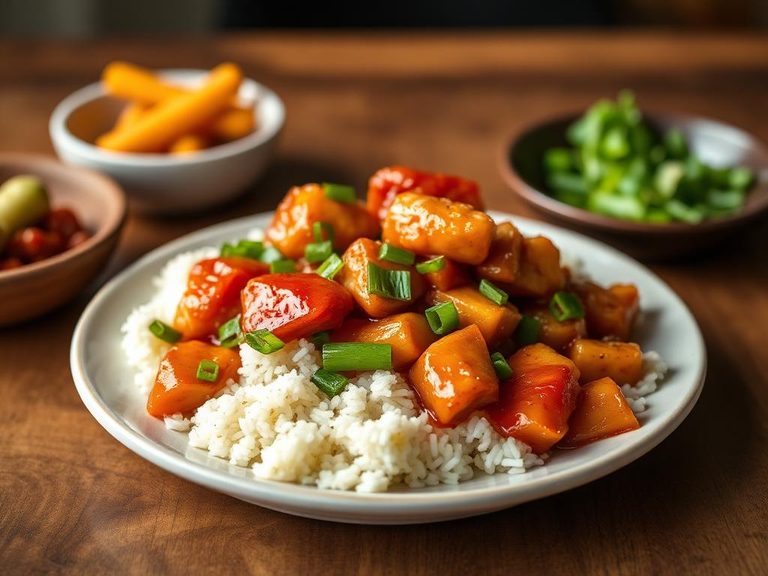
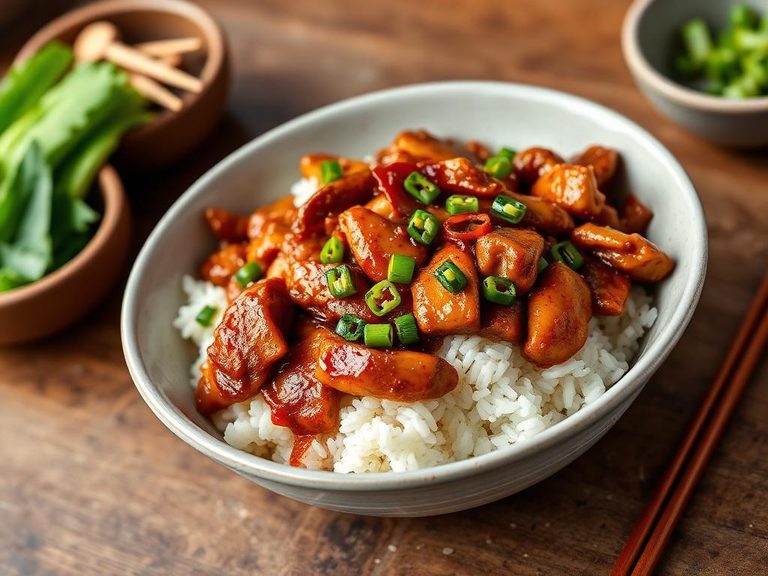
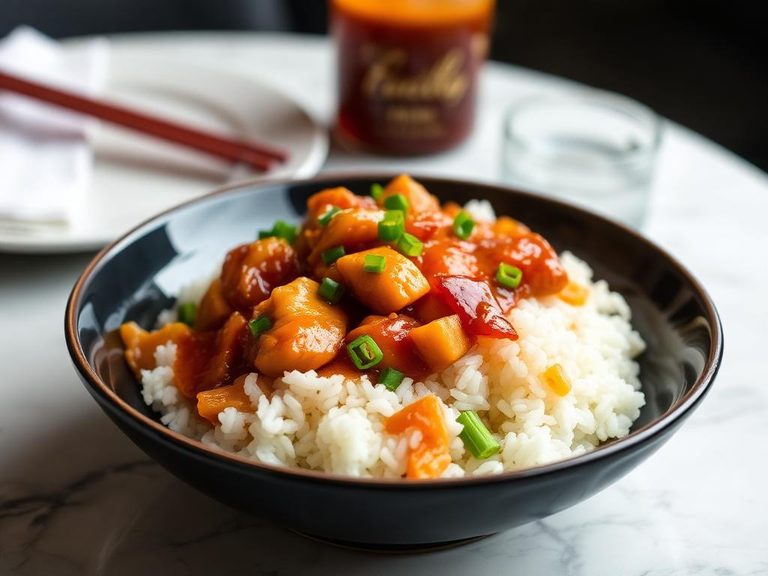
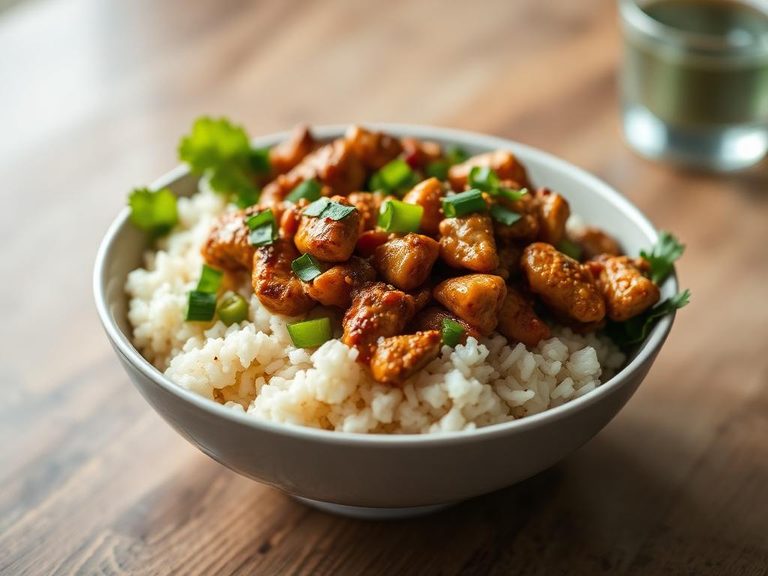
This is a convenient, pre-cooked frozen meal featuring tender chicken pieces nestled in a bed of fluffy white rice, glazed in a savory-sweet sauce. Expect a soft, cohesive texture where the rice absorbs the sauce's flavor, ranging from the umami depth of teriyaki to the tangy kick of sweet and sour. Nutritionally, it's a light, low-fat option, though primarily a source of quick-release carbohydrates.
💚 Why it's loved
People love it for its ultimate convenience and comforting, familiar flavors that require zero cooking skill. The combination of saucy chicken and rice hits a satisfying, nostalgic note for many, making it a reliable go-to for a quick lunch or dinner.
⚠️ Watch-outs & how to enjoy it better
The main downside is its high glycemic load from refined white rice and added sugars, which can cause rapid blood sugar spikes. It may also contain high sodium for preservation and flavor. To counteract this, pair it with a side of non-starchy vegetables (like steamed broccoli) to add fiber, and consider a smaller portion size to manage carbohydrate intake.
Key benefits
- Extremely low in fat (1.56g per 100g)
- Good source of lean protein from chicken
- Very low calorie density (126 kcal per 100g)
- Convenient, no-prep meal solution
- Provides quick energy from carbohydrates
🍽️ Popular dishes
🌍 Where it's eaten
💡 Did you know?
The 'frozen entree' category for rice bowls exploded in popularity in the 1980s and 90s, driven by microwave technology and a cultural shift towards convenience foods.
Full nutrition (scales with serving)
| Water | 69.1 g |
| Energy | 126 kcal |
| Energy | 529 kj |
| Protein | 5.7 g |
| Total lipid (fat) | 1.6 g |
| Ash | 1.3 g |
| Carbohydrate, by difference | 22.5 g |
| Fiber, total dietary | 0.70 g |
| Total Sugars | 4.1 g |
| Sucrose | 3.5 g |
| Glucose | 0.25 g |
| Fructose | 0.32 g |
| Lactose | 0.00 g |
| Maltose | 0.00 g |
| Galactose | 0.00 g |
| Starch | 15.1 g |
| Calcium, Ca | 13.0 mg |
| Iron, Fe | 0.35 mg |
| Magnesium, Mg | 14.0 mg |
| Phosphorus, P | 94.0 mg |
| Potassium, K | 123 mg |
| Sodium, Na | 333 mg |
| Zinc, Zn | 0.38 mg |
| Copper, Cu | 0.03 mg |
| Manganese, Mn | 0.21 mg |
| Selenium, Se | 7.1 ug |
| Vitamin C, total ascorbic acid | 3.0 mg |
| Thiamin | 0.07 mg |
| Riboflavin | 0.06 mg |
| Niacin | 2.3 mg |
| Pantothenic acid | 0.35 mg |
| Vitamin B-6 | 0.16 mg |
| Folate, total | 18.0 ug |
| Folic acid | 5.0 ug |
| Folate, food | 13.0 ug |
| Folate, DFE | 22.0 ug |
| Choline, total | 13.4 mg |
| Betaine | 1.8 mg |
| Vitamin B-12 | 0.32 ug |
| Vitamin B-12, added | 0.32 ug |
| Vitamin A, RAE | 32.0 ug |
| Retinol | 2.0 ug |
| Carotene, beta | 287 ug |
| Carotene, alpha | 107 ug |
| Cryptoxanthin, beta | 43.0 ug |
| Vitamin A, IU | 609 iu |
| Lycopene | 53.0 ug |
| Lutein + zeaxanthin | 97.0 ug |
| Vitamin E (alpha-tocopherol) | 0.23 mg |
| Vitamin E, added | 0.00 mg |
| Tocopherol, beta | 0.01 mg |
| Tocopherol, gamma | 0.14 mg |
| Tocopherol, delta | 0.00 mg |
| Vitamin D (D2 + D3), International Units | 1.0 iu |
| Vitamin D (D2 + D3) | 0.00 ug |
| Vitamin K (phylloquinone) | 3.8 ug |
| Vitamin K (Dihydrophylloquinone) | 0.00 ug |
| Vitamin K (Menaquinone-4) | 2.1 ug |
| Alcohol, ethyl | 0.00 g |
| Caffeine | 0.00 mg |
| Theobromine | 0.00 mg |
Fat & fatty acid profile (per 100g)
| Fatty acids, total saturated | 0.33 g |
| SFA 4:0 | 0.00 g |
| SFA 6:0 | 0.00 g |
| SFA 8:0 | 0.00 g |
| SFA 10:0 | 0.00 g |
| SFA 12:0 | 0.00 g |
| SFA 14:0 | 0.01 g |
| SFA 15:0 | 0.00 g |
| SFA 16:0 | 0.24 g |
| SFA 17:0 | 0.00 g |
| SFA 18:0 | 0.07 g |
| SFA 20:0 | 0.00 g |
| SFA 22:0 | 0.00 g |
| SFA 24:0 | 0.00 g |
| Fatty acids, total monounsaturated | 0.50 g |
| MUFA 14:1 | 0.00 g |
| MUFA 15:1 | 0.00 g |
| MUFA 16:1 | 0.04 g |
| MUFA 17:1 | 0.00 g |
| MUFA 18:1 | 0.47 g |
| MUFA 20:1 | 0.00 g |
| MUFA 22:1 | 0.00 g |
| MUFA 24:1 c | 0.00 g |
| Fatty acids, total polyunsaturated | 0.41 g |
| PUFA 18:2 | 0.38 g |
| PUFA 18:3 | 0.02 g |
| PUFA 18:4 | 0.00 g |
| PUFA 20:2 n-6 c,c | 0.00 g |
| PUFA 20:3 | 0.00 g |
| PUFA 20:4 | 0.01 g |
| PUFA 20:5 n-3 (EPA) | 0.00 g |
| PUFA 21:5 | 0.00 g |
| PUFA 22:4 | 0.00 g |
| PUFA 22:5 n-3 (DPA) | 0.00 g |
| PUFA 22:6 n-3 (DHA) | 0.00 g |
| Cholesterol | 16.0 mg |
Amino acid profile (per 100g)
| Tryptophan | 0.07 g |
| Threonine | 0.25 g |
| Isoleucine | 0.27 g |
| Leucine | 0.46 g |
| Lysine | 0.42 g |
| Methionine | 0.13 g |
| Cystine | 0.08 g |
| Phenylalanine | 0.26 g |
| Tyrosine | 0.16 g |
| Valine | 0.31 g |
| Arginine | 0.39 g |
| Histidine | 0.19 g |
| Alanine | 0.34 g |
| Aspartic acid | 0.57 g |
| Glutamic acid | 0.93 g |
| Glycine | 0.26 g |
| Proline | 0.24 g |
| Serine | 0.24 g |
FAQ
Is this a healthy meal?
It's a low-fat, moderate-protein option, but its healthiness depends on context. It's high in refined carbs and often sodium, so it's best viewed as an occasional convenience meal rather than a daily staple. Adding a side of vegetables improves its nutritional profile significantly.
How does the nutrition compare to takeout?
Frozen versions are typically lower in calories and fat than restaurant takeout, as they use less oil. However, they can have similar or even higher sodium levels for preservation. The portion size is also more controlled.
Can I eat this if I'm gluten-free?
Most likely not. The sauces (teriyaki, sweet and sour) usually contain soy sauce, which is made with wheat. Always check the ingredient list for wheat-based ingredients if you have celiac disease or gluten sensitivity.