CRACKER BARREL, grilled sirloin steak
Whole food · Restaurant Foods

Photo: Wikipedia
A lean, grilled cut of beef from the sirloin primal, known for its robust, beefy flavor and firm, slightly chewy texture. It's a high-protein, virtually carb-free centerpiece, delivering a satisfying, savory bite with a clean, charred finish from the grill. The nutrition profile is dominated by protein, making it a staple for muscle maintenance and satiety.
💚 Why it's loved
People love it for its deep, satisfying umami flavor and the satisfying texture that comes from a proper grill char. It's a versatile protein that anchors a classic American meal, often paired with comforting sides like mashed potatoes or green beans.
⚠️ Watch-outs & how to enjoy it better
As a red meat, it can be high in saturated fat and cholesterol depending on the cut and preparation, which some may need to moderate. For those watching sodium intake, restaurant-seasoned versions can be salty. To balance, pair with fiber-rich vegetables and consider a smaller portion size.
Key benefits
- Excellent source of high-quality protein (31.5g per 100g)
- Very low in carbohydrates and sugars
- Provides essential nutrients like iron, zinc, and B vitamins
- Supports muscle repair and growth due to high protein content
- Naturally gluten-free
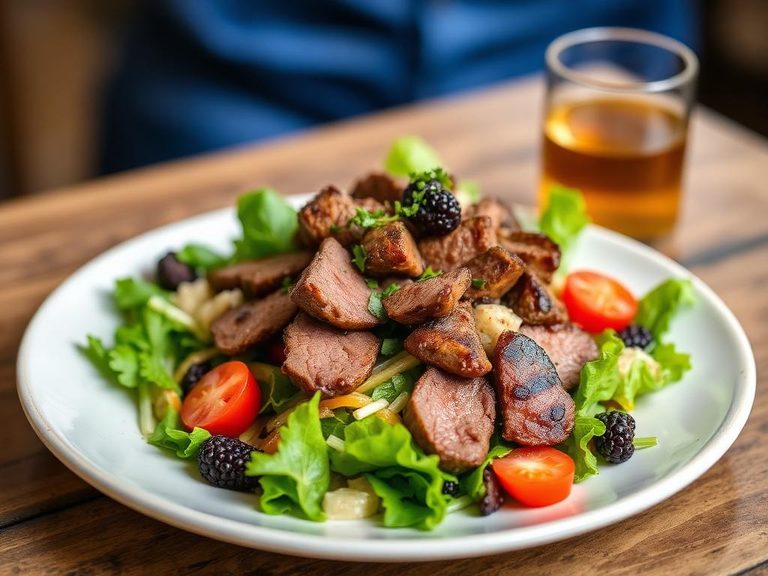
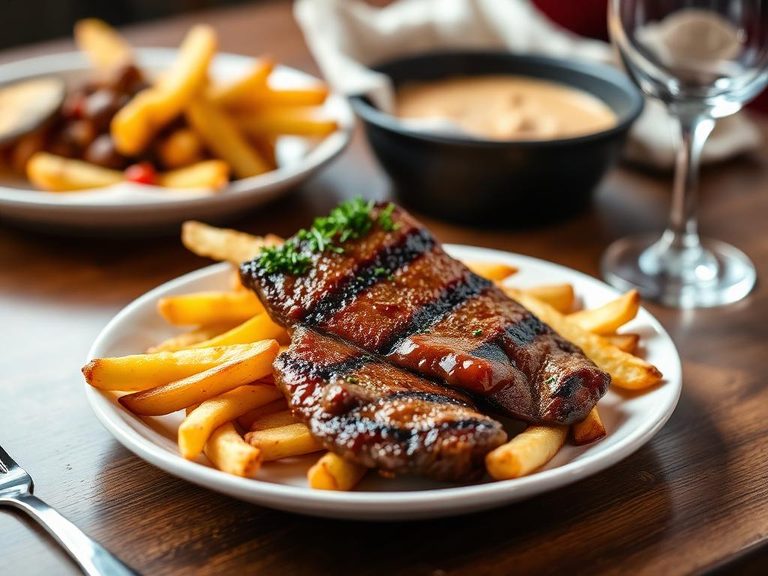
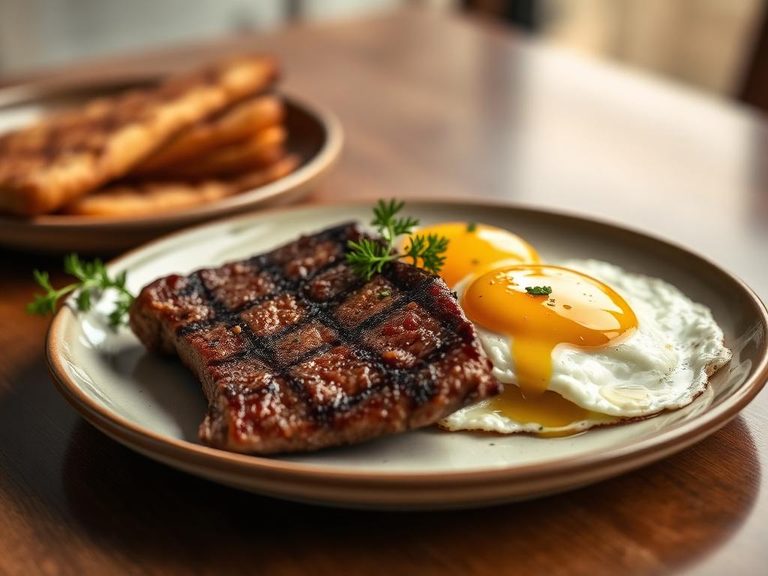
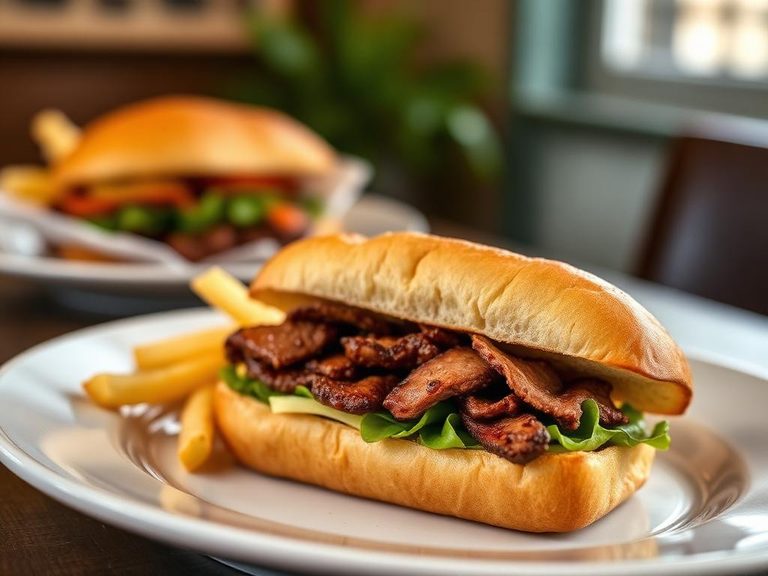
🍽️ Popular dishes

🌍 Where it's eaten
💡 Did you know?
The sirloin is actually divided into several sub-cuts, including the top sirloin and the more tender tenderloin (filet mignon), which are often confused as separate primal cuts.
Full nutrition (scales with serving)
| Water | 59.4 g |
| Energy | 203 kcal |
| Energy | 848 kj |
| Protein | 31.5 g |
| Total lipid (fat) | 8.5 g |
| Ash | 1.6 g |
| Carbohydrate, by difference | 0.00 g |
| Calcium, Ca | 7.0 mg |
| Iron, Fe | 2.8 mg |
| Magnesium, Mg | 28.0 mg |
| Phosphorus, P | 249 mg |
| Potassium, K | 408 mg |
| Sodium, Na | 180 mg |
| Zinc, Zn | 5.4 mg |
| Copper, Cu | 0.11 mg |
| Manganese, Mn | 0.02 mg |
| Selenium, Se | 31.8 ug |
| Thiamin | 0.09 mg |
| Riboflavin | 0.35 mg |
| Niacin | 6.4 mg |
| Pantothenic acid | 0.77 mg |
| Vitamin B-6 | 0.69 mg |
| Vitamin B-12 | 3.0 ug |
| Vitamin A, RAE | 7.0 ug |
| Retinol | 7.0 ug |
| Vitamin A, IU | 23.0 iu |
| Vitamin E (alpha-tocopherol) | 0.46 mg |
| Tocopherol, beta | 0.00 mg |
| Tocopherol, gamma | 0.15 mg |
| Tocopherol, delta | 0.03 mg |
| Tocotrienol, alpha | 0.00 mg |
| Tocotrienol, beta | 0.00 mg |
| Tocotrienol, gamma | 0.00 mg |
| Tocotrienol, delta | 0.00 mg |
| Vitamin K (phylloquinone) | 1.0 ug |
| Vitamin K (Dihydrophylloquinone) | 0.90 ug |
| Vitamin K (Menaquinone-4) | 3.5 ug |
Fat & fatty acid profile (per 100g)
| Fatty acids, total saturated | 3.0 g |
| SFA 4:0 | 0.00 g |
| SFA 6:0 | 0.00 g |
| SFA 8:0 | 0.00 g |
| SFA 10:0 | 0.01 g |
| SFA 12:0 | 0.01 g |
| SFA 14:0 | 0.18 g |
| SFA 15:0 | 0.03 g |
| SFA 16:0 | 1.7 g |
| SFA 17:0 | 0.09 g |
| SFA 18:0 | 1.00 g |
| SFA 20:0 | 0.01 g |
| SFA 22:0 | 0.01 g |
| SFA 24:0 | 0.00 g |
| Fatty acids, total monounsaturated | 3.4 g |
| MUFA 14:1 | 0.04 g |
| MUFA 15:1 | 0.00 g |
| MUFA 16:1 | 0.23 g |
| MUFA 16:1 c | 0.21 g |
| MUFA 17:1 | 0.06 g |
| MUFA 18:1 | 3.0 g |
| MUFA 18:1 c | 2.7 g |
| MUFA 20:1 | 0.03 g |
| MUFA 22:1 | 0.00 g |
| MUFA 22:1 c | 0.00 g |
| MUFA 24:1 c | 0.00 g |
| Fatty acids, total polyunsaturated | 0.74 g |
| PUFA 18:2 | 0.56 g |
| PUFA 18:2 n-6 c,c | 0.49 g |
| PUFA 18:2 CLAs | 0.03 g |
| PUFA 18:3 | 0.04 g |
| PUFA 18:3 n-3 c,c,c (ALA) | 0.04 g |
| PUFA 18:3 n-6 c,c,c | 0.00 g |
| PUFA 18:3i | 0.00 g |
| PUFA 18:4 | 0.00 g |
| PUFA 20:2 n-6 c,c | 0.01 g |
| PUFA 20:3 | 0.03 g |
| PUFA 20:3 n-3 | 0.00 g |
| PUFA 20:3 n-6 | 0.03 g |
| PUFA 20:4 | 0.08 g |
| PUFA 20:5 n-3 (EPA) | 0.01 g |
| PUFA 22:4 | 0.01 g |
| PUFA 22:5 n-3 (DPA) | 0.02 g |
| PUFA 22:6 n-3 (DHA) | 0.00 g |
| Fatty acids, total trans | 0.43 g |
| Fatty acids, total trans-monoenoic | 0.39 g |
| TFA 16:1 t | 0.02 g |
| TFA 18:1 t | 0.36 g |
| TFA 22:1 t | 0.00 g |
| TFA 18:2 t not further defined | 0.04 g |
| Fatty acids, total trans-polyenoic | 0.04 g |
| Cholesterol | 87.0 mg |
Amino acid profile (per 100g)
| Tryptophan | 0.41 g |
| Threonine | 1.5 g |
| Isoleucine | 1.6 g |
| Leucine | 2.8 g |
| Lysine | 3.1 g |
| Methionine | 0.83 g |
| Cystine | 0.32 g |
| Phenylalanine | 1.4 g |
| Tyrosine | 1.1 g |
| Valine | 2.9 g |
| Arginine | 2.2 g |
| Histidine | 1.2 g |
| Alanine | 1.9 g |
| Aspartic acid | 3.1 g |
| Glutamic acid | 5.1 g |
| Glycine | 1.5 g |
| Proline | 1.3 g |
| Serine | 1.3 g |
FAQ
How does the nutrition differ from a ribeye steak?
Sirloin is significantly leaner, with less fat and fewer calories per serving than a marbled ribeye, making it a higher-protein, lower-fat choice.
Is this a good option for a low-carb diet?
Absolutely. With 0g of carbs, it's a perfect fit for ketogenic and other low-carbohydrate eating plans.
What's the best way to cook it to retain nutrients?
Grilling, broiling, or pan-searing with minimal added fats helps preserve its protein content. Avoid overcooking to maintain moisture and B-vitamin levels.