

Peas, green, canned, regular pack, solids and liquids
Whole food · Vegetables and Vegetable Products

Photo: Wikipedia
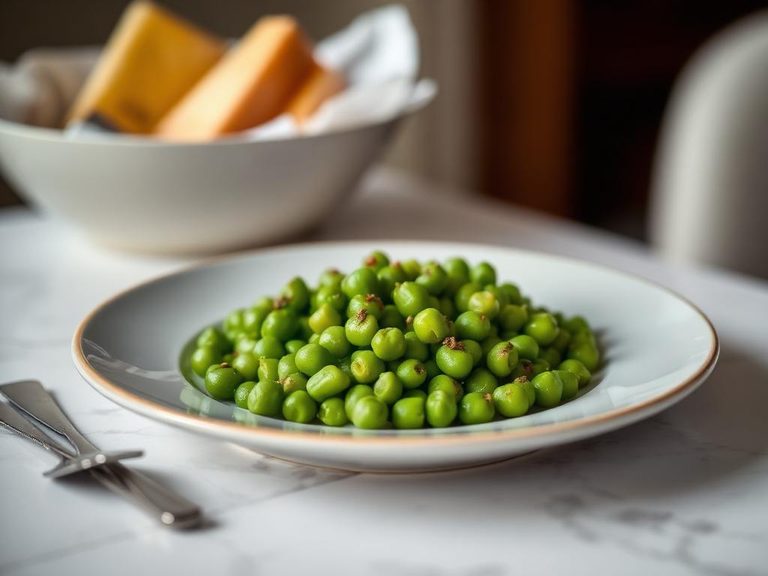
Canned green peas are a pantry staple, offering a soft, slightly starchy texture and a sweet, earthy flavor that's milder than fresh or frozen varieties. They are a surprisingly good source of plant-based protein and dietary fiber for a canned vegetable. Their convenience and long shelf life make them a reliable addition to quick meals.
Calorie split: 20% protein · 72% carbs · 7% fat
↓ Full nutrition💚 Why it's loved
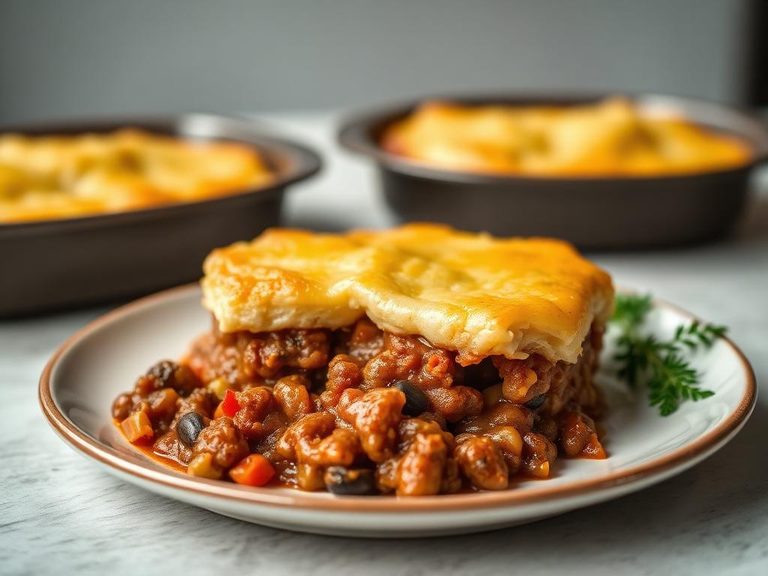
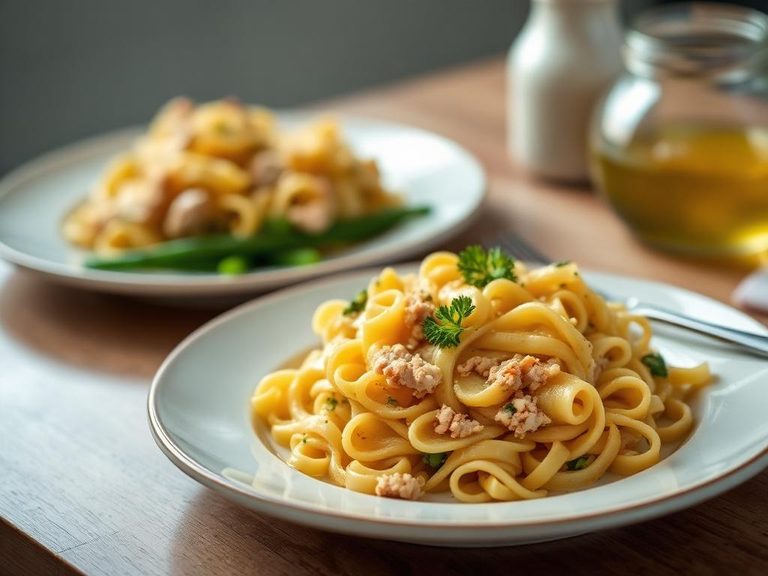
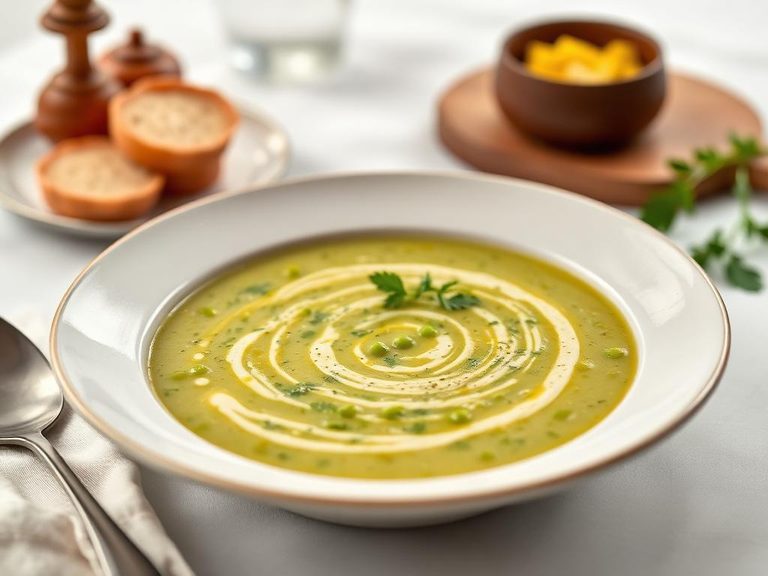
People love canned peas for their comforting, familiar sweetness and how effortlessly they blend into casseroles, soups, and stews. They are a nostalgic, versatile ingredient that adds color, texture, and nutrition to countless home-cooked dishes.
⚠️ Watch-outs & how to enjoy it better
The canning process can lead to a softer texture and higher sodium content compared to fresh or frozen peas. To manage sodium, look for 'no salt added' varieties or rinse the peas thoroughly under water before use. Their starchy, sweet nature means those monitoring blood sugar should be mindful of portion sizes.
Key benefits
- Good source of plant-based protein (3g per 100g)
- High in dietary fiber (3.3g per 100g)
- Low in fat (less than 0.5g per 100g)
- Provides essential vitamins like folate and vitamin K
- Convenient, shelf-stable source of vegetables
🍽️ Popular dishes


🌍 Where it's eaten
💡 Did you know?
The canning process for peas was developed in the early 19th century, making them one of the first vegetables to be commercially preserved and shipped globally.
Full nutrition (USDA data · scales with serving)
| Water | 85.1 g |
| Energy | 58.0 kcal |
| Energy | 241 kj |
| Protein | 3.0 g |
| Total lipid (fat) | 0.48 g |
| Ash | 0.77 g |
| Carbohydrate, by difference | 10.6 g |
| Fiber, total dietary | 3.3 g |
| Total Sugars | 3.2 g |
| Sucrose | 3.0 g |
| Glucose | 0.08 g |
| Fructose | 0.10 g |
| Lactose | 0.00 g |
| Maltose | 0.07 g |
| Galactose | 0.00 g |
| Calcium, Ca | 20.0 mg |
| Iron, Fe | 1.3 mg |
| Magnesium, Mg | 19.0 mg |
| Phosphorus, P | 63.0 mg |
| Potassium, K | 106 mg |
| Sodium, Na | 185 mg |
| Zinc, Zn | 0.72 mg |
| Copper, Cu | 0.10 mg |
| Manganese, Mn | 0.21 mg |
| Selenium, Se | 1.3 ug |
| Vitamin C, total ascorbic acid | 7.8 mg |
| Thiamin | 0.08 mg |
| Riboflavin | 0.02 mg |
| Niacin | 0.99 mg |
| Pantothenic acid | 0.09 mg |
| Vitamin B-6 | 0.07 mg |
| Folate, total | 24.0 ug |
| Folic acid | 0.00 ug |
| Folate, food | 24.0 ug |
| Folate, DFE | 24.0 ug |
| Choline, total | 20.0 mg |
| Vitamin B-12 | 0.00 ug |
| Vitamin B-12, added | 0.00 ug |
| Vitamin A, RAE | 76.0 ug |
| Retinol | 0.00 ug |
| Carotene, beta | 910 ug |
| Carotene, alpha | 15.0 ug |
| Cryptoxanthin, beta | 0.00 ug |
| Vitamin A, IU | 1529 iu |
| Lycopene | 0.00 ug |
| Lutein + zeaxanthin | 1747 ug |
| Vitamin E (alpha-tocopherol) | 0.02 mg |
| Vitamin E, added | 0.00 mg |
| Tocopherol, beta | 0.00 mg |
| Tocopherol, gamma | 1.7 mg |
| Tocopherol, delta | 0.03 mg |
| Tocotrienol, alpha | 0.00 mg |
| Tocotrienol, beta | 0.00 mg |
| Tocotrienol, gamma | 0.05 mg |
| Tocotrienol, delta | 0.00 mg |
| Vitamin D (D2 + D3), International Units | 0.00 iu |
| Vitamin D (D2 + D3) | 0.00 ug |
| Vitamin K (phylloquinone) | 20.7 ug |
| Alcohol, ethyl | 0.00 g |
| Caffeine | 0.00 mg |
| Theobromine | 0.00 mg |
Fat & fatty acid profile (per 100g)
| Fatty acids, total saturated | 0.09 g |
| SFA 4:0 | 0.00 g |
| SFA 6:0 | 0.00 g |
| SFA 8:0 | 0.00 g |
| SFA 10:0 | 0.00 g |
| SFA 12:0 | 0.00 g |
| SFA 14:0 | 0.00 g |
| SFA 16:0 | 0.08 g |
| SFA 18:0 | 0.01 g |
| Fatty acids, total monounsaturated | 0.04 g |
| MUFA 16:1 | 0.00 g |
| MUFA 18:1 | 0.04 g |
| MUFA 20:1 | 0.00 g |
| MUFA 22:1 | 0.00 g |
| Fatty acids, total polyunsaturated | 0.23 g |
| PUFA 18:2 | 0.18 g |
| PUFA 18:3 | 0.04 g |
| PUFA 18:4 | 0.00 g |
| PUFA 20:4 | 0.00 g |
| PUFA 20:5 n-3 (EPA) | 0.00 g |
| PUFA 22:5 n-3 (DPA) | 0.00 g |
| PUFA 22:6 n-3 (DHA) | 0.00 g |
| Fatty acids, total trans | 0.00 g |
| Cholesterol | 0.00 mg |
Amino acid profile (per 100g)
| Tryptophan | 0.02 g |
| Threonine | 0.12 g |
| Isoleucine | 0.11 g |
| Leucine | 0.18 g |
| Lysine | 0.18 g |
| Methionine | 0.05 g |
| Cystine | 0.02 g |
| Phenylalanine | 0.11 g |
| Tyrosine | 0.07 g |
| Valine | 0.13 g |
| Arginine | 0.24 g |
| Histidine | 0.06 g |
| Alanine | 0.14 g |
| Aspartic acid | 0.28 g |
| Glutamic acid | 0.42 g |
| Glycine | 0.10 g |
| Proline | 0.10 g |
| Serine | 0.10 g |
FAQ
Are canned peas as nutritious as fresh or frozen?
They retain most of their protein, fiber, and minerals. Some heat-sensitive vitamins like vitamin C may be reduced, but they remain a nutritious option, especially when fresh or frozen aren't available.
How can I reduce the sodium in canned peas?
Rinse them thoroughly in a colander under cool running water for a minute. This can remove a significant portion of the surface sodium. Choosing 'no salt added' cans is the best option.
What's the difference between 'regular pack' and 'no salt added' canned peas?
'Regular pack' peas are canned with added salt for flavor and preservation. 'No salt added' peas are canned with just water and peas, giving you control over the sodium content.
Nutrient density (calculated · NRF9.3)
Nutrient Rich Foods index: beneficial nutrients (protein, fiber, vitamins, minerals) minus saturated fat, added sugar & sodium, per 100 kcal.
NRF9.3 index — Fulgoni, Keast & Drewnowski, 2009. Computed from USDA nutrients.
Weight-loss friendliness (composite index)
Energy density 0.58 kcal/g · 21% calories from protein · 3.3 g fiber · 3.2 g sugar per 100 g.
Composite of energy density (Rolls et al., 1999), protein & fiber satiety, minus sugar. A calculated heuristic — ranks satiety-per-calorie, not a clinical measure.
Dietary load (calculated from USDA values)
Potential renal acid load. Positive = acid-forming, negative = alkaline-forming.
Sodium-to-potassium ratio: 1.75 (lower is better — aim for ≤ 1)
Sodium:potassium per WHO potassium guidance. Computed from USDA nutrients.