

Noodles, egg, enriched, cooked
Whole food · Cereal Grains and Pasta

Photo: Wikipedia
Enriched egg noodles are a pantry staple made from wheat flour and egg, giving them a rich, golden hue and a satisfyingly chewy, springy texture. Cooked, they offer a mild, comforting flavor that acts as a perfect canvas for bold sauces and broths. Nutritionally, they provide a quick source of energy from carbohydrates with a modest protein boost from the egg.
Calorie split: 13% protein · 73% carbs · 14% fat
↓ Full nutrition💚 Why it's loved
People adore egg noodles for their comforting, hearty texture and neutral taste that soaks up flavors from broths, stir-fries, and creamy sauces. They are a beloved, quick-cooking comfort food central to many family meals and cultural traditions.
⚠️ Watch-outs & how to enjoy it better
As a refined carbohydrate, they can cause rapid blood sugar spikes, making portion control important for those managing diabetes. They also contain gluten (wheat) and egg, two common allergens. To counteract this, pair them with protein (like chicken or tofu) and fiber-rich vegetables to slow digestion and create a more balanced meal.
Key benefits
- Provides quick-release energy from complex carbohydrates
- Enriched with B vitamins like folate and iron
- Contains a small amount of high-quality protein from egg
- Low in fat and naturally cholesterol-free
- Versatile base for countless balanced meals
🍽️ Popular dishes
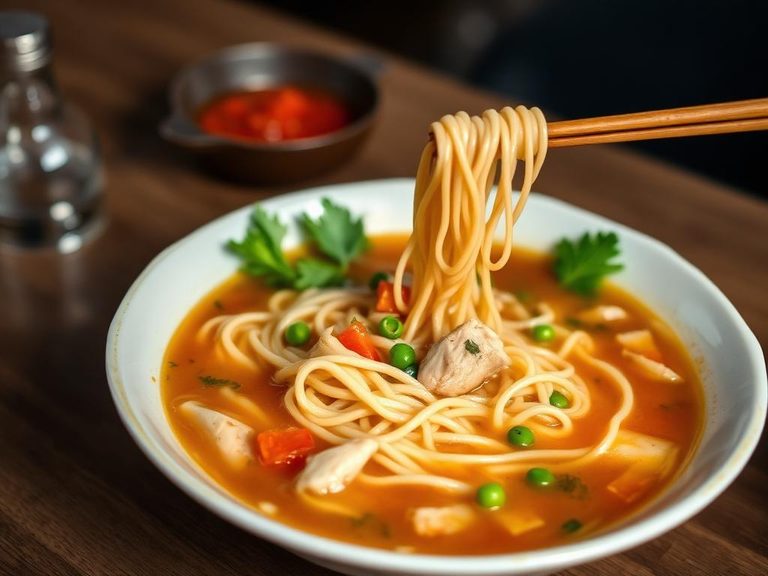
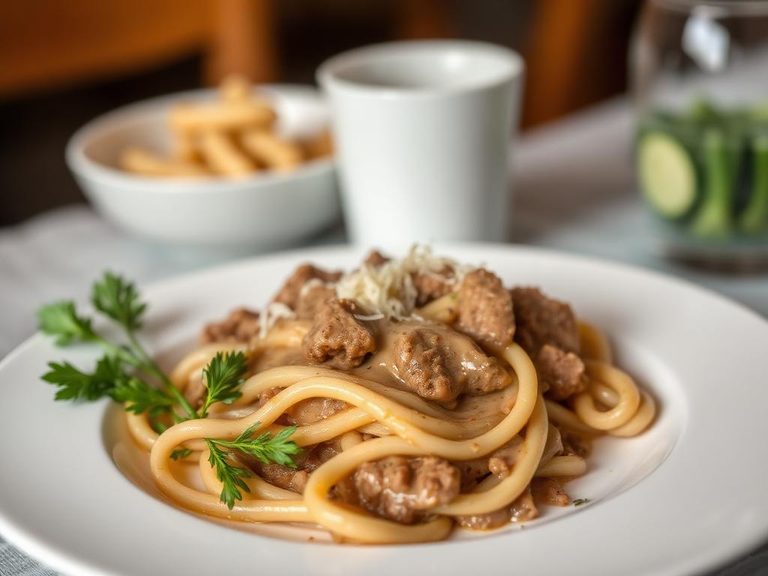
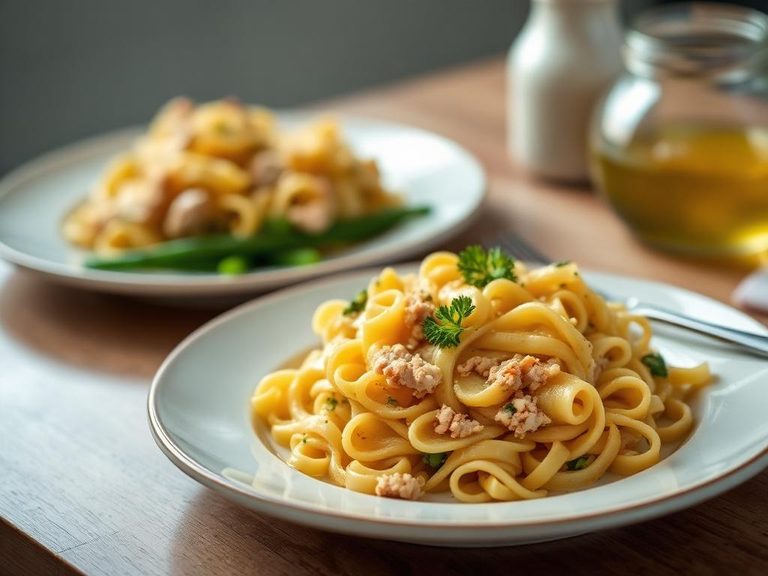
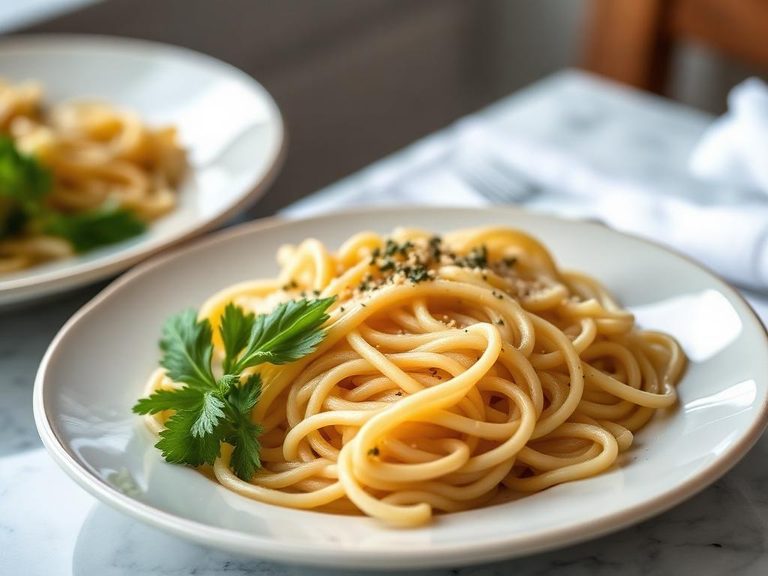
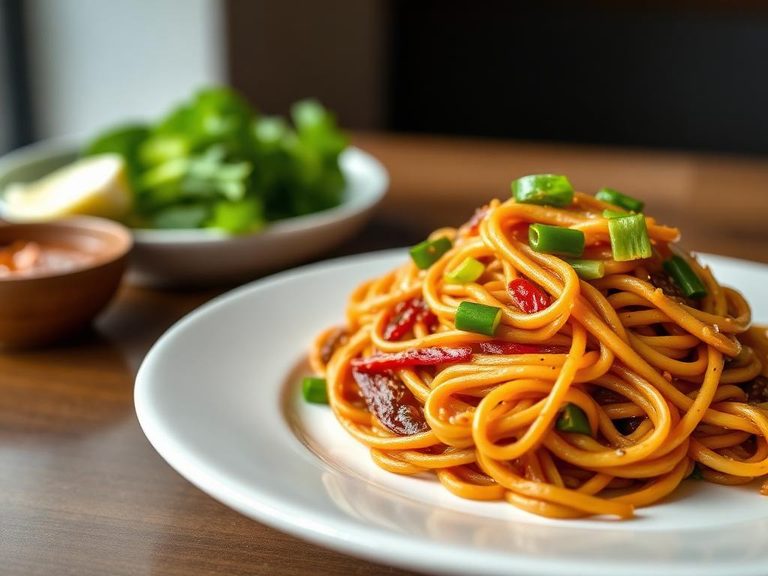
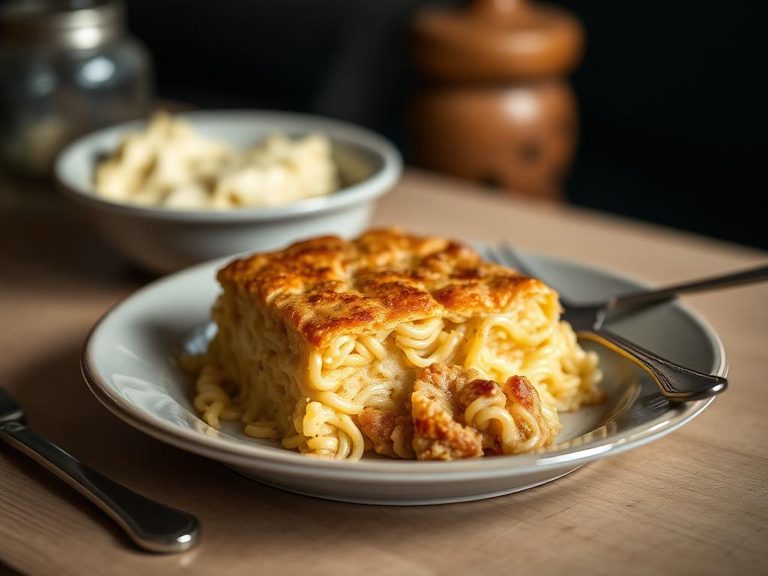
🌍 Where it's eaten
💡 Did you know?
The classic 'wide' egg noodle is often cut into a distinctive wavy or ruffled shape, which isn't just for looks—the ridges are designed to trap and hold onto sauces and gravies more effectively.
Full nutrition (USDA data · scales with serving)
| Water | 67.7 g |
| Energy | 138 kcal |
| Energy | 578 kj |
| Protein | 4.5 g |
| Total lipid (fat) | 2.1 g |
| Ash | 0.50 g |
| Carbohydrate, by difference | 25.2 g |
| Fiber, total dietary | 1.2 g |
| Total Sugars | 0.40 g |
| Sucrose | 0.04 g |
| Glucose | 0.07 g |
| Fructose | 0.00 g |
| Lactose | 0.00 g |
| Maltose | 0.30 g |
| Galactose | 0.00 g |
| Calcium, Ca | 12.0 mg |
| Iron, Fe | 1.5 mg |
| Magnesium, Mg | 21.0 mg |
| Phosphorus, P | 76.0 mg |
| Potassium, K | 38.0 mg |
| Sodium, Na | 5.0 mg |
| Zinc, Zn | 0.65 mg |
| Copper, Cu | 0.10 mg |
| Manganese, Mn | 0.32 mg |
| Selenium, Se | 23.9 ug |
| Fluoride, F | 6.0 ug |
| Vitamin C, total ascorbic acid | 0.00 mg |
| Thiamin | 0.29 mg |
| Riboflavin | 0.14 mg |
| Niacin | 2.1 mg |
| Pantothenic acid | 0.26 mg |
| Vitamin B-6 | 0.05 mg |
| Folate, total | 84.0 ug |
| Folic acid | 77.0 ug |
| Folate, food | 7.0 ug |
| Folate, DFE | 138 ug |
| Choline, total | 25.7 mg |
| Betaine | 19.2 mg |
| Vitamin B-12 | 0.09 ug |
| Vitamin B-12, added | 0.00 ug |
| Vitamin A, RAE | 6.0 ug |
| Retinol | 6.0 ug |
| Carotene, beta | 1.0 ug |
| Carotene, alpha | 0.00 ug |
| Cryptoxanthin, beta | 0.00 ug |
| Vitamin A, IU | 21.0 iu |
| Lycopene | 0.00 ug |
| Lutein + zeaxanthin | 38.0 ug |
| Vitamin E (alpha-tocopherol) | 0.17 mg |
| Vitamin E, added | 0.00 mg |
| Tocopherol, beta | 0.03 mg |
| Tocopherol, gamma | 0.60 mg |
| Tocopherol, delta | 0.00 mg |
| Tocotrienol, alpha | 0.13 mg |
| Tocotrienol, beta | 0.00 mg |
| Tocotrienol, gamma | 0.00 mg |
| Tocotrienol, delta | 0.00 mg |
| Vitamin D (D2 + D3), International Units | 4.0 iu |
| Vitamin D (D2 + D3) | 0.10 ug |
| Vitamin K (phylloquinone) | 0.00 ug |
| Vitamin K (Dihydrophylloquinone) | 0.00 ug |
| Alcohol, ethyl | 0.00 g |
| Caffeine | 0.00 mg |
| Theobromine | 0.00 mg |
Fat & fatty acid profile (per 100g)
| Fatty acids, total saturated | 0.42 g |
| SFA 4:0 | 0.00 g |
| SFA 6:0 | 0.00 g |
| SFA 8:0 | 0.00 g |
| SFA 10:0 | 0.00 g |
| SFA 12:0 | 0.00 g |
| SFA 14:0 | 0.01 g |
| SFA 16:0 | 0.34 g |
| SFA 18:0 | 0.07 g |
| Fatty acids, total monounsaturated | 0.58 g |
| MUFA 16:1 | 0.04 g |
| MUFA 18:1 | 0.54 g |
| MUFA 20:1 | 0.00 g |
| MUFA 22:1 | 0.00 g |
| Fatty acids, total polyunsaturated | 0.55 g |
| PUFA 18:2 | 0.52 g |
| PUFA 18:3 | 0.03 g |
| PUFA 18:4 | 0.00 g |
| PUFA 20:4 | 0.00 g |
| PUFA 20:5 n-3 (EPA) | 0.00 g |
| PUFA 22:5 n-3 (DPA) | 0.00 g |
| PUFA 22:6 n-3 (DHA) | 0.00 g |
| Fatty acids, total trans | 0.03 g |
| Cholesterol | 29.0 mg |
Amino acid profile (per 100g)
| Tryptophan | 0.04 g |
| Threonine | 0.14 g |
| Isoleucine | 0.19 g |
| Leucine | 0.36 g |
| Lysine | 0.14 g |
| Methionine | 0.09 g |
| Cystine | 0.10 g |
| Phenylalanine | 0.24 g |
| Tyrosine | 0.09 g |
| Valine | 0.22 g |
| Arginine | 0.19 g |
| Histidine | 0.12 g |
| Alanine | 0.17 g |
| Aspartic acid | 0.24 g |
| Glutamic acid | 1.5 g |
| Glycine | 0.16 g |
| Proline | 0.49 g |
| Serine | 0.26 g |
FAQ
What's the difference between egg noodles and regular pasta?
The primary difference is the inclusion of egg in the dough, which gives egg noodles a richer flavor, a more tender and springy texture, and a characteristic yellow color. They are also often cut into wider, wavy shapes.
Are enriched egg noodles healthy?
They are a source of energy and fortified nutrients like iron and B vitamins, but as a refined grain, they lack the fiber of whole-grain options. Their healthiness in a diet depends on portion size and what you pair them with.
How do I prevent cooked noodles from getting mushy?
Cook them in plenty of salted, boiling water just until al dente (firm to the bite), then drain immediately. For cold dishes, rinse with cold water to stop the cooking process and remove excess starch.
Nutrient density (calculated · NRF9.3)
Nutrient Rich Foods index: beneficial nutrients (protein, fiber, vitamins, minerals) minus saturated fat, added sugar & sodium, per 100 kcal.
NRF9.3 index — Fulgoni, Keast & Drewnowski, 2009. Computed from USDA nutrients.
Weight-loss friendliness (composite index)
Energy density 1.38 kcal/g · 13% calories from protein · 1.2 g fiber · 0.4 g sugar per 100 g.
Composite of energy density (Rolls et al., 1999), protein & fiber satiety, minus sugar. A calculated heuristic — ranks satiety-per-calorie, not a clinical measure.
Dietary load (calculated from USDA values)
Potential renal acid load. Positive = acid-forming, negative = alkaline-forming.
Sodium-to-potassium ratio: 0.13 (lower is better — aim for ≤ 1)
Sodium:potassium per WHO potassium guidance. Computed from USDA nutrients.