

Lamb, New Zealand, imported, tongue - swiss cut, raw
Whole food · Lamb, Veal, and Game Products
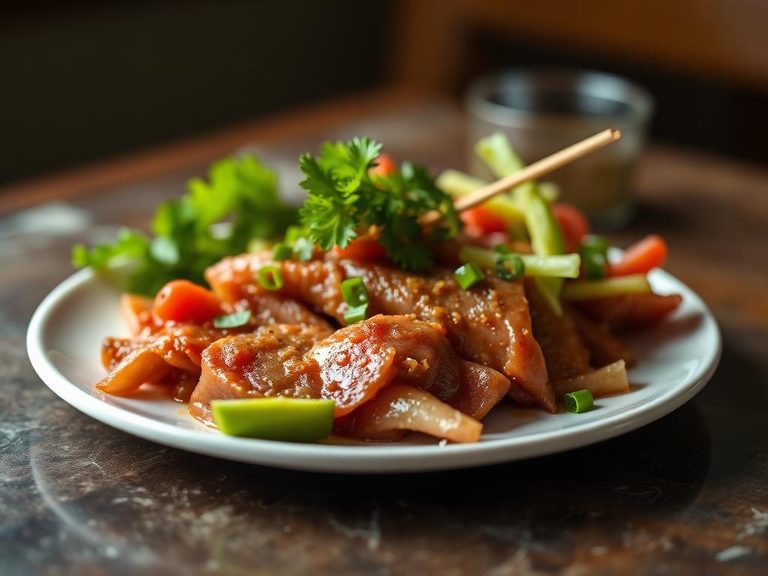
This is raw New Zealand lamb tongue, expertly prepared in a 'Swiss cut' that typically removes the outer membrane and roots for a cleaner, more uniform piece. When cooked, it develops a rich, beefy flavor with a uniquely tender, creamy, and slightly gelatinous texture. Nutritionally, it is a dense source of high-quality protein and healthy fats, with virtually no carbohydrates.
Calorie split: 25% protein · 0% carbs · 75% fat
↓ Full nutrition💚 Why it's loved
People love lamb tongue for its luxurious, melt-in-the-mouth texture when slow-cooked and its deep, savory flavor that absorbs marinades and seasonings beautifully. It's a prized ingredient in many cultures for its unique mouthfeel and versatility in both rustic and refined dishes.
⚠️ Watch-outs & how to enjoy it better
The primary caution is its high purine content, which can be a concern for individuals with gout or kidney issues. To enjoy it, practice strict portion control and avoid consuming it alongside other high-purine foods like organ meats or certain seafood. Also, be mindful of the high fat content if monitoring calorie intake.
Key benefits
- Excellent source of complete protein for muscle maintenance.
- Rich in iron and zinc, essential minerals for energy and immunity.
- High in vitamin B12, crucial for nerve function and red blood cells.
- Contains beneficial monounsaturated fats.
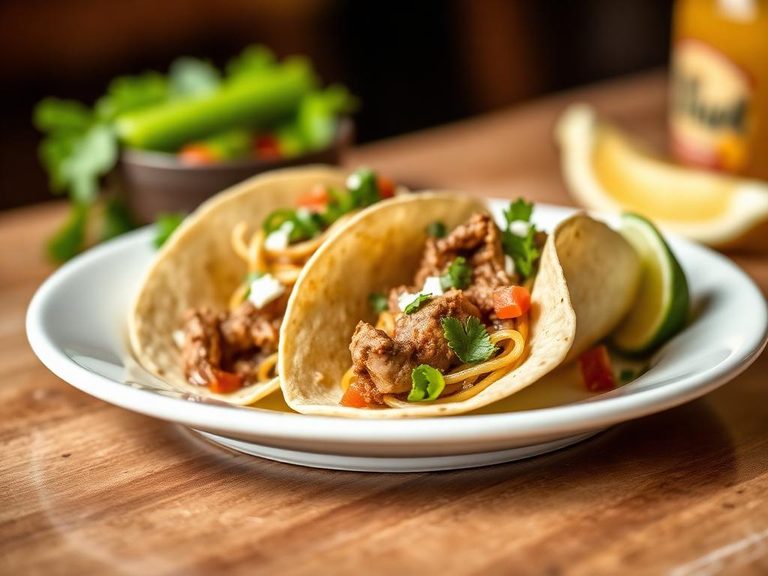
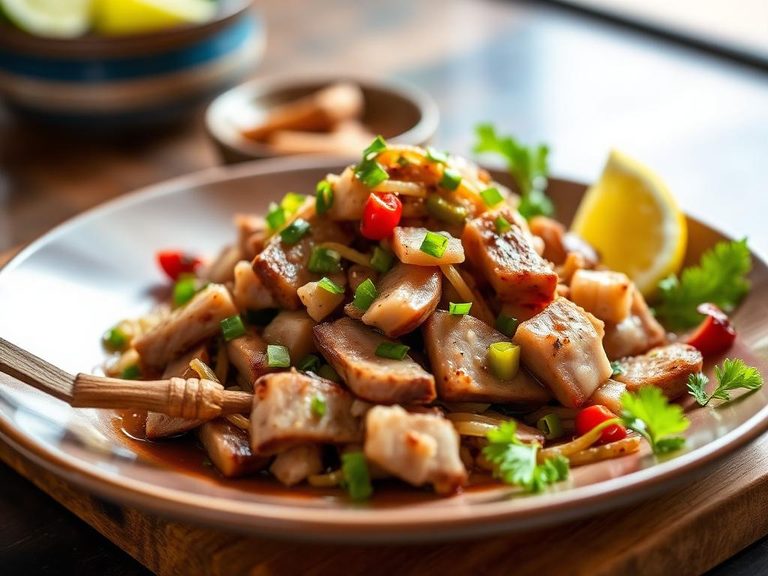
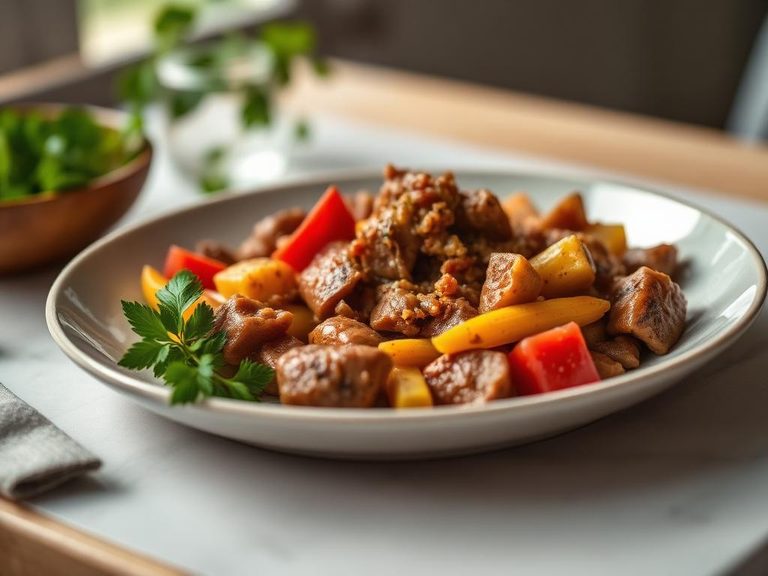
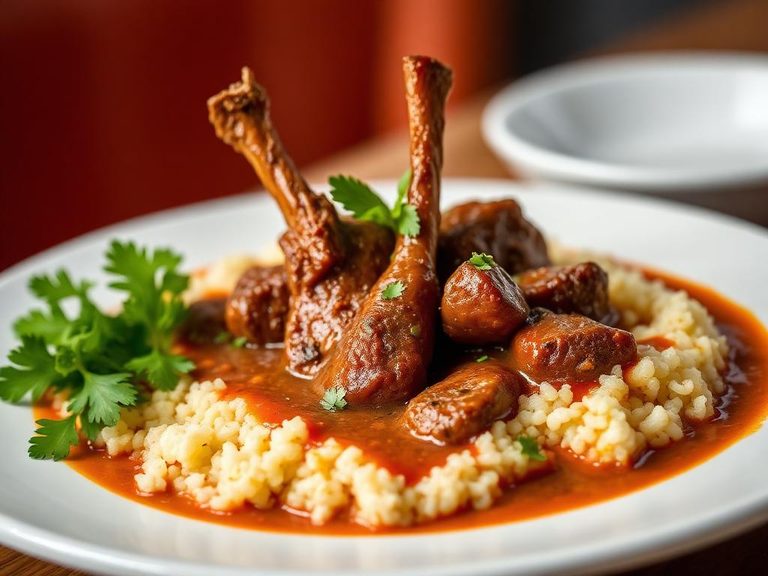
🍽️ Popular dishes
🌍 Where it's eaten
💡 Did you know?
The 'Swiss cut' is a butchery technique specifically for tongue that involves removing the root and outer skin before cooking, making it ready for immediate use in recipes.
Full nutrition (USDA data · scales with serving)
| Water | 66.5 g |
| Energy | 225 kcal |
| Energy | 940 kj |
| Protein | 14.3 g |
| Total lipid (fat) | 18.6 g |
| Ash | 0.77 g |
| Carbohydrate, by difference | 0.00 g |
| Fiber, total dietary | 0.00 g |
| Total Sugars | 0.00 g |
| Calcium, Ca | 6.0 mg |
| Iron, Fe | 1.3 mg |
| Magnesium, Mg | 15.0 mg |
| Phosphorus, P | 142 mg |
| Potassium, K | 207 mg |
| Sodium, Na | 77.0 mg |
| Zinc, Zn | 1.6 mg |
| Copper, Cu | 0.15 mg |
| Manganese, Mn | 0.02 mg |
| Selenium, Se | 5.4 ug |
| Vitamin C, total ascorbic acid | 0.00 mg |
| Thiamin | 0.10 mg |
| Riboflavin | 0.29 mg |
| Niacin | 3.1 mg |
| Pantothenic acid | 0.44 mg |
| Vitamin B-6 | 0.10 mg |
| Vitamin B-12 | 6.1 ug |
| Vitamin A, RAE | 5.0 ug |
| Retinol | 5.0 ug |
| Carotene, beta | 0.00 ug |
| Carotene, alpha | 0.00 ug |
| Cryptoxanthin, beta | 0.00 ug |
| Vitamin A, IU | 18.0 iu |
| Lycopene | 0.00 ug |
| Lutein + zeaxanthin | 0.00 ug |
| Vitamin E (alpha-tocopherol) | 0.57 mg |
| Vitamin D (D2 + D3), International Units | 5.0 iu |
| Vitamin D (D2 + D3) | 0.10 ug |
| Vitamin D3 (cholecalciferol) | 0.10 ug |
| Alcohol, ethyl | 0.00 g |
| Caffeine | 0.00 mg |
| Theobromine | 0.00 mg |
Fat & fatty acid profile (per 100g)
| Fatty acids, total saturated | 5.9 g |
| SFA 4:0 | 0.00 g |
| SFA 6:0 | 0.00 g |
| SFA 8:0 | 0.00 g |
| SFA 10:0 | 0.01 g |
| SFA 12:0 | 0.02 g |
| SFA 14:0 | 0.31 g |
| SFA 16:0 | 2.5 g |
| SFA 17:0 | 0.30 g |
| SFA 18:0 | 2.7 g |
| SFA 20:0 | 0.01 g |
| SFA 22:0 | 0.01 g |
| SFA 24:0 | 0.00 g |
| Fatty acids, total monounsaturated | 6.4 g |
| MUFA 14:1 | 0.02 g |
| MUFA 15:1 | 0.00 g |
| MUFA 16:1 | 0.25 g |
| MUFA 16:1 c | 0.23 g |
| MUFA 17:1 | 0.00 g |
| MUFA 18:1 | 6.1 g |
| MUFA 18:1 c | 5.5 g |
| MUFA 20:1 | 0.02 g |
| MUFA 22:1 | 0.00 g |
| MUFA 22:1 c | 0.00 g |
| MUFA 24:1 c | 0.00 g |
| Fatty acids, total polyunsaturated | 1.0 g |
| PUFA 18:2 | 0.67 g |
| PUFA 18:2 n-6 c,c | 0.35 g |
| PUFA 18:2 CLAs | 0.32 g |
| PUFA 18:3 | 0.28 g |
| PUFA 18:3 n-3 c,c,c (ALA) | 0.28 g |
| PUFA 18:3 n-6 c,c,c | 0.00 g |
| PUFA 18:4 | 0.00 g |
| PUFA 20:2 n-6 c,c | 0.00 g |
| PUFA 20:3 | 0.00 g |
| PUFA 20:3 n-3 | 0.00 g |
| PUFA 20:3 n-6 | 0.00 g |
| PUFA 20:4 | 0.03 g |
| PUFA 20:4 n-6 | 0.03 g |
| PUFA 20:5 n-3 (EPA) | 0.02 g |
| PUFA 22:5 n-3 (DPA) | 0.03 g |
| PUFA 22:6 n-3 (DHA) | 0.01 g |
| Fatty acids, total trans | 0.66 g |
| Fatty acids, total trans-monoenoic | 0.66 g |
| TFA 16:1 t | 0.03 g |
| TFA 18:1 t | 0.63 g |
| TFA 18:2 t,t | 0.00 g |
| Fatty acids, total trans-polyenoic | 0.00 g |
| Cholesterol | 88.0 mg |
Amino acid profile (per 100g)
| Threonine | 0.68 g |
| Isoleucine | 0.64 g |
| Leucine | 1.1 g |
| Lysine | 1.2 g |
| Methionine | 0.47 g |
| Cystine | 0.19 g |
| Phenylalanine | 0.56 g |
| Tyrosine | 0.49 g |
| Valine | 0.73 g |
| Arginine | 0.96 g |
| Histidine | 0.30 g |
| Alanine | 0.71 g |
| Glutamic acid | 2.0 g |
| Glycine | 0.61 g |
| Proline | 0.46 g |
| Serine | 0.49 g |
FAQ
What is a 'Swiss cut' for tongue?
It's a preparation where the tough root end and outer membrane are removed by the butcher, leaving the clean, edible muscle ready for cooking.
How should I cook it?
It's best when braised, simmered, or slow-cooked in liquid (like broth or wine) for 2-3 hours until fork-tender. It can then be sliced and served warm or chilled.
Is lamb tongue the same as beef tongue?
They are very similar in structure and preparation, but lamb tongue is smaller, slightly milder, and often considered more delicate in flavor.
Nutrient density (calculated · NRF9.3)
Nutrient Rich Foods index: beneficial nutrients (protein, fiber, vitamins, minerals) minus saturated fat, added sugar & sodium, per 100 kcal.
NRF9.3 index — Fulgoni, Keast & Drewnowski, 2009. Computed from USDA nutrients.
Weight-loss friendliness (composite index)
Energy density 2.25 kcal/g · 25% calories from protein · 0.0 g fiber · 0.0 g sugar per 100 g.
Composite of energy density (Rolls et al., 1999), protein & fiber satiety, minus sugar. A calculated heuristic — ranks satiety-per-calorie, not a clinical measure.
Dietary load (calculated from USDA values)
Potential renal acid load. Positive = acid-forming, negative = alkaline-forming.
Sodium-to-potassium ratio: 0.37 (lower is better — aim for ≤ 1)
Sodium:potassium per WHO potassium guidance. Computed from USDA nutrients.