Lamb Tongue Curry (Indian)
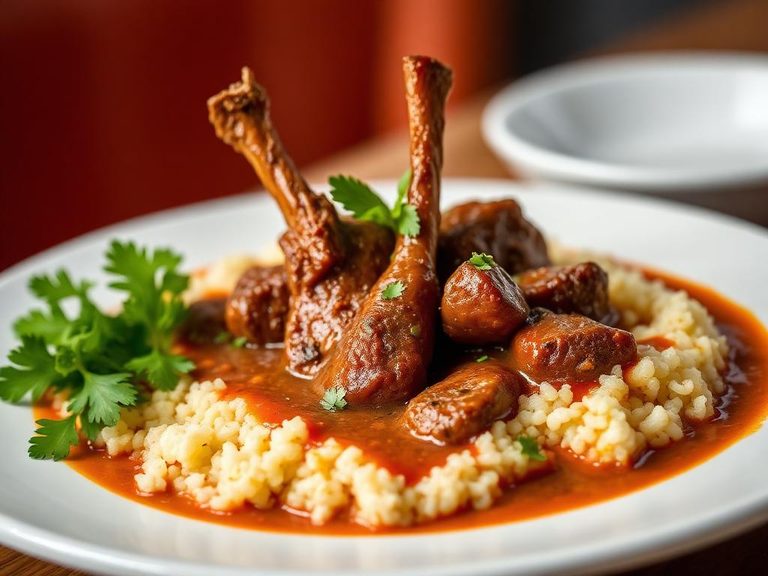
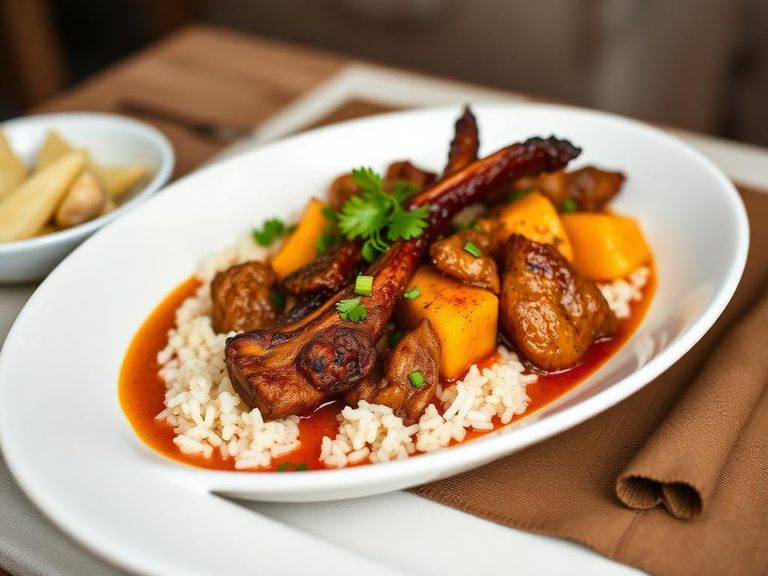
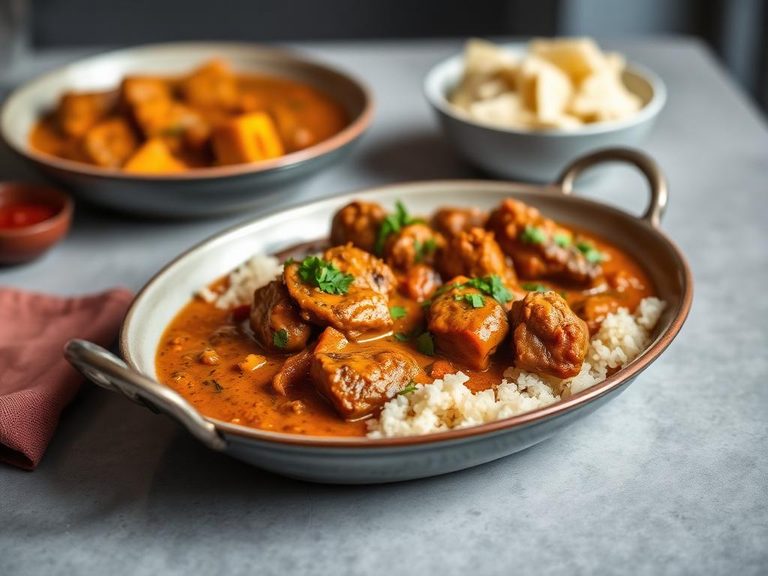
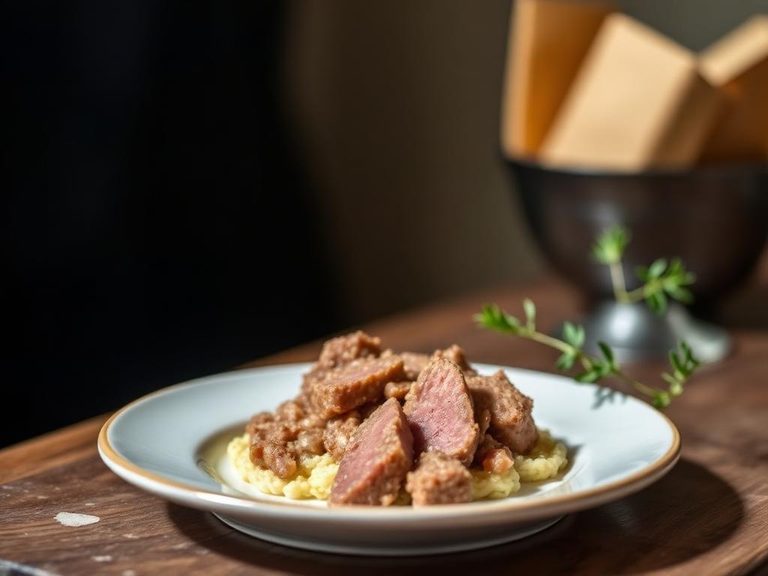
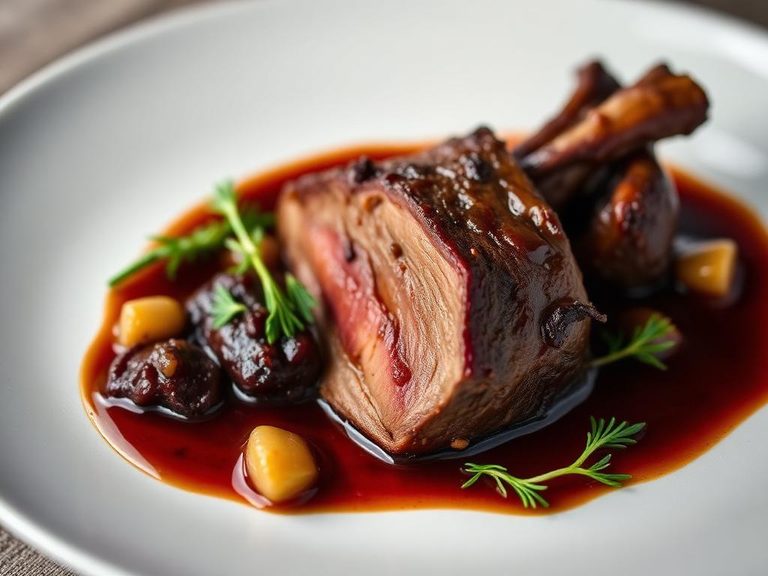
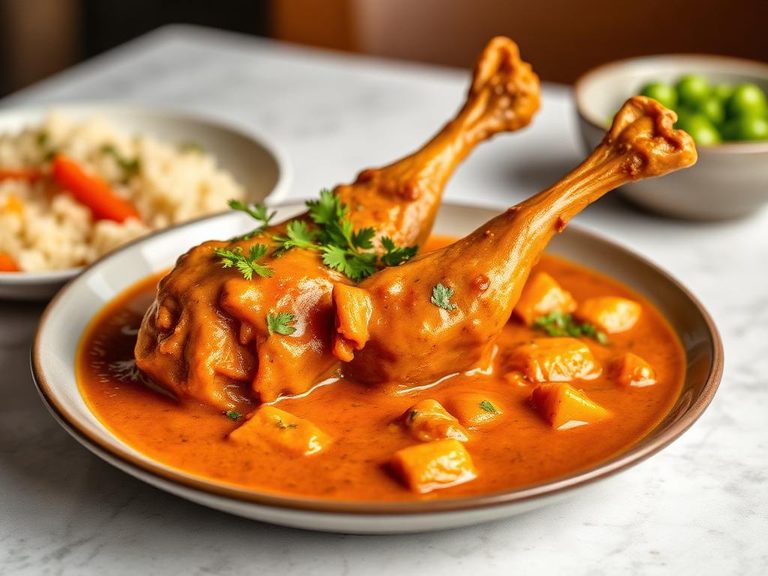
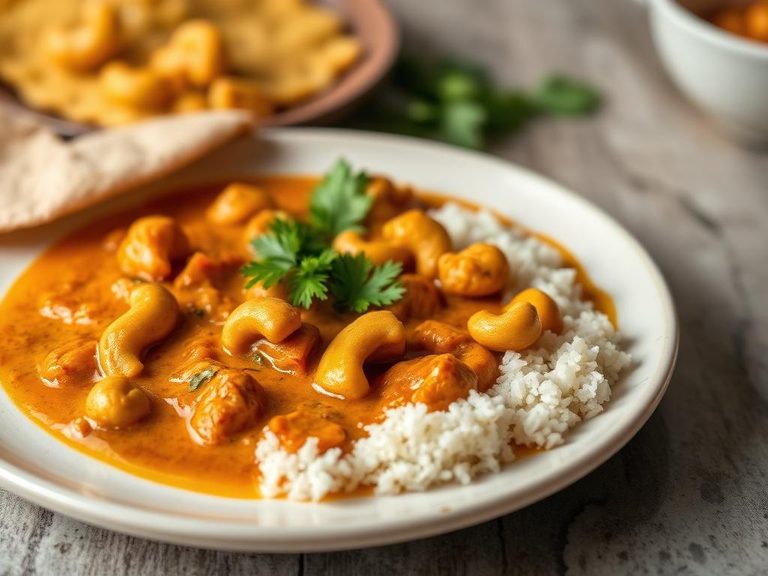
Lamb Tongue Curry is a rich, slow-cooked Indian dish, particularly popular in regions like Hyderabad and among Anglo-Indian communities. It features tender lamb tongues simmered in a complex, aromatic gravy made from a base of onions, tomatoes, ginger, garlic, and a blend of traditional spices like turmeric, coriander, and garam masala.
🍽️ Nutrition at a glance
This dish is high in protein and fat, with a moderate amount of carbohydrates coming from the spice and onion-tomato base. It is a significant source of iron, zinc, and B-vitamins, with a typical serving containing approximately 450-550 calories.
Nutrition breakdown
| Calories | 500 kcal |
| Protein | 35 g |
| Carbs | 12 g |
| Fat | 36 g |
| Fiber | 3 g |
| Sugar | 5 g |
| Sodium | 680 mg |
| Iron | 4.5 mg |
| Zinc | 7 mg |
| Vitamin B12 | 12 µg |
| Niacin (B3) | 8 mg |
| Phosphorus | 320 mg |
| Potassium | 410 mg |
| Selenium | 28 µg |
| Vitamin B6 | 0.5 mg |
Per 1 cup (250 g) · estimated, varies by recipe
💡 What's interesting
Culturally, it's a prime example of nose-to-tail eating, valued for its unique, tender texture and ability to absorb complex flavors. Nutritionally, organ meats like tongue are exceptionally dense in micronutrients, offering more iron and certain vitamins than many muscle meats.