

Kale, cooked, boiled, drained, with salt
Whole food · Vegetables and Vegetable Products

Photo: Wikipedia
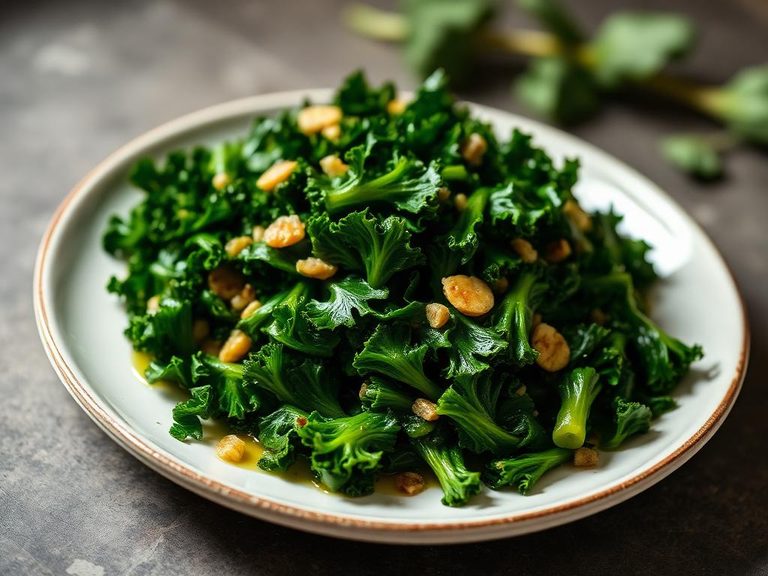
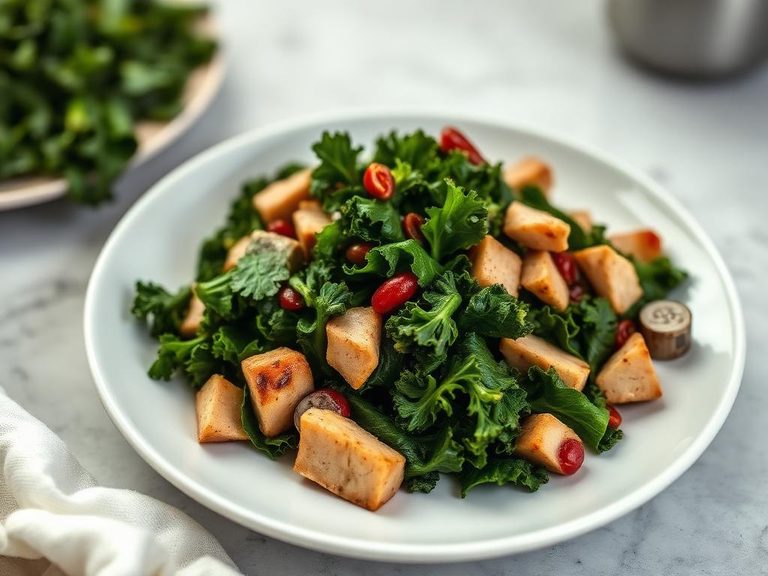
Boiled kale is a tender, deep-green leaf with a pleasantly earthy, slightly bitter flavor and a soft, yielding texture. It's a nutritional powerhouse, offering a significant amount of vitamin K and vitamin C for very few calories.
Calorie split: 27% protein · 48% carbs · 25% fat
↓ Full nutrition💚 Why it's loved
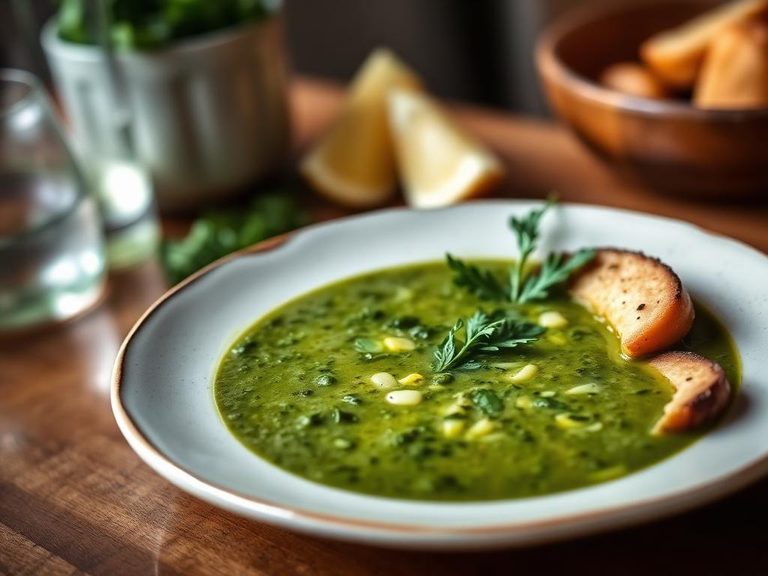
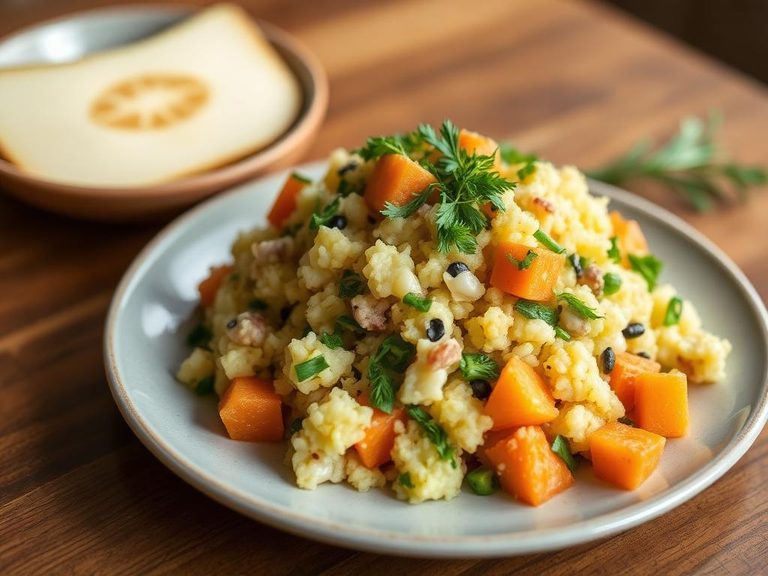
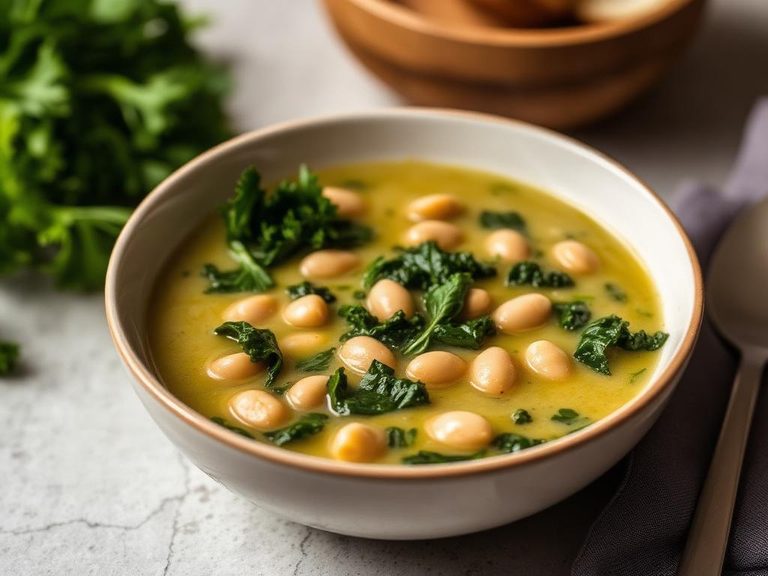
People love its robust, hearty texture that holds up well in soups and stews, and its ability to absorb flavors from garlic, lemon, or bacon. It's a cornerstone of many comforting, rustic dishes.
⚠️ Watch-outs & how to enjoy it better
Its natural bitterness can be off-putting, and the oxalates it contains can interfere with mineral absorption. To counteract, pair it with a source of fat (like olive oil or avocado) or acid (like lemon juice) to brighten the flavor, and boil it in plenty of water, draining well, to reduce oxalate content.
Key benefits
- Excellent source of vitamin K for bone health.
- High in vitamin C, an important antioxidant.
- Provides a good amount of fiber for digestive health.
- Rich in plant-based compounds like lutein and zeaxanthin.
- Low in calories and carbohydrates.
🍽️ Popular dishes
🌍 Where it's eaten
💡 Did you know?
Kale is a member of the same species as wild cabbage (Brassica oleracea), making it a close relative of broccoli, cauliflower, and Brussels sprouts.
Full nutrition (USDA data · scales with serving)
| Water | 89.8 g |
| Energy | 44.0 kcal |
| Energy | 183 kj |
| Protein | 2.9 g |
| Total lipid (fat) | 1.2 g |
| Ash | 0.73 g |
| Carbohydrate, by difference | 5.3 g |
| Fiber, total dietary | 2.3 g |
| Total Sugars | 1.2 g |
| Sucrose | 0.25 g |
| Glucose | 0.54 g |
| Fructose | 0.42 g |
| Lactose | 0.00 g |
| Maltose | 0.00 g |
| Galactose | 0.00 g |
| Calcium, Ca | 150 mg |
| Iron, Fe | 0.84 mg |
| Magnesium, Mg | 25.0 mg |
| Phosphorus, P | 42.0 mg |
| Potassium, K | 144 mg |
| Sodium, Na | 252 mg |
| Zinc, Zn | 0.27 mg |
| Copper, Cu | 0.07 mg |
| Manganese, Mn | 0.54 mg |
| Selenium, Se | 1.0 ug |
| Vitamin C, total ascorbic acid | 17.8 mg |
| Thiamin | 0.06 mg |
| Riboflavin | 0.14 mg |
| Niacin | 0.46 mg |
| Pantothenic acid | 0.17 mg |
| Vitamin B-6 | 0.06 mg |
| Folate, total | 65.0 ug |
| Folic acid | 0.00 ug |
| Folate, food | 65.0 ug |
| Folate, DFE | 65.0 ug |
| Choline, total | 0.40 mg |
| Betaine | 0.30 mg |
| Vitamin B-12 | 0.00 ug |
| Vitamin B-12, added | 0.00 ug |
| Vitamin A, RAE | 146 ug |
| Retinol | 0.00 ug |
| Carotene, beta | 1731 ug |
| Carotene, alpha | 10.0 ug |
| Cryptoxanthin, beta | 26.0 ug |
| Vitamin A, IU | 2915 iu |
| Lycopene | 0.00 ug |
| Lutein + zeaxanthin | 4983 ug |
| Vitamin E (alpha-tocopherol) | 1.6 mg |
| Vitamin E, added | 0.00 mg |
| Tocopherol, beta | 0.00 mg |
| Tocopherol, gamma | 0.12 mg |
| Tocopherol, delta | 0.00 mg |
| Tocotrienol, alpha | 0.00 mg |
| Tocotrienol, beta | 0.00 mg |
| Tocotrienol, gamma | 0.00 mg |
| Tocotrienol, delta | 0.00 mg |
| Vitamin D (D2 + D3), International Units | 0.00 iu |
| Vitamin D (D2 + D3) | 0.00 ug |
| Vitamin K (phylloquinone) | 419 ug |
| Vitamin K (Dihydrophylloquinone) | 0.00 ug |
| Vitamin K (Menaquinone-4) | 0.00 ug |
| Alcohol, ethyl | 0.00 g |
| Caffeine | 0.00 mg |
| Theobromine | 0.00 mg |
Fat & fatty acid profile (per 100g)
| Fatty acids, total saturated | 0.16 g |
| SFA 4:0 | 0.00 g |
| SFA 6:0 | 0.00 g |
| SFA 8:0 | 0.00 g |
| SFA 10:0 | 0.00 g |
| SFA 12:0 | 0.01 g |
| SFA 14:0 | 0.01 g |
| SFA 16:0 | 0.14 g |
| SFA 18:0 | 0.01 g |
| Fatty acids, total monounsaturated | 0.09 g |
| MUFA 16:1 | 0.00 g |
| MUFA 18:1 | 0.09 g |
| MUFA 20:1 | 0.00 g |
| MUFA 22:1 | 0.00 g |
| Fatty acids, total polyunsaturated | 0.59 g |
| PUFA 18:2 | 0.26 g |
| PUFA 18:3 | 0.33 g |
| PUFA 18:4 | 0.00 g |
| PUFA 20:4 | 0.00 g |
| PUFA 20:5 n-3 (EPA) | 0.00 g |
| PUFA 22:5 n-3 (DPA) | 0.00 g |
| PUFA 22:6 n-3 (DHA) | 0.00 g |
| Fatty acids, total trans | 0.00 g |
| Cholesterol | 0.00 mg |
Amino acid profile (per 100g)
| Tryptophan | 0.04 g |
| Threonine | 0.13 g |
| Isoleucine | 0.18 g |
| Leucine | 0.20 g |
| Lysine | 0.18 g |
| Methionine | 0.03 g |
| Cystine | 0.04 g |
| Phenylalanine | 0.15 g |
| Tyrosine | 0.10 g |
| Valine | 0.16 g |
| Arginine | 0.16 g |
| Histidine | 0.17 g |
| Alanine | 0.15 g |
| Aspartic acid | 0.26 g |
| Glutamic acid | 0.33 g |
| Glycine | 0.14 g |
| Proline | 0.17 g |
| Serine | 0.12 g |
FAQ
How do I keep boiled kale from being mushy?
Boil it for just 3-5 minutes until tender-crisp, then immediately plunge it into an ice water bath to stop the cooking process. This preserves its bright color and texture.
Is boiled kale as nutritious as raw?
Boiling can reduce some heat-sensitive nutrients like vitamin C, but it makes other nutrients like beta-carotene more bioavailable. It also significantly reduces oxalate levels.
Why does my boiled kale taste bitter?
The bitterness comes from natural compounds called glucosinolates. You can mellow it by using younger, smaller leaves, removing the tough stems, or balancing the flavor with a splash of vinegar or lemon juice after cooking.
Nutrient density (calculated · NRF9.3)
Nutrient Rich Foods index: beneficial nutrients (protein, fiber, vitamins, minerals) minus saturated fat, added sugar & sodium, per 100 kcal.
NRF9.3 index — Fulgoni, Keast & Drewnowski, 2009. Computed from USDA nutrients.
Weight-loss friendliness (composite index)
Energy density 0.44 kcal/g · 27% calories from protein · 2.3 g fiber · 1.2 g sugar per 100 g.
Composite of energy density (Rolls et al., 1999), protein & fiber satiety, minus sugar. A calculated heuristic — ranks satiety-per-calorie, not a clinical measure.
Dietary load (calculated from USDA values)
Potential renal acid load. Positive = acid-forming, negative = alkaline-forming.
Sodium-to-potassium ratio: 1.75 (lower is better — aim for ≤ 1)
Sodium:potassium per WHO potassium guidance. Computed from USDA nutrients.