

Flour, whole wheat, unenriched
Whole food · Cereal Grains and Pasta

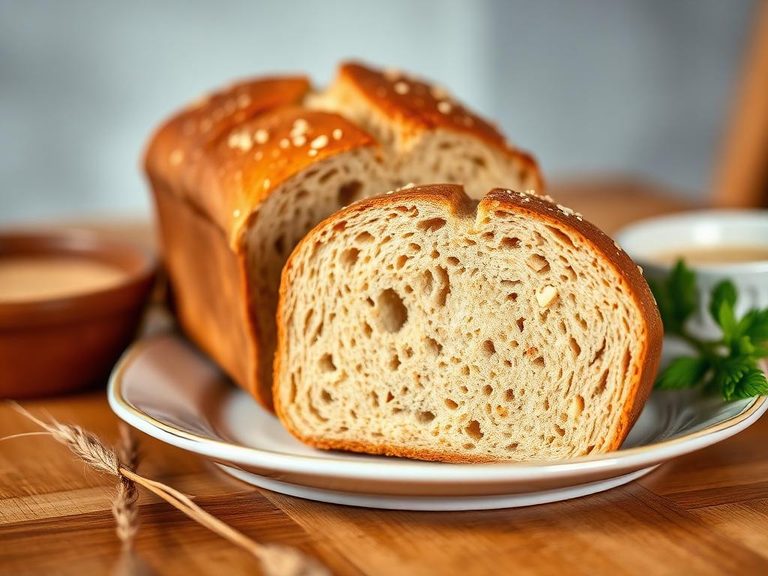
Photo: Wikipedia
Whole wheat flour is the coarsely ground, nutrient-dense powder from the entire wheat kernel, boasting a hearty, nutty flavor and a slightly gritty texture that adds substance to baked goods. It's a fiber and protein powerhouse, delivering over 10 grams of fiber per 100g, which is significantly more than refined white flour.
Calorie split: 16% protein · 77% carbs · 7% fat
↓ Full nutrition💚 Why it's loved
People cherish it for its deep, earthy flavor that adds a robust, satisfying character to breads and pancakes. Its nutritional density makes it a beloved staple for those seeking to incorporate more whole grains into their diet without sacrificing the fundamental joy of baking.
⚠️ Watch-outs & how to enjoy it better
Its high fiber content can cause digestive discomfort like bloating if introduced too quickly, and its dense texture can make baked goods heavier. For those monitoring blood sugar, its carbohydrates still require portion awareness. To counteract, start with smaller portions, blend it 50/50 with white flour in recipes, and always pair it with a protein or healthy fat (like eggs, nuts, or seeds) to slow digestion.
Key benefits
- Excellent source of dietary fiber for digestive health.
- High in plant-based protein for muscle maintenance.
- Rich in B vitamins like niacin and thiamine for energy metabolism.
- Contains essential minerals such as magnesium, selenium, and zinc.
- Provides complex carbohydrates for sustained energy release.
🍽️ Popular dishes





🌍 Where it's eaten
💡 Did you know?
Unlike refined white flour, which uses only the endosperm, whole wheat flour includes the bran and germ, meaning it contains the entire grain kernel and its natural oils, which is why it has a shorter shelf life and should often be stored in the refrigerator or freezer.
Full nutrition (USDA data · scales with serving)
| Water | 9.4 g |
| Energy (Atwater General Factors) | 370 kcal |
| Energy (Atwater Specific Factors) | 346 kcal |
| Energy | 370 kcal |
| Energy | 1550 kj |
| Nitrogen | 2.4 g |
| Protein | 15.1 g |
| Total lipid (fat) | 2.7 g |
| Ash | 1.6 g |
| Carbohydrate, by difference | 71.2 g |
| Fiber, total dietary | 10.6 g |
| Calcium, Ca | 38.0 mg |
| Iron, Fe | 3.9 mg |
| Magnesium, Mg | 136 mg |
| Phosphorus, P | 352 mg |
| Potassium, K | 376 mg |
| Sodium, Na | 3.0 mg |
| Zinc, Zn | 3.2 mg |
| Copper, Cu | 0.45 mg |
| Manganese, Mn | 3.6 mg |
| Selenium, Se | 23.6 ug |
| Molybdenum, Mo | 58.5 ug |
| Thiamin | 0.50 mg |
| Riboflavin | 0.13 mg |
| Niacin | 5.5 mg |
| Vitamin B-6 | 0.27 mg |
| Folate, total | 39.0 ug |
Fat & fatty acid profile (per 100g)
Estimated from Pasta, gluten-free, corn flour and quinoa flour, cooked, ANCIENT HARVEST — USDA does not publish this profile for Flour.
| Fatty acids, total saturated | 0.15 g |
| SFA 4:0 | 0.00 g |
| SFA 6:0 | 0.00 g |
| SFA 8:0 | 0.00 g |
| SFA 10:0 | 0.00 g |
| SFA 12:0 | 0.00 g |
| SFA 14:0 | 0.01 g |
| SFA 15:0 | 0.00 g |
| SFA 16:0 | 0.09 g |
| SFA 17:0 | 0.00 g |
| SFA 18:0 | 0.04 g |
| SFA 20:0 | 0.01 g |
| SFA 22:0 | 0.00 g |
| SFA 24:0 | 0.00 g |
| Fatty acids, total monounsaturated | 0.66 g |
| MUFA 14:1 | 0.00 g |
| MUFA 15:1 | 0.17 g |
| MUFA 16:1 | 0.00 g |
| MUFA 16:1 c | 0.00 g |
| MUFA 17:1 | 0.00 g |
| MUFA 18:1 | 0.48 g |
| MUFA 18:1 c | 0.47 g |
| MUFA 20:1 | 0.01 g |
| MUFA 22:1 | 0.00 g |
| MUFA 22:1 c | 0.00 g |
| MUFA 24:1 c | 0.00 g |
| Fatty acids, total polyunsaturated | 0.95 g |
| PUFA 18:2 | 0.91 g |
| PUFA 18:2 n-6 c,c | 0.91 g |
| PUFA 18:2 CLAs | 0.00 g |
| PUFA 18:3 | 0.03 g |
| PUFA 18:3 n-3 c,c,c (ALA) | 0.03 g |
| PUFA 18:3 n-6 c,c,c | 0.00 g |
| PUFA 18:3i | 0.00 g |
| PUFA 18:4 | 0.00 g |
| PUFA 20:2 n-6 c,c | 0.00 g |
| PUFA 20:3 | 0.00 g |
| PUFA 20:3 n-3 | 0.00 g |
| PUFA 20:3 n-6 | 0.00 g |
| PUFA 20:4 | 0.00 g |
| PUFA 20:5 n-3 (EPA) | 0.00 g |
| PUFA 22:4 | 0.00 g |
| PUFA 22:5 n-3 (DPA) | 0.00 g |
| PUFA 22:6 n-3 (DHA) | 0.00 g |
| Fatty acids, total trans | 0.01 g |
| Fatty acids, total trans-monoenoic | 0.00 g |
| TFA 16:1 t | 0.00 g |
| TFA 18:1 t | 0.00 g |
| TFA 22:1 t | 0.00 g |
| TFA 18:2 t not further defined | 0.00 g |
| Fatty acids, total trans-polyenoic | 0.00 g |
| Cholesterol | 0.00 mg |
Amino acid profile (per 100g)
Estimated from Pasta, gluten-free, corn flour and quinoa flour, cooked, ANCIENT HARVEST — USDA does not publish this profile for Flour.
| Tryptophan | 0.02 g |
| Threonine | 0.10 g |
| Isoleucine | 0.09 g |
| Leucine | 0.35 g |
| Lysine | 0.16 g |
| Methionine | 0.06 g |
| Cystine | 0.07 g |
| Phenylalanine | 0.15 g |
| Tyrosine | 0.12 g |
| Valine | 0.11 g |
| Arginine | 0.18 g |
| Histidine | 0.09 g |
| Alanine | 0.21 g |
| Aspartic acid | 0.19 g |
| Glutamic acid | 0.46 g |
| Glycine | 0.12 g |
| Proline | 0.29 g |
| Serine | 0.15 g |
| Hydroxyproline | 0.00 g |
FAQ
Why is my whole wheat bread so dense and heavy?
The bran in whole wheat flour can cut through gluten strands, limiting rise. To improve texture, use vital wheat gluten in the recipe, ensure proper kneading to develop gluten, and allow for a longer, slower rise. Blending with some white flour also helps.
Can I substitute it 1:1 for white flour in any recipe?
Not always. For cookies or cakes, a 1:1 swap can make them dry and crumbly. It's best to start by replacing 25-50% of the white flour. For yeast breads, you can often use 100% whole wheat but will need to adjust liquid (it absorbs more) and kneading time.
How do I store it to keep it fresh?
Because of the natural oils in the germ, it can go rancid. Store it in an airtight container in a cool, dark place for a month, or in the freezer for up to six months to preserve its flavor and nutritional value.
Nutrient density (calculated · NRF9.3)
Nutrient Rich Foods index: beneficial nutrients (protein, fiber, vitamins, minerals) minus saturated fat, added sugar & sodium, per 100 kcal.
NRF9.3 index — Fulgoni, Keast & Drewnowski, 2009. Computed from USDA nutrients.
Weight-loss friendliness (composite index)
Energy density 3.70 kcal/g · 16% calories from protein · 10.6 g fiber · 0.0 g sugar per 100 g.
Composite of energy density (Rolls et al., 1999), protein & fiber satiety, minus sugar. A calculated heuristic — ranks satiety-per-calorie, not a clinical measure.
Dietary load (calculated from USDA values)
Potential renal acid load. Positive = acid-forming, negative = alkaline-forming.
Sodium-to-potassium ratio: 0.01 (lower is better — aim for ≤ 1)
Sodium:potassium per WHO potassium guidance. Computed from USDA nutrients.