

Pie crusts
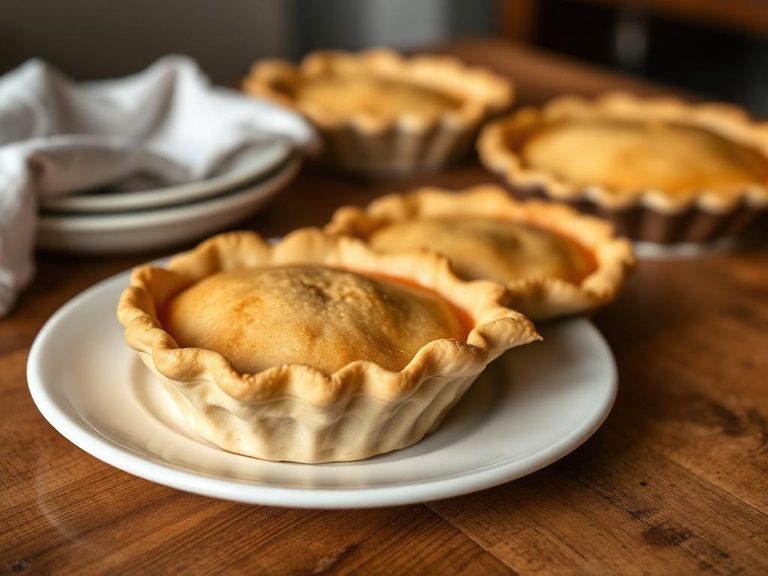
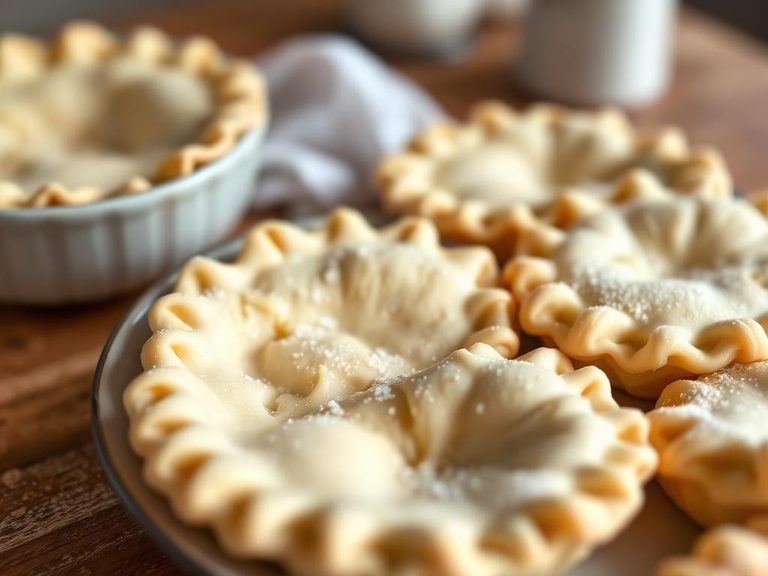
Pie crust is a foundational pastry used as the base or top layer for both sweet and savory pies. It is typically made from flour, a fat source like butter or lard, water, and a pinch of salt, with origins in ancient Roman and medieval European cooking. This versatile dough is now a staple in cuisines worldwide, from American apple pie to British steak and kidney pie.
🍳 View the full Pie crusts recipe →
🍽️ Nutrition at a glance
Pie crust is generally high in fat and carbohydrates, with minimal protein. A single serving (about 1/8 of a 9-inch crust) provides roughly 100-150 calories, primarily from the fat used to achieve its flaky texture.
Nutrition breakdown
| Calories | 195 kcal |
| Protein | 2.5 g |
| Carbs | 22 g |
| Fat | 11 g |
| Fiber | 0.8 g |
| Sugar | 0.5 g |
| Sodium | 190 mg |
| Iron | 1.3 mg |
| Thiamin (B1) | 0.2 mg |
| Niacin (B3) | 1.5 mg |
| Folate | 30 mcg |
| Calcium | 10 mg |
| Magnesium | 6 mg |
| Phosphorus | 25 mg |
| Selenium | 5 mcg |
Per 1 crust (9-inch, 1/8 of total, approx. 45 g) · estimated, varies by recipe
💡 What's interesting
The science behind a perfect flaky crust involves keeping the fat cold and in small pieces; as it melts during baking, it creates steam pockets that separate the dough into delicate layers. Nutritionally, while it is energy-dense, it serves as an important vehicle for delivering nutrient-rich fillings like fruits, vegetables, or meats.
🍽️ Related dishes
AI estimate may be inaccurate · Terms