

Flour, rye
Whole food · Cereal Grains and Pasta

Photo: Wikipedia
Rye flour is a robust, earthy flour with a distinctive, slightly sour and nutty flavor profile and a dense, hearty texture. Nutritionally, it stands out for its exceptionally high fiber content, which is significantly greater than that of refined wheat flour, and it provides a solid source of protein. Its deep color and strong character make it a staple for rustic, flavorful baked goods.
Calorie split: 9% protein · 86% carbs · 5% fat
↓ Full nutrition💚 Why it's loved
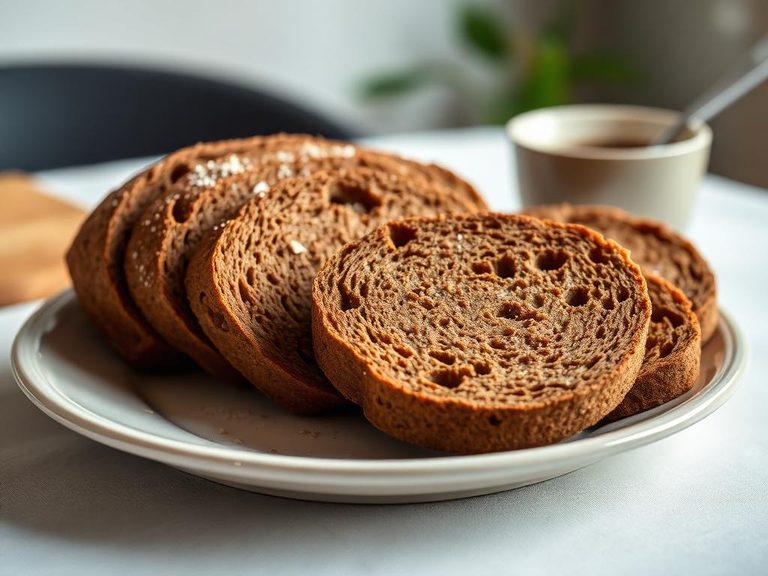
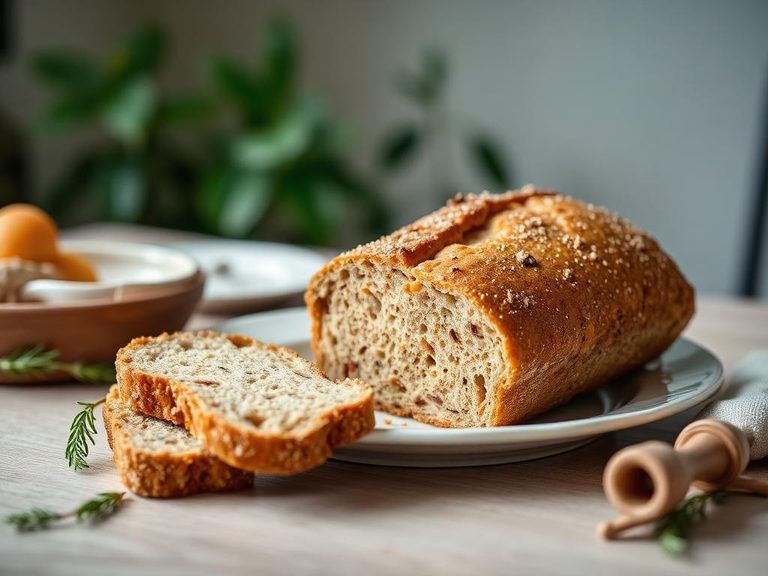
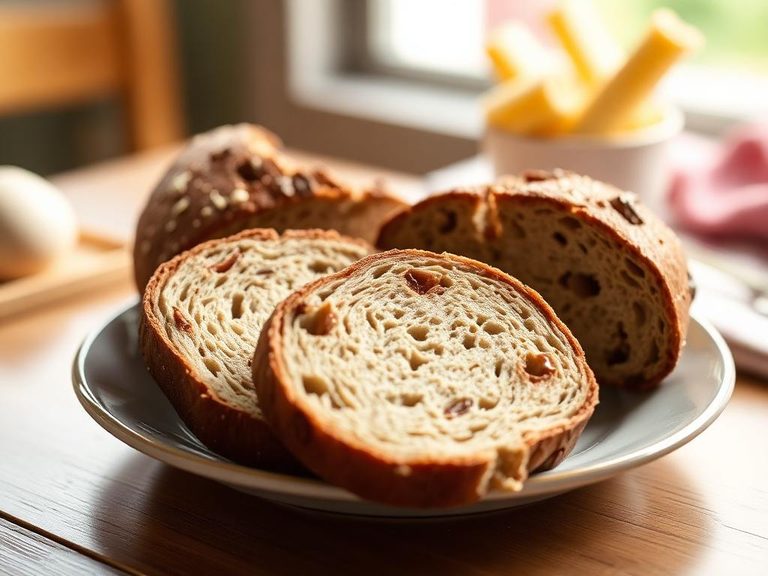
People cherish rye flour for its deep, complex flavor that adds a sophisticated tang and earthiness to breads and pastries. It's the soul of iconic breads like German Pumpernickel and Danish Rugbrød, prized for their dense, moist, and satisfying character.
⚠️ Watch-outs & how to enjoy it better
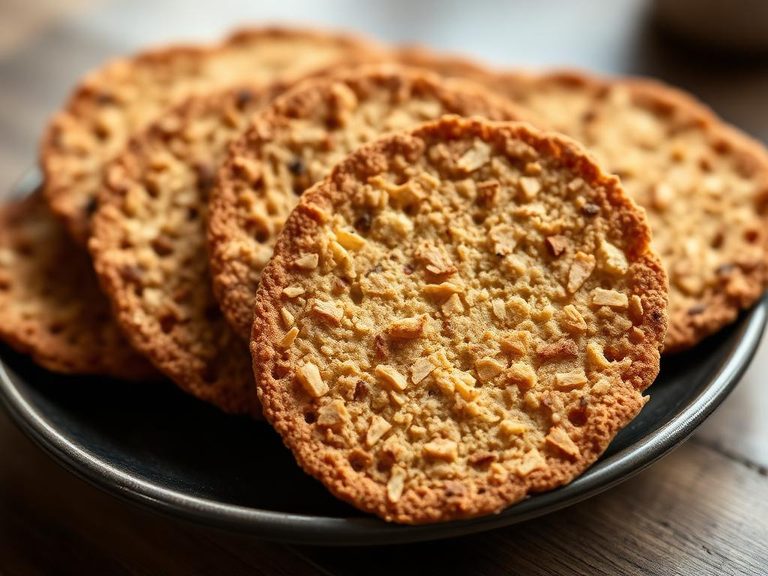
The strong, assertive flavor of rye flour can be overpowering if used alone, and its low-gluten content means it produces dense, heavy loaves that may not rise as high as wheat breads. For those sensitive to gluten, it is not safe. To balance its intensity, it's often blended with wheat flour, and its density is embraced in specific recipes like crispbreads where a hearty texture is desired.
Key benefits
- Exceptionally high in dietary fiber (13.68g per 100g)
- Good source of plant-based protein (8.395g per 100g)
- Contains more minerals like magnesium and phosphorus than refined wheat
- Its fiber content promotes a feeling of fullness
- Lower in gluten than wheat flour, though not gluten-free
🍽️ Popular dishes

🌍 Where it's eaten
💡 Did you know?
Rye is a remarkably hardy grain that can grow in poor soils and cold climates where wheat struggles, making it a historical lifeline for communities in Northern and Eastern Europe.
Full nutrition (USDA data · scales with serving)
| Water | 11.1 g |
| Energy (Atwater General Factors) | 359 kcal |
| Energy (Atwater Specific Factors) | 351 kcal |
| Nitrogen | 1.4 g |
| Protein | 8.4 g |
| Total lipid (fat) | 1.9 g |
| Ash | 1.4 g |
| Carbohydrate, by difference | 77.2 g |
| Fiber, total dietary | 13.7 g |
| Total dietary fiber (AOAC 2011.25) | 17.9 g |
| High Molecular Weight Dietary Fiber (HMWDF) | 13.0 g |
| Low Molecular Weight Dietary Fiber (LMWDF) | 4.9 g |
| Beta-glucan | 1.9 g |
| Starch | 54.1 g |
| Calcium, Ca | 32.2 mg |
| Iron, Fe | 2.5 mg |
| Magnesium, Mg | 95.4 mg |
| Phosphorus, P | 280 mg |
| Potassium, K | 434 mg |
| Sodium, Na | 0.00 mg |
| Zinc, Zn | 2.3 mg |
| Copper, Cu | 0.34 mg |
| Manganese, Mn | 2.1 mg |
| Selenium, Se | 16.6 ug |
| Molybdenum, Mo | 75.5 ug |
| Thiamin | 0.22 mg |
| Riboflavin | 0.17 mg |
| Niacin | 1.2 mg |
| Vitamin B-6 | 0.16 mg |
| Biotin | 9.0 ug |
Fat & fatty acid profile (per 100g)
Estimated from Pasta, gluten-free, corn flour and quinoa flour, cooked, ANCIENT HARVEST — USDA does not publish this profile for Flour.
| Fatty acids, total saturated | 0.15 g |
| SFA 4:0 | 0.00 g |
| SFA 6:0 | 0.00 g |
| SFA 8:0 | 0.00 g |
| SFA 10:0 | 0.00 g |
| SFA 12:0 | 0.00 g |
| SFA 14:0 | 0.01 g |
| SFA 15:0 | 0.00 g |
| SFA 16:0 | 0.09 g |
| SFA 17:0 | 0.00 g |
| SFA 18:0 | 0.04 g |
| SFA 20:0 | 0.01 g |
| SFA 22:0 | 0.00 g |
| SFA 24:0 | 0.00 g |
| Fatty acids, total monounsaturated | 0.66 g |
| MUFA 14:1 | 0.00 g |
| MUFA 15:1 | 0.17 g |
| MUFA 16:1 | 0.00 g |
| MUFA 16:1 c | 0.00 g |
| MUFA 17:1 | 0.00 g |
| MUFA 18:1 | 0.48 g |
| MUFA 18:1 c | 0.47 g |
| MUFA 20:1 | 0.01 g |
| MUFA 22:1 | 0.00 g |
| MUFA 22:1 c | 0.00 g |
| MUFA 24:1 c | 0.00 g |
| Fatty acids, total polyunsaturated | 0.95 g |
| PUFA 18:2 | 0.91 g |
| PUFA 18:2 n-6 c,c | 0.91 g |
| PUFA 18:2 CLAs | 0.00 g |
| PUFA 18:3 | 0.03 g |
| PUFA 18:3 n-3 c,c,c (ALA) | 0.03 g |
| PUFA 18:3 n-6 c,c,c | 0.00 g |
| PUFA 18:3i | 0.00 g |
| PUFA 18:4 | 0.00 g |
| PUFA 20:2 n-6 c,c | 0.00 g |
| PUFA 20:3 | 0.00 g |
| PUFA 20:3 n-3 | 0.00 g |
| PUFA 20:3 n-6 | 0.00 g |
| PUFA 20:4 | 0.00 g |
| PUFA 20:5 n-3 (EPA) | 0.00 g |
| PUFA 22:4 | 0.00 g |
| PUFA 22:5 n-3 (DPA) | 0.00 g |
| PUFA 22:6 n-3 (DHA) | 0.00 g |
| Fatty acids, total trans | 0.01 g |
| Fatty acids, total trans-monoenoic | 0.00 g |
| TFA 16:1 t | 0.00 g |
| TFA 18:1 t | 0.00 g |
| TFA 22:1 t | 0.00 g |
| TFA 18:2 t not further defined | 0.00 g |
| Fatty acids, total trans-polyenoic | 0.00 g |
| Cholesterol | 0.00 mg |
Amino acid profile (per 100g)
Estimated from Pasta, gluten-free, corn flour and quinoa flour, cooked, ANCIENT HARVEST — USDA does not publish this profile for Flour.
| Tryptophan | 0.02 g |
| Threonine | 0.10 g |
| Isoleucine | 0.09 g |
| Leucine | 0.35 g |
| Lysine | 0.16 g |
| Methionine | 0.06 g |
| Cystine | 0.07 g |
| Phenylalanine | 0.15 g |
| Tyrosine | 0.12 g |
| Valine | 0.11 g |
| Arginine | 0.18 g |
| Histidine | 0.09 g |
| Alanine | 0.21 g |
| Aspartic acid | 0.19 g |
| Glutamic acid | 0.46 g |
| Glycine | 0.12 g |
| Proline | 0.29 g |
| Serine | 0.15 g |
| Hydroxyproline | 0.00 g |
FAQ
Is rye flour gluten-free?
No. Rye flour contains gluten, specifically a type called secalin. It is not suitable for people with celiac disease or gluten sensitivity.
Why is rye bread so dense and heavy?
Rye flour contains less gluten-forming proteins than wheat flour. The gluten it does form is weaker and less elastic, resulting in a tighter crumb and a denser loaf that doesn't rise as much.
What's the difference between light and dark rye flour?
Light rye flour is made from the inner part of the rye kernel (similar to white flour) and has a milder flavor. Dark rye flour includes more of the outer bran layer, giving it a stronger, earthier taste and darker color.
Nutrient density (calculated · NRF9.3)
Nutrient Rich Foods index: beneficial nutrients (protein, fiber, vitamins, minerals) minus saturated fat, added sugar & sodium, per 100 kcal.
NRF9.3 index — Fulgoni, Keast & Drewnowski, 2009. Computed from USDA nutrients.
Weight-loss friendliness (composite index)
Energy density 3.59 kcal/g · 9% calories from protein · 13.7 g fiber · 0.0 g sugar per 100 g.
Composite of energy density (Rolls et al., 1999), protein & fiber satiety, minus sugar. A calculated heuristic — ranks satiety-per-calorie, not a clinical measure.
Dietary load (calculated from USDA values)
Potential renal acid load. Positive = acid-forming, negative = alkaline-forming.
Sodium-to-potassium ratio: 0.00 (lower is better — aim for ≤ 1)
Sodium:potassium per WHO potassium guidance. Computed from USDA nutrients.