Danish Rugbrød
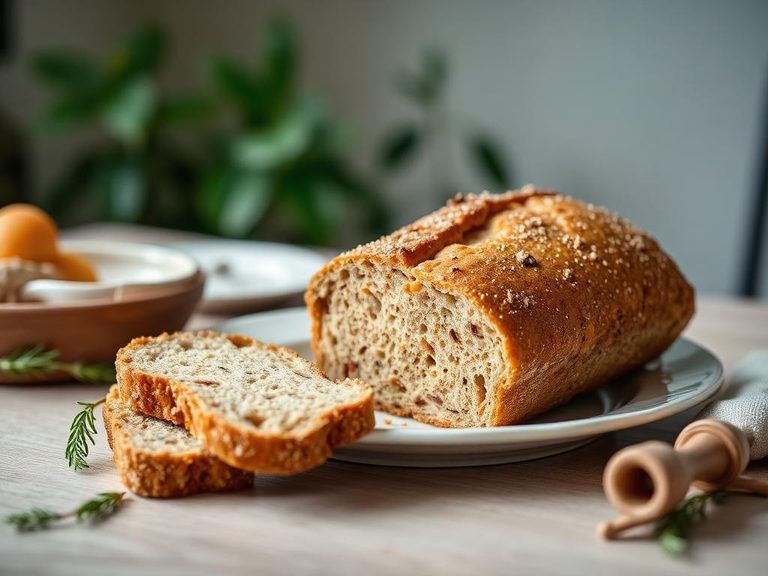
Danish Rugbrød, or rye bread, is a dense, dark, and hearty bread that is a cornerstone of Danish cuisine. It is traditionally made with rye flour, whole rye kernels, and a sourdough starter, often incorporating seeds like sunflower or flax for added texture and nutrition. This bread is the essential base for the classic open-faced sandwich, the smørrebrød.
🍽️ Nutrition at a glance
Rugbrød is a high-fiber, complex carbohydrate source with a moderate amount of plant-based protein, especially when packed with seeds. It provides key nutrients like magnesium, iron, and B vitamins, and a typical slice (about 50g) contains roughly 120-150 calories.
Nutrition breakdown
| Calories | 120 kcal |
| Protein | 4 g |
| Carbs | 22 g |
| Fat | 1.5 g |
| Fiber | 5 g |
| Sugar | 1.5 g |
| Sodium | 300 mg |
| Iron | 1.5 mg |
| Magnesium | 40 mg |
| Phosphorus | 80 mg |
| Thiamin (B1) | 0.1 mg |
| Niacin (B3) | 1.5 mg |
| Folate | 20 mcg |
| Manganese | 0.8 mg |
| Selenium | 10 mcg |
Per 1 slice (50 g) · estimated, varies by recipe
💡 What's interesting
What's unique is its long fermentation process using sourdough, which not only gives it a distinctive tangy flavor but also improves digestibility and nutrient absorption. Nutritionally, its high fiber and low glycemic index make it exceptionally filling and help stabilize blood sugar, which is why it's considered a very healthy staple.