Danish Kringle
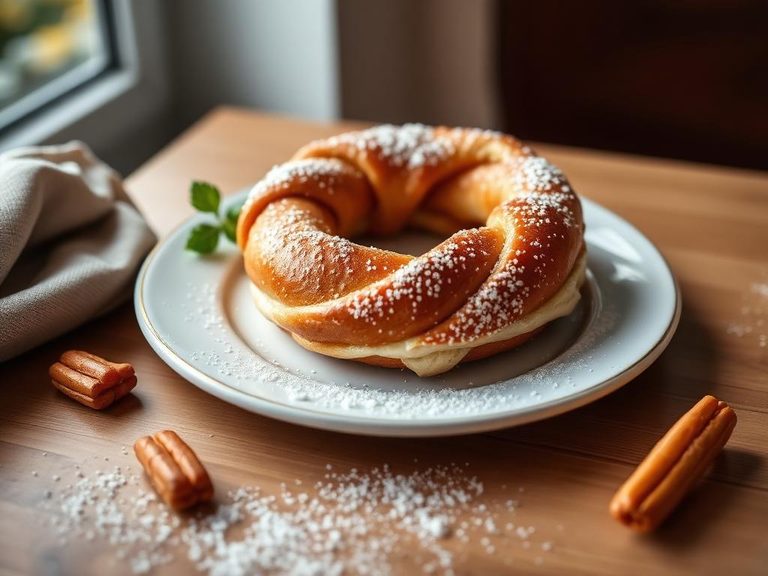
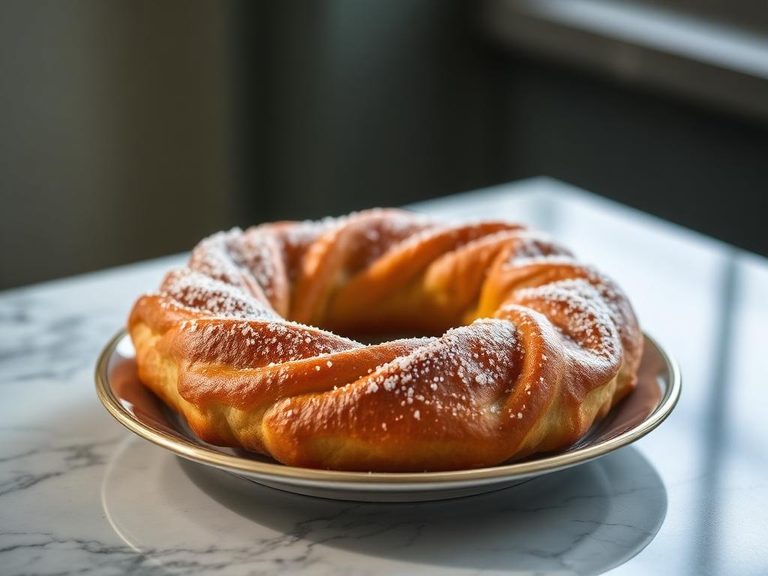
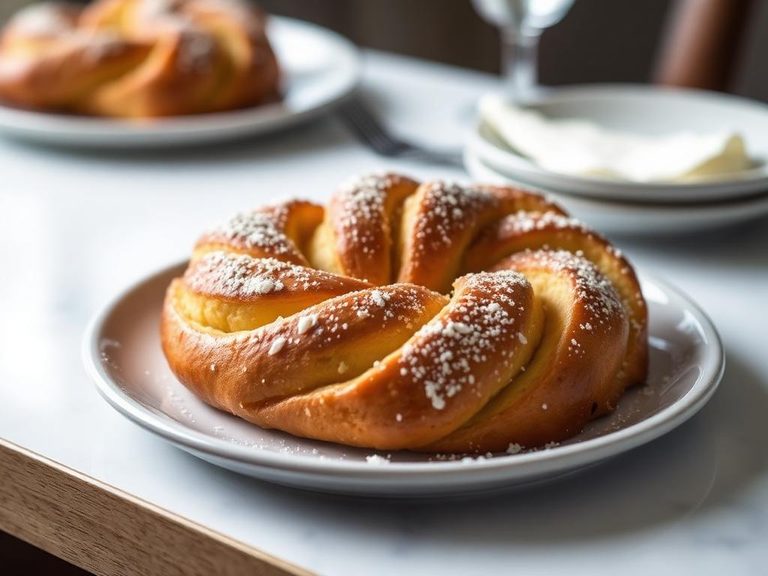
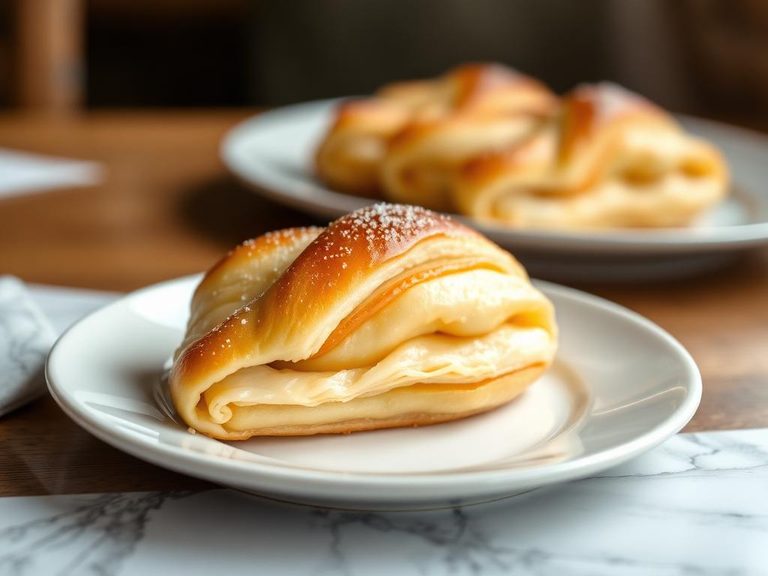
Danish Kringle is a flaky, buttery, pretzel-shaped pastry that is a staple of Danish and Scandinavian-American baking. It is typically made from a laminated yeast dough, filled with a sweet paste like almond, fruit, or cinnamon, and then topped with icing and nuts. While its origins are Danish, it has become especially popular in the American Midwest.
🍽️ Nutrition at a glance
This pastry is very high in carbohydrates and fat due to its buttery dough and sweet filling, making it a calorie-dense treat. A single serving can provide a significant amount of sugar and energy, with minimal protein or other essential nutrients.
Nutrition breakdown
| Calories | 400 kcal |
| Protein | 5 g |
| Carbs | 50 g |
| Fat | 20 g |
| Fiber | 1 g |
| Sugar | 25 g |
| Sodium | 250 mg |
| Iron | 2.5 mg |
| Calcium | 60 mg |
| Potassium | 100 mg |
| Vitamin A | 150 IU |
| Vitamin B1 (Thiamin) | 0.2 mg |
| Vitamin B2 (Riboflavin) | 0.1 mg |
| Folate | 40 mcg |
| Phosphorus | 80 mg |
Per 1 pastry (113 g) · estimated, varies by recipe
💡 What's interesting
The name 'Kringle' is derived from the Scandinavian word for pretzel, reflecting the traditional shape of the pastry. It is often associated with celebrations and holidays, and its preparation can be a complex, multi-day process involving careful layering of butter into the dough.