

Fish, roughy, orange, cooked, dry heat
Whole food · Finfish and Shellfish Products

Photo: Wikipedia
Orange roughy is a deep-sea fish prized for its delicate, snow-white flesh that cooks up with a clean, sweet flavor and a firm yet flaky texture. When prepared with dry heat like baking or broiling, it becomes exceptionally lean, delivering a massive 22.6 grams of protein per 100 grams with virtually no fat or carbohydrates. It's a powerhouse of pure, high-quality protein for those watching their macros.
Calorie split: 92% protein · 0% carbs · 8% fat
↓ Full nutrition💚 Why it's loved
People love orange roughy for its mild, non-fishy taste and versatile, dense texture that holds up well to grilling, baking, or pan-searing without falling apart. It's a blank canvas that absorbs marinades and seasonings beautifully, making it a favorite for clean, protein-focused meals.
⚠️ Watch-outs & how to enjoy it better
As a deep-water species, orange roughy is extremely long-lived (up to 150 years) and slow to reproduce, making it highly susceptible to overfishing; sustainability is a major concern. Consumers should look for certified sustainable sources (e.g., MSC label) to avoid contributing to depleted stocks. Its very low fat content means it can dry out if overcooked, so careful timing is essential.
Key benefits
- Extremely high in lean protein for muscle maintenance.
- Very low in fat and calories, ideal for weight management.
- Contains selenium, a key antioxidant for immune function.
- Source of phosphorus for bone health.
- Naturally free of carbohydrates and sugars.
🍽️ Popular dishes
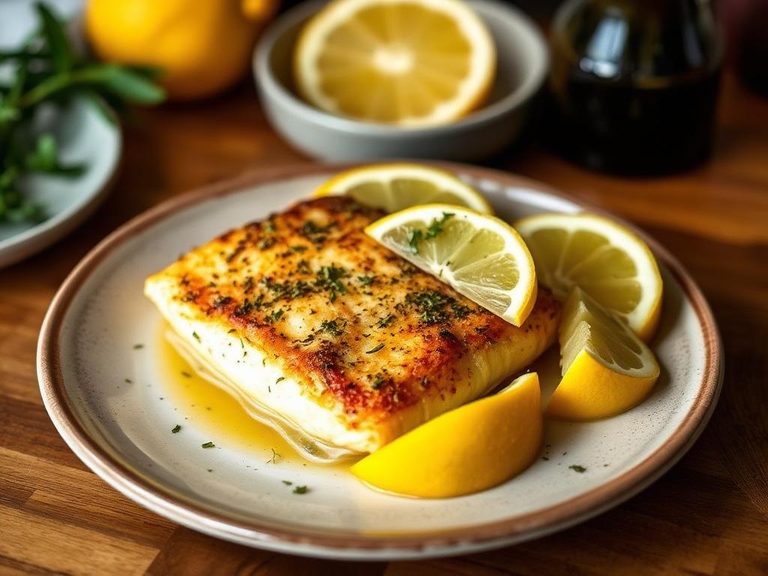
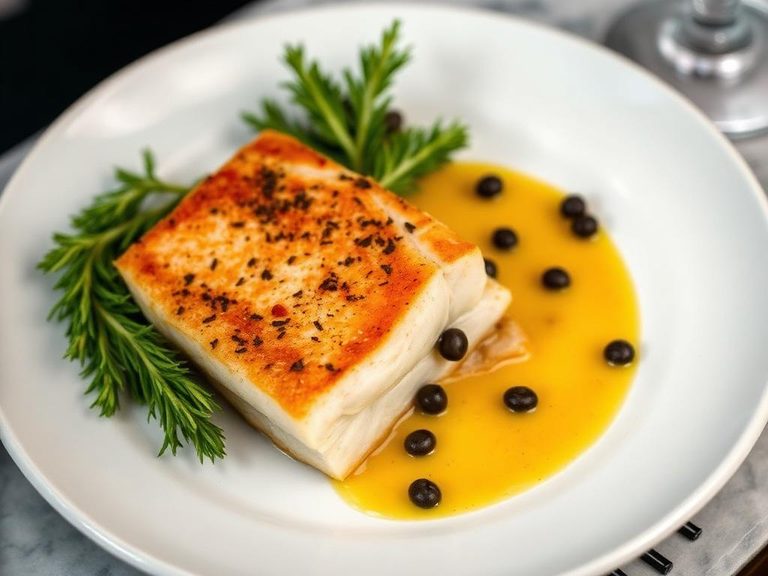
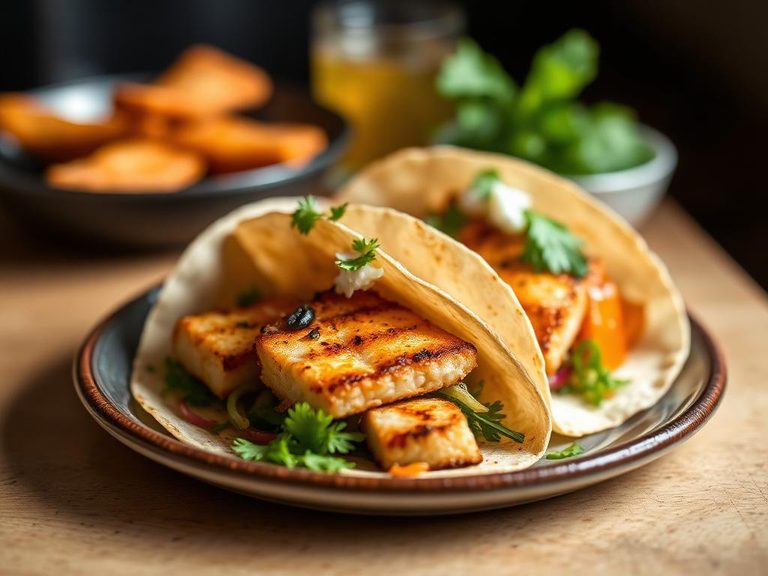
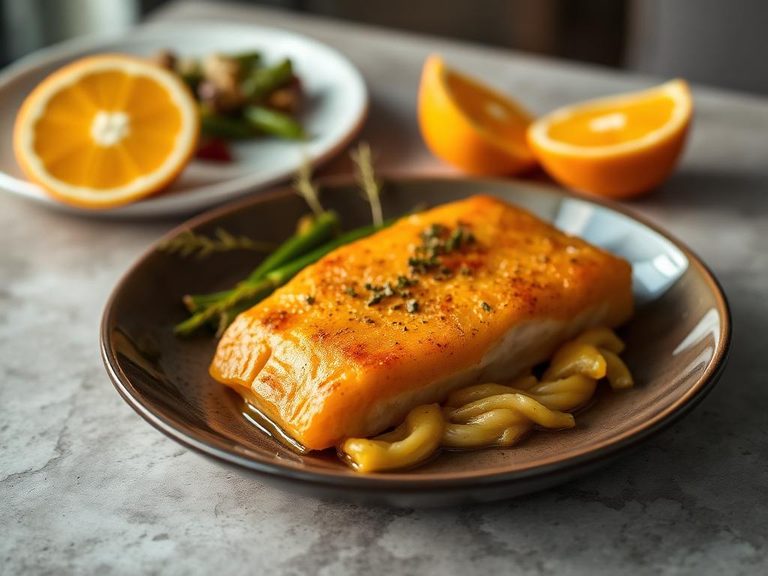
🌍 Where it's eaten
💡 Did you know?
Orange roughy was only discovered and commercialized in the 1970s; before that, it was considered a 'trash fish' and often discarded by trawlers targeting other species.
Full nutrition (USDA data · scales with serving)
| Water | 67.0 g |
| Energy | 105 kcal |
| Energy | 439 kj |
| Protein | 22.6 g |
| Total lipid (fat) | 0.90 g |
| Ash | 0.99 g |
| Carbohydrate, by difference | 0.00 g |
| Fiber, total dietary | 0.00 g |
| Total Sugars | 0.00 g |
| Calcium, Ca | 11.0 mg |
| Iron, Fe | 1.1 mg |
| Magnesium, Mg | 18.0 mg |
| Phosphorus, P | 102 mg |
| Potassium, K | 181 mg |
| Sodium, Na | 69.0 mg |
| Zinc, Zn | 0.32 mg |
| Copper, Cu | 0.07 mg |
| Manganese, Mn | 0.04 mg |
| Selenium, Se | 88.3 ug |
| Vitamin C, total ascorbic acid | 0.00 mg |
| Thiamin | 0.04 mg |
| Riboflavin | 0.06 mg |
| Niacin | 1.8 mg |
| Pantothenic acid | 0.06 mg |
| Vitamin B-6 | 0.07 mg |
| Folate, total | 5.0 ug |
| Folic acid | 0.00 ug |
| Folate, food | 5.0 ug |
| Folate, DFE | 5.0 ug |
| Vitamin B-12 | 0.47 ug |
| Vitamin B-12, added | 0.00 ug |
| Vitamin A, RAE | 24.0 ug |
| Retinol | 24.0 ug |
| Carotene, beta | 0.00 ug |
| Carotene, alpha | 0.00 ug |
| Cryptoxanthin, beta | 0.00 ug |
| Vitamin A, IU | 80.0 iu |
| Lycopene | 0.00 ug |
| Lutein + zeaxanthin | 0.00 ug |
| Vitamin E (alpha-tocopherol) | 1.9 mg |
| Vitamin E, added | 0.00 mg |
| Tocopherol, beta | 0.00 mg |
| Tocopherol, gamma | 0.03 mg |
| Tocopherol, delta | 0.00 mg |
| Tocotrienol, alpha | 0.00 mg |
| Tocotrienol, beta | 0.00 mg |
| Tocotrienol, gamma | 0.00 mg |
| Tocotrienol, delta | 0.00 mg |
| Vitamin K (phylloquinone) | 1.1 ug |
| Vitamin K (Dihydrophylloquinone) | 0.00 ug |
| Alcohol, ethyl | 0.00 g |
| Caffeine | 0.00 mg |
| Theobromine | 0.00 mg |
Fat & fatty acid profile (per 100g)
| Fatty acids, total saturated | 0.03 g |
| SFA 4:0 | 0.00 g |
| SFA 6:0 | 0.00 g |
| SFA 8:0 | 0.00 g |
| SFA 10:0 | 0.00 g |
| SFA 12:0 | 0.00 g |
| SFA 14:0 | 0.01 g |
| SFA 15:0 | 0.00 g |
| SFA 16:0 | 0.02 g |
| SFA 17:0 | 0.00 g |
| SFA 18:0 | 0.01 g |
| SFA 20:0 | 0.00 g |
| SFA 22:0 | 0.00 g |
| SFA 24:0 | 0.00 g |
| Fatty acids, total monounsaturated | 0.44 g |
| MUFA 14:1 | 0.00 g |
| MUFA 15:1 | 0.00 g |
| MUFA 16:1 | 0.06 g |
| MUFA 17:1 | 0.00 g |
| MUFA 18:1 | 0.29 g |
| MUFA 20:1 | 0.07 g |
| MUFA 22:1 | 0.03 g |
| Fatty acids, total polyunsaturated | 0.18 g |
| PUFA 18:2 | 0.06 g |
| PUFA 18:3 | 0.00 g |
| PUFA 18:3 n-3 c,c,c (ALA) | 0.00 g |
| PUFA 18:4 | 0.00 g |
| PUFA 20:2 n-6 c,c | 0.07 g |
| PUFA 20:3 | 0.00 g |
| PUFA 20:4 | 0.02 g |
| PUFA 20:5 n-3 (EPA) | 0.01 g |
| PUFA 22:5 n-3 (DPA) | 0.00 g |
| PUFA 22:6 n-3 (DHA) | 0.03 g |
| Cholesterol | 80.0 mg |
Amino acid profile (per 100g)
| Tryptophan | 0.23 g |
| Threonine | 1.0 g |
| Isoleucine | 1.1 g |
| Leucine | 1.8 g |
| Lysine | 2.1 g |
| Methionine | 0.73 g |
| Cystine | 0.24 g |
| Phenylalanine | 0.87 g |
| Tyrosine | 0.80 g |
| Valine | 1.1 g |
| Arginine | 1.4 g |
| Histidine | 0.47 g |
| Alanine | 1.3 g |
| Aspartic acid | 2.5 g |
| Glutamic acid | 3.7 g |
| Glycine | 0.87 g |
| Proline | 0.73 g |
| Serine | 0.94 g |
FAQ
What does orange roughy taste like?
It has a very mild, sweet, and clean flavor with no strong 'fishy' taste, making it a great choice for people who are sensitive to fishy flavors.
How do I prevent orange roughy from drying out?
Because it's so lean, it cooks quickly. Use high heat for a short time (like broiling or quick pan-searing), or bake with a sauce or foil packet to retain moisture. It's done when it just turns opaque and flakes easily.
Is orange roughy a sustainable seafood choice?
Historically, it was severely overfished due to its slow growth. Today, sustainability varies greatly by region and fishery. Always look for a trusted eco-certification like the Marine Stewardship Council (MSC) blue label.
Nutrient density (calculated · NRF9.3)
Nutrient Rich Foods index: beneficial nutrients (protein, fiber, vitamins, minerals) minus saturated fat, added sugar & sodium, per 100 kcal.
NRF9.3 index — Fulgoni, Keast & Drewnowski, 2009. Computed from USDA nutrients.
Weight-loss friendliness (composite index)
Energy density 1.05 kcal/g · 86% calories from protein · 0.0 g fiber · 0.0 g sugar per 100 g.
Composite of energy density (Rolls et al., 1999), protein & fiber satiety, minus sugar. A calculated heuristic — ranks satiety-per-calorie, not a clinical measure.
Dietary load (calculated from USDA values)
Potential renal acid load. Positive = acid-forming, negative = alkaline-forming.
Sodium-to-potassium ratio: 0.38 (lower is better — aim for ≤ 1)
Sodium:potassium per WHO potassium guidance. Computed from USDA nutrients.