

Carrots, frozen, unprepared (Includes foods for USDA's Food Distribution Program)
Whole food · Vegetables and Vegetable Products
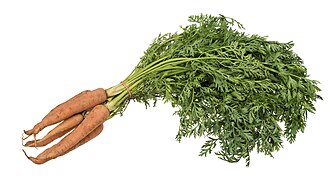
Photo: Wikipedia
These are whole or sliced carrots harvested at peak sweetness, then flash-frozen to lock in their vibrant orange color and firm, snappy texture. They offer a clean, earthy sweetness with a satisfying crunch even after cooking, making them a reliable pantry staple. Nutritionally, they are a standout source of fiber and beta-carotene while remaining very low in calories.
Calorie split: 8% protein · 81% carbs · 11% fat
↓ Full nutrition💚 Why it's loved
People love them for their reliable, concentrated sweetness and ability to add color, texture, and nutrition to any meal with zero prep work. They are a universal ingredient, equally at home in a rustic stew, a vibrant stir-fry, or a simple side dish.
⚠️ Watch-outs & how to enjoy it better
The primary caution is for individuals managing blood sugar, as the carbohydrates can cause a moderate spike if eaten in large, isolated portions. To counteract this, pair them with a source of protein or healthy fat (like chicken, nuts, or olive oil) to slow digestion. Also, their natural sweetness can be muted if overcooked; for best texture, add them to dishes in the last 10-15 minutes of cooking.
Key benefits
- Excellent source of beta-carotene, converted to vitamin A in the body
- High in dietary fiber for digestive health and satiety
- Very low in calories, fat, and naturally sugar-free
- Convenient, reduces food waste, and available year-round
- Retains nutrients effectively due to flash-freezing
🍽️ Popular dishes

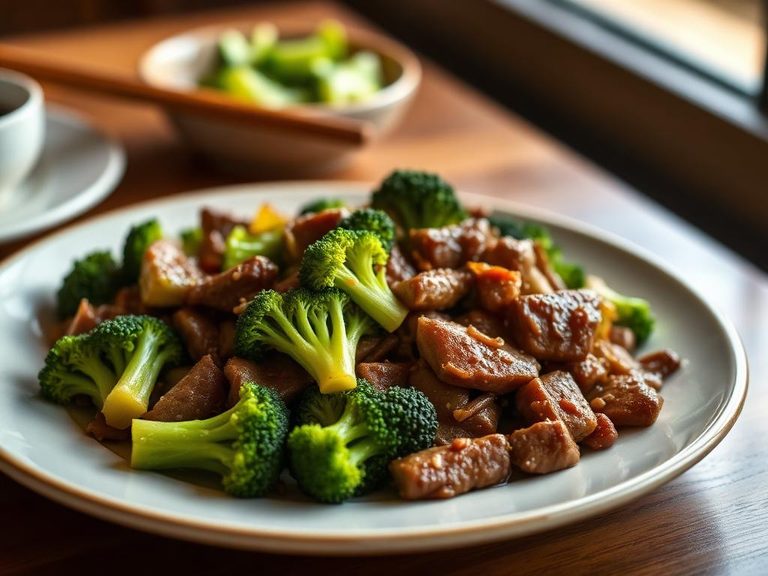

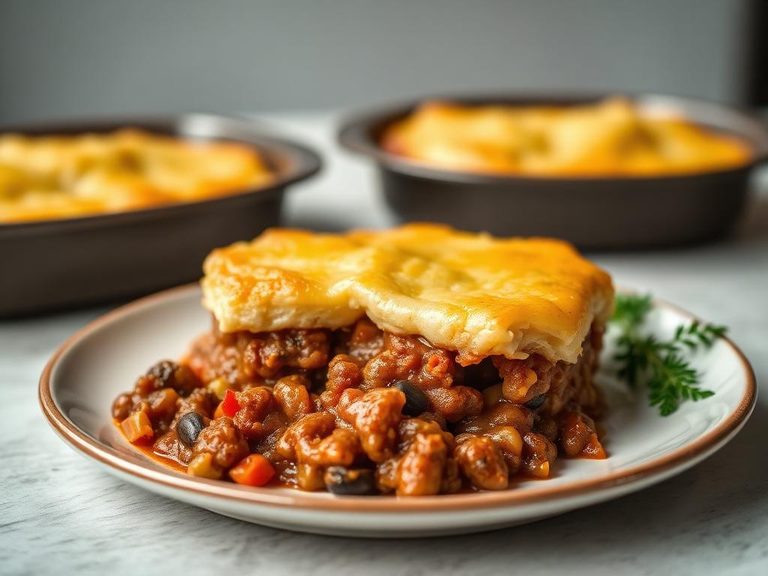

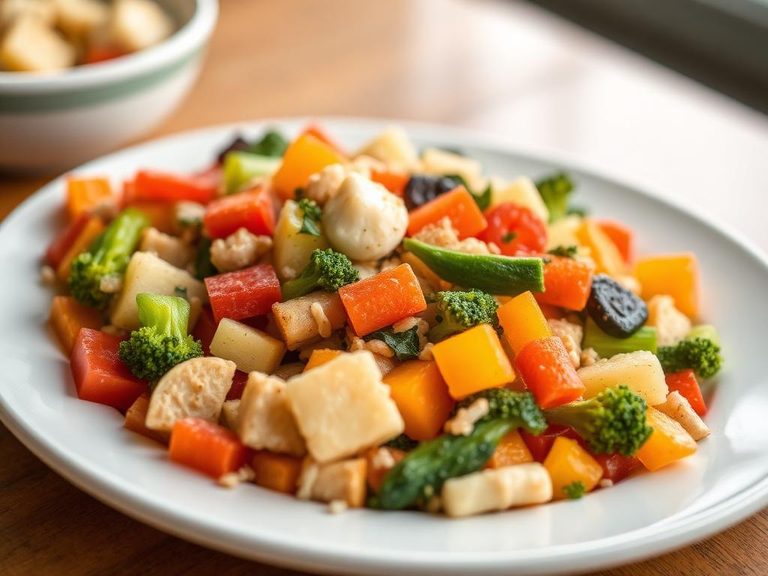
🌍 Where it's eaten
💡 Did you know?
The flash-freezing process used for these carrots creates tiny ice crystals that actually rupture the plant's cell walls, which is why frozen carrots can sometimes become softer than fresh ones upon cooking.
Full nutrition (USDA data · scales with serving)
| Water | 90.1 g |
| Energy | 37.0 kcal |
| Energy | 153 kj |
| Nitrogen | 0.13 g |
| Protein | 0.81 g |
| Total lipid (fat) | 0.47 g |
| Total fat (NLEA) | 0.33 g |
| Ash | 0.72 g |
| Carbohydrate, by difference | 7.9 g |
| Carbohydrate, by summation | 7.8 g |
| Fiber, total dietary | 3.2 g |
| Fiber, soluble | 1.4 g |
| Fiber, insoluble | 1.9 g |
| Sugars, Total | 4.2 g |
| Sucrose | 2.3 g |
| Glucose | 0.84 g |
| Fructose | 1.1 g |
| Lactose | 0.00 g |
| Maltose | 0.00 g |
| Galactose | 0.00 g |
| Starch | 0.38 g |
| Calcium, Ca | 33.0 mg |
| Iron, Fe | 0.43 mg |
| Magnesium, Mg | 10.8 mg |
| Phosphorus, P | 31.0 mg |
| Potassium, K | 210 mg |
| Sodium, Na | 66.0 mg |
| Zinc, Zn | 0.28 mg |
| Copper, Cu | 0.08 mg |
| Manganese, Mn | 0.14 mg |
| Vitamin C, total ascorbic acid | 2.2 mg |
| Thiamin | 0.04 mg |
| Riboflavin | 0.05 mg |
| Niacin | 0.47 mg |
| Pantothenic acid | 0.20 mg |
| Vitamin B-6 | 0.09 mg |
| Folate, total | 7.0 ug |
| Vitamin E (alpha-tocopherol) | 0.69 mg |
| Tocopherol, beta | 0.01 mg |
| Tocopherol, gamma | 0.01 mg |
| Tocopherol, delta | 0.00 mg |
| Tocotrienol, alpha | 0.00 mg |
| Tocotrienol, beta | 0.00 mg |
| Tocotrienol, gamma | 0.00 mg |
| Tocotrienol, delta | 0.00 mg |
| Vitamin K (phylloquinone) | 15.0 ug |
| Vitamin K (Dihydrophylloquinone) | 0.00 ug |
Fat & fatty acid profile (per 100g)
| Fatty acids, total saturated | 0.00 g |
| SFA 4:0 | 0.00 g |
| SFA 6:0 | 0.00 g |
| SFA 8:0 | 0.00 g |
| SFA 10:0 | 0.00 g |
| SFA 12:0 | 0.00 g |
| SFA 14:0 | 0.00 g |
| SFA 15:0 | 0.00 g |
| SFA 16:0 | 0.00 g |
| SFA 17:0 | 0.00 g |
| SFA 18:0 | 0.00 g |
| SFA 20:0 | 0.00 g |
| SFA 22:0 | 0.00 g |
| SFA 24:0 | 0.00 g |
| Fatty acids, total monounsaturated | 0.00 g |
| MUFA 14:1 c | 0.00 g |
| MUFA 16:1 c | 0.00 g |
| MUFA 18:1 | 0.00 g |
| MUFA 18:1 c | 0.00 g |
| MUFA 20:1 | 0.00 g |
| MUFA 20:1 c | 0.00 g |
| MUFA 22:1 | 0.00 g |
| MUFA 22:1 c | 0.00 g |
| Fatty acids, total polyunsaturated | 0.16 g |
| PUFA 18:2 | 0.16 g |
| PUFA 18:2 c | 0.16 g |
| PUFA 18:3 | 0.00 g |
| PUFA 18:3 c | 0.00 g |
| PUFA 18:4 | 0.00 g |
| PUFA 20:4 | 0.00 g |
| PUFA 20:4c | 0.00 g |
| PUFA 20:5c | 0.00 g |
| PUFA 20:5 n-3 (EPA) | 0.00 g |
| PUFA 22:5 c | 0.00 g |
| PUFA 22:5 n-3 (DPA) | 0.00 g |
| PUFA 22:6 c | 0.00 g |
| PUFA 22:6 n-3 (DHA) | 0.00 g |
Amino acid profile (per 100g)
| Tryptophan | 0.01 g |
| Threonine | 0.13 g |
| Isoleucine | 0.05 g |
| Leucine | 0.07 g |
| Lysine | 0.07 g |
| Methionine | 0.01 g |
| Cystine | 0.05 g |
| Phenylalanine | 0.04 g |
| Tyrosine | 0.03 g |
| Valine | 0.05 g |
| Arginine | 0.06 g |
| Histidine | 0.03 g |
| Alanine | 0.07 g |
| Aspartic acid | 0.11 g |
| Glutamic acid | 0.20 g |
| Glycine | 0.03 g |
| Proline | 0.03 g |
| Serine | 0.03 g |
FAQ
Do I need to thaw frozen carrots before cooking?
No, you can add them directly to soups, stews, and casseroles from frozen. For roasting or sautéing, thawing first can help achieve better browning and texture.
Why are my frozen carrots mushy after cooking?
Overcooking is the main culprit. Frozen carrots are often blanched before freezing, so they need less cooking time. Add them later in the cooking process and heat just until tender-crisp.
Are frozen carrots as nutritious as fresh?
Yes, often more so. Flash-freezing preserves nutrients at their peak, while fresh carrots can lose vitamins during transport and storage. They are nutritionally comparable and a very healthy choice.
Nutrient density (calculated · NRF9.3)
Nutrient Rich Foods index: beneficial nutrients (protein, fiber, vitamins, minerals) minus saturated fat, added sugar & sodium, per 100 kcal.
NRF9.3 index — Fulgoni, Keast & Drewnowski, 2009. Computed from USDA nutrients.
Weight-loss friendliness (composite index)
Energy density 0.37 kcal/g · 9% calories from protein · 3.2 g fiber · 0.0 g sugar per 100 g.
Composite of energy density (Rolls et al., 1999), protein & fiber satiety, minus sugar. A calculated heuristic — ranks satiety-per-calorie, not a clinical measure.
Dietary load (calculated from USDA values)
Potential renal acid load. Positive = acid-forming, negative = alkaline-forming.
Sodium-to-potassium ratio: 0.31 (lower is better — aim for ≤ 1)
Sodium:potassium per WHO potassium guidance. Computed from USDA nutrients.