Broccoli, raw
Whole food · Vegetables and Vegetable Products

Photo: Wikipedia
Raw broccoli is a crunchy, vibrant green cruciferous vegetable with a fresh, slightly bitter and peppery taste. Its florets are densely packed with nutrients, offering a notable 2.57 grams of protein per 100 grams, making it a surprisingly protein-rich snack. It's a low-calorie powerhouse, delivering only 31 calories while providing over 2 grams of dietary fiber.
💚 Why it's loved
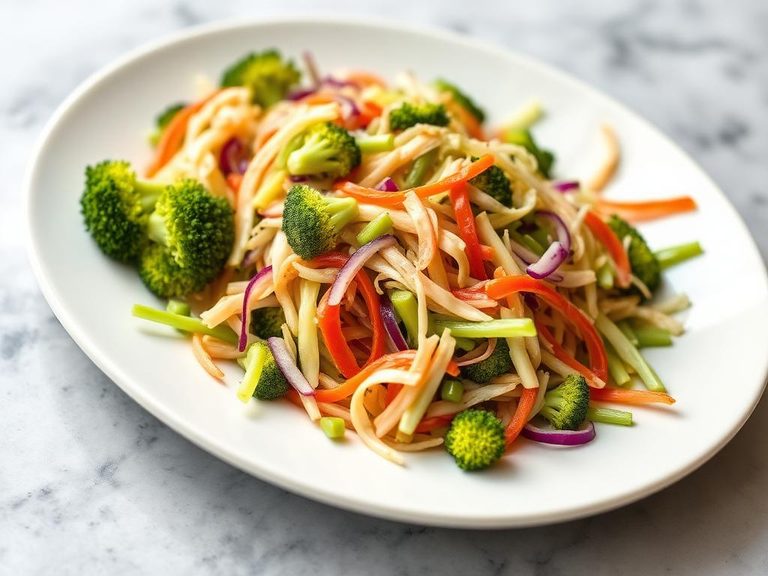
People love raw broccoli for its satisfying crunch and versatility—it's a staple in veggie platters, salads, and slaws. Its mild, earthy flavor pairs well with dips, and it's celebrated as a convenient, nutrient-dense snack in health-conscious cultures worldwide.
⚠️ Watch-outs & how to enjoy it better
Some find its raw flavor too bitter or sulfurous, and it can cause temporary gas or bloating due to its fiber and raffinose content. To counteract bitterness, try blanching it briefly or pairing it with a flavorful dip like hummus. To ease digestion, chew thoroughly or lightly steam it.
Key benefits
- Excellent source of vitamin C and vitamin K
- Rich in sulforaphane, a compound studied for its health properties
- High in fiber, supporting digestive health
- Very low in calories and contains no sugar
🍽️ Popular dishes
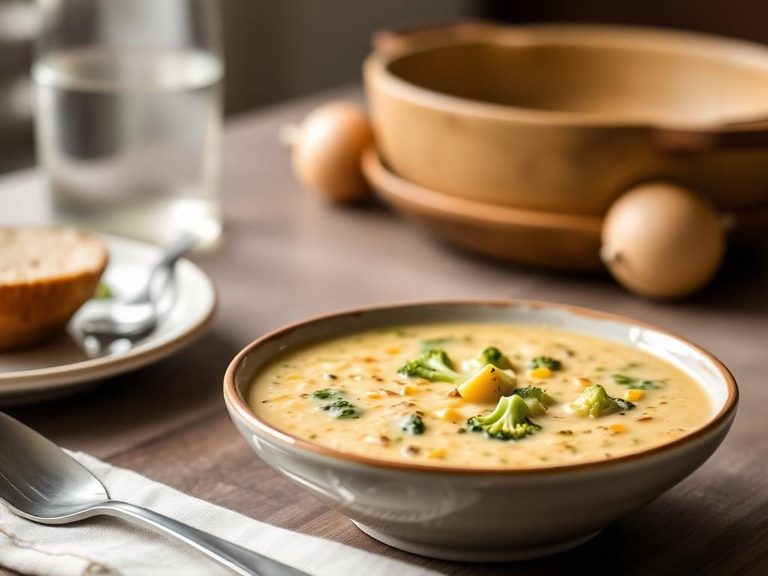
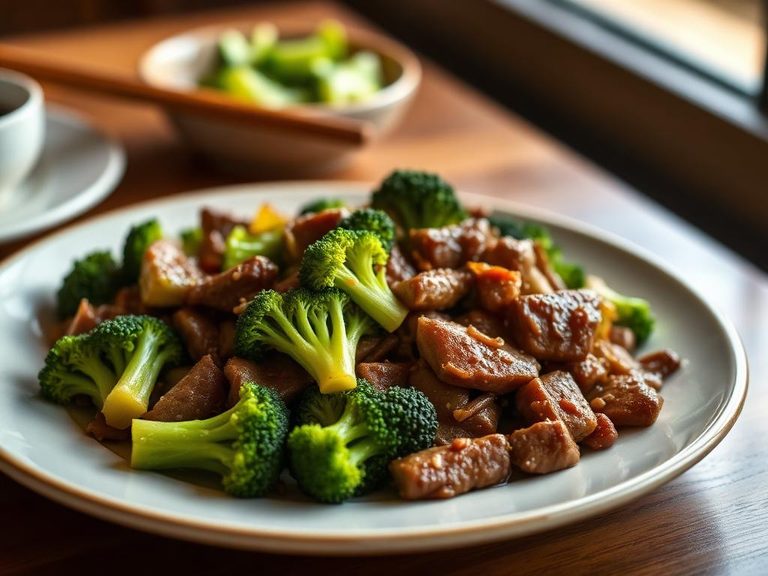
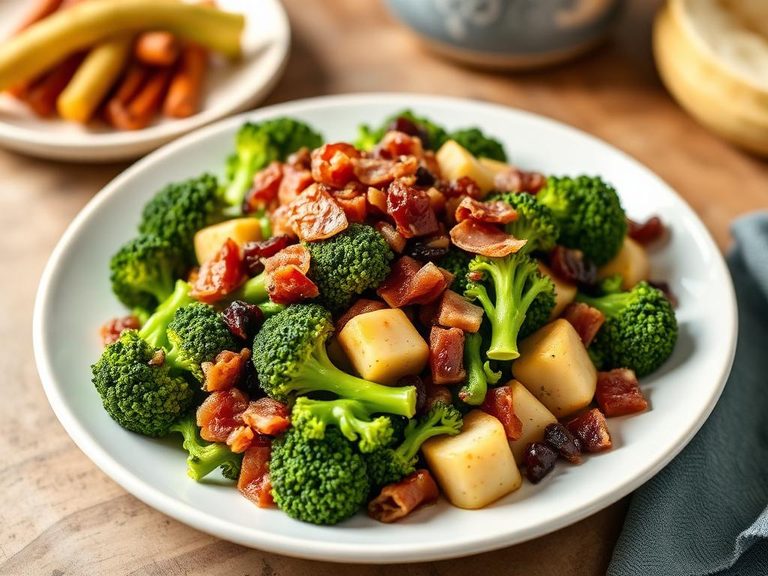
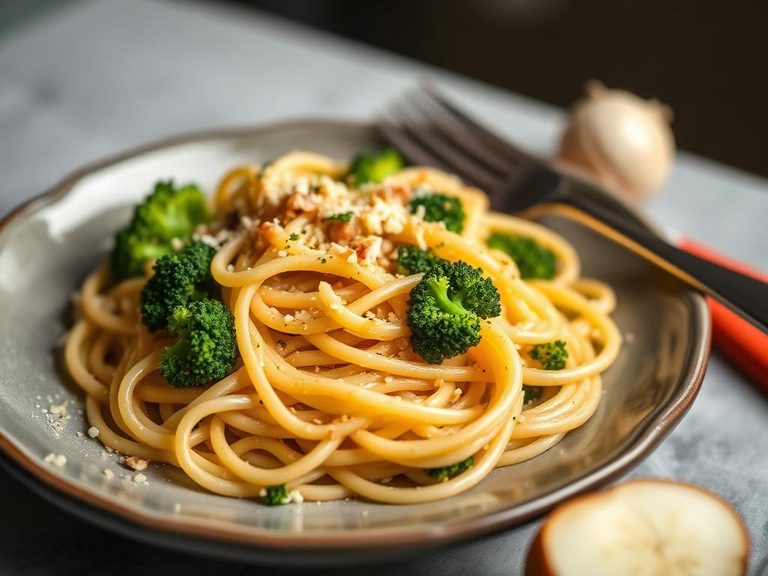
🌍 Where it's eaten
💡 Did you know?
The part we eat is actually the flower head of the plant; if left unharvested, the small green buds would bloom into tiny yellow flowers.
Full nutrition (scales with serving)
| Water | 90.0 g |
| Energy (Atwater General Factors) | 39.0 kcal |
| Energy (Atwater Specific Factors) | 32.0 kcal |
| Energy | 31.0 kcal |
| Energy | 132 kj |
| Nitrogen | 0.41 g |
| Protein | 2.6 g |
| Total lipid (fat) | 0.34 g |
| Total fat (NLEA) | 0.07 g |
| Ash | 0.83 g |
| Carbohydrate, by difference | 6.3 g |
| Carbohydrate, by summation | 3.8 g |
| Fiber, total dietary | 2.4 g |
| Fiber, soluble | 0.00 g |
| Fiber, insoluble | 2.4 g |
| Sugars, Total | 1.4 g |
| Sucrose | 0.01 g |
| Glucose | 0.58 g |
| Fructose | 0.82 g |
| Lactose | 0.00 g |
| Maltose | 0.00 g |
| Galactose | 0.00 g |
| Starch | 0.00 g |
| Calcium, Ca | 46.0 mg |
| Iron, Fe | 0.69 mg |
| Magnesium, Mg | 21.0 mg |
| Phosphorus, P | 67.0 mg |
| Potassium, K | 303 mg |
| Sodium, Na | 36.0 mg |
| Zinc, Zn | 0.42 mg |
| Copper, Cu | 0.06 mg |
| Manganese, Mn | 0.20 mg |
| Selenium, Se | 1.6 ug |
| Vitamin C, total ascorbic acid | 91.3 mg |
| Thiamin | 0.08 mg |
| Riboflavin | 0.11 mg |
| Niacin | 0.64 mg |
| Pantothenic acid | 0.61 mg |
| Vitamin B-6 | 0.19 mg |
| Folate, total | 65.0 ug |
| Vitamin A, RAE | 8.0 ug |
| Carotene, beta | 93.0 ug |
| Carotene, alpha | 0.00 ug |
| Cryptoxanthin, beta | 0.00 ug |
| Lycopene | 0.00 ug |
| Lutein + zeaxanthin | 745 ug |
| Phytoene | 0.00 ug |
| Phytofluene | 0.00 ug |
| Vitamin E (alpha-tocopherol) | 0.15 mg |
| Tocopherol, beta | 0.00 mg |
| Tocopherol, gamma | 0.04 mg |
| Tocopherol, delta | 0.00 mg |
| Tocotrienol, alpha | 0.01 mg |
| Tocotrienol, beta | 0.00 mg |
| Tocotrienol, gamma | 0.00 mg |
| Tocotrienol, delta | 0.00 mg |
| Vitamin K (phylloquinone) | 102 ug |
| Vitamin K (Dihydrophylloquinone) | 0.00 ug |
| Fatty acids, total saturated | 0.04 g |
| SFA 8:0 | 0.00 g |
| SFA 10:0 | 0.00 g |
| SFA 12:0 | 0.00 g |
| SFA 14:0 | 0.00 g |
| SFA 15:0 | 0.00 g |
| SFA 16:0 | 0.03 g |
| SFA 17:0 | 0.00 g |
| SFA 18:0 | 0.01 g |
| SFA 20:0 | 0.00 g |
| SFA 22:0 | 0.00 g |
| Fatty acids, total monounsaturated | 0.01 g |
| MUFA 14:1 c | 0.00 g |
| MUFA 15:1 | 0.00 g |
| MUFA 16:1 c | 0.00 g |
| MUFA 17:1 | 0.00 g |
| MUFA 17:1 c | 0.00 g |
| MUFA 18:1 | 0.01 g |
| MUFA 18:1 c | 0.01 g |
| MUFA 20:1 | 0.00 g |
| MUFA 20:1 c | 0.00 g |
| Fatty acids, total polyunsaturated | 0.02 g |
| PUFA 18:2 | 0.02 g |
| PUFA 18:2 c | 0.02 g |
| PUFA 18:3 | 0.02 g |
| PUFA 18:3 c | 0.00 g |
| PUFA 18:3 n-6 c,c,c | 0.00 g |
| PUFA 20:2 c | 0.00 g |
| PUFA 20:2 n-6 c,c | 0.00 g |
| PUFA 20:3 | 0.00 g |
| PUFA 20:3 c | 0.00 g |
| PUFA 20:4 | 0.00 g |
| PUFA 20:4c | 0.00 g |
| Tryptophan | 0.03 g |
| Threonine | 0.09 g |
| Isoleucine | 0.08 g |
| Leucine | 0.13 g |
| Lysine | 0.14 g |
| Methionine | 0.04 g |
| Cystine | 0.03 g |
| Phenylalanine | 0.12 g |
| Tyrosine | 0.05 g |
| Valine | 0.13 g |
| Arginine | 0.19 g |
| Histidine | 0.06 g |
| Alanine | 0.10 g |
| Aspartic acid | 0.33 g |
| Glutamic acid | 0.54 g |
| Glycine | 0.09 g |
| Proline | 0.11 g |
| Serine | 0.12 g |
FAQ
Is raw broccoli healthier than cooked?
Both have benefits. Raw broccoli retains more heat-sensitive vitamin C and the enzyme myrosinase, which helps form sulforaphane. Cooking makes some nutrients more bioavailable and can be easier to digest.
Why does raw broccoli sometimes taste bitter?
The bitterness comes from naturally occurring compounds called glucosinolates. This can vary by variety and freshness. Blanching or pairing with a salty or creamy dip can balance the flavor.
Can I eat the broccoli stem raw?
Yes, the stem is edible and nutritious. Peel off the tough outer layer, then slice or chop the tender inner core for a sweet, crunchy addition to salads or slaws.