

Beef, variety meats and by-products, tripe, cooked, simmered
Whole food · Beef Products

Photo: Wikipedia
Beef tripe is the edible stomach lining of cattle, most commonly the honeycomb-textured omasum or the smoother rumen. When simmered, it develops a uniquely tender yet pleasantly chewy texture with a mild, savory flavor that readily absorbs the spices of its cooking liquid. Nutritionally, it's a lean, low-calorie protein source, providing nearly 12 grams of protein per 100 grams with minimal fat and carbohydrates.
Calorie split: 51% protein · 9% carbs · 40% fat
↓ Full nutrition💚 Why it's loved
People love tripe for its incredible ability to soak up flavors, making it a perfect canvas for rich, spicy broths and stews. Its satisfying, slightly springy texture is a prized culinary experience in many global cuisines, often associated with comforting, traditional dishes.
⚠️ Watch-outs & how to enjoy it better
Some are put off by its distinctive, slightly rubbery texture and mild, offal-like taste. Those with sensitive digestion may find it challenging to digest, and it can be high in sodium depending on the preparation method. To counteract this, ensure it is thoroughly cleaned and simmered for a long time to improve digestibility, and pair it with fiber-rich vegetables or control the amount of added salt in the broth.
Key benefits
- High-quality, complete protein source
- Very low in calories and carbohydrates
- Contains B vitamins, especially B12
- Good source of selenium and zinc
- Naturally low in sugar and fiber
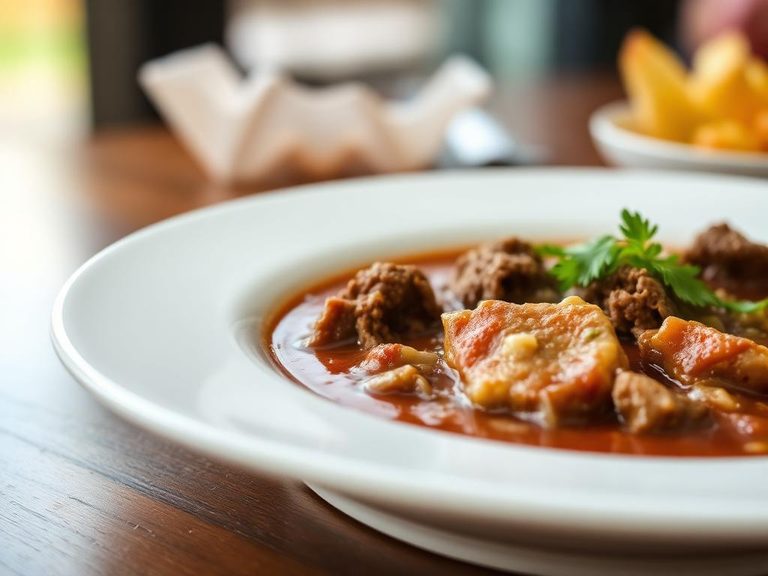
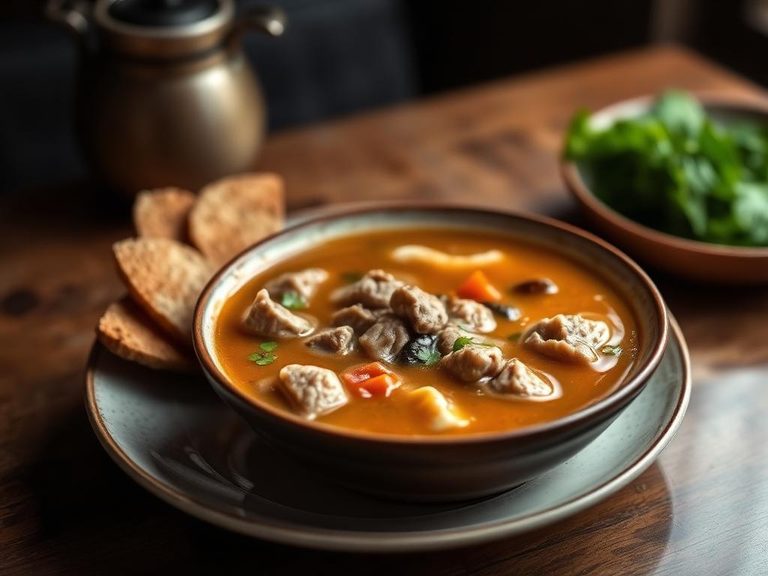
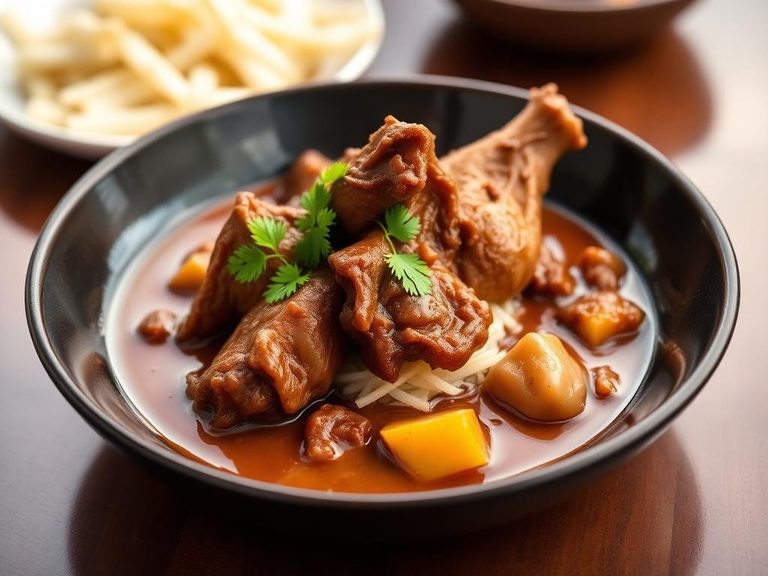
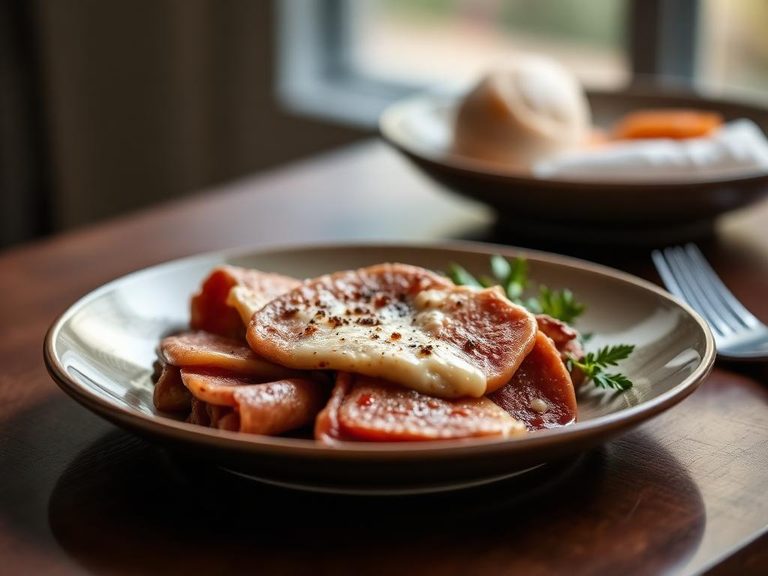
🍽️ Popular dishes
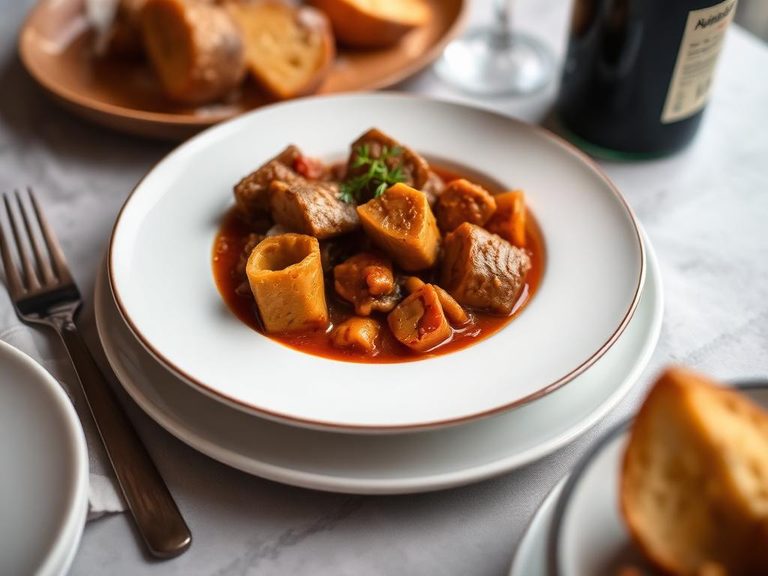
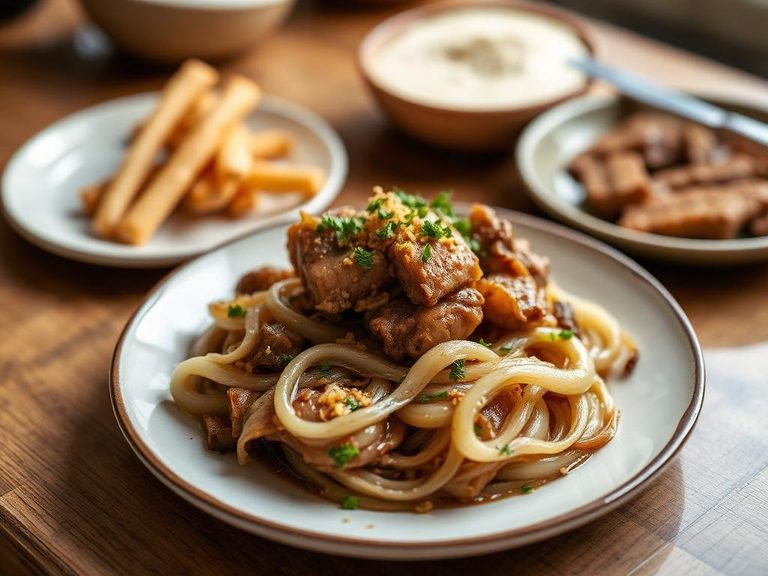
🌍 Where it's eaten
💡 Did you know?
The 'honeycomb' appearance of one common type of tripe (omasum) is not a natural structure but is created by the internal folds of the stomach, which increase surface area for digestion.
Full nutrition (USDA data · scales with serving)
| Water | 81.7 g |
| Energy | 94.0 kcal |
| Energy | 394 kj |
| Protein | 11.7 g |
| Total lipid (fat) | 4.0 g |
| Ash | 0.60 g |
| Carbohydrate, by difference | 2.0 g |
| Fiber, total dietary | 0.00 g |
| Total Sugars | 0.00 g |
| Calcium, Ca | 81.0 mg |
| Iron, Fe | 0.66 mg |
| Magnesium, Mg | 15.0 mg |
| Phosphorus, P | 66.0 mg |
| Potassium, K | 42.0 mg |
| Sodium, Na | 68.0 mg |
| Zinc, Zn | 1.7 mg |
| Copper, Cu | 0.00 mg |
| Manganese, Mn | 0.10 mg |
| Selenium, Se | 11.8 ug |
| Vitamin C, total ascorbic acid | 0.00 mg |
| Thiamin | 0.00 mg |
| Riboflavin | 0.03 mg |
| Niacin | 0.46 mg |
| Pantothenic acid | 0.10 mg |
| Vitamin B-6 | 0.00 mg |
| Folate, total | 3.0 ug |
| Folic acid | 0.00 ug |
| Folate, food | 3.0 ug |
| Folate, DFE | 3.0 ug |
| Vitamin B-12 | 0.72 ug |
| Vitamin B-12, added | 0.00 ug |
| Vitamin A, RAE | 0.00 ug |
| Retinol | 0.00 ug |
| Carotene, beta | 0.00 ug |
| Carotene, alpha | 0.00 ug |
| Cryptoxanthin, beta | 0.00 ug |
| Vitamin A, IU | 0.00 iu |
| Lycopene | 0.00 ug |
| Lutein + zeaxanthin | 0.00 ug |
| Vitamin E (alpha-tocopherol) | 0.14 mg |
| Vitamin E, added | 0.00 mg |
| Tocopherol, beta | 0.00 mg |
| Tocopherol, gamma | 0.02 mg |
| Tocopherol, delta | 0.00 mg |
| Tocotrienol, alpha | 0.02 mg |
| Tocotrienol, beta | 0.00 mg |
| Tocotrienol, gamma | 0.00 mg |
| Tocotrienol, delta | 0.00 mg |
| Vitamin K (phylloquinone) | 0.00 ug |
| Alcohol, ethyl | 0.00 g |
| Caffeine | 0.00 mg |
| Theobromine | 0.00 mg |
Fat & fatty acid profile (per 100g)
| Fatty acids, total saturated | 1.4 g |
| SFA 4:0 | 0.00 g |
| SFA 6:0 | 0.00 g |
| SFA 8:0 | 0.00 g |
| SFA 10:0 | 0.00 g |
| SFA 12:0 | 0.00 g |
| SFA 14:0 | 0.07 g |
| SFA 15:0 | 0.03 g |
| SFA 16:0 | 0.68 g |
| SFA 17:0 | 0.09 g |
| SFA 18:0 | 0.48 g |
| SFA 20:0 | 0.00 g |
| SFA 22:0 | 0.01 g |
| Fatty acids, total monounsaturated | 1.6 g |
| MUFA 14:1 | 0.01 g |
| MUFA 15:1 | 0.00 g |
| MUFA 16:1 | 0.09 g |
| MUFA 18:1 | 1.5 g |
| MUFA 20:1 | 0.02 g |
| MUFA 22:1 | 0.00 g |
| Fatty acids, total polyunsaturated | 0.21 g |
| PUFA 18:2 | 0.14 g |
| PUFA 18:3 | 0.01 g |
| PUFA 18:3 n-3 c,c,c (ALA) | 0.01 g |
| PUFA 18:3 n-6 c,c,c | 0.00 g |
| PUFA 18:4 | 0.00 g |
| PUFA 20:2 n-6 c,c | 0.01 g |
| PUFA 20:3 | 0.00 g |
| PUFA 20:4 | 0.06 g |
| PUFA 20:5 n-3 (EPA) | 0.00 g |
| PUFA 22:5 n-3 (DPA) | 0.00 g |
| PUFA 22:6 n-3 (DHA) | 0.00 g |
| Fatty acids, total trans | 0.20 g |
| Cholesterol | 157 mg |
Amino acid profile (per 100g)
Estimated from Beef, variety meats and by-products, mechanically separated beef, raw — USDA does not publish this profile for Beef.
| Tryptophan | 0.17 g |
| Threonine | 0.47 g |
| Isoleucine | 0.58 g |
| Leucine | 1.2 g |
| Lysine | 1.2 g |
| Methionine | 0.43 g |
| Cystine | 0.23 g |
| Phenylalanine | 0.64 g |
| Tyrosine | 0.38 g |
| Valine | 0.92 g |
| Arginine | 1.2 g |
| Histidine | 0.44 g |
| Alanine | 1.0 g |
| Aspartic acid | 1.3 g |
| Glutamic acid | 2.1 g |
| Glycine | 1.2 g |
| Proline | 0.92 g |
| Serine | 0.57 g |
FAQ
What part of the cow is tripe?
Tripe is the edible lining from the stomach of a cow. There are four stomach chambers, and the most commonly eaten types are from the rumen (blanket tripe) and the omasum (honeycomb tripe).
How should I prepare tripe to make it tender?
Tripe requires long, slow cooking to become tender. It must be thoroughly cleaned first, then typically simmered for several hours (2-4 hours) in a flavorful broth or stew until it reaches the desired tenderness.
Is tripe high in cholesterol?
While tripe is a meat product and contains some cholesterol, it is relatively low in fat compared to many other cuts of beef. Its cholesterol content is moderate, and it is a lean protein source.
Nutrient density (calculated · NRF9.3)
Nutrient Rich Foods index: beneficial nutrients (protein, fiber, vitamins, minerals) minus saturated fat, added sugar & sodium, per 100 kcal.
NRF9.3 index — Fulgoni, Keast & Drewnowski, 2009. Computed from USDA nutrients.
Weight-loss friendliness (composite index)
Energy density 0.94 kcal/g · 50% calories from protein · 0.0 g fiber · 0.0 g sugar per 100 g.
Composite of energy density (Rolls et al., 1999), protein & fiber satiety, minus sugar. A calculated heuristic — ranks satiety-per-calorie, not a clinical measure.
Dietary load (calculated from USDA values)
Potential renal acid load. Positive = acid-forming, negative = alkaline-forming.
Sodium-to-potassium ratio: 1.62 (lower is better — aim for ≤ 1)
Sodium:potassium per WHO potassium guidance. Computed from USDA nutrients.