

Beef, variety meats and by-products, brain, raw
Whole food · Beef Products

Photo: Wikipedia
Beef brain is a soft, delicate organ meat with a creamy, custard-like texture when cooked properly, often described as having a mild, slightly sweet, and mineral-rich flavor. It's a nutrient-dense food, exceptionally high in omega-3 fatty acids (DHA) and vitamin B12, while being low in carbohydrates and a good source of protein.
Calorie split: 31% protein · 3% carbs · 66% fat
↓ Full nutrition💚 Why it's loved
People love it for its uniquely smooth, rich mouthfeel and its ability to absorb flavors from spices and sauces. It's a cherished ingredient in many culinary traditions, prized for both its taste and its historical use as a nourishing food.
⚠️ Watch-outs & how to enjoy it better
The primary concern is its high cholesterol content, so those managing cholesterol levels should consume it in moderation. Its soft texture can be off-putting to some, and it must be sourced from young, healthy animals and prepared meticulously to ensure safety. Tip: Pair with fiber-rich vegetables and use small portions as a flavorful accent rather than the main dish.
Key benefits
- Excellent source of vitamin B12 for nerve function and red blood cell formation.
- Rich in DHA, an omega-3 fatty acid crucial for brain health.
- Provides high-quality protein with all essential amino acids.
- Contains important minerals like selenium and phosphorus.
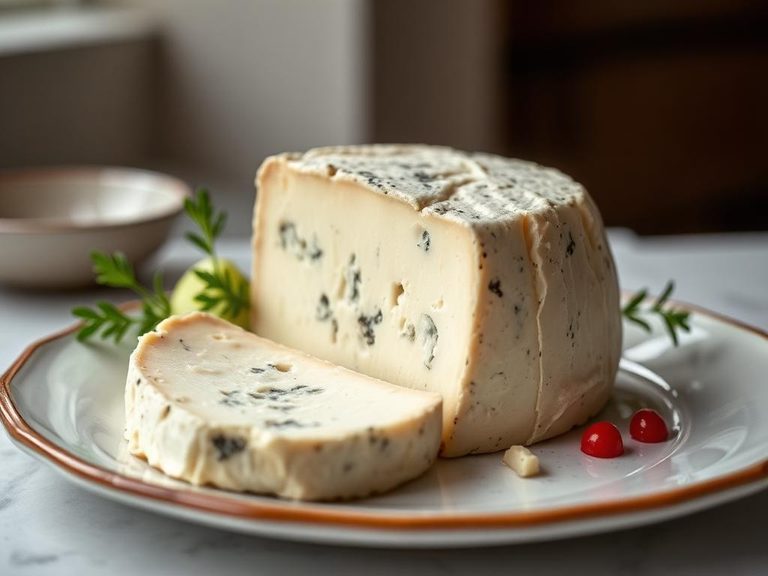
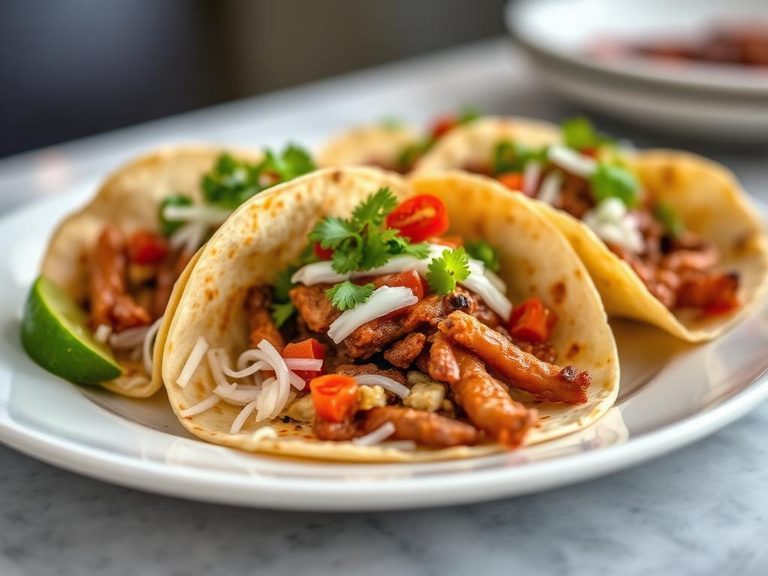
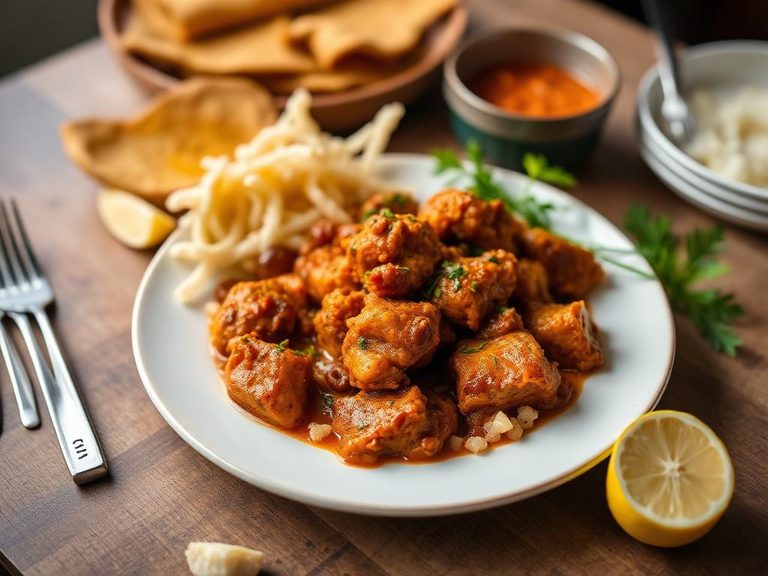
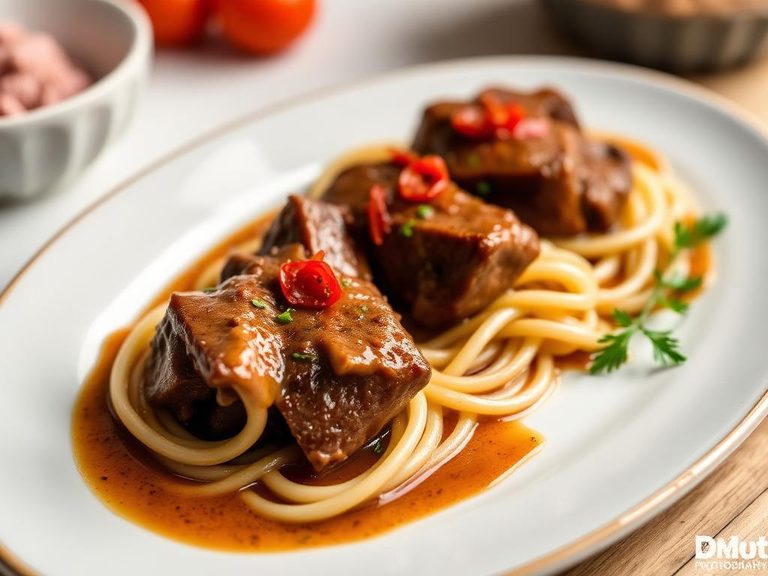
🍽️ Popular dishes
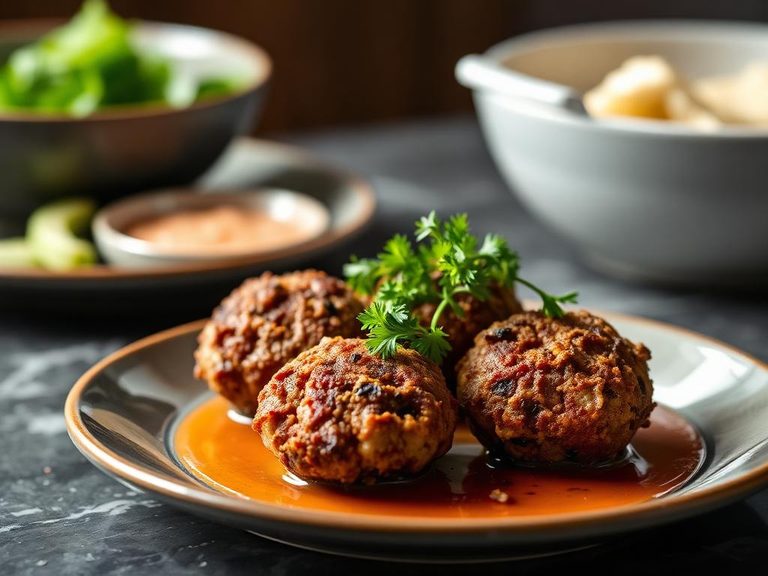
🌍 Where it's eaten
💡 Did you know?
Beef brain is one of the few foods naturally rich in phosphatidylserine, a phospholipid that plays a key role in cell membrane signaling, particularly in the brain.
Full nutrition (USDA data · scales with serving)
| Water | 76.3 g |
| Energy | 143 kcal |
| Energy | 600 kj |
| Protein | 10.9 g |
| Total lipid (fat) | 10.3 g |
| Ash | 1.5 g |
| Carbohydrate, by difference | 1.1 g |
| Fiber, total dietary | 0.00 g |
| Total Sugars | 0.00 g |
| Calcium, Ca | 43.0 mg |
| Iron, Fe | 2.5 mg |
| Magnesium, Mg | 13.0 mg |
| Phosphorus, P | 362 mg |
| Potassium, K | 274 mg |
| Sodium, Na | 126 mg |
| Zinc, Zn | 1.0 mg |
| Copper, Cu | 0.29 mg |
| Manganese, Mn | 0.03 mg |
| Selenium, Se | 21.3 ug |
| Vitamin C, total ascorbic acid | 10.7 mg |
| Thiamin | 0.09 mg |
| Riboflavin | 0.20 mg |
| Niacin | 3.5 mg |
| Pantothenic acid | 2.0 mg |
| Vitamin B-6 | 0.23 mg |
| Folate, total | 3.0 ug |
| Folic acid | 0.00 ug |
| Folate, food | 3.0 ug |
| Folate, DFE | 3.0 ug |
| Vitamin B-12 | 9.5 ug |
| Vitamin A, RAE | 7.0 ug |
| Retinol | 0.00 ug |
| Carotene, beta | 88.0 ug |
| Carotene, alpha | 0.00 ug |
| Cryptoxanthin, beta | 0.00 ug |
| Vitamin A, IU | 147 iu |
| Lycopene | 0.00 ug |
| Lutein + zeaxanthin | 0.00 ug |
| Vitamin E (alpha-tocopherol) | 0.99 mg |
| Tocopherol, beta | 0.00 mg |
| Tocopherol, gamma | 0.05 mg |
| Tocopherol, delta | 0.00 mg |
| Tocotrienol, alpha | 0.00 mg |
| Tocotrienol, beta | 0.00 mg |
| Tocotrienol, gamma | 0.00 mg |
| Tocotrienol, delta | 0.00 mg |
| Vitamin K (phylloquinone) | 0.00 ug |
| Alcohol, ethyl | 0.00 g |
| Caffeine | 0.00 mg |
| Theobromine | 0.00 mg |
Fat & fatty acid profile (per 100g)
| Fatty acids, total saturated | 2.3 g |
| SFA 4:0 | 0.00 g |
| SFA 6:0 | 0.00 g |
| SFA 8:0 | 0.00 g |
| SFA 10:0 | 0.00 g |
| SFA 12:0 | 0.00 g |
| SFA 14:0 | 0.03 g |
| SFA 15:0 | 0.00 g |
| SFA 16:0 | 0.92 g |
| SFA 17:0 | 0.03 g |
| SFA 18:0 | 1.3 g |
| SFA 20:0 | 0.02 g |
| SFA 22:0 | 0.03 g |
| Fatty acids, total monounsaturated | 1.9 g |
| MUFA 14:1 | 0.00 g |
| MUFA 15:1 | 0.00 g |
| MUFA 16:1 | 0.02 g |
| MUFA 18:1 | 1.6 g |
| MUFA 20:1 | 0.22 g |
| MUFA 22:1 | 0.00 g |
| Fatty acids, total polyunsaturated | 1.6 g |
| PUFA 18:2 | 0.04 g |
| PUFA 18:3 | 0.00 g |
| PUFA 18:3 n-3 c,c,c (ALA) | 0.00 g |
| PUFA 18:3 n-6 c,c,c | 0.00 g |
| PUFA 18:4 | 0.00 g |
| PUFA 20:2 n-6 c,c | 0.00 g |
| PUFA 20:3 | 0.00 g |
| PUFA 20:4 | 0.32 g |
| PUFA 20:5 n-3 (EPA) | 0.00 g |
| PUFA 22:5 n-3 (DPA) | 0.37 g |
| PUFA 22:6 n-3 (DHA) | 0.85 g |
| Fatty acids, total trans | 0.61 g |
| Cholesterol | 3010 mg |
Amino acid profile (per 100g)
Estimated from Beef, variety meats and by-products, mechanically separated beef, raw — USDA does not publish this profile for Beef.
| Tryptophan | 0.17 g |
| Threonine | 0.47 g |
| Isoleucine | 0.58 g |
| Leucine | 1.2 g |
| Lysine | 1.2 g |
| Methionine | 0.43 g |
| Cystine | 0.23 g |
| Phenylalanine | 0.64 g |
| Tyrosine | 0.38 g |
| Valine | 0.92 g |
| Arginine | 1.2 g |
| Histidine | 0.44 g |
| Alanine | 1.0 g |
| Aspartic acid | 1.3 g |
| Glutamic acid | 2.1 g |
| Glycine | 1.2 g |
| Proline | 0.92 g |
| Serine | 0.57 g |
FAQ
How do you prepare beef brain to remove the blood vessels?
The traditional method is to soak the brain in cold water or a mild acidulated water (like water with a splash of vinegar or lemon juice) for 1-2 hours, which helps the thin membrane (pia mater) and blood vessels to loosen and peel away more easily.
Is eating brain safe?
When sourced from young, healthy animals from regulated sources and cooked thoroughly, it is considered safe. The primary food safety concern is avoiding prion diseases, which is why sourcing is critical. It should always be cooked to an internal temperature of at least 160°F (71°C).
What does beef brain taste like?
It has a very mild, slightly sweet and mineral flavor, often compared to a very rich, creamy tofu or a delicate sweetbread. The taste is subtle, making it a great canvas for stronger seasonings and sauces.
Nutrient density (calculated · NRF9.3)
Nutrient Rich Foods index: beneficial nutrients (protein, fiber, vitamins, minerals) minus saturated fat, added sugar & sodium, per 100 kcal.
NRF9.3 index — Fulgoni, Keast & Drewnowski, 2009. Computed from USDA nutrients.
Weight-loss friendliness (composite index)
Energy density 1.43 kcal/g · 30% calories from protein · 0.0 g fiber · 0.0 g sugar per 100 g.
Composite of energy density (Rolls et al., 1999), protein & fiber satiety, minus sugar. A calculated heuristic — ranks satiety-per-calorie, not a clinical measure.
Dietary load (calculated from USDA values)
Potential renal acid load. Positive = acid-forming, negative = alkaline-forming.
Sodium-to-potassium ratio: 0.46 (lower is better — aim for ≤ 1)
Sodium:potassium per WHO potassium guidance. Computed from USDA nutrients.