

Beef, chuck, short ribs, boneless, separable lean only, trimmed to 0" fat, select, raw
Whole food · Beef Products
Boneless beef chuck short ribs are a rich, marbled cut prized for their deep beefy flavor and tender, succulent texture when slow-cooked. With a lean-to-fat ratio that yields 161 kcal and 20.14g of protein per 100g, they offer a hearty, satisfying meal. Their natural fat content renders during cooking, creating a luscious, self-basting effect that makes them a favorite for braising and grilling.
Calorie split: 50% protein · 0% carbs · 50% fat
↓ Full nutrition💚 Why it's loved
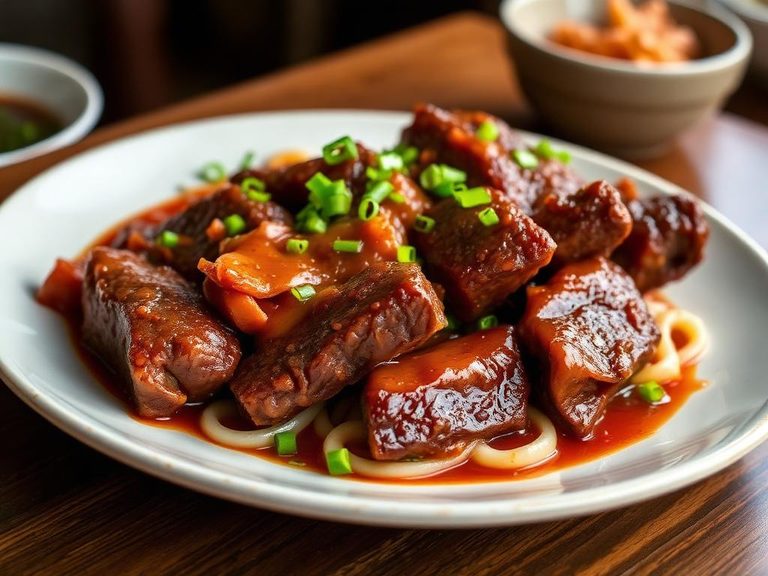
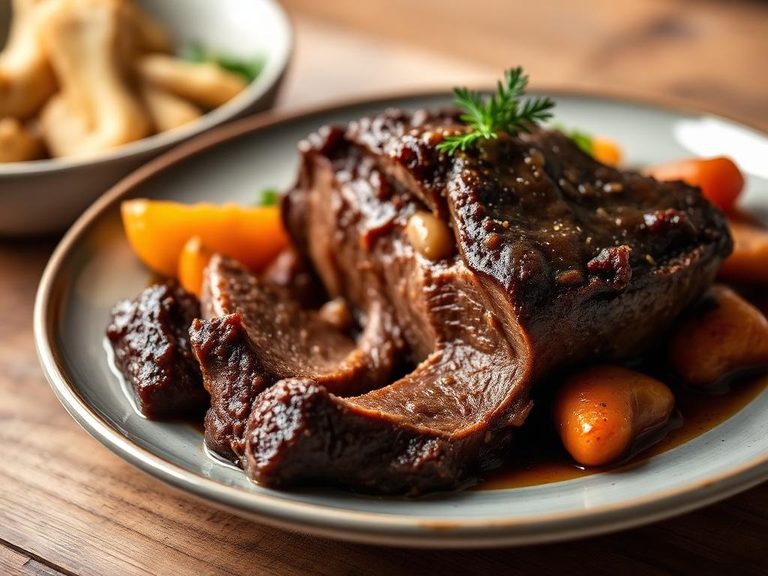
People adore these ribs for their robust, beefy flavor that intensifies with slow cooking, becoming melt-in-your-mouth tender. Their versatility allows them to shine in everything from Korean BBQ to hearty stews, making them a beloved comfort food across many cultures.
⚠️ Watch-outs & how to enjoy it better
The high fat content, while flavorful, can be a concern for those monitoring saturated fat intake. To counteract this, trim visible fat before cooking or choose leaner preparations like grilling. Pairing with fiber-rich vegetables like roasted broccoli or a side salad can help balance the meal. For those watching cholesterol, limiting portion size to a 3-4 ounce serving is advisable.
Key benefits
- Excellent source of high-quality protein for muscle maintenance.
- Rich in iron and B vitamins, supporting energy metabolism.
- Provides conjugated linoleic acid (CLA), a beneficial fatty acid.
- High in zinc, which supports immune function.
- Natural source of creatine, beneficial for physical performance.
🍽️ Popular dishes
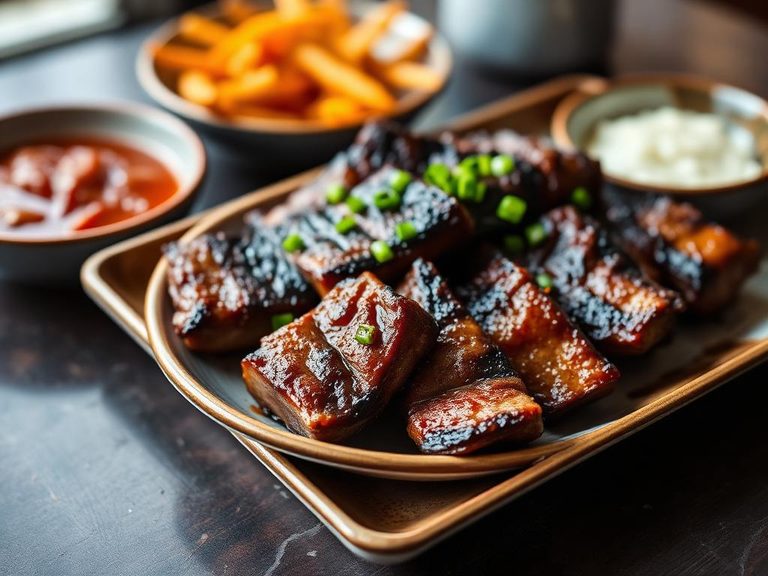
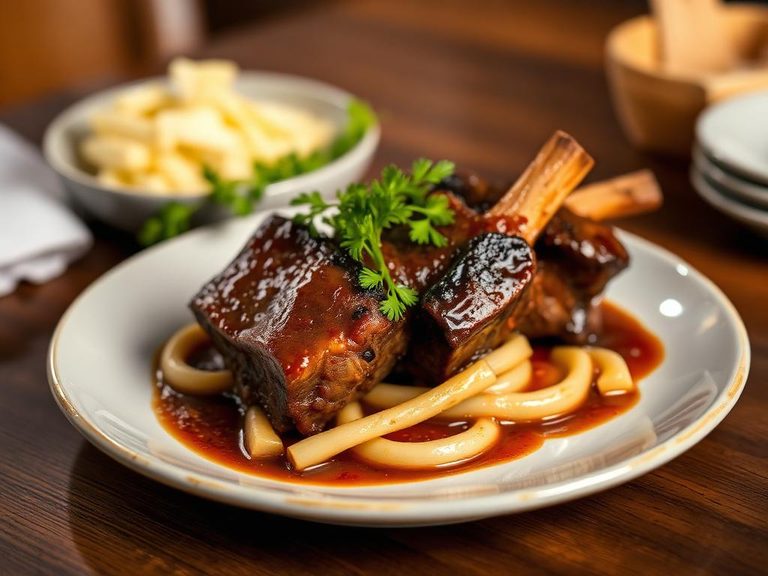
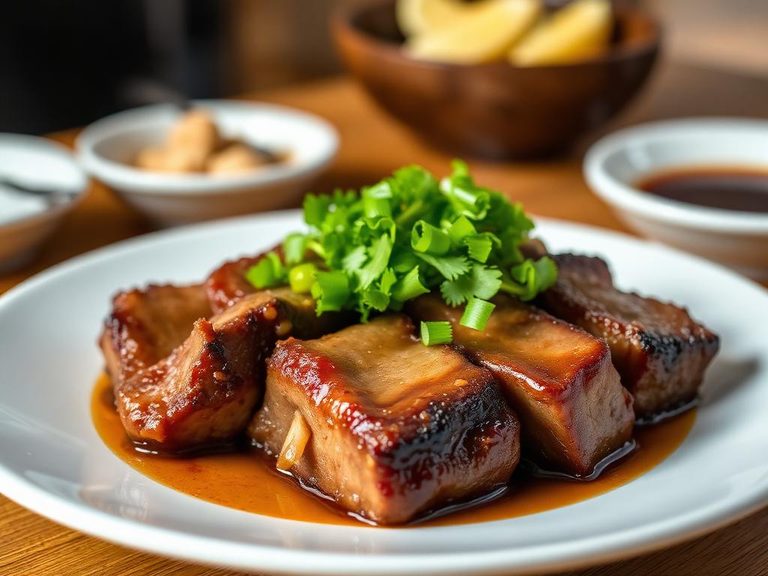
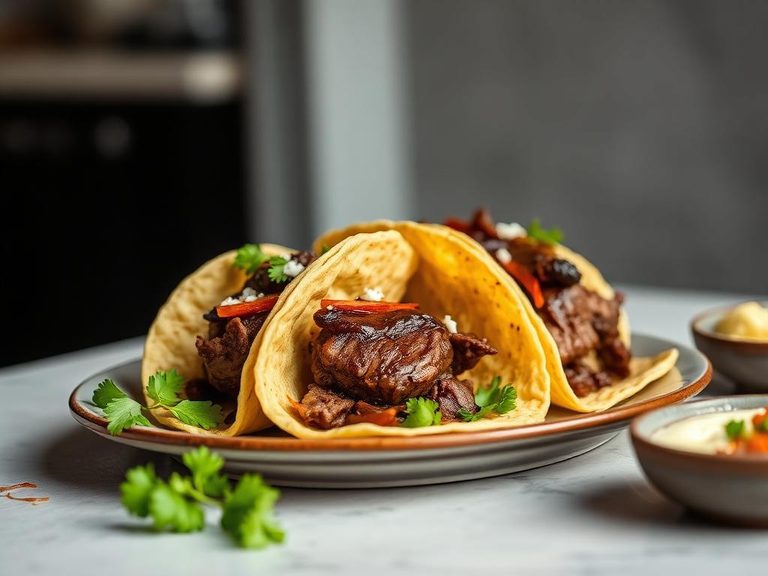
🌍 Where it's eaten
💡 Did you know?
The term 'short ribs' refers to the cut's position on the cow—specifically the rib section between the 6th and 12th ribs—where the meat is attached to the rib bones, but boneless versions are simply the meat from this same area with the bones removed.
Full nutrition (USDA data · scales with serving)
| Water | 70.2 g |
| Energy | 161 kcal |
| Energy | 676 kj |
| Protein | 20.1 g |
| Total lipid (fat) | 9.0 g |
| Ash | 0.93 g |
| Carbohydrate, by difference | 0.00 g |
| Fiber, total dietary | 0.00 g |
| Total Sugars | 0.00 g |
| Calcium, Ca | 12.0 mg |
| Iron, Fe | 2.3 mg |
| Magnesium, Mg | 20.0 mg |
| Phosphorus, P | 181 mg |
| Potassium, K | 303 mg |
| Sodium, Na | 93.0 mg |
| Zinc, Zn | 8.1 mg |
| Copper, Cu | 0.08 mg |
| Manganese, Mn | 0.01 mg |
| Selenium, Se | 21.4 ug |
| Vitamin C, total ascorbic acid | 0.00 mg |
| Thiamin | 0.08 mg |
| Riboflavin | 0.20 mg |
| Niacin | 3.6 mg |
| Pantothenic acid | 0.72 mg |
| Vitamin B-6 | 0.32 mg |
| Folate, total | 3.0 ug |
| Folic acid | 0.00 ug |
| Folate, food | 3.0 ug |
| Folate, DFE | 3.0 ug |
| Choline, total | 71.1 mg |
| Betaine | 22.5 mg |
| Vitamin B-12 | 3.6 ug |
| Vitamin B-12, added | 0.00 ug |
| Vitamin A, RAE | 2.0 ug |
| Retinol | 2.0 ug |
| Carotene, beta | 0.00 ug |
| Carotene, alpha | 0.00 ug |
| Cryptoxanthin, beta | 0.00 ug |
| Vitamin A, IU | 8.0 iu |
| Lycopene | 0.00 ug |
| Lutein + zeaxanthin | 0.00 ug |
| Vitamin E (alpha-tocopherol) | 0.16 mg |
| Vitamin E, added | 0.00 mg |
| Vitamin D (D2 + D3), International Units | 4.0 iu |
| Vitamin D (D2 + D3) | 0.10 ug |
| Vitamin D3 (cholecalciferol) | 0.10 ug |
| Vitamin K (phylloquinone) | 1.5 ug |
| Alcohol, ethyl | 0.00 g |
| Caffeine | 0.00 mg |
| Theobromine | 0.00 mg |
Fat & fatty acid profile (per 100g)
| Fatty acids, total saturated | 3.9 g |
| SFA 4:0 | 0.00 g |
| SFA 6:0 | 0.00 g |
| SFA 8:0 | 0.00 g |
| SFA 10:0 | 0.00 g |
| SFA 12:0 | 0.00 g |
| SFA 14:0 | 0.25 g |
| SFA 16:0 | 2.1 g |
| SFA 17:0 | 0.15 g |
| SFA 18:0 | 1.4 g |
| SFA 20:0 | 0.00 g |
| SFA 24:0 | 0.01 g |
| Fatty acids, total monounsaturated | 4.6 g |
| MUFA 14:1 | 0.05 g |
| MUFA 16:1 | 0.27 g |
| MUFA 17:1 | 0.10 g |
| MUFA 18:1 | 4.2 g |
| MUFA 18:1 c | 3.5 g |
| MUFA 18:1-11 t (18:1t n-7) | 0.56 g |
| MUFA 20:1 | 0.01 g |
| MUFA 22:1 | 0.00 g |
| Fatty acids, total polyunsaturated | 0.41 g |
| PUFA 18:2 | 0.36 g |
| PUFA 18:2 n-6 c,c | 0.33 g |
| PUFA 18:2 CLAs | 0.03 g |
| PUFA 18:3 | 0.01 g |
| PUFA 18:3 n-3 c,c,c (ALA) | 0.01 g |
| PUFA 18:4 | 0.00 g |
| PUFA 20:2 n-6 c,c | 0.00 g |
| PUFA 20:4 | 0.04 g |
| PUFA 20:5 n-3 (EPA) | 0.00 g |
| PUFA 22:5 n-3 (DPA) | 0.00 g |
| PUFA 22:6 n-3 (DHA) | 0.00 g |
| Fatty acids, total trans | 0.72 g |
| Fatty acids, total trans-monoenoic | 0.72 g |
| TFA 18:1 t | 0.72 g |
| Cholesterol | 80.0 mg |
Amino acid profile (per 100g)
| Tryptophan | 0.23 g |
| Threonine | 0.91 g |
| Isoleucine | 0.88 g |
| Leucine | 1.7 g |
| Lysine | 1.8 g |
| Methionine | 0.59 g |
| Cystine | 0.21 g |
| Phenylalanine | 0.79 g |
| Tyrosine | 0.71 g |
| Valine | 0.93 g |
| Arginine | 1.4 g |
| Histidine | 0.66 g |
| Alanine | 1.2 g |
| Aspartic acid | 1.9 g |
| Glutamic acid | 3.3 g |
| Glycine | 0.90 g |
| Proline | 0.83 g |
| Serine | 0.79 g |
| Hydroxyproline | 0.10 g |
FAQ
What's the best way to cook boneless short ribs for tenderness?
Slow cooking methods like braising, roasting, or using a slow cooker are ideal. Cooking at low temperatures (around 300°F/150°C) for 2-3 hours breaks down connective tissue, resulting in fork-tender meat.
Can I grill boneless short ribs?
Yes, but they are best when marinated and cooked over medium-high heat. Korean-style galbi is a classic grilled preparation. Ensure they are not overcooked, as they can become tough if grilled too quickly at high heat.
How does the nutrition compare to other beef cuts?
Compared to leaner cuts like sirloin, short ribs have higher fat and calorie content but also offer more flavor and tenderness when cooked properly. They are comparable to other marbled cuts like ribeye in terms of fat content.
Nutrient density (calculated · NRF9.3)
Nutrient Rich Foods index: beneficial nutrients (protein, fiber, vitamins, minerals) minus saturated fat, added sugar & sodium, per 100 kcal.
NRF9.3 index — Fulgoni, Keast & Drewnowski, 2009. Computed from USDA nutrients.
Weight-loss friendliness (composite index)
Energy density 1.61 kcal/g · 50% calories from protein · 0.0 g fiber · 0.0 g sugar per 100 g.
Composite of energy density (Rolls et al., 1999), protein & fiber satiety, minus sugar. A calculated heuristic — ranks satiety-per-calorie, not a clinical measure.
Dietary load (calculated from USDA values)
Potential renal acid load. Positive = acid-forming, negative = alkaline-forming.
Sodium-to-potassium ratio: 0.31 (lower is better — aim for ≤ 1)
Sodium:potassium per WHO potassium guidance. Computed from USDA nutrients.