

Beef, chuck, short ribs, boneless, separable lean only, trimmed to 0" fat, all grades, cooked, braised
Whole food · Beef Products
This is a premium cut of beef from the shoulder, slow-braised until the lean meat becomes incredibly tender and rich with a deep, savory beef flavor. With virtually no fat, it offers a clean, pure protein source that absorbs braising liquids beautifully, resulting in a melt-in-your-mouth texture without greasiness.
Calorie split: 48% protein · 0% carbs · 52% fat
↓ Full nutrition💚 Why it's loved
People adore it for its profound beefy flavor and the luxurious, fork-tender texture achieved through slow cooking, which makes it feel indulgent despite being lean. It's a cultural staple in comfort food across many cuisines, symbolizing hearty, home-cooked meals.
⚠️ Watch-outs & how to enjoy it better
Being a lean cut, it can become tough and dry if overcooked or prepared with high-heat methods like grilling. To counteract this, always use moist-heat cooking methods (braising, stewing) and ensure sufficient cooking liquid and time. Its high protein content may also be a consideration for individuals with specific kidney conditions, who should consult a healthcare provider.
Key benefits
- Excellent source of complete, high-quality protein
- Naturally zero carbohydrates and sugar
- Rich in iron and B vitamins, especially B12
- Provides essential minerals like zinc and selenium
- Lean cut suitable for high-protein dietary patterns
🍽️ Popular dishes
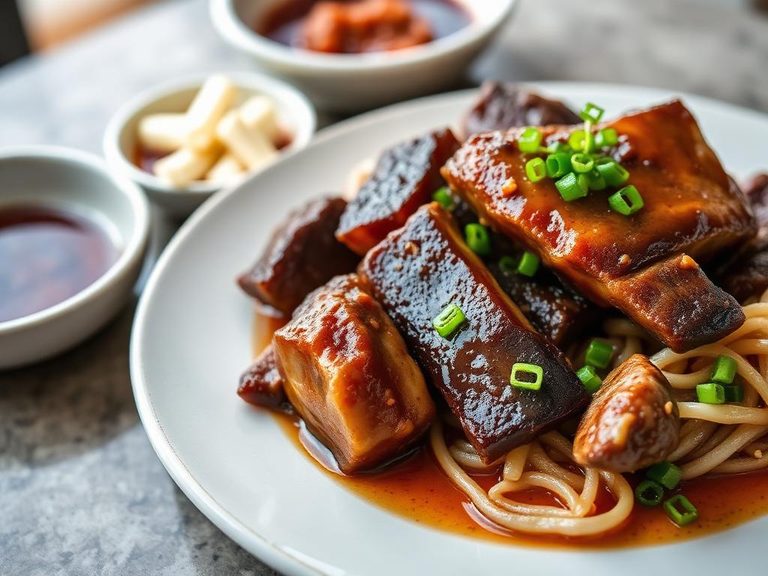
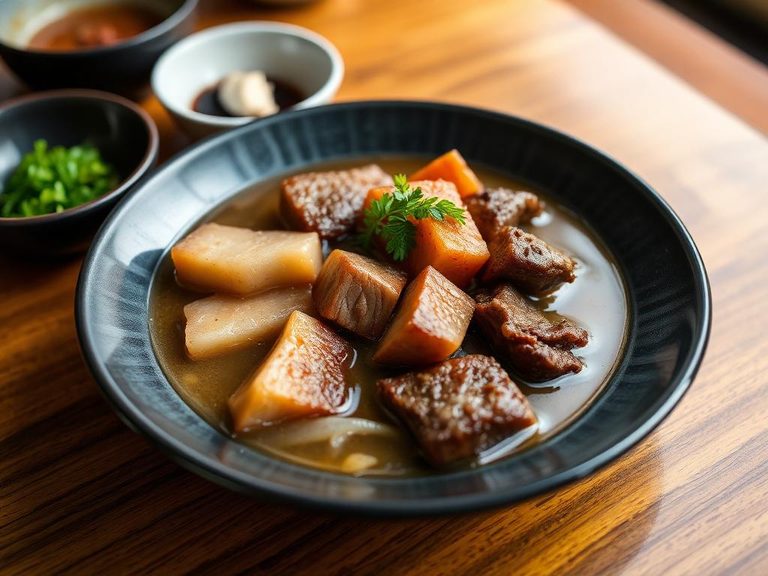
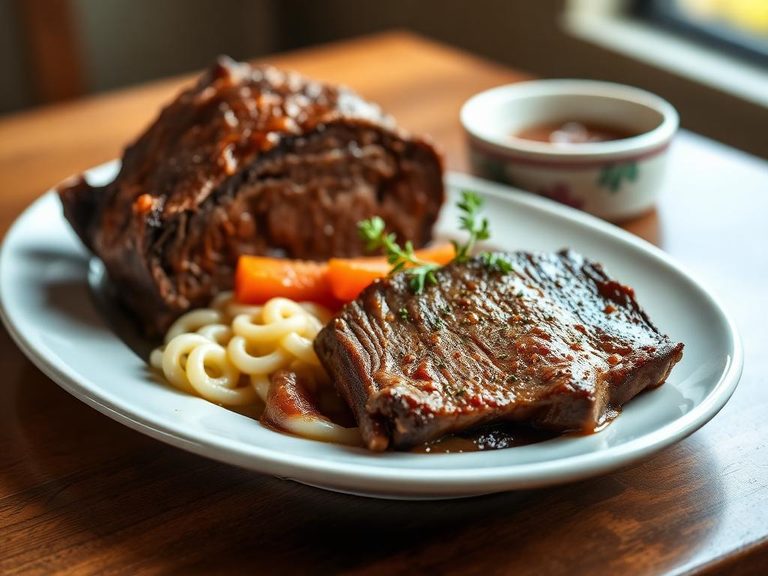
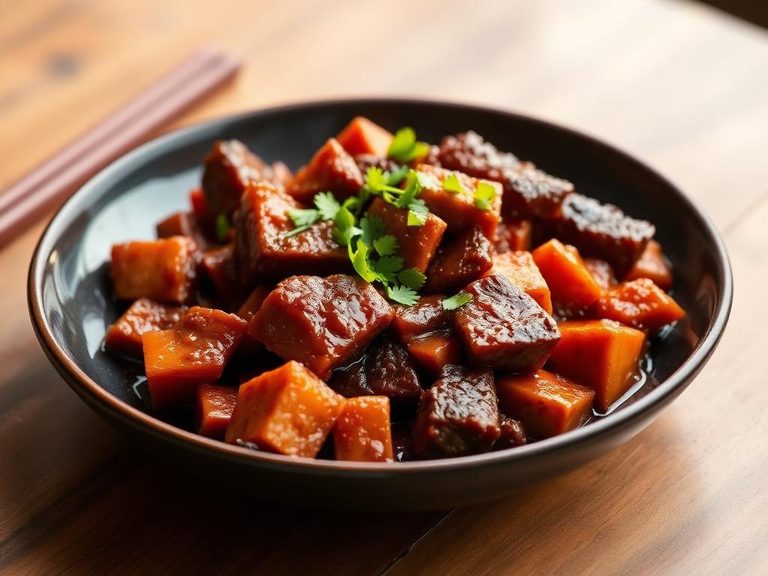
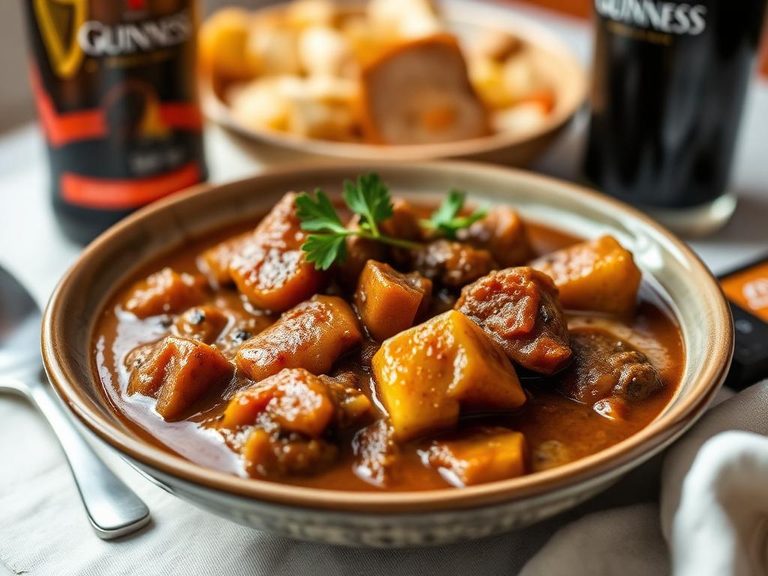
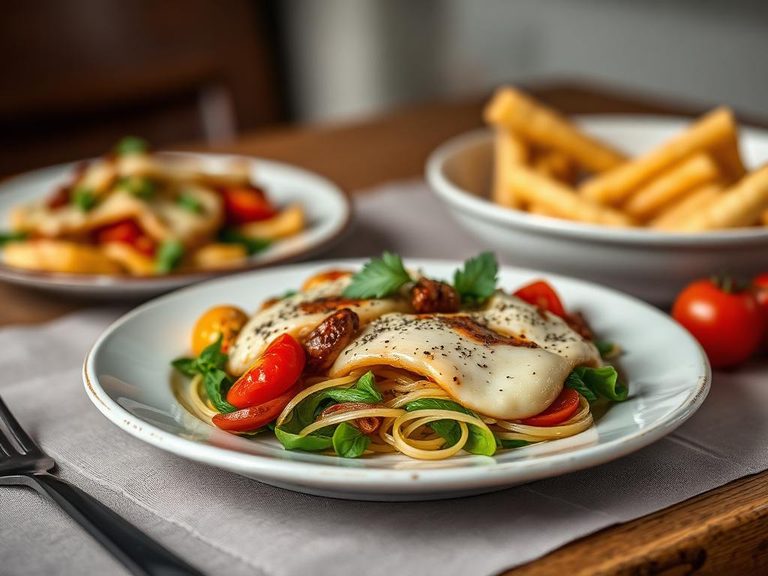
🌍 Where it's eaten
💡 Did you know?
The term 'chuck' comes from the shoulder area, and 'short' refers to the short length of the rib bones in the bone-in version, not the size of the animal.
Full nutrition (USDA data · scales with serving)
| Water | 57.0 g |
| Energy | 240 kcal |
| Energy | 1002 kj |
| Protein | 28.8 g |
| Total lipid (fat) | 13.8 g |
| Ash | 0.91 g |
| Carbohydrate, by difference | 0.00 g |
| Fiber, total dietary | 0.00 g |
| Total Sugars | 0.00 g |
| Calcium, Ca | 14.0 mg |
| Iron, Fe | 3.2 mg |
| Magnesium, Mg | 23.0 mg |
| Phosphorus, P | 201 mg |
| Potassium, K | 276 mg |
| Sodium, Na | 75.0 mg |
| Zinc, Zn | 12.0 mg |
| Copper, Cu | 0.11 mg |
| Manganese, Mn | 0.02 mg |
| Selenium, Se | 33.9 ug |
| Vitamin C, total ascorbic acid | 0.00 mg |
| Thiamin | 0.10 mg |
| Riboflavin | 0.26 mg |
| Niacin | 3.5 mg |
| Pantothenic acid | 0.83 mg |
| Vitamin B-6 | 0.31 mg |
| Folate, total | 7.0 ug |
| Folic acid | 0.00 ug |
| Folate, food | 7.0 ug |
| Folate, DFE | 7.0 ug |
| Choline, total | 101 mg |
| Betaine | 15.2 mg |
| Vitamin B-12 | 3.9 ug |
| Vitamin B-12, added | 0.00 ug |
| Vitamin A, RAE | 2.0 ug |
| Retinol | 2.0 ug |
| Carotene, beta | 0.00 ug |
| Carotene, alpha | 0.00 ug |
| Cryptoxanthin, beta | 0.00 ug |
| Vitamin A, IU | 6.0 iu |
| Lycopene | 0.00 ug |
| Lutein + zeaxanthin | 0.00 ug |
| Vitamin E (alpha-tocopherol) | 0.09 mg |
| Vitamin E, added | 0.00 mg |
| Vitamin D (D2 + D3), International Units | 6.0 iu |
| Vitamin D (D2 + D3) | 0.10 ug |
| Vitamin D3 (cholecalciferol) | 0.10 ug |
| Vitamin K (phylloquinone) | 1.6 ug |
| Alcohol, ethyl | 0.00 g |
| Caffeine | 0.00 mg |
| Theobromine | 0.00 mg |
Fat & fatty acid profile (per 100g)
| Fatty acids, total saturated | 3.9 g |
| SFA 4:0 | 0.00 g |
| SFA 6:0 | 0.00 g |
| SFA 8:0 | 0.00 g |
| SFA 10:0 | 0.00 g |
| SFA 12:0 | 0.00 g |
| SFA 14:0 | 0.24 g |
| SFA 16:0 | 2.1 g |
| SFA 17:0 | 0.13 g |
| SFA 18:0 | 1.4 g |
| SFA 20:0 | 0.01 g |
| SFA 24:0 | 0.01 g |
| Fatty acids, total monounsaturated | 8.9 g |
| MUFA 14:1 | 0.10 g |
| MUFA 16:1 | 0.56 g |
| MUFA 17:1 | 0.17 g |
| MUFA 18:1 | 8.0 g |
| MUFA 18:1 c | 7.1 g |
| MUFA 18:1-11 t (18:1t n-7) | 0.53 g |
| MUFA 20:1 | 0.04 g |
| MUFA 22:1 | 0.00 g |
| Fatty acids, total polyunsaturated | 0.78 g |
| PUFA 18:2 | 0.69 g |
| PUFA 18:2 n-6 c,c | 0.64 g |
| PUFA 18:2 CLAs | 0.05 g |
| PUFA 18:3 | 0.03 g |
| PUFA 18:3 n-3 c,c,c (ALA) | 0.03 g |
| PUFA 18:4 | 0.00 g |
| PUFA 20:2 n-6 c,c | 0.00 g |
| PUFA 20:4 | 0.06 g |
| PUFA 20:5 n-3 (EPA) | 0.00 g |
| PUFA 22:5 n-3 (DPA) | 0.00 g |
| PUFA 22:6 n-3 (DHA) | 0.00 g |
| Fatty acids, total trans | 0.89 g |
| Fatty acids, total trans-monoenoic | 0.89 g |
| TFA 18:1 t | 0.89 g |
| Cholesterol | 105 mg |
Amino acid profile (per 100g)
| Tryptophan | 0.33 g |
| Threonine | 1.3 g |
| Isoleucine | 1.3 g |
| Leucine | 2.4 g |
| Lysine | 2.6 g |
| Methionine | 0.84 g |
| Cystine | 0.31 g |
| Phenylalanine | 1.1 g |
| Tyrosine | 1.0 g |
| Valine | 1.3 g |
| Arginine | 1.9 g |
| Histidine | 0.95 g |
| Alanine | 1.7 g |
| Aspartic acid | 2.7 g |
| Glutamic acid | 4.7 g |
| Glycine | 1.3 g |
| Proline | 1.2 g |
| Serine | 1.1 g |
| Hydroxyproline | 0.15 g |
FAQ
What's the difference between boneless and bone-in short ribs?
Bone-in short ribs have a piece of rib bone attached, which adds flavor and gelatin to braising liquids during cooking. Boneless short ribs are the same meat cut with the bone removed, offering more pure meat per pound and easier slicing after cooking.
Why is this cut labeled 'separable lean only, trimmed to 0' fat?
This means all external fat and connective tissue have been meticulously removed, leaving only the lean muscle. This results in a nutritionally leaner product (13.8g fat per 100g vs. 20g+ for untrimmed) but requires careful cooking to prevent dryness.
Is braising the only way to cook it?
For tenderness, yes, braising or stewing is essential. The long, slow cook in liquid breaks down the connective tissue (collagen) into gelatin, which makes the lean meat tender and succulent. Quick-cooking methods would make it very tough.
Nutrient density (calculated · NRF9.3)
Nutrient Rich Foods index: beneficial nutrients (protein, fiber, vitamins, minerals) minus saturated fat, added sugar & sodium, per 100 kcal.
NRF9.3 index — Fulgoni, Keast & Drewnowski, 2009. Computed from USDA nutrients.
Weight-loss friendliness (composite index)
Energy density 2.40 kcal/g · 48% calories from protein · 0.0 g fiber · 0.0 g sugar per 100 g.
Composite of energy density (Rolls et al., 1999), protein & fiber satiety, minus sugar. A calculated heuristic — ranks satiety-per-calorie, not a clinical measure.
Dietary load (calculated from USDA values)
Potential renal acid load. Positive = acid-forming, negative = alkaline-forming.
Sodium-to-potassium ratio: 0.27 (lower is better — aim for ≤ 1)
Sodium:potassium per WHO potassium guidance. Computed from USDA nutrients.