Pork, fresh, shoulder, arm picnic, separable lean only, cooked, braised
Whole food · Pork Products

Photo: Wikipedia
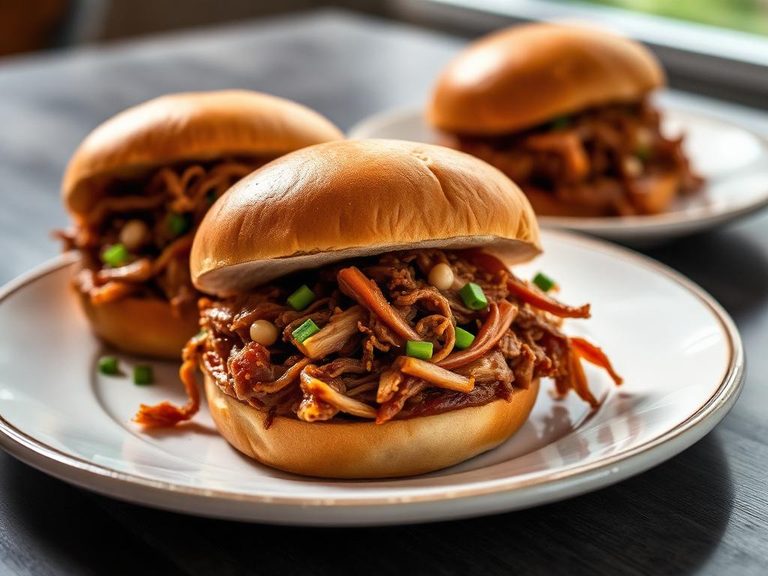
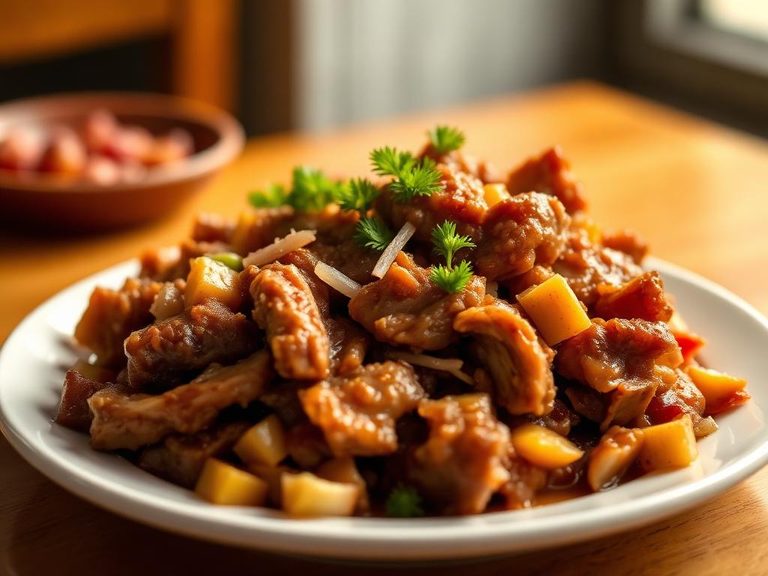
This is the lean, braised portion of a pork shoulder arm picnic, a cut prized for its deep, savory flavor and tender, fork-shreddable texture after slow cooking. It's a protein powerhouse, delivering nearly 27 grams of high-quality protein per 100g with virtually no carbohydrates. The slow braising process renders the connective tissue into gelatin, creating a succulent mouthfeel without excessive fat.
💚 Why it's loved
People love it for its incredible versatility and the way it absorbs the flavors of the braising liquid, becoming a rich, savory canvas for countless seasonings. It's the ultimate comfort food, transforming tough, economical cuts into melt-in-your-mouth tenderness that feels both hearty and satisfying.
⚠️ Watch-outs & how to enjoy it better
While lean, the braising liquid can be high in sodium, which may be a concern for those monitoring blood pressure. To mitigate this, you can use low-sodium broth, rinse the meat after cooking, or control the amount of added salt. It's also a common allergen for those with pork sensitivities. Pairing it with fiber-rich vegetables like roasted Brussels sprouts or a vinegar-based slaw can help balance the meal.
Key benefits
- Excellent source of complete protein for muscle maintenance and repair.
- Very low in carbohydrates, making it suitable for low-carb and ketogenic diets.
- Rich in essential minerals like selenium, phosphorus, and zinc.
- Contains B vitamins, particularly thiamine (B1) and niacin (B3), important for energy metabolism.
- The gelatin formed during braising can support gut lining health.
🍽️ Popular dishes

🌍 Where it's eaten
💡 Did you know?
The 'picnic' in its name comes from the fact that this shoulder cut was traditionally considered sturdy and portable enough to be packed for outdoor meals or picnics.
Full nutrition (scales with serving)
| Water | 63.6 g |
| Energy | 194 kcal |
| Energy | 813 kj |
| Protein | 26.8 g |
| Total lipid (fat) | 8.9 g |
| Ash | 1.1 g |
| Carbohydrate, by difference | 0.00 g |
| Fiber, total dietary | 0.00 g |
| Total Sugars | 0.00 g |
| Calcium, Ca | 16.0 mg |
| Iron, Fe | 0.97 mg |
| Magnesium, Mg | 23.0 mg |
| Phosphorus, P | 254 mg |
| Potassium, K | 382 mg |
| Sodium, Na | 100 mg |
| Zinc, Zn | 3.4 mg |
| Copper, Cu | 0.11 mg |
| Manganese, Mn | 0.02 mg |
| Selenium, Se | 31.2 ug |
| Vitamin C, total ascorbic acid | 0.00 mg |
| Thiamin | 0.46 mg |
| Riboflavin | 0.34 mg |
| Niacin | 5.5 mg |
| Pantothenic acid | 1.3 mg |
| Vitamin B-6 | 0.36 mg |
| Folate, total | 5.0 ug |
| Folic acid | 0.00 ug |
| Folate, food | 5.0 ug |
| Folate, DFE | 5.0 ug |
| Choline, total | 111 mg |
| Betaine | 4.3 mg |
| Vitamin B-12 | 0.76 ug |
| Vitamin B-12, added | 0.00 ug |
| Vitamin A, RAE | 2.0 ug |
| Retinol | 2.0 ug |
| Carotene, beta | 0.00 ug |
| Carotene, alpha | 0.00 ug |
| Cryptoxanthin, beta | 0.00 ug |
| Vitamin A, IU | 6.0 iu |
| Lycopene | 0.00 ug |
| Lutein + zeaxanthin | 0.00 ug |
| Vitamin E (alpha-tocopherol) | 0.29 mg |
| Vitamin E, added | 0.00 mg |
| Vitamin D (D2 + D3), International Units | 42.0 iu |
| Vitamin D (D2 + D3) | 1.0 ug |
| Vitamin D3 (cholecalciferol) | 1.0 ug |
| Vitamin K (phylloquinone) | 0.00 ug |
| Vitamin K (Dihydrophylloquinone) | 0.00 ug |
| Alcohol, ethyl | 0.00 g |
| Caffeine | 0.00 mg |
| Theobromine | 0.00 mg |
Fat & fatty acid profile (per 100g)
| Fatty acids, total saturated | 2.9 g |
| SFA 4:0 | 0.00 g |
| SFA 6:0 | 0.00 g |
| SFA 8:0 | 0.00 g |
| SFA 10:0 | 0.00 g |
| SFA 12:0 | 0.01 g |
| SFA 14:0 | 0.10 g |
| SFA 15:0 | 0.00 g |
| SFA 16:0 | 1.8 g |
| SFA 17:0 | 0.03 g |
| SFA 18:0 | 0.92 g |
| SFA 20:0 | 0.01 g |
| SFA 22:0 | 0.00 g |
| SFA 24:0 | 0.00 g |
| Fatty acids, total monounsaturated | 3.8 g |
| MUFA 14:1 | 0.00 g |
| MUFA 15:1 | 0.00 g |
| MUFA 16:1 | 0.19 g |
| MUFA 17:1 | 0.00 g |
| MUFA 18:1 | 3.5 g |
| MUFA 18:1 c | 3.4 g |
| MUFA 20:1 | 0.06 g |
| MUFA 22:1 | 0.00 g |
| MUFA 22:1 c | 0.00 g |
| Fatty acids, total polyunsaturated | 1.9 g |
| PUFA 18:2 | 1.6 g |
| PUFA 18:2 n-6 c,c | 1.6 g |
| PUFA 18:3 | 0.08 g |
| PUFA 18:3 n-3 c,c,c (ALA) | 0.08 g |
| PUFA 18:3 n-6 c,c,c | 0.00 g |
| PUFA 18:3i | 0.00 g |
| PUFA 18:4 | 0.00 g |
| PUFA 20:2 n-6 c,c | 0.06 g |
| PUFA 20:3 | 0.01 g |
| PUFA 20:4 | 0.09 g |
| PUFA 20:5 n-3 (EPA) | 0.00 g |
| PUFA 22:5 n-3 (DPA) | 0.01 g |
| PUFA 22:6 n-3 (DHA) | 0.00 g |
| Fatty acids, total trans | 0.15 g |
| Fatty acids, total trans-monoenoic | 0.13 g |
| TFA 18:1 t | 0.13 g |
| TFA 18:2 t not further defined | 0.02 g |
| Fatty acids, total trans-polyenoic | 0.02 g |
| Cholesterol | 87.0 mg |
Amino acid profile (per 100g)
| Tryptophan | 0.32 g |
| Threonine | 1.2 g |
| Isoleucine | 1.3 g |
| Leucine | 2.2 g |
| Lysine | 2.4 g |
| Methionine | 0.73 g |
| Cystine | 0.30 g |
| Phenylalanine | 1.1 g |
| Tyrosine | 1.1 g |
| Valine | 1.4 g |
| Arginine | 1.7 g |
| Histidine | 1.1 g |
| Alanine | 1.5 g |
| Aspartic acid | 2.5 g |
| Glutamic acid | 4.1 g |
| Glycine | 1.2 g |
| Proline | 1.1 g |
| Serine | 1.1 g |
| Hydroxyproline | 0.09 g |
FAQ
Is this the same as pulled pork?
It's the primary cut used to make pulled pork. After braising or smoking, the tender meat from the pork shoulder is easily shredded or 'pulled' apart.
How do I keep it from drying out?
The key is low and slow cooking in a covered pot with sufficient liquid. Braising in broth, cider, or even cola at around 325°F (163°C) for several hours ensures the connective tissue melts and the meat stays moist.
Can I use the braising liquid as a sauce?
Absolutely! Strain the liquid, skim off excess fat, and reduce it on the stove to create a rich, flavorful sauce or gravy to serve over the meat.