

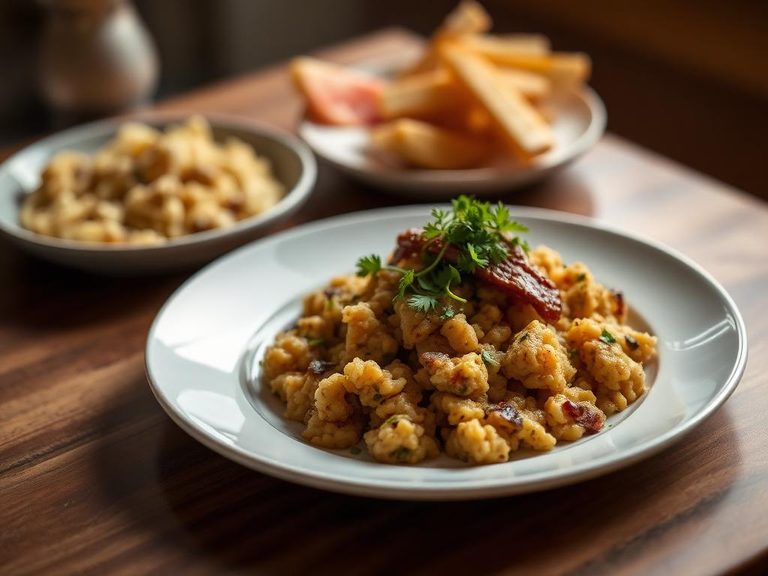
Wocas, tuber, cooked, Oregon, yellow pond lily (Klamath)
Whole food · American Indian/Alaska Native Foods

Photo: Wikipedia
Wocas is the starchy, edible tuber of the yellow pond lily (Nuphar polysepala), a traditional food of Indigenous peoples in the Pacific Northwest, particularly the Klamath. When cooked, it has a dense, slightly chewy texture and a mild, earthy flavor reminiscent of a cross between a potato and a lotus root. It's a notable source of dietary fiber (2.3g per 100g) while being very low in calories and fat.
Calorie split: 8% protein · 83% carbs · 9% fat
↓ Full nutrition💚 Why it's loved
People love wocas for its unique, earthy flavor and satisfying, starchy texture that holds up well in soups and stews. It's also cherished as a culturally significant food, connecting modern eaters to the traditional diets of the Klamath and other Pacific Northwest tribes.
⚠️ Watch-outs & how to enjoy it better
Its mild, earthy taste can be unremarkable to some, and its dense, chewy texture may not appeal to everyone. As with many starchy tubers, consuming large portions can lead to a significant carbohydrate load; pairing it with protein or healthy fats can help moderate blood sugar response. Always ensure it is properly cooked and sourced from clean water, as aquatic plants can accumulate contaminants.
Key benefits
- High in dietary fiber for digestive health
- Very low in calories (34 kcal per 100g)
- Provides a source of complex carbohydrates
- Contains no sugar
- Traditional Indigenous food with cultural significance
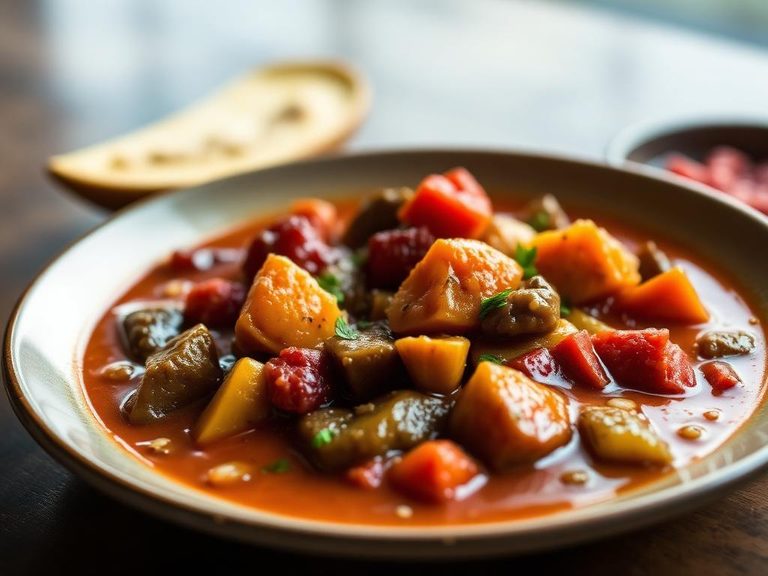
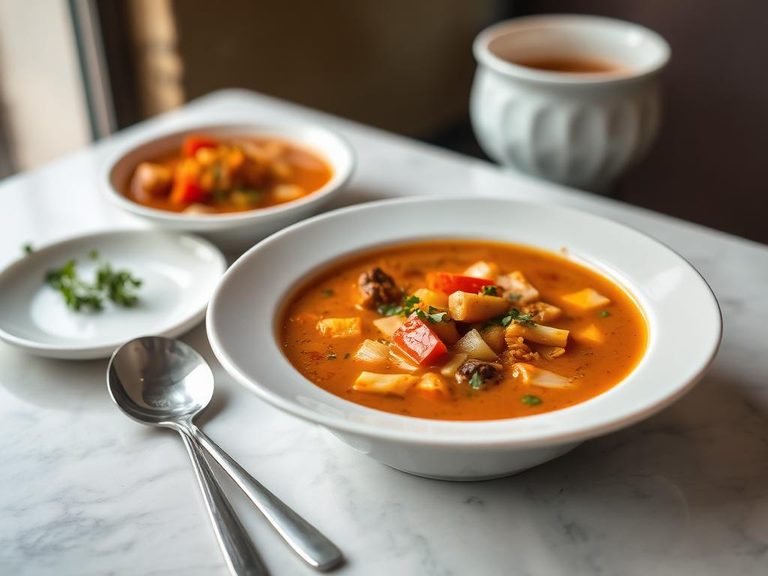
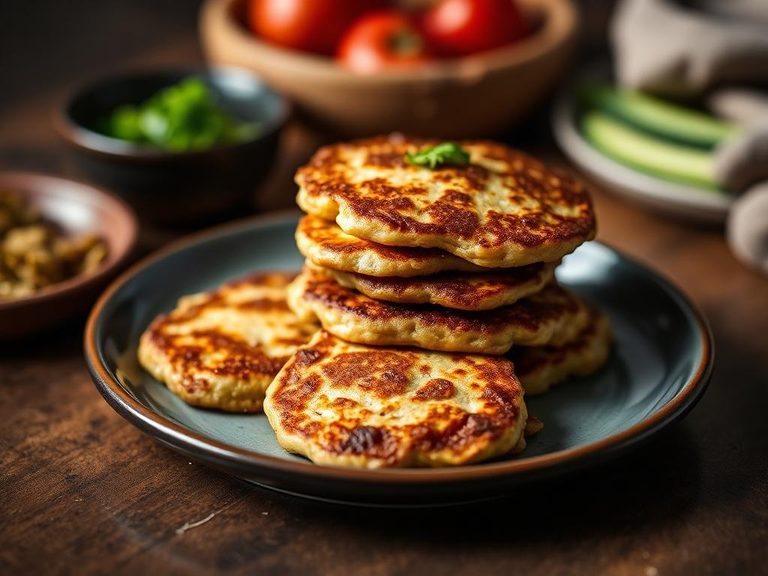
🍽️ Popular dishes
🌍 Where it's eaten
💡 Did you know?
The Klamath people traditionally harvested wocas tubers by diving into shallow lakes and pulling them from the muddy bottom, a practice that required great skill and knowledge of the lakebed.
Full nutrition (USDA data · scales with serving)
| Water | 91.4 g |
| Energy | 34.0 kcal |
| Energy | 143 kj |
| Protein | 0.69 g |
| Total lipid (fat) | 0.35 g |
| Ash | 0.49 g |
| Carbohydrate, by difference | 7.1 g |
| Fiber, total dietary | 2.3 g |
| Total Sugars | 0.00 g |
| Sucrose | 0.00 g |
| Glucose | 0.00 g |
| Fructose | 0.00 g |
| Lactose | 0.00 g |
| Maltose | 0.00 g |
| Galactose | 0.00 g |
| Starch | 3.7 g |
| Calcium, Ca | 23.0 mg |
| Iron, Fe | 1.2 mg |
| Magnesium, Mg | 3.0 mg |
| Phosphorus, P | 13.0 mg |
| Potassium, K | 187 mg |
| Sodium, Na | 10.0 mg |
| Zinc, Zn | 0.30 mg |
| Copper, Cu | 0.00 mg |
| Manganese, Mn | 0.95 mg |
| Selenium, Se | 0.00 ug |
| Thiamin | 0.01 mg |
| Riboflavin | 0.01 mg |
| Niacin | 0.29 mg |
| Pantothenic acid | 0.14 mg |
| Vitamin B-6 | 0.07 mg |
| Folate, total | 5.0 ug |
| Folic acid | 0.00 ug |
| Folate, food | 5.0 ug |
| Folate, DFE | 5.0 ug |
| Vitamin B-12 | 0.00 ug |
| Vitamin E (alpha-tocopherol) | 0.42 mg |
| Tocopherol, beta | 0.00 mg |
| Tocopherol, gamma | 0.01 mg |
| Tocopherol, delta | 0.02 mg |
| Tocotrienol, alpha | 0.00 mg |
| Tocotrienol, beta | 0.01 mg |
| Tocotrienol, gamma | 0.00 mg |
| Tocotrienol, delta | 0.00 mg |
| Alcohol, ethyl | 0.00 g |
| Caffeine | 0.00 mg |
| Theobromine | 0.00 mg |
Fat & fatty acid profile (per 100g)
| Fatty acids, total saturated | 0.04 g |
| SFA 4:0 | 0.01 g |
| SFA 6:0 | 0.00 g |
| SFA 8:0 | 0.00 g |
| SFA 10:0 | 0.00 g |
| SFA 12:0 | 0.00 g |
| SFA 14:0 | 0.00 g |
| SFA 15:0 | 0.00 g |
| SFA 16:0 | 0.02 g |
| SFA 17:0 | 0.00 g |
| SFA 18:0 | 0.01 g |
| SFA 20:0 | 0.00 g |
| SFA 22:0 | 0.00 g |
| SFA 24:0 | 0.00 g |
| Fatty acids, total monounsaturated | 0.02 g |
| MUFA 14:1 | 0.00 g |
| MUFA 15:1 | 0.00 g |
| MUFA 16:1 | 0.00 g |
| MUFA 16:1 c | 0.00 g |
| MUFA 17:1 | 0.00 g |
| MUFA 18:1 | 0.02 g |
| MUFA 18:1 c | 0.02 g |
| MUFA 20:1 | 0.00 g |
| MUFA 22:1 | 0.00 g |
| MUFA 22:1 c | 0.00 g |
| MUFA 24:1 c | 0.00 g |
| Fatty acids, total polyunsaturated | 0.05 g |
| PUFA 18:2 | 0.04 g |
| PUFA 18:2 n-6 c,c | 0.04 g |
| PUFA 18:2 CLAs | 0.00 g |
| PUFA 18:3 | 0.01 g |
| PUFA 18:3 n-3 c,c,c (ALA) | 0.01 g |
| PUFA 18:3 n-6 c,c,c | 0.00 g |
| PUFA 18:4 | 0.00 g |
| PUFA 20:2 n-6 c,c | 0.00 g |
| PUFA 20:3 | 0.00 g |
| PUFA 20:3 n-3 | 0.00 g |
| PUFA 20:3 n-6 | 0.00 g |
| PUFA 20:4 | 0.00 g |
| PUFA 20:5 n-3 (EPA) | 0.00 g |
| PUFA 22:4 | 0.00 g |
| PUFA 22:5 n-3 (DPA) | 0.00 g |
| PUFA 22:6 n-3 (DHA) | 0.00 g |
| Fatty acids, total trans | 0.00 g |
| Fatty acids, total trans-monoenoic | 0.00 g |
| TFA 16:1 t | 0.00 g |
| TFA 18:1 t | 0.00 g |
| TFA 22:1 t | 0.00 g |
| TFA 18:2 t not further defined | 0.00 g |
| Fatty acids, total trans-polyenoic | 0.00 g |
| Cholesterol | 0.00 mg |
| Stigmasterol | 1.0 mg |
| Campesterol | 0.00 mg |
| Beta-sitosterol | 10.0 mg |
FAQ
What does wocas taste like?
Wocas has a mild, earthy flavor with a starchy, slightly chewy texture, often compared to a potato or lotus root.
Is wocas healthy?
Yes, it is low in calories and fat, and a good source of dietary fiber, making it a nutritious starchy vegetable option.
How is wocas typically prepared?
It is commonly boiled, roasted, or mashed. It can also be used in soups, stews, or made into fritters or pancakes.
Where can I find wocas?
Wocas is a traditional food of the Pacific Northwest, particularly associated with the Klamath people. It may be found in specialty markets or through Indigenous food networks in that region.
Nutrient density (calculated · NRF9.3)
Nutrient Rich Foods index: beneficial nutrients (protein, fiber, vitamins, minerals) minus saturated fat, added sugar & sodium, per 100 kcal.
NRF9.3 index — Fulgoni, Keast & Drewnowski, 2009. Computed from USDA nutrients.
Weight-loss friendliness (composite index)
Energy density 0.34 kcal/g · 8% calories from protein · 2.3 g fiber · 0.0 g sugar per 100 g.
Composite of energy density (Rolls et al., 1999), protein & fiber satiety, minus sugar. A calculated heuristic — ranks satiety-per-calorie, not a clinical measure.
Dietary load (calculated from USDA values)
Potential renal acid load. Positive = acid-forming, negative = alkaline-forming.
Sodium-to-potassium ratio: 0.05 (lower is better — aim for ≤ 1)
Sodium:potassium per WHO potassium guidance. Computed from USDA nutrients.