

Klamath Stew
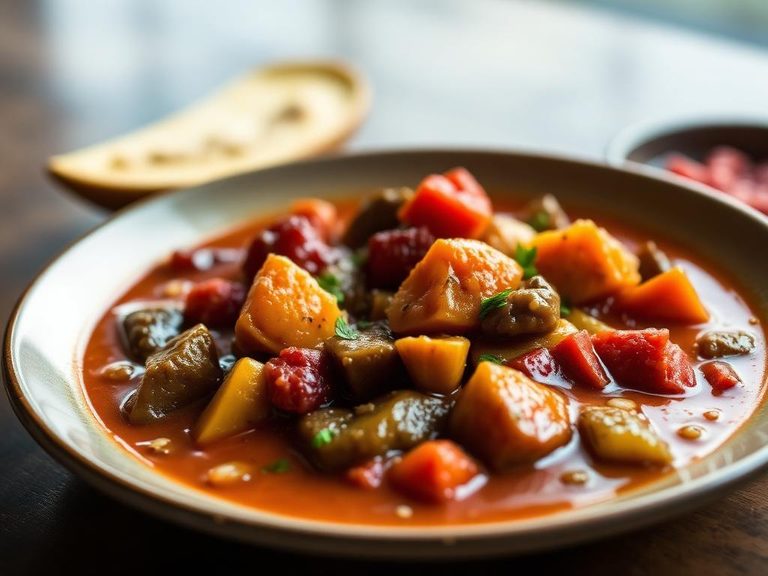
Klamath Stew is a hearty, traditional dish originating from the Klamath Basin region of Oregon and Northern California, often featuring foraged or locally sourced ingredients like camas root, wild game, or fish. It reflects the culinary heritage of the Klamath Tribes, combining earthy flavors with a rich, nourishing broth. The stew is typically slow-cooked to meld the flavors of its diverse components into a comforting meal.
🍽️ Nutrition at a glance
This dish is generally high in protein and fiber, with a moderate amount of fat depending on the ingredients used, and provides key nutrients like iron, potassium, and B vitamins. A typical serving might range from 300 to 400 calories, making it a balanced and sustaining option.
Nutrition breakdown
| Calories | 350 kcal |
| Protein | 25 g |
| Carbs | 30 g |
| Fat | 12 g |
| Fiber | 6 g |
| Sugar | 4 g |
| Sodium | 480 mg |
| Iron | 4.5 mg |
| Potassium | 520 mg |
| Vitamin B6 | 0.6 mg |
| Vitamin B12 | 2.8 mcg |
| Zinc | 3.2 mg |
| Magnesium | 45 mg |
| Phosphorus | 280 mg |
| Selenium | 18 mcg |
Per 1 cup (240 g) · estimated, varies by recipe
💡 What's interesting
What makes Klamath Stew unique is its use of camas root, a traditional Indigenous ingredient that adds a slightly sweet, earthy flavor and was historically a vital carbohydrate source. Nutritionally, it showcases the value of foraged foods, offering a nutrient-dense profile that supports both cultural preservation and modern health-conscious eating.
AI estimate may be inaccurate · Terms