

Wheat flour, white (industrial), 10% protein, bleached, unenriched
Whole food · Cereal Grains and Pasta
This is the workhorse of industrial baking: a finely milled, bleached wheat flour with a moderate 10% protein content, designed for a soft, tender crumb. Its neutral, slightly sweet flavor and ultra-fine texture make it the invisible foundation of countless baked goods, from fluffy cakes to flaky pastries. Nutritionally, it's a dense carbohydrate source, packing 366 kcal and over 76g of carbs per 100g, with minimal fat or fiber.
Calorie split: 11% protein · 85% carbs · 4% fat
↓ Full nutrition💚 Why it's loved
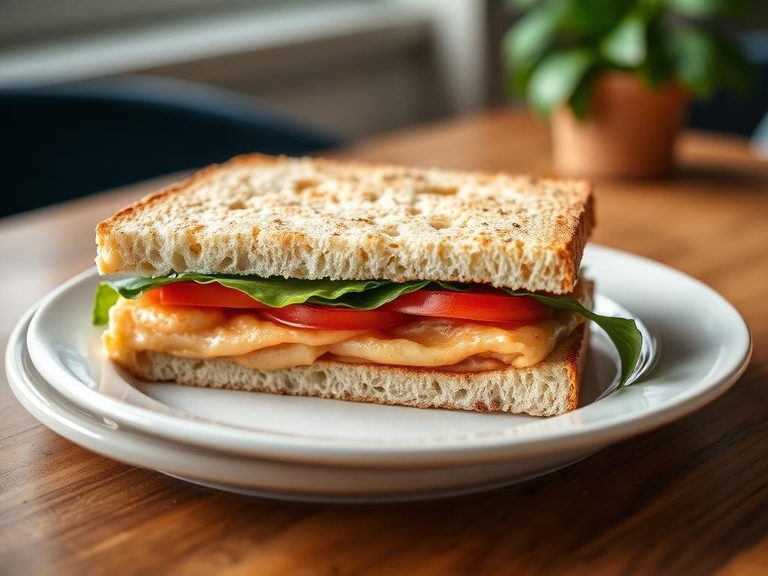
People love it for its unparalleled versatility and reliability in baking, creating the light, airy textures of classic cakes, cookies, and pancakes. It's a cultural staple in American and Western European kitchens, forming the base of everyday comfort foods.
⚠️ Watch-outs & how to enjoy it better
As a refined carbohydrate, it can cause rapid blood-sugar spikes and lacks the fiber and nutrients of whole wheat. It's a common allergen (gluten) and should be avoided by those with celiac disease or gluten sensitivity. To counteract blood sugar impact, pair it with protein (like eggs or nuts) or healthy fats (like butter or avocado), and consider using it in smaller portions or mixing it with whole-grain flours.
Key benefits
- Provides a dense, quick source of energy from complex carbohydrates.
- Its fine texture creates a soft, tender crumb in baked goods.
- Acts as a versatile binding agent in batters and doughs.
- Has a neutral flavor that doesn't overpower other ingredients.
🍽️ Popular dishes




🌍 Where it's eaten
💡 Did you know?
The bleaching process, which uses agents like chlorine gas or benzoyl peroxide, not only whitens the flour but also alters its protein structure to create a more tender crumb and improve its performance in baked goods.
Full nutrition (USDA data · scales with serving)
| Water | 12.0 g |
| Energy | 366 kcal |
| Energy | 1530 kj |
| Protein | 9.7 g |
| Total lipid (fat) | 1.5 g |
| Ash | 0.58 g |
| Carbohydrate, by difference | 76.2 g |
| Fiber, total dietary | 2.4 g |
| Total Sugars | 0.49 g |
| Sucrose | 0.20 g |
| Glucose | 0.03 g |
| Fructose | 0.03 g |
| Lactose | 0.00 g |
| Maltose | 0.23 g |
| Galactose | 0.00 g |
| Starch | 64.5 g |
| Calcium, Ca | 20.0 mg |
| Iron, Fe | 1.3 mg |
| Magnesium, Mg | 25.0 mg |
| Phosphorus, P | 107 mg |
| Potassium, K | 149 mg |
| Sodium, Na | 2.0 mg |
| Zinc, Zn | 1.0 mg |
| Copper, Cu | 0.19 mg |
| Manganese, Mn | 0.82 mg |
| Selenium, Se | 14.6 ug |
| Vitamin C, total ascorbic acid | 0.00 mg |
| Thiamin | 0.19 mg |
| Riboflavin | 0.07 mg |
| Niacin | 1.2 mg |
| Pantothenic acid | 0.25 mg |
| Vitamin B-6 | 0.04 mg |
| Folate, total | 31.0 ug |
| Folic acid | 0.00 ug |
| Folate, food | 31.0 ug |
| Folate, DFE | 31.0 ug |
| Choline, total | 10.4 mg |
| Vitamin B-12 | 0.00 ug |
| Vitamin A, RAE | 0.00 ug |
| Retinol | 0.00 ug |
| Carotene, beta | 0.00 ug |
| Carotene, alpha | 0.00 ug |
| Cryptoxanthin, beta | 0.00 ug |
| Vitamin A, IU | 0.00 iu |
| Lycopene | 0.00 ug |
| Lutein + zeaxanthin | 18.0 ug |
| Vitamin E (alpha-tocopherol) | 0.05 mg |
| Tocopherol, beta | 0.04 mg |
| Tocopherol, gamma | 0.42 mg |
| Tocopherol, delta | 0.01 mg |
| Tocotrienol, alpha | 0.05 mg |
| Tocotrienol, beta | 0.00 mg |
| Tocotrienol, gamma | 0.00 mg |
| Tocotrienol, delta | 0.00 mg |
| Vitamin D (D2 + D3), International Units | 0.00 iu |
| Vitamin D (D2 + D3) | 0.00 ug |
| Vitamin K (phylloquinone) | 0.30 ug |
| Alcohol, ethyl | 0.00 g |
| Caffeine | 0.00 mg |
| Theobromine | 0.00 mg |
Fat & fatty acid profile (per 100g)
| Fatty acids, total saturated | 0.30 g |
| SFA 4:0 | 0.00 g |
| SFA 6:0 | 0.00 g |
| SFA 8:0 | 0.00 g |
| SFA 10:0 | 0.00 g |
| SFA 12:0 | 0.00 g |
| SFA 14:0 | 0.00 g |
| SFA 15:0 | 0.00 g |
| SFA 16:0 | 0.30 g |
| SFA 17:0 | 0.00 g |
| SFA 18:0 | 0.00 g |
| SFA 20:0 | 0.00 g |
| SFA 22:0 | 0.00 g |
| SFA 24:0 | 0.00 g |
| Fatty acids, total monounsaturated | 0.19 g |
| MUFA 14:1 | 0.00 g |
| MUFA 16:1 | 0.00 g |
| MUFA 18:1 | 0.19 g |
| MUFA 20:1 | 0.00 g |
| MUFA 22:1 | 0.00 g |
| Fatty acids, total polyunsaturated | 0.84 g |
| PUFA 18:2 | 0.83 g |
| PUFA 18:3 | 0.02 g |
| PUFA 18:4 | 0.00 g |
| PUFA 20:4 | 0.00 g |
| PUFA 20:5 n-3 (EPA) | 0.00 g |
| PUFA 22:5 n-3 (DPA) | 0.00 g |
| PUFA 22:6 n-3 (DHA) | 0.00 g |
| Cholesterol | 0.00 mg |
Amino acid profile (per 100g)
| Tryptophan | 0.11 g |
| Threonine | 0.26 g |
| Isoleucine | 0.33 g |
| Leucine | 0.63 g |
| Lysine | 0.26 g |
| Methionine | 0.15 g |
| Cystine | 0.24 g |
| Phenylalanine | 0.40 g |
| Tyrosine | 0.13 g |
| Valine | 0.39 g |
| Arginine | 0.37 g |
| Histidine | 0.20 g |
| Alanine | 0.29 g |
| Aspartic acid | 0.40 g |
| Glutamic acid | 3.0 g |
| Glycine | 0.33 g |
| Proline | 1.0 g |
| Serine | 0.41 g |
FAQ
What is the difference between bleached and unbleached flour?
Bleached flour is treated with chemicals to speed up aging, resulting in a whiter color and softer texture, ideal for tender baked goods. Unbleached flour is aged naturally, has a slightly denser texture, and a more off-white color, often preferred for breads and pastries where structure is key.
Is this flour suitable for making bread?
While it can be used for soft, fluffy breads like sandwich loaves, its lower protein content (10%) means it develops less gluten than bread flour (12-14%). For chewy, artisan breads, bread flour is a better choice.
How should I store this flour?
Store it in an airtight container in a cool, dark place like a pantry. For long-term storage, keep it in the refrigerator or freezer to prevent rancidity and pest infestation.
Nutrient density (calculated · NRF9.3)
Nutrient Rich Foods index: beneficial nutrients (protein, fiber, vitamins, minerals) minus saturated fat, added sugar & sodium, per 100 kcal.
NRF9.3 index — Fulgoni, Keast & Drewnowski, 2009. Computed from USDA nutrients.
Weight-loss friendliness (composite index)
Energy density 3.66 kcal/g · 11% calories from protein · 2.4 g fiber · 0.5 g sugar per 100 g.
Composite of energy density (Rolls et al., 1999), protein & fiber satiety, minus sugar. A calculated heuristic — ranks satiety-per-calorie, not a clinical measure.
Dietary load (calculated from USDA values)
Potential renal acid load. Positive = acid-forming, negative = alkaline-forming.
Sodium-to-potassium ratio: 0.01 (lower is better — aim for ≤ 1)
Sodium:potassium per WHO potassium guidance. Computed from USDA nutrients.